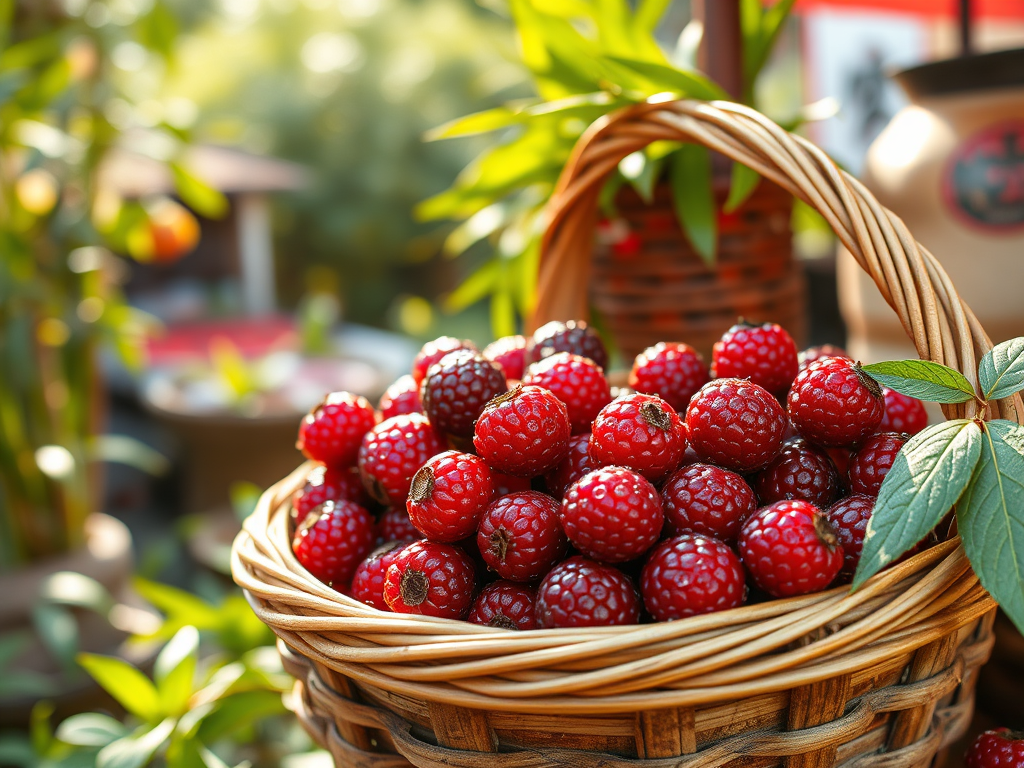
🍒 Red Bayberry: The Ancient, Antioxidant‑Rich Jewel of East Asia
This keeps your blog aligned with your editorial values: accuracy, transparency, and reader trust.
If you’ve ever wandered through a summer market in southeastern China, you’ve likely seen baskets overflowing with small, crimson, bead‑textured fruits that look like something between a raspberry and a tiny sea urchin. This is Red Bayberry — also known as Yangmei, Chinese Bayberry, Waxberry, Yumberry, or Yamamomo in Japan.
More than just a striking fruit, Red Bayberry carries 2,000 years of cultural history, medicinal tradition, and culinary creativity. Today, it’s gaining global attention for its vibrant flavor, antioxidant power, and its role as one of Asia’s most beloved seasonal fruits.
Let’s explore what makes this fruit so special.
🌱 What Exactly Is Red Bayberry?
Red Bayberry (Myrica rubra) is a subtropical evergreen tree native to China, Japan, Korea, Taiwan, and the Philippines. The fruit is typically 1.5–2.5 cm in diameter, with a deep red to purple color and a surface covered in tiny bead‑like segments.
Inside, the flesh is:
- Juicy
- Soft
- Sweet with a tart, wine‑like edge
- Wrapped around a single hard seed
Think of it as a flavor somewhere between cranberry, pomegranate, and grape, with a texture all its own.
🏺 A Fruit With 2,000 Years of History
Red Bayberry has been cultivated in China for over two millennia, especially in:
- Zhejiang
- Fujian
- Guangdong
- Yunnan
In Chinese culture, Yangmei symbolizes:
- Prosperity
- Good fortune
- Summer abundance
It appears in poetry, regional festivals, and traditional medicine, where it’s used to support digestion, circulation, and overall vitality.
In Japan, the fruit — called Yamamomo — is associated with early summer and is often enjoyed fresh or preserved.
🧬 Nutritional Benefits
Red Bayberry is packed with nutrients and antioxidants, including:
- Vitamin C
- Vitamin A
- Vitamin E
- Riboflavin & thiamine
- Carotene
- Oligomeric proanthocyanidins (OPCs), powerful antioxidants
These compounds support:
- Immune health
- Skin health
- Vision
- Collagen production
- Reduced inflammation
- Heart health
- Blood sugar regulation
It’s a small fruit with a surprisingly big nutritional profile.
🍒 Red Bayberry (Yangmei) — Health Benefits
Red bayberry is a nutrient‑dense East Asian fruit known for its vibrant color, sweet‑tart flavor, and long history in traditional wellness practices. Modern research is beginning to validate many of its traditional uses.
🌿 1. Rich in Antioxidants
Red bayberry contains powerful antioxidants — especially myricetin and myricitrin — which help protect cells from oxidative stress and free‑radical damage.
Potential benefits:
- Supports healthy aging
- Protects against environmental stress
- May reduce inflammation
❤️ 2. Supports Circulation & Heart Health
Compounds in bayberry, particularly myricitrin, help widen blood vessels, improving blood flow and circulation.
Potential benefits:
- Better cardiovascular function
- Reduced circulatory discomfort
- Improved nutrient and oxygen delivery
🛡️ 3. Immune‑Boosting Properties
Bayberry has immunomodulatory effects, meaning it may help support and balance immune function.
Why:
- High antioxidant content
- Natural plant compounds that support immune cell activity
🔥 4. Anti‑Inflammatory & Pain‑Relieving Effects
Traditional medicine has long used bayberry to ease pain and swelling. Modern findings show that myricitrin and related compounds have anti‑inflammatory and analgesic properties.
Potential benefits:
- Reduced joint discomfort
- Relief from minor aches
- Support for inflammatory conditions
🌱 5. Digestive Support (Traditional Use)
Historically, bayberry has been used to support digestion and soothe digestive discomfort.
Traditional benefits:
- Easing bloating
- Supporting digestive regularity
- Calming the stomach
🌬️ 6. Respiratory Support (Traditional Use)
Native American and early herbal traditions used bayberry for colds, coughs, and respiratory congestion.
Potential benefits:
- Eases throat irritation
- Supports respiratory comfort
- Helps during seasonal illnesses
✨ 7. Skin & Overall Vitality Support
Because of its antioxidant and anti‑inflammatory profile, red bayberry may support:
- Skin clarity
- Healthy complexion
- Overall vitality and wellness
⚠️ Important Note
These are general informational benefits, not medical advice. Anyone with health conditions should consult a healthcare professional before using bayberry supplements or extracts.
🍽️ Culinary Uses
Red Bayberry is incredibly versatile in the kitchen. Its sweet‑tart flavor and juicy texture make it ideal for:
Fresh Eating
- Enjoyed chilled
- Added to fruit bowls
- Paired with yogurt or cream
Drinks
- Juices
- Smoothies
- Cocktails
- Fermented wines and liqueurs (a specialty in Zhejiang)
Desserts
- Jams & jellies
- Sorbets
- Cakes & pastries
- Compotes
Preserved Forms
- Dried bayberries
- Candied bayberries
- Pickled bayberries (a regional delicacy)
Non‑Culinary Uses
- Wax from the fruit is used in candles
- Root bark used historically for dyes and tanning
🍒 Recipe
1: Fresh Red Bayberry Cooler (Yangmei Refresher)
A bright, ruby‑red drink that tastes like summer poured over ice.
Ingredients
- 2 cups fresh red bayberries (washed)
- 2 tbsp honey or sugar
- 1 tbsp lemon juice
- 2 cups cold water or sparkling water
- Ice
- Optional: mint leaves
Instructions
- Add bayberries, honey, and lemon juice to a blender.
- Blend until smooth and vibrant.
- Strain through a fine sieve to remove seeds.
- Pour over ice and top with cold or sparkling water.
- Garnish with mint and a few whole berries.
Notes
- For a deeper flavor, chill the blended mixture for 1 hour before serving.
- Sparkling water gives it a festive lift.
🍰 Recipe 2: Red Bayberry Compote
A glossy, jewel‑toned topping perfect for yogurt, pancakes, cheesecake, or warm bread.
Ingredients
- 2 cups red bayberries
- ¼ cup sugar
- 1 tbsp lemon juice
- 2 tbsp water
- Optional: ½ tsp vanilla or a pinch of cinnamon
Instructions
- Add berries, sugar, lemon juice, and water to a small pot.
- Simmer on low for 8–10 minutes until the berries soften and release their juices.
- Lightly mash with a spoon, keeping some texture.
- Cook 2–3 more minutes until thickened.
- Cool and store in the fridge for up to a week.
Notes
- This compote thickens as it cools.
- Add cinnamon for warmth or vanilla for softness.
🧁 Recipe 3: Red Bayberry Muffins
Soft, fluffy muffins with bright bursts of tart‑sweet berry flavor.
Ingredients
- 1 ½ cups flour
- ¾ cup sugar
- 1 tsp baking powder
- ½ tsp baking soda
- ¼ tsp salt
- 1 egg
- ½ cup milk
- ⅓ cup melted butter or oil
- 1 tsp vanilla
- 1 cup fresh or frozen red bayberries
Instructions
- Preheat oven to 375°F (190°C).
- Mix flour, sugar, baking powder, baking soda, and salt in a bowl.
- In another bowl, whisk egg, milk, butter, and vanilla.
- Combine wet and dry ingredients gently.
- Fold in bayberries (freeze them first if they’re too soft).
- Scoop into muffin cups and bake 16–20 minutes.
Notes
- Freezing the berries helps them stay whole in the batter.
- These muffins pair beautifully with a bayberry compote swirl.
🌍 Availability
Fresh Red Bayberry is highly seasonal — typically May to June in China — and extremely delicate, which makes global export challenging. However, it is increasingly available in:
- Asian supermarkets
- Specialty produce markets
- Online fruit importers
- Frozen or dried form year‑round
In the U.S., it’s still considered a specialty fruit, but interest is growing rapidly.
🚫 Who Should Avoid or Limit Red Bayberry (Myrica rubra / Yangmei)
Although red bayberry has traditional and nutritional benefits, several groups should avoid or use caution based on documented safety concerns.
⚠️ 1. Pregnant or Breastfeeding Individuals
Red bayberry is considered possibly unsafe during pregnancy and breastfeeding because it contains a chemical that may be carcinogenic and can cause nausea, vomiting, and liver stress.
⚠️ 2. People With High Blood Pressure
Bayberry contains large amounts of tannins, which can increase sodium retention. This may worsen high blood pressure and fluid buildup.
⚠️ 3. Individuals With Water Retention (Edema)
Because tannins can cause the body to retain more sodium and fluid, bayberry may worsen edema and should be avoided.
⚠️ 4. Anyone With Liver Concerns
Bayberry has been associated with nausea, vomiting, and liver damage when taken internally in significant amounts.
⚠️ 5. People With Known Fruit Allergies
Allergic reactions — including anaphylaxis — have been documented with Chinese bayberry fruit, and cross‑sensitivity with other fruits has been reported.
⚠️ 6. Individuals Taking Certain Medications
Bayberry may interact with medications because it can inhibit CYP3A4 and CYP2C9, enzymes involved in drug metabolism. This means it may affect how certain medications are processed in the body.
⚠️ 7. Anyone Sensitive to Tannins
Because bayberry is high in tannins, it may cause:
- Stomach irritation
- Nausea
- Vomiting
- Worsening of digestive discomfort
✨Summary
Red bayberry should be avoided by pregnant or breastfeeding individuals, people with high blood pressure or edema, those with liver issues, individuals with fruit allergies, and anyone taking medications affected by CYP3A4 or CYP2C9. Bayberry can also cause nausea, vomiting, and liver stress in some people.
- People with sensitive digestion — the fruit’s acidity may cause discomfort
- Individuals with berry allergies
- Those watching sugar intake — the fruit is naturally sweet
- People prone to kidney stones — bayberries contain oxalates
As always, moderation is key.
✨ Final Thoughts
Red Bayberry is more than a seasonal treat — it’s a fruit woven into the cultural, culinary, and medicinal traditions of East Asia. With its vibrant flavor, antioxidant richness, and deep historical roots, it’s no surprise that Yangmei is finally gaining global recognition.
Whether you enjoy it fresh, dried, juiced, or transformed into wine, Red Bayberry brings a burst of color, culture, and nourishment to the table.
📚 Further Reading (Real, Verifiable Sources)
These sources offer reliable information on Red Bayberry/Yangmei:
- Purdue University Horticulture — Myrica rubra (Chinese Bayberry) https://hort.purdue.edu/newcrop/morton/chinese_bayberry.html
- UC Davis Postharvest Center — Chinese Bayberry https://postharvest.ucdavis.edu/
- ScienceDirect — Myrica rubra overview https://www.sciencedirect.com/topics/agricultural-and-biological-sciences/myrica-rubra
- MDPI Journal — Nutritional and Functional Properties of Myrica rubra https://www.mdpi.com/
- Zhejiang Agricultural University — Research on Yangmei cultivation (Institutional site; articles vary by year)
- SVK Herbal USA — Red Bayberry Nutritional & Health Benefits
- Nootropics Planet — Bayberry Benefits, Circulation, Immune Support, Anti‑Inflammatory Properties
- VitaLibrary — Bayberry Traditional Uses & Therapeutic Applications
- WebMD — Bayberry Safety & Warnings
 EJADA
EJADA 
Leave a comment