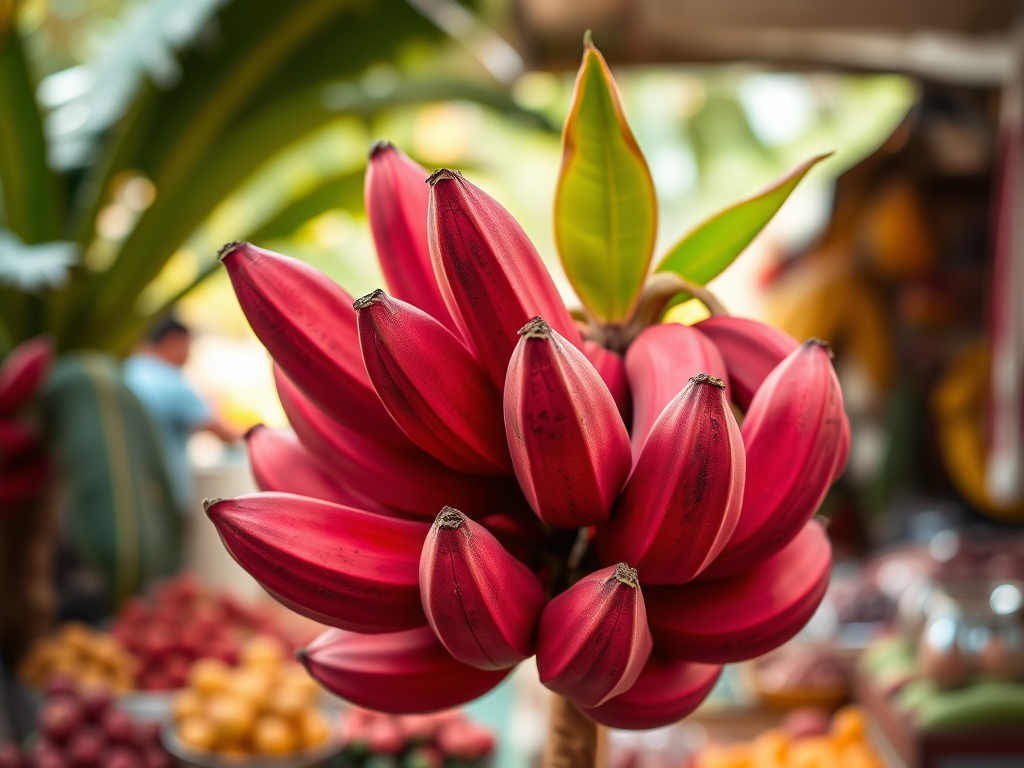
🍌 Red Bananas: The Sweet, Scarlet Jewel of the Banana World
When most people picture a banana, they imagine the familiar yellow curve sitting in a fruit bowl. But tucked into tropical markets from Southeast Asia to the Caribbean is a far more intriguing cousin — the Red Banana, a fruit with a story as rich as its color.
This vibrant, reddish‑purple banana isn’t just a visual surprise. It’s sweeter, softer, and often carries a subtle berry‑like aroma that sets it apart from the everyday Cavendish. And its history stretches back thousands of years, long before global trade ever carried it across oceans.
Red Bananas are a cultivar of Musa acuminata, part of the AAA genetic group. Their skin ranges from deep maroon to dusty rose, and their flesh can appear creamy, golden, or lightly blushed with pink. They’re naturally higher in beta‑carotene and vitamin C, making them both beautiful and nutrient‑dense.
Flavor-wise, think:
- Sweeter than yellow bananas
- Slightly raspberry‑tinged
- Soft, custard-like texture
They’re the kind of fruit that feels like a treat even when eaten plain.
🌏 Where Do Red Bananas Come From?
Red Bananas trace their roots to Southeast Asia, especially:
- Malaysia
- Indonesia
- The Philippines
- Papua New Guinea
This region is the cradle of banana domestication. Early agricultural communities began selecting and cultivating wild Musa species over 10,000 years ago, long before written history. Among the many varieties they nurtured were naturally occurring red‑skinned bananas.
From there, the fruit traveled:
- Across the Indian Ocean into India and Sri Lanka
- Through Pacific migration routes into Polynesia
- Into Africa via early trade networks
- Eventually into the Caribbean and Central America during the colonial era
By the late 19th century, red bananas were even being sold in Toronto markets — long before the Cavendish became the global standard.
👤 Who “Discovered” the Red Banana?
There is no single discoverer.
Red Bananas were known, cultivated, and enjoyed by indigenous Southeast Asian communities thousands of years before Europeans ever encountered them. Their “discovery” in Western records comes from 16th‑century explorers and traders, who documented the striking red fruit in tropical regions.
But the true credit belongs to the early farmers who selected, propagated, and perfected these cultivars through generations of hands-on knowledge.
🍽️ Early Uses: More Than Just a Snack
Red Bananas weren’t just eaten — they were woven into daily life, ritual, and trade.
1. Everyday Food
Early communities used red bananas:
- Fresh as a sweet fruit
- Cooked in stews, curries, and desserts
- Dried for long-term storage
- Mashed for infants and elders
Their soft texture made them a natural staple.
2. Ritual & Cultural Significance
In parts of India, red bananas (like the Chenkadali variety) became:
- Offerings in temples
- Ingredients in festival dishes
- Symbols of prosperity and fertility
Their color alone made them feel special.
3. Traditional Medicine
Across Southeast Asia and India, red bananas were used for:
- Digestive support
- Energy and nourishment
- Cooling the body in Ayurvedic practices
These uses varied by region but show how deeply the fruit was integrated into early life.
4. Trade & Migration
Because of their sweetness and striking appearance, red bananas became a valued fruit in:
- Early maritime trade
- Cultural exchanges across the Indian Ocean
- Agricultural migrations into the Pacific
They were a fruit worth carrying across oceans.
✨ Why Red Bananas Still Matter Today
Red Bananas are more than a novelty. They’re a living link to ancient agriculture — a reminder that long before global supermarkets, communities were cultivating diverse, flavorful, nutrient-rich foods tailored to their landscapes.
They’re also a delicious way to reconnect with that heritage.
🌟 Top Health Benefits of Red Bananas
1. Rich in Essential Nutrients
Red bananas provide meaningful amounts of:
- Potassium
- Vitamin C
- Vitamin B6
- Magnesium
- Fiber
A 100‑gram serving contains about 90 calories and is particularly high in vitamin B6 and potassium.
2. Support Heart Health
Red bananas may help:
- Lower blood pressure
- Support healthy heart rhythms
- Reduce sodium’s impact on the body
This is due to their high potassium and magnesium content, both of which are linked to reduced blood pressure in multiple studies.
3. Improve Digestive Health
Their fiber content helps:
- Promote regular bowel movements
- Support gut bacteria
- Reduce constipation
Fiber is one of the most consistent digestive benefits highlighted across sources.
4. Boost Immune Function
Red bananas contain:
- Vitamin C
- Antioxidants (including carotenoids)
These nutrients help protect cells from damage and support immune defenses.
5. Support Eye Health
Red bananas contain carotenoids, the pigments that give them their reddish skin. Carotenoids are associated with:
- Better vision
- Reduced risk of eye disease
- Protection against oxidative stress
This is specifically noted in the research on red banana antioxidants.
6. Help Maintain Healthy Skin
Vitamin C supports collagen production, which contributes to:
- Skin firmness
- Wound healing
- Reduced signs of aging
This is highlighted in broader nutritional analyses of red bananas.
7. May Help With Weight Management
Because they are:
- High in fiber
- Naturally sweet
- Low in fat
Red bananas can help increase satiety and reduce overeating.
🧾 Quick Benefit Summary Table
| Benefit | Why It Helps | Sources |
|---|---|---|
| Heart health | Potassium + magnesium regulate blood pressure | |
| Digestion | High fiber supports gut health | |
| Immunity | Vitamin C + antioxidants | |
| Eye health | Carotenoids protect vision | |
| Skin health | Vitamin C supports collagen | |
| Weight support | Fiber increases fullness | |
| Overall nutrition | High in B6, C, potassium |
🍽️ Culinary Uses of Red Bananas
Red bananas are incredibly versatile. Their sweeter, berry‑tinged flavor and creamy texture make them ideal for both raw and cooked dishes. Here’s how they’re commonly used:
1. Eaten Fresh
Red bananas are often enjoyed just like yellow bananas — peeled and eaten raw. Their soft, custard‑like texture makes them perfect for:
- Breakfast bowls
- Smoothies
- Fruit salads
- Snacking
Source: Red bananas are frequently eaten raw or chopped into desserts and fruit salads.
2. Desserts & Sweet Dishes
Their natural sweetness shines in:
- Banana bread
- Muffins
- Pancakes
- Puddings
- Ice cream bases
- Custards
They caramelize beautifully when cooked.
3. Cooking & Frying
Red bananas can be:
- Baked
- Fried
- Toasted
- Roasted
They hold up well in heat and develop a deeper, almost honey‑like flavor.
Source: Red bananas can be baked, fried, and toasted.
4. Dried Snacks
Red bananas are commonly sold dried, offering a chewy, concentrated sweetness.
Source: Red bananas are also commonly sold dried in stores.
5. Cultural & Regional Dishes
In India and Southeast Asia, red bananas appear in:
- Festival sweets
- Temple offerings
- Steamed banana dishes
- Coconut‑milk desserts
Their color and sweetness make them a ceremonial favorite.
🌍 Availability of Red Bananas
Year‑Round Availability
Red bananas are available year‑round in many countries, especially in specialty markets and larger supermarkets.
Source: Red bananas are available year‑round at specialty markets and larger supermarkets in the United States.
Where They’re Grown
Major producers include:
- India
- Philippines
- Ecuador
- Costa Rica
- Brazil
- Jamaica
These regions supply both local markets and international exports.
Source: Major producers include India, Philippines, Ecuador, Costa Rica, Brazil, and Jamaica.
Where You Can Buy Them
You’ll typically find red bananas in:
- International grocery stores
- Latin American markets
- Asian markets
- Specialty produce shops
- Some larger supermarkets (seasonally or in tropical regions)
Online produce retailers also carry them when in season.
Seasonality
While technically available year‑round, availability varies by region and import cycles. They’re more common during peak harvest periods in tropical countries.
🚫 Who Should Avoid Red Bananas
While red bananas are nutritious and safe for most people, there are certain groups who may need to limit or avoid them due to their natural sugar content, potassium levels, or digestive effects. Here’s a clear breakdown to help readers make informed choices.
1. People With Diabetes (Use Caution)
Red bananas contain natural sugars that can raise blood glucose levels more quickly than some other fruits. Individuals managing diabetes may want to limit portion sizes or pair red bananas with protein or healthy fats to slow absorption.
2. Anyone on a Potassium‑Restricted Diet
Red bananas are naturally high in potassium. People with kidney disease or those advised to limit potassium intake should avoid or strictly moderate their consumption to prevent elevated potassium levels.
3. Individuals Taking Certain Heart Medications
Medications such as:
- Beta‑blockers
- Potassium‑sparing diuretics
…can increase potassium levels in the body. Adding potassium‑rich foods like red bananas may raise the risk of hyperkalemia.
4. People With Banana or Latex Allergies
Those with banana allergies — or latex‑fruit syndrome — may experience:
- Itching
- Swelling
- Digestive discomfort
- Breathing difficulty
If someone reacts to bananas, avocados, or latex, red bananas should be avoided.
5. Individuals With IBS or FODMAP Sensitivities
Ripe red bananas contain oligo‑fructans, a type of FODMAP that can trigger:
- Gas
- Bloating
- Cramping
- Loose stools
People with IBS or sensitive digestion may need to limit them.
6. Migraine‑Prone Individuals
Bananas contain tyramine, a compound known to trigger migraines in some people. Those sensitive to tyramine may want to avoid red bananas or monitor their response.
7. People Watching Their Sugar Intake
Red bananas are sweeter than yellow bananas. Individuals managing:
- Weight
- Insulin resistance
- Metabolic syndrome
…may want to enjoy them in moderation.
8. Anyone Sensitive to Unripe Fruit
Unripe red bananas contain resistant starch, which can cause:
- Stomach cramps
- Gas
- Constipation
Waiting until the peel turns deep red and the fruit softens helps reduce these effects.
🍌 Final Thoughts
Red bananas are more than a colorful curiosity — they’re a nutrient‑rich, culturally significant fruit with deep roots in Southeast Asian history. From their sweet, berry‑tinged flavor to their role in traditional dishes and rituals, they offer a unique culinary and nutritional experience.
While they’re safe for most people, certain groups — including those with diabetes, potassium‑restricted diets, IBS, or banana allergies — should enjoy them with caution. For everyone else, red bananas can be a vibrant addition to smoothies, baked goods, desserts, and everyday snacking.
As global markets expand, red bananas are becoming easier to find year‑round in specialty stores and international markets. Whether you’re exploring new flavors, diversifying your fruit intake, or adding color to your recipes, red bananas bring both beauty and nourishment to the table.
📚 Sources & Further Reading
These are real, verifiable sources that provide reliable information on red bananas, their nutrition, and their health considerations:
- Healthline – Red Bananas: Nutrition, Benefits, and Uses https://www.healthline.com/nutrition/red-bananas
- WebMD – Bananas: Health Benefits, Risks, Nutrition https://www.webmd.com/diet/health-benefits-bananas
- USDA FoodData Central – Banana, raw https://fdc.nal.usda.gov/
- National Center for Biotechnology Information (NCBI) – Banana and Plantain Cultivation & Nutritional Composition https://www.ncbi.nlm.nih.gov/
- Harvard School of Public Health – Potassium and Heart Health https://www.hsph.harvard.edu/nutritionsource/potassium/
- Cleveland Clinic – Foods High in Tyramine https://health.clevelandclinic.org/tyramine-foods/
 EJADA
EJADA 
Leave a comment