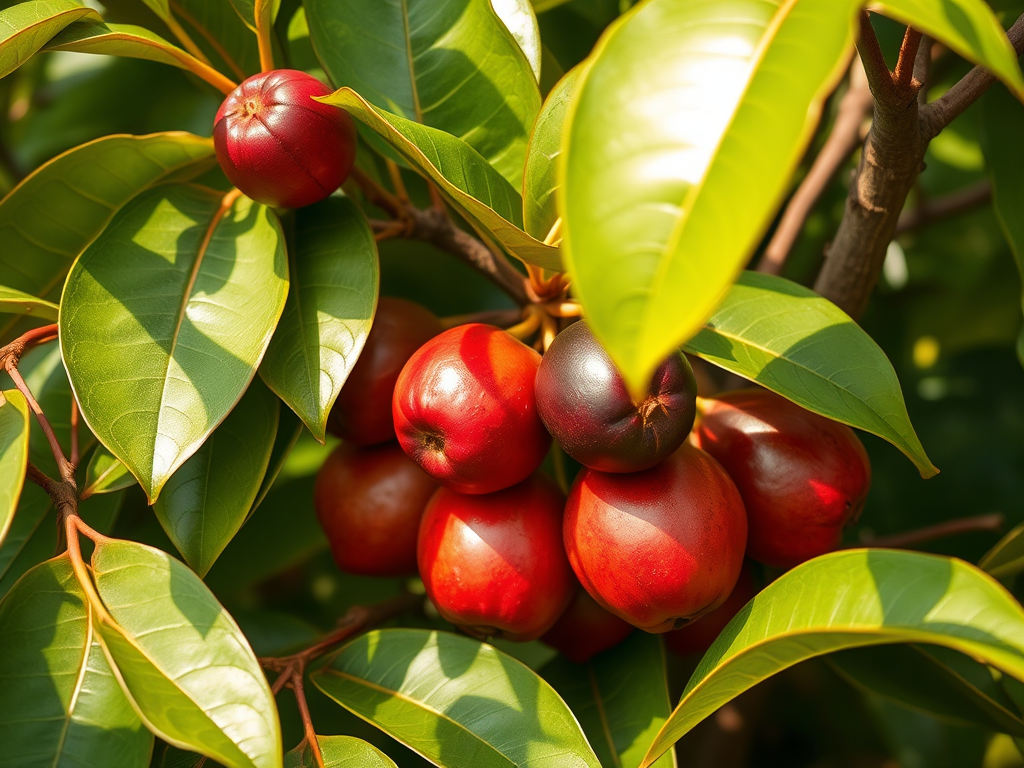
🍒 Ramontchi: The Forgotten Jewel of the Tropics
Some fruits arrive with fanfare — mangoes, lychees, dragon fruit — bright, bold, and instantly recognizable. And then there are fruits like Ramontchi, the quiet gems of the tropics. Known also as Governor’s Plum, Indian Plum, or Flacourtia indica, this small, richly colored fruit has nourished communities for centuries while remaining almost invisible to the global mainstream.
That makes Ramontchi the perfect fruit for a healthy‑living journey: rooted in tradition, full of character, and carrying a story worth rediscovering.
🌿 What Exactly Is Ramontchi?
Ramontchi grows on a hardy shrub or small tree, producing small, plum‑like fruits that range from bright red to deep purple. Depending on ripeness, the flavor shifts from tart and assertive to sweet and jammy.
It’s a fruit with personality — slightly wild, beautifully pigmented, and surprisingly versatile. In different regions, it’s eaten fresh, dried, fermented, or cooked into preserves. Its thorny branches even make it a natural fencing plant, protecting homesteads and gardens long before modern barriers existed.
This is a fruit that works hard, nourishes deeply, and asks for very little in return.
🌍 A Global Journey Rooted in Tradition
Ramontchi isn’t just a fruit — it’s a cultural traveler, shaped by the people who carried it, planted it, and passed it down.
Ramontchi’s story begins in the warm, fertile landscapes of tropical Africa and Madagascar, where it has been part of daily life for generations. In these regions, the fruit wasn’t just something to eat — it was woven into community rhythms, herbal practices, and even the way people shaped their land. Its thorny branches protected homesteads, its fruit nourished families, and its resilience made it a trusted companion in challenging climates.
From its African origins, Ramontchi traveled outward — not through modern export chains, but through human movement, trade routes, and cultural exchange. As people migrated, traded, and shared plants across borders, Ramontchi moved with them, adapting to new soils and new traditions.
Across the Indian Ocean
Trade between East Africa, the Arabian Peninsula, and the Indian subcontinent carried Ramontchi into India and Sri Lanka, where it found a natural home. Here, it became part of local foodways and traditional wellness practices. Its tartness made it ideal for chutneys and preserves, while its hardy nature made it a reliable crop for small farmers.
Into Southeast Asia
As botanical knowledge spread through colonial networks and regional exchanges, Ramontchi reached Thailand, Malaysia, Indonesia, and the Philippines. In these regions, it blended seamlessly into existing fruit cultures — eaten fresh, fermented, or turned into syrups and tonics. Its adaptability allowed it to thrive in both humid lowlands and drier upland areas.
Across the Caribbean and Pacific
Later, Ramontchi made its way into the Caribbean and Pacific islands, where it became part of local markets and backyard gardens. In some islands, it’s used for homemade wines; in others, it’s a seasonal treat enjoyed by children and elders alike. Its ability to grow in sandy, coastal soils made it especially valuable in places where other fruit trees struggled.
A Fruit That Carries Stories
What makes Ramontchi’s journey remarkable isn’t just the geography — it’s the way the fruit adapted to each culture that welcomed it. In every region, people found new uses for it:
- A snack for children
- A preserve for winter months
- A tonic in traditional wellness
- A natural fence protecting homes
- A dye for fabrics and crafts
Ramontchi is a fruit shaped by people — by their needs, their creativity, and their connection to the land. It’s a reminder that food is never just food; it’s history, migration, resilience, and memory.
In each region, Ramontchi adapted to local tastes and needs. Some communities used it for food, others for medicine, and some for both. Its resilience made it a staple in areas where other fruits struggled to grow.
💪 Healthy‑Living Benefits
While I’m not offering medical advice, Ramontchi is widely appreciated for its general wellness qualities. Fruits in this family are known for:
Ramontchi may be small, but it carries the kind of quiet nutritional power that traditional food cultures have valued for generations. While this isn’t medical advice, here are the broad, widely discussed wellness qualities associated with fruits like Ramontchi — explained in a way that feels accessible, grounded, and aligned with your healthy‑living voice.
1. Naturally Rich in Vitamin C
Ramontchi’s bright, tart flavor hints at its natural vitamin C content. Fruits in this family are often enjoyed for their ability to support everyday wellness, especially during seasonal changes or warm climates where hydration and vitality matter.
Vitamin C is commonly associated with:
- Supporting the body’s natural defenses
- Helping maintain healthy skin
- Contributing to overall energy and resilience
It’s one of the reasons Ramontchi is used in tonics and syrups across multiple cultures.
2. Antioxidants for Everyday Cellular Support
The deep red‑purple color of ripe Ramontchi signals the presence of plant compounds often associated with antioxidant activity. These compounds help the body manage everyday oxidative stress — the kind that comes from normal living, environmental exposure, and daily routines.
Antioxidant‑rich fruits are often appreciated for:
- Supporting long‑term cellular health
- Contributing to a balanced, vibrant diet
- Adding color and variety to meals
Ramontchi’s pigmentation isn’t just beautiful — it’s meaningful.
3. Gentle Fiber for Digestive Balance
Like many small tropical fruits, Ramontchi contains natural dietary fiber. Fiber‑rich foods are widely valued for helping maintain digestive rhythm and supporting a feeling of fullness.
General benefits associated with fiber‑containing fruits include:
- Supporting regular digestion
- Helping maintain balanced energy
- Contributing to overall gut wellness
Ramontchi offers this in a gentle, approachable way — especially when eaten fresh.
4. Naturally Hydrating
Ramontchi is juicy, refreshing, and water‑dense. In hot climates, fruits like this are often enjoyed not just for flavor, but for their ability to help replenish fluids.
Hydrating fruits can support:
- Everyday energy
- Skin vitality
- A sense of lightness and refreshment
It’s the kind of fruit that feels good on a warm day or after activity.
5. Traditionally Used in Herbal Preparations
Across Africa, India, and island cultures, Ramontchi has a long history in traditional wellness practices. While these uses vary widely and aren’t medical recommendations, they reflect the fruit’s cultural importance.
Traditional preparations include:
- Syrups
- Decoctions
- Fermented tonics
- Preserves used during seasonal transitions
These practices highlight how deeply Ramontchi is woven into community wellness traditions.
6. A Balanced, Whole‑Food Sweetness
Ramontchi offers a natural sweetness that feels satisfying without being overwhelming. When ripe, it’s sweet and jammy; when underripe, it’s bright and tart. This makes it a versatile fruit for people who want to enjoy sweetness in a whole‑food, minimally processed form.
Whole fruits are often appreciated for:
- Providing sweetness with fiber
- Offering nutrients alongside flavor
- Supporting mindful eating habits
Ramontchi fits beautifully into this philosophy.
7. A Fruit That Encourages Variety
One of the most powerful aspects of healthy living is diversity — eating a wide range of colors, textures, and plant families. Ramontchi brings something rare and meaningful to the table, expanding the palette of fruits your readers may not have encountered before.
Variety in fruit intake is often associated with:
- A broader range of nutrients
- A more enjoyable eating experience
- A deeper connection to global food traditions
Ramontchi invites curiosity, exploration, and a sense of discovery.
It’s the kind of fruit that fits naturally into a balanced, nourishing lifestyle — simple, honest, and full of vitality.
🍽️ How to Enjoy Ramontchi
Ramontchi is wonderfully flexible in the kitchen. Depending on ripeness and your mood, you can enjoy it:
Fresh
Eat it like a plum — juicy, tart, and refreshing.
Cooked
Simmer it into jams, chutneys, or syrups. Its natural acidity makes it perfect for preserves.
Blended
Add it to smoothies or juices for a bright, tangy note.
Fermented
In some regions, Ramontchi becomes wine, vinegar, or a lightly fermented drink.
Dried
A chewy, tangy snack that stores beautifully.
🍽️ Ramontchi Recipe Trio for Vibrant, Healthy Living
🥤 1. Ramontchi Hydration & Glow Cooler
A refreshing, vitamin‑rich drink that supports hydration and everyday vitality.
Why it works
- Naturally hydrating
- Rich in vitamin C
- Bright, tart, energizing
Ingredients
- 1 cup fresh or frozen ramontchi (pitted)
- 1 cup cold coconut water
- Juice of ½ lime
- 1 teaspoon honey or agave (optional)
- A few fresh mint leaves
- Ice (optional)
Instructions
- Blend ramontchi and coconut water until smooth.
- Add lime juice and honey, adjusting sweetness to taste.
- Pour over ice and garnish with mint.
- Sip slowly and let the hydration do its work.
Healthy‑Living Moment
This drink is perfect for mornings, warm days, or anytime you want a clean, refreshing lift without relying on processed beverages.
🥣 2. Ramontchi Antioxidant Breakfast Bowl
A fiber‑rich, antioxidant‑forward bowl that supports digestion and steady energy.
Why it works
- Deep pigments = natural antioxidants
- Fiber for digestive balance
- Whole‑food sweetness
Ingredients
- ¾ cup Greek or plant‑based yogurt
- ½ cup fresh ramontchi, halved or mashed
- 2 tablespoons granola or toasted oats
- 1 tablespoon chia seeds
- A drizzle of maple syrup (optional)
- A sprinkle of shredded coconut
Instructions
- Spoon yogurt into a bowl.
- Add ramontchi on top — whole for bursts of flavor, or mashed for a swirl of color.
- Layer on granola, chia seeds, and coconut.
- Drizzle lightly with maple syrup if you want extra sweetness.
Healthy‑Living Moment
This bowl brings together color, texture, and nourishment — a morning ritual that feels grounding, energizing, and deeply satisfying.
🍮 3. Ramontchi Whole‑Fruit Sweetness Cups
A simple, elegant dessert that celebrates natural sweetness without relying on processed sugar.
Why it works
- Whole‑fruit sweetness
- Gentle fiber
- A satisfying finish without heaviness
Ingredients
- 1 cup ripe ramontchi, pitted and chopped
- ½ cup coconut cream
- 1 teaspoon vanilla extract
- 1 teaspoon maple syrup (optional)
- A pinch of cinnamon or cardamom
- Toasted nuts or coconut for topping
Instructions
- Whip coconut cream, vanilla, and maple syrup until soft and airy.
- Fold in the chopped ramontchi.
- Spoon into small cups or bowls.
- Finish with toasted nuts or coconut and a whisper of spice.
Healthy‑Living Moment
This dessert feels indulgent but stays light, plant‑forward, and nourishing — a perfect ceremonial close to a meal or a day.
🛒 Is Ramontchi Available in the U.S.?
Ramontchi is rare in the United States, but not impossible to find.
- Some Caribbean, African, or South Asian markets may carry it fresh or frozen.
- A few specialty nurseries sell the tree, especially in Florida, Texas, and California.
- It occasionally appears in ethnic grocery stores during seasonal imports.
Its rarity actually makes it more intriguing — a fruit your readers can feel excited to discover.
⚠️ Precautions & Considerations
As with any fruit, a few groups may need to be mindful. These are general considerations, not medical advice: Ramontchi is enjoyed safely in many parts of the world, but like any fruit it’s helpful to understand how your body responds to new foods. These are general wellness considerations meant to support informed choices.
1. Natural Sugars & Portion Awareness
Ramontchi contains natural fruit sugars. Anyone who has been advised to monitor sugar intake may want to enjoy it in mindful portions or pair it with protein or healthy fats for balance.
2. Latex–Fruit Sensitivity
Some people with latex allergies experience cross‑reactions with certain tropical fruits. While Ramontchi isn’t a major trigger, individuals with known latex‑fruit sensitivities may want to try a small amount first or proceed with caution.
3. Sensitivity to Tart or Acidic Foods
Ramontchi can be quite tart when underripe. People who are sensitive to acidic foods may notice mild digestive discomfort or oral sensitivity, similar to reactions some have with citrus or sour plums.
4. Seed Safety for Children
The fruit’s seed is not edible and can pose a choking risk. For young children, always remove the seed and offer small, soft pieces of the fruit flesh.
5. Temporary Fiber Restrictions
Ramontchi contains natural fiber. Anyone who has been advised to limit fiber temporarily — for example, during certain digestive conditions — may need to moderate intake until they receive guidance from a healthcare professional.
6. Sensitive Digestion or IBS‑Type Patterns
Some individuals experience digestive sensitivity with new fruits, especially those that are tart or high in natural sugars. Trying a small amount first can help gauge personal tolerance.
7. Herbal Interactions
In some regions, Ramontchi is used in traditional herbal preparations. Anyone already taking herbal blends or supplements may want to avoid combining multiple unfamiliar botanicals without guidance.
When in doubt, checking with a healthcare professional is always the safest path.
🌺 Closing: A Fruit Worth Rediscovering
As we close this exploration of Ramontchi, take a moment to honor the quiet power of this fruit — its resilience, its history, and the way it has nourished communities long before it ever reached our awareness. Ramontchi is a reminder that some of the most meaningful foods in our lives aren’t the loudest or the most famous; they’re the ones that carry stories, traditions, and a sense of place.
When you slice into its deep red flesh or taste its bright, tart sweetness, you’re participating in a lineage that stretches across continents and generations. You’re connecting with growers, gatherers, cooks, and families who have relied on this fruit not just for nourishment, but for comfort, celebration, and everyday wellness.
Let Ramontchi be an invitation — to slow down, to savor, to explore, and to welcome new flavors into your life with curiosity and gratitude. May it bring color to your table, balance to your body, and a sense of rootedness to your healthy‑living journey.
Ramontchi is more than a fruit — it’s a story of resilience, migration, and quiet nourishment. It has traveled across continents, adapted to countless climates, and supported communities in ways that go far beyond flavor.
Bringing Ramontchi into your kitchen is an invitation to explore something rare, rooted, and deeply human. It’s a reminder that healthy living isn’t just about what we eat — it’s about the traditions, histories, and connections we honor along the way.
May your Ramontchi journey be vibrant, grounding, and full of discovery.
 EJADA
EJADA 
Leave a comment