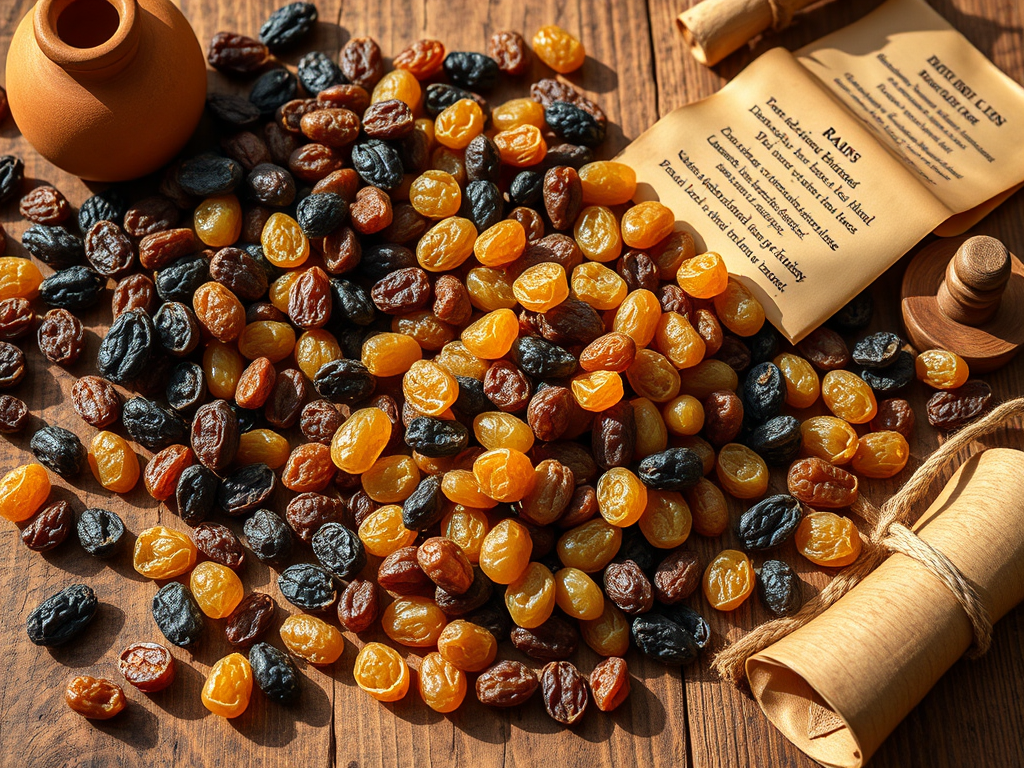
Raisins: The Ancient Fruit That Traveled Through Time
Raisins may seem like a simple pantry staple today, but their story stretches back thousands of years — long before modern agriculture, global trade routes, or even written recipes. These tiny dried grapes have crossed continents, fueled armies, decorated temples, and even served as currency. Their journey is one of the oldest in the world of food.
The Accidental Discovery of a Timeless Fruit
Historical evidence suggests that raisins were first discovered by accident. Ancient peoples living in the hot Mediterranean basin noticed that grapes left on the vine naturally dried in the sun, transforming into sweet, dark, wrinkled clusters. Wall paintings from around 2000 BC in Mediterranean regions show dried fruits being eaten and used decoratively, confirming that raisins were known and valued extremely early in human history.
Who First Cultivated Raisins?
While the discovery was accidental, the Phoenicians and Armenians were the first to intentionally cultivate raisins and develop early viticulture practices.
Phoenicians (1200–900 BC)
- Established vineyards in Malaga and Valencia (Spain)
- Produced muscat raisins, known for their large size and rich flavor
Armenians (circa 1000 BC)
- Developed vineyards in Persia (modern Turkey, Iran, Iraq)
- Perfected drying techniques ideal for the region’s hot climate
These early raisin producers traded heavily with the Greeks and Romans, who quickly adopted raisins into their cuisine, medicine, and religious practices.
How Ancient Civilizations Used Raisins
Raisins weren’t just food — they were cultural artifacts, medicinal tools, and even economic assets.
1. As Currency and Prizes
Raisins became so valuable that they were used:
- As prizes in sporting events
- As payment for taxes
- As bartering goods in trade networks
2. In Medicine
Ancient physicians prescribed raisins for:
- Digestive issues
- Poisoning
- Symptoms of aging
- General vitality
3. In Religious and Ceremonial Life
- Early Greeks and Romans decorated temples and places of worship with raisins
- Raisins appeared in ceremonial feasts and offerings
4. In Culinary Traditions
Raisins were incorporated into:
- Stuffed meats (Emperor Augustus famously enjoyed birds stuffed with raisins)
- Early baked goods
- Wines and fermented drinks
- Festival breads such as panettone, stollen, and kulich (by the 14th–15th centuries)
5. As Military Rations
Hannibal’s troops carried raisins while crossing the Alps — a testament to their portability and energy density.
How Raisins Spread Across the World
Raisins remained mostly Mediterranean until the 11th century, when knights returning from the Crusades brought them back to Northern Europe, sparking massive demand. By the 14th century, raisins were deeply embedded in English cuisine, though the climate was too cold for local production.
Raisins reached the Americas through:
- Spanish explorers in 1492, who carried them as ship rations
- Spanish missionaries, who brought raisin‑friendly grape varieties to Mexico and California
A Fruit With an Enduring Legacy
From accidental sun‑dried grapes to a global pantry essential, raisins have traveled through time as currency, medicine, ritual food, and culinary treasure. Their story is a reminder of how simple natural processes — like sunlight drying a grape — can shape entire food cultures.
Medical Benefits of Raisins
Raisins have been valued for their healing properties since antiquity, and modern nutrition science continues to validate what ancient physicians observed. Their concentrated nutrients, natural sugars, and antioxidant compounds make them a powerful addition to everyday eating.
1. Rich in Antioxidants
Raisins contain potent antioxidants such as polyphenols, flavonols, quercetin, and resveratrol. These compounds help reduce oxidative stress, protect cells from damage, and support long‑term health by lowering inflammation.
2. Supports Digestive Health
A ¼‑cup serving of raisins provides about 2 grams of dietary fiber, which helps:
- Promote regular bowel movements
- Prevent constipation
- Support healthy gut bacteria
- Slow digestion to stabilize blood sugar
During the drying process, some grape sugars convert into fructans, a natural prebiotic that feeds beneficial gut microbes.
3. Helps Maintain Healthy Blood Sugar
Despite their sweetness, raisins have a low to moderate glycemic index because their fiber slows glucose absorption. Studies show that raisins can help:
- Reduce post‑meal blood sugar spikes
- Improve insulin response
- Support long‑term glucose control
This makes raisins a better alternative to processed snacks.
4. Heart‑Healthy Properties
Raisins are naturally rich in potassium, fiber, and polyphenols, all of which support cardiovascular health. Regular consumption may help:
- Lower blood pressure
- Reduce LDL (“bad”) cholesterol
- Improve blood vessel function
Potassium is especially important for balancing sodium levels and maintaining healthy blood pressure.
5. Bone Strength and Mineral Support
Raisins contain small but meaningful amounts of:
- Calcium
- Magnesium
- Vitamin K
- Boron
Boron is particularly notable because it supports bone density and helps the body metabolize calcium and magnesium — a combination essential for skeletal health.
6. Natural Energy Booster
With 32 grams of carbohydrates per ¼ cup, raisins provide quick, clean energy without added sugars. This makes them ideal for:
- Athletes
- Hikers
- Children
- Anyone needing a portable, nutrient‑dense energy source
Nutritional Facts of Raisins
(Based on a ¼‑cup packed serving)
✅ Macronutrients
- Calories: 125
- Carbohydrates: 32 g
- Fiber: 2 g
- Protein: 1 g
- Fat: 0 g
- Cholesterol: 0 mg
✅ Vitamins & Minerals
- Potassium: 340 mg
- Iron: 1 mg
- Calcium: 25 mg
- Magnesium: 12 mg
- Vitamin B‑6: trace
- Vitamin C: trace
✅ Antioxidant Compounds
- Phenols
- Flavonols
- Quercetin
- Resveratrol
✅ Natural Sugars
Raisins contain over 50% natural fructose and glucose, concentrated through drying. Unlike refined sugar, these natural sugars come packaged with fiber, minerals, and antioxidants.
✅ Groups Who May Need to Limit or Avoid Raisins
(General information only — anyone with concerns should speak with a healthcare professional.)
🍬 1. People who need to monitor blood sugar
Raisins are nutrient‑dense but also high in natural sugars. They can raise blood glucose more quickly than fresh fruit because the water is removed and sugars are concentrated.
People who may need to be cautious include:
- Individuals managing diabetes
- Those advised to follow a low‑glycemic diet
Raisins aren’t “off limits,” but portion size matters.
🦷 2. People with dental concerns
Raisins are:
- Sticky
- High in natural sugars
- Able to cling to teeth longer than many foods
This can increase the risk of cavities, especially in children or anyone with:
- Frequent dental issues
- Dry mouth
- Orthodontic appliances
Good oral hygiene helps offset this.
🧂 3. Individuals on potassium‑restricted diets
Raisins contain significant potassium. People who may need to limit potassium include those with:
- Certain kidney conditions
- Specific medical dietary restrictions
Again — this depends entirely on individual medical guidance.
🥗 4. People sensitive to fructans or FODMAPs
Raisins contain fructans, a type of fermentable carbohydrate. These can trigger digestive symptoms in people with:
- IBS
- FODMAP sensitivities
- Certain types of gut inflammation
Symptoms may include bloating or discomfort.
🍇 5. Anyone advised to reduce calorie‑dense foods
Raisins are small but calorie‑dense. People following certain weight‑management plans may be advised to:
- Limit dried fruits
- Choose fresh fruit instead
This is about portion control, not elimination.
🧒 6. Very young children (choking risk)
Whole raisins can be a choking hazard for toddlers. Many pediatric guidelines recommend:
- Cutting them
- Avoiding them until a child can chew reliably
Early Culinary Uses of Raisins
Long before raisins became a pantry staple, they played a central role in the earliest recorded cuisines of the Mediterranean, Middle East, and Near East. Their natural sweetness, long shelf life, and portability made them indispensable in both everyday meals and ceremonial dishes.
1. Ancient Mediterranean Sweeteners
Before refined sugar existed, raisins were one of the earliest natural sweeteners available. They were:
- Crushed into pastes
- Mixed into porridges
- Added to breads and cakes
- Cooked down into syrups
Greek and Roman cooks often used raisin syrup (called defrutum or sapa) to sweeten wine, sauces, and desserts.
2. Stuffed Meats and Poultry
Raisins were a prized ingredient in early savory dishes. Ancient Roman recipes (including those attributed to Apicius) used raisins in:
- Stuffed birds
- Meatballs
- Sauces for pork and lamb
The sweet‑savory balance was considered a mark of sophistication.
3. Early Breads and Festival Cakes
Raisins appeared in some of the earliest ceremonial breads. Across the Mediterranean, they were kneaded into:
- Harvest breads
- Wedding loaves
- Religious festival cakes
Their sweetness symbolized abundance and blessing.
4. Trail Food for Travelers and Soldiers
Because raisins were lightweight, shelf‑stable, and energy‑dense, they became essential travel food. They were carried by:
- Traders crossing desert routes
- Roman soldiers
- Greek athletes
- Early sailors
Raisins provided quick energy long before the concept of “snacks” existed.
5. Wine and Fermented Drinks
Raisins were used to:
- Boost fermentation
- Sweeten wine
- Create raisin wine (a precursor to dessert wines)
In some regions, dried grapes were soaked to revive their sugars and added to musts to strengthen the final drink.
6. Decorative and Ceremonial Uses
In ancient Greece and Rome, raisins were used to decorate:
- Temple offerings
- Banquet platters
- Celebration tables
They symbolized prosperity and divine favor.
7. Early Grain Dishes
Raisins were commonly added to:
- Barley porridges
- Wheat pilafs
- Bulgur dishes
- Early couscous preparations
These dishes blended grains, nuts, herbs, and dried fruits — a pattern still seen in Middle Eastern cuisine today.
8. Medicinal Confections
Many early “culinary” uses overlapped with medicine. Raisins were mixed into:
- Honey‑based tonics
- Spiced pastes
- Herbal preparations
These were eaten both for flavor and for perceived healing benefits.
🍇 Classic Recipes Made With Raisins
1. Oatmeal Raisin Cookies
A timeless favorite. Key ingredients: oats, butter, brown sugar, cinnamon, vanilla, raisins. Why raisins work: they stay plump and sweet, adding chewiness and natural caramel notes.
2. Cinnamon Raisin Bread
Soft, swirled, and perfect toasted. Key ingredients: yeast dough, cinnamon sugar, butter, raisins. Use: breakfast, French toast, or holiday brunch.
3. Rice Pudding with Golden Raisins
Creamy, comforting, and lightly sweet. Key ingredients: rice, milk, sugar, vanilla, nutmeg, golden raisins. Cultural roots: Mediterranean, Middle Eastern, and Latin American kitchens.
🍽️ Savory Dishes Featuring Raisins
4. Moroccan Chicken Tagine with Raisins
A sweet‑savory North African classic. Key ingredients: chicken, onions, garlic, turmeric, cumin, cinnamon, raisins, almonds. Flavor profile: warm spices + gentle sweetness.
5. Curried Rice with Raisins
A vibrant side dish. Key ingredients: basmati rice, curry powder, peas, carrots, raisins. Why it works: raisins balance the spice with natural sweetness.
6. Stuffed Bell Peppers with Rice & Raisins
Mediterranean‑inspired comfort food. Key ingredients: rice, tomatoes, herbs, pine nuts, raisins. Use: vegetarian main or side.
🥗 Salads with Raisins
7. Carrot Raisin Salad
A crunchy, refreshing classic. Key ingredients: shredded carrots, raisins, lemon, honey, yogurt or mayo. Optional: toasted walnuts.
8. Broccoli Salad with Raisins
A potluck staple. Key ingredients: broccoli florets, raisins, sunflower seeds, red onion, creamy dressing. Why it works: sweet + crunchy + tangy.
9. Couscous Salad with Raisins & Herbs
Light, bright, and perfect for meal prep. Key ingredients: couscous, parsley, mint, lemon, olive oil, raisins.
🍞 Baked Goods & Breakfasts
10. Raisin Scones
Tender, buttery, and perfect with tea. Key ingredients: flour, butter, cream, sugar, raisins.
11. Raisin Bran Muffins
Wholesome and hearty. Key ingredients: bran cereal, buttermilk, eggs, raisins, brown sugar.
12. Apple Raisin Oatmeal
A warm breakfast bowl. Key ingredients: oats, apples, cinnamon, raisins, maple syrup.
🍲 Global & Cultural Recipes with Raisins
13. Indian Kheer with Raisins
A festive rice pudding. Key ingredients: milk, rice, cardamom, saffron, raisins, cashews.
14. Armenian Pilaf with Raisins
A traditional sweet‑savory side. Key ingredients: rice or bulgur, butter, onions, raisins, toasted nuts.
15. Panettone (Italian Christmas Bread)
A holiday classic. Key ingredients: enriched dough, raisins, candied citrus. Symbolism: abundance, celebration, and prosperity.
Conclusion: A Tiny Fruit With a Timeless Legacy
From accidental sun‑drying on ancient vines to becoming a global pantry essential, raisins have traveled through millennia as sweeteners, medicines, ceremonial offerings, military rations, and culinary treasures. Their story is one of resilience — a reminder that some of the world’s most enduring foods began with simple natural processes and human curiosity.
Today, raisins continue to bridge cultures and cuisines. Whether folded into breads, simmered into savory dishes, or enjoyed by the handful, they carry with them a history richer than their size suggests. Their nutritional benefits, versatility, and deep cultural roots make them more than just dried grapes — they are one of humanity’s earliest and most beloved foods.
Disclaimer
This blog post is for general informational and historical purposes only. It is not medical advice, nutritional counseling, or a substitute for professional guidance. Anyone with health concerns, dietary restrictions, or medical conditions should consult a qualified healthcare professional before making changes to their diet.
Sources Used
Below is a transparent, reader‑friendly list of all sources referenced while building this post. Each link leads to the original resource for further reading:
✅ Sources Used
- Britannica – Raisin: History, Drying & Uses
- about/the-raisin-industry/history
Iran Dried Fruit – History of Raisin
Jerry James Stone – History of Raisins: What Am I Even Eating?!
- Verywell Health – Health Benefits of Raisins
- WebMD – Raisins: Nutrition & Health Benefits
- Health.com – What Happens to Your Body When You Eat Raisins
Shop: ZAREL for BJG Designs
 EJADA
EJADA 
Leave a comment