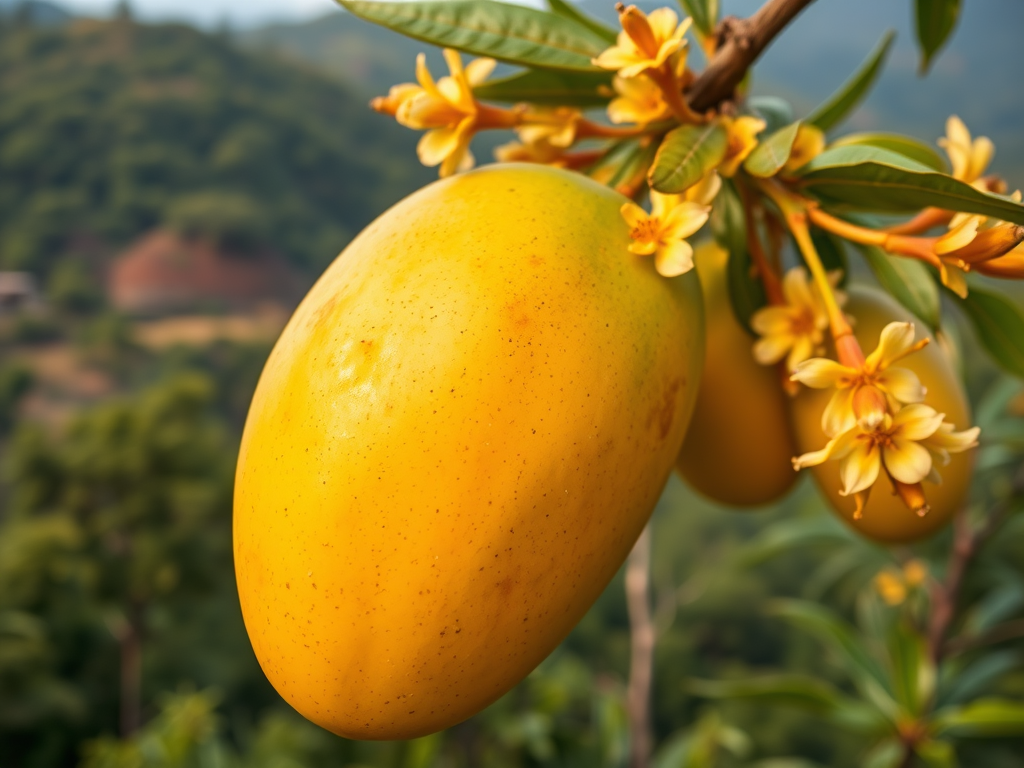
The Quindío Mango is a rare Colombian variety celebrated for its sweet, tropical flavor and cultural significance. It originates from the Quindío region in Colombia, a fertile Andean valley known for coffee and diverse fruits.
🍐 Characteristics of Quindío Mango
- Appearance: Medium to large fruit, with smooth skin that ripens from green to golden-yellow or orange.
- Flavor: Sweet, juicy, and aromatic, often compared to a blend of peach and tropical mango varieties.
- Texture: Soft, fiberless flesh that makes it easy to eat fresh or use in recipes.
🌍 Origins & Background
The Quindío Mango traces its roots to Colombia’s fertile Andean valleys, where geography, climate, and culture converge to create a unique fruit identity. It is not a globally standardized cultivar like Alphonso or Haden, but rather a regional treasure shaped by local traditions and biodiversity.
🌍 Geographic Origins
- Quindío Region: Located in Colombia’s “Coffee Axis” (Eje Cafetero), Quindío is a small department nestled in the central Andes. Its volcanic soils, abundant rainfall, and warm tropical climate provide ideal conditions for mango cultivation.
- Andean biodiversity: The region is known for its extraordinary plant diversity. Mango trees thrive alongside coffee, plantains, and citrus, creating a rich agricultural mosaic.
📜 Historical Background
- Mango’s global journey: Mango (Mangifera indica) originated over 5,000 years ago in South Asia (India, Myanmar, and southern China). From there, it spread westward via trade routes. Portuguese explorers introduced mango to Brazil in the 16th century, and Spanish colonists carried it into Colombia and other parts of South America.
- Local adaptation: In Quindío, mango trees naturalized and adapted to the Andean climate, giving rise to distinctive varieties like the Quindío Mango. These fruits developed unique flavor profiles compared to coastal or lowland mangos.
- Cultural integration: Over centuries, the mango became embedded in Colombian foodways, celebrated in local festivals, and used in both sweet and savory dishes.
🌱 Agricultural Context
- Tree characteristics: Mango trees in Quindío grow tall and evergreen, often reaching 50–60 feet, with fragrant blossoms that attract pollinators.
- Seasonality: Harvest typically occurs during the warmer months, aligning with regional agricultural cycles.
- Sustainability: Mango trees contribute to carbon sequestration, absorbing more CO₂ than they emit during growth and harvest.
🎉 Cultural Significance
- Festivals: Mango harvests are celebrated in Quindío with fairs, competitions, and culinary showcases.
- Symbolism: The fruit represents abundance, hospitality, and tropical identity in Colombian culture.
- Regional pride: Just as coffee defines Quindío globally, the mango is cherished locally as a symbol of the region’s agricultural richness.
✨ Summary:
The Quindío Mango is a product of Colombia’s Andean environment, shaped by volcanic soils, tropical climate, and centuries of cultural adaptation. Introduced by colonial trade but transformed by local biodiversity, it stands today as both a culinary delight and a cultural emblem.
Sources:
Mango History & Production – National Mango Board, Britannica
Fairchild Tropical Botanic Garden Mysteries of Mangifera
Live Eat Learn – Mango Varieties
American Gardener – Mango Identification Guide
Holistic Health Pathways – Quindío Fruit
The Quindío Mango is a versatile fruit in Colombian cuisine, celebrated for both sweet and savory applications. Its fiberless flesh and tropical aroma make it ideal for fresh enjoyment, desserts, drinks, and even main dishes.
🍽 Culinary Uses of Quindío Mango
🥭 Fresh & Simple
- Eaten raw: Sliced and served as a refreshing snack.
- Smoothies & juices: Blended into tropical drinks, often paired with passion fruit or citrus.
- Salads: Adds sweetness and color to green salads or fruit medleys.
🍰 Desserts
- Cakes & pastries: Incorporated into batters or used as a topping.
- Ice creams & sorbets: Mango pulp creates a creamy, aromatic base.
- Jams & preserves: Cooked down with sugar to highlight its natural sweetness.
🌮 Savory Dishes
- Salsas: Combined with chili, lime, and cilantro for a sweet-spicy condiment.
- Sauces for meats: Mango purée balances grilled chicken, pork, or fish.
- Curries & stews: Adds tropical depth to Colombian and fusion dishes.
🍹 Drinks
- Cocktails: Used in margaritas, mojitos, or tropical punches.
- Non-alcoholic: Mango agua fresca and smoothies are popular in warm climates.
Here’s a recipe card that showcases mango in a festive dessert context:
Quindim, a Brazilian Dessert
1h 5m · 418 cals · 5 servingsView recipe
Quindim Recipe
This recipe has a rating of 4.9 stars from 10 reviewers.
4.9 (10)
1 servingView recipe
Quindim (Brazilian dessert) Fast2eat
This recipe has a rating of 5.0 stars from 1 reviewers.
5.0 (1)
30 min · 111 calsView recipe
Quindim: Brazilian Coconut Flan
This recipe has a rating of 4.8 stars from 0 reviewers.
4.8
1h 0m · 701 cals · 4 servingsView recipe
✨ Summary: The Quindío Mango shines across culinary traditions—whether eaten fresh, transformed into desserts, blended into drinks, or paired with savory dishes. Its versatility makes it a true emblem of Colombian abundance.
Quindío Mango, like other mango varieties, is packed with nutrients and offers wide-ranging health benefits — from boosting immunity to supporting digestion and heart health.
🥭 Nutritional Profile (per 1 cup / 165 g fresh mango)
- Calories: ~99 (low calorie density)
- Protein: 1.4 g
- Carbohydrates: 24.8 g
- Fiber: 2.6–3 g (supports digestion)
- Sugar: ~22 g (natural fruit sugars)
- Fat: 0.6 g (virtually fat-free)
- Vitamin C: 67% DV (immune support, collagen production)
- Vitamin A (beta-carotene): 10% DV (eye health, skin vitality)
- Vitamin B6, Folate, Copper: Important for metabolism and fetal development
- Potassium & Magnesium: Support blood pressure regulation and heart rhythm
🌿 Key Health Benefits
1. Immune System Support
- High vitamin C strengthens immunity, aids wound healing, and enhances iron absorption.
- Beta-carotene and carotenoids act as antioxidants, protecting cells from damage.
2. Digestive Health
- Rich in fiber and pectin, which feed beneficial gut bacteria and regulate bowel movements.
- Traditional use: mango pulp and leaves have been used in folk remedies for digestion and hydration.
3. Heart Health
- Potassium and magnesium help lower blood pressure and maintain a steady heartbeat.
- Mangiferin, a bioactive compound in mango, may reduce inflammation in the heart and improve cardiovascular function.
4. Skin & Eye Health
- Vitamin A and carotenoids support healthy vision and protect against age-related eye disease.
- Antioxidants contribute to glowing skin and reduce oxidative stress.
5. Metabolic & Anti-Cancer Potential
- Polyphenols in mango may help regulate blood sugar and reduce risk of certain cancers.
- Early studies suggest mangiferin has anti-inflammatory and anti-cancer properties.
⚠️ Precautions
- Moderation: Mango is high in natural sugars; excessive intake may spike blood sugar.
- Allergies: Rare, but possible cross-reactivity with cashew/pistachio family.
- Dried mango: Much higher in sugar and calories compared to fresh fruit.
✨ Summary: The Quindío Mango is not only delicious but also a powerhouse of vitamin C, fiber, antioxidants, and minerals. It supports immunity, digestion, heart health, and skin vitality, while offering protective compounds like mangiferin.
Sources:
Healthline – Mango Nutrition & Benefits,
WebMD – Mango Health Benefits,
EatingWell – Mango Benefits
🌟 Closing Reflections
The Quindío Mango is more than a tropical delicacy—it is a cultural emblem of Colombia’s fertile valleys. From its Andean origins to its vibrant role in cuisine and festivals, this mango embodies abundance, hospitality, and transformation. Its sweet, fiberless flesh makes it a culinary star, while its nutritional richness supports health and vitality.
Across history, mango has carried symbolic meaning—offered in rituals, celebrated in feasts, and cherished in everyday life. The Quindío variety continues this legacy, reminding us that food is not only nourishment but also a story of place, people, and tradition.
⚠️ Disclaimer
This blog post is intended for educational and cultural storytelling purposes only.
- The health and nutritional information provided is general and not a substitute for professional medical advice.
- Readers with allergies, sensitivities, or medical conditions should consult a qualified healthcare provider before making dietary changes.
- Rituals and cultural practices described are historical and symbolic, not prescriptive.
- Availability of Quindío Mango may vary by region and season.
mangoes are widely available in the United States, but the specific Quindío Mango from Colombia is not commonly found in U.S. markets. Most mangoes sold in the U.S. are imported from Mexico, Peru, Ecuador, Brazil, and Guatemala, with domestic production limited to Florida and Southern California.
🛒 Mango Availability in the U.S.
- Imported mangoes: The majority of mangoes in U.S. stores come from Mexico, Guatemala, Ecuador, Peru, and Brazil, ensuring year-round supply.
- Domestic production: Small-scale cultivation exists in Florida and Southern California, but availability is seasonal and limited.
- Varieties you’ll find: Common types include Tommy Atkins, Kent, Keitt, Haden, Ataulfo (Honey), and Francis. Specialty varieties like Alphonso or Kesar from India are imported in small quantities and sold mainly through online retailers or specialty storesVICE.
🌍 What About Quindío Mango?
- The Quindío Mango is a regional Colombian variety, prized locally for its sweet, fiberless flesh.
- It is not part of the mainstream export supply chain to the U.S., so you won’t typically find it in grocery stores.
- To taste it, you’d likely need to visit Colombia or source it through specialty importers (though availability is rare).
🥭 Best Substitutes for Quindío Mango in Recipes
| Substitute Mango | Flavor Profile | Texture | Best Uses |
|---|---|---|---|
| Ataulfo (Honey Mango) | Sweet, creamy, slightly tangy | Fiberless, buttery flesh | Smoothies, desserts, salsas |
| Kent Mango | Sweet, tropical, less acidic | Juicy, almost fiberless | Juices, jams, sauces |
| Keitt Mango | Mildly sweet, tangy | Firm, low fiber | Savory dishes, salads, chutneys |
| Haden Mango | Sweet with floral notes | Medium fiber | Fresh eating, cocktails |
| Tommy Atkins | Mild sweetness, more tart | Fibrous | Works in cooked dishes where texture matters less |
🌿 Substitution Tips
- For desserts (like jams, sorbets, poached mango): Use Ataulfo or Kent for their creamy, fiberless flesh.
- For savory stews or salsas: Keitt works well because it holds shape when cooked.
- For drinks: Ataulfo blends smoothly into juices and cocktails.
- For preserves: Kent or Haden give a balanced sweet-tart flavor.
✨ Summary: If you can’t find Quindío Mango, the Ataulfo (Honey Mango) is the closest substitute for its sweetness and fiberless texture. For stews or cooked recipes, Keitt or Kent are excellent alternatives.
✨ Summary
Mangoes are abundant in the U.S. thanks to imports and domestic production, but the Quindío Mango is not generally available here. Instead, U.S. consumers enjoy varieties like Tommy Atkins, Kent, Keitt, and Ataulfo.
 EJADA
EJADA 
Leave a comment