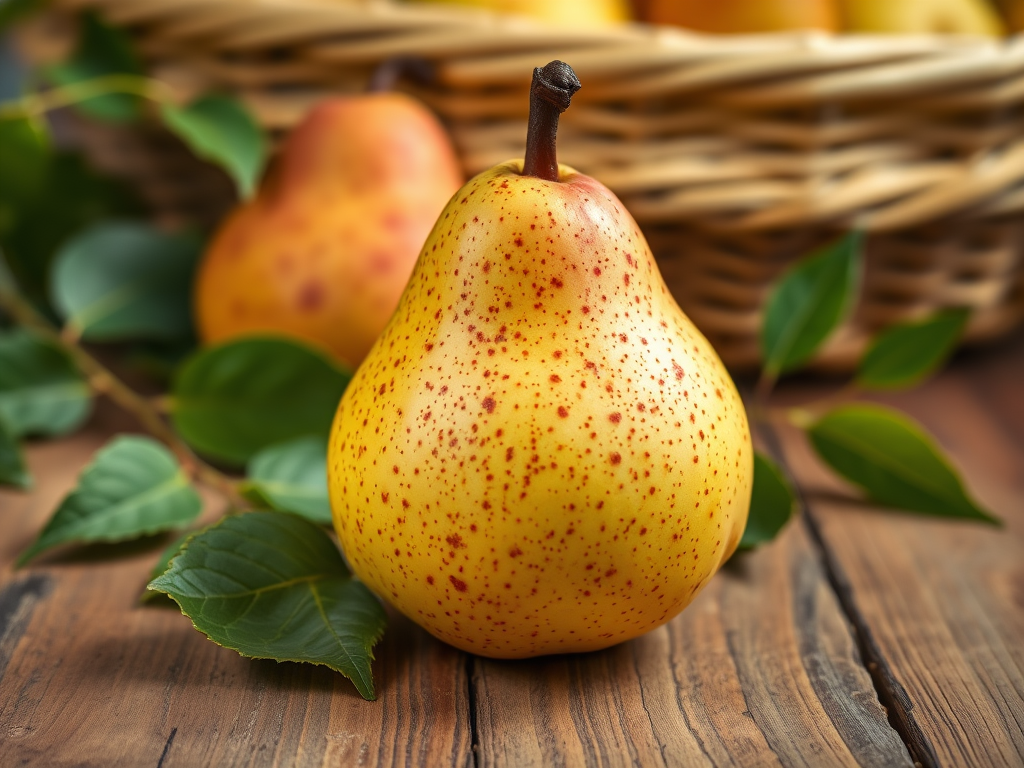
The Forelle Pear (sometimes marketed as the Queen’s Forelle Pear) is a small, bell‑shaped European pear variety that originated in Saxony, Germany in the 1600s. Its name Forelle means “trout” in German, referring to the pear’s distinctive red freckles (lenticels) that resemble the speckled skin of a rainbow trout. It was introduced to the United States by German immigrants in the 1800s and is now grown mainly in the Pacific Northwest (Oregon and Washington).
🍐 Characteristics
Size: Small, slightly larger than Seckel pears.
Shape: Symmetrical, bell‑shaped body with a narrow neck and long stem.
Skin: Green when young, turning bright yellow with red freckles as it ripens.
Flesh: Crisp, moist, and sweet with a tangy finish.
Seasonality: Available September through January, making it a festive winter pear.
🌱 Cultivation & History
The Forelle Pear (often called the Queen’s Forelle Pear) originated in Saxony, Germany in the 1600s and was named “Forelle” (German for trout) because of its distinctive red freckles resembling trout skin. It was introduced to the United States by German immigrants in the 1800s and is now cultivated mainly in the Pacific Northwest (Oregon and Washington). It requires cold winters for chilling and is harvested in fall through winter (September–January).
🌍 Geographic Roots
📜 Origin of the Forelle Pear: Northern Saxony, Germany, 1600s
The Forelle Pear (often called the Queen’s Forelle Pear) has one of the most distinctive and well‑documented origins among European pears.
Region: Northern Saxony, Germany — a fertile area known for orchards and viticulture during the Renaissance.
Climate: Cold winters and mild summers provided the chilling hours and growing conditions necessary for European pear varieties to thrive.
Soil: Loamy soils along river valleys supported fruit trees, including apples, cherries, and pears.
🕰️ Historical Context
1600s Europe: This was a period of agricultural experimentation, with noble estates and monasteries cultivating specialty fruits.
Naming: The pear was named Forelle (German for trout) because of its red lenticels (freckles) that resemble the speckled skin of a trout.
Cultivation: Likely developed as a chance seedling selected for its striking appearance and crisp, sweet flesh.
Spread: Quickly became popular in Saxony and neighboring regions, prized for its beauty and festive appeal.
📜 Early Use & Symbolism of the Forelle Pear
The Queen’s Forelle Pear carries a rich legacy that blends culinary delight with cultural meaning, especially in its place of origin — Saxony, Germany — and later in festive traditions abroad.
🍽️ Early Use in Saxony (1600s–1700s)
Table Fruit of Nobility: Because of its small size, crisp texture, and decorative freckles, Forelle pears were prized as a luxury fruit served at banquets and noble courts.
Winter Feasts: Harvested in autumn and stored into winter, they became a seasonal delicacy during Christmas and New Year celebrations.
Visual Appeal: Their speckled red skin made them popular for fruit displays and garnishes, symbolizing refinement and abundance.
🎨 Symbolism in German Culture
Name Meaning: Forelle means trout in German, referencing the pear’s red freckles that resemble trout skin. This gave the fruit a distinct identity tied to nature and beauty.
Symbol of Festivity: The bright red speckles and golden skin were associated with joy, prosperity, and fertility, making them a decorative centerpiece in holiday rituals.
Children’s Fruit: Their small size made them ideal for children, symbolizing innocence and sweetness in family traditions.
🌍 Symbolism in Migration & Modern Use
German Immigrants (1800s): When Forelle pears were brought to the U.S., they carried with them a sense of heritage and cultural pride, becoming part of immigrant food traditions.
Pacific Northwest Identity: Today, grown mainly in Oregon and Washington, they symbolize regional specialty and artisanal farming, standing apart from mass‑market pears like Bartlett or Anjou.
Holiday Rituals: In the U.S., their festive appearance makes them popular in Christmas fruit baskets, cheese boards, and decorative centerpieces, continuing their symbolic role as a fruit of celebration.
In Summary
The Queen’s Forelle Pear was more than food — it was a status symbol in Saxony, a marker of festivity and abundance, and later a heritage fruit in immigrant traditions. Its speckled skin and petite size gave it a dual symbolism of refinement and innocence, making it both a noble banquet fruit and a family favorite.
🌍 Global Journey
Modern Cultivation: Today, it remains a specialty crop, grown in limited quantities compared to Bartlett or Anjou pears, but cherished for its festive look and crisp sweetness.
1800s Migration: German immigrants carried the Forelle Pear to the United States, where it adapted well to the Pacific Northwest (Oregon & Washington).
🍐 Culinary Traditions & Ritual Uses of the Forelle Pear in Modern Holiday Settings
The Queen’s Forelle Pear has evolved from its noble Saxon origins into a festive fruit of modern holiday tables, cherished for both its flavor and symbolic beauty.
🕯️ Ritual & Symbolic Uses
Decorative Centerpieces: Their golden skin with red freckles makes them a natural ornament for Christmas fruit bowls, wreaths, and table displays.
Symbol of Abundance: In German tradition, pears represented fertility and prosperity; Forelle’s festive look continues this symbolism in modern holiday feasts.
Gift Giving: Included in holiday fruit baskets, they symbolize hospitality and generosity, echoing their noble banquet origins.
Cultural Continuity: In immigrant communities, Forelle pears became a way to preserve heritage, linking German traditions with American holiday rituals.
🌟 Why They Endure in Holiday Culture
Seasonality: Available September–January, aligning perfectly with autumn harvest and winter celebrations.
Visual Appeal: Their speckled red freckles resemble ornaments, making them both edible and decorative.
Versatility: Works across savory, sweet, and ceremonial contexts — from cheese boards to symbolic offerings.
🎄 Holiday Culinary Traditions
Cheese Boards & Appetizers: Forelle pears are often sliced thin and paired with brie, blue cheese, or aged cheddar, adding sweetness and color to holiday platters.
Salads: Their crisp texture and tangy finish make them ideal for winter salads with walnuts, cranberries, and arugula.
Desserts: Used in poached pear recipes, tarts, and cakes, their small size makes them perfect for individual servings.
Beverages: Infused into mulled wine, cider, or festive cocktails, their speckled skin adds visual charm.
Children’s Treats: Their petite size makes them popular in lunch boxes and holiday snack trays, symbolizing innocence and joy.
🥗 Starter: Winter Salad with Forelle Pears
Ingredients: Forelle pears (thinly sliced), arugula, candied walnuts, dried cranberries, goat cheese.
Dressing: Honey‑mustard vinaigrette.
Ritual Use: Served at holiday gatherings to symbolize freshness and abundance.
🍖 Main Course: Pork Tenderloin with Pear Glaze
Ingredients: Pork tenderloin, Forelle pears (pureed), balsamic vinegar, rosemary, garlic.
Method: Roast pork, glaze with pear reduction.
Ritual Use: Combines harvest fruit with winter meat, echoing Saxon feasting traditions.
🍮 Dessert: Poached Forelle Pears in Mulled Wine
Ingredients: Forelle pears, red wine, cinnamon, cloves, star anise, orange peel.
Method: Simmer pears gently in spiced wine until tender.
Ritual Use: A festive centerpiece dessert, symbolizing warmth and prosperity.
🕯️ Holiday Ritual & Decorative Uses
Centerpieces: Arrange Forelle pears in bowls with pinecones, evergreen sprigs, and candles. Their speckled red freckles resemble ornaments.
Gift Baskets: Include Forelle pears in holiday fruit baskets as a symbol of hospitality and generosity.
Children’s Rituals: Their small size makes them perfect for holiday snack trays, symbolizing innocence and joy.
Festive Drinks: Use Forelle pear slices to garnish mulled wine, cider, or sparkling water — adding both flavor and symbolism.
🕯️ Ritual & Symbolic Uses
Decorative Centerpieces: Their golden skin with red freckles makes them a natural ornament for Christmas fruit bowls, wreaths, and table displays.
Symbol of Abundance: In German tradition, pears represented fertility and prosperity; Forelle’s festive look continues this symbolism in modern holiday feasts.
Gift Giving: Included in holiday fruit baskets, they symbolize hospitality and generosity, echoing their noble banquet origins.
Cultural Continuity: In immigrant communities, Forelle pears became a way to preserve heritage, linking German traditions with American holiday rituals.
🌟 Why They Endure in Holiday Culture
Seasonality: Available September–January, aligning perfectly with autumn harvest and winter celebrations.
Visual Appeal: Their speckled red freckles resemble ornaments, making them both edible and decorative.
Versatility: Works across savory, sweet, and ceremonial contexts — from cheese boards to symbolic offerings.
The Queen’s Forelle Pear is more than a fruit — it is a holiday emblem. Its crisp sweetness, festive freckles, and petite elegance make it a staple of modern culinary traditions and ritual displays, bridging centuries of heritage with today’s celebrations of abundance, family, and joy.
🩺 Health Benefits of Forelle Pears
❤️ Cardiovascular Health
- Potassium helps regulate blood pressure and heart rhythm.
- Dietary fiber lowers LDL (“bad”) cholesterol and supports healthy arteries.
- Flavonoid antioxidants reduce inflammation, lowering the risk of heart disease and stroke.
🧠 Blood Sugar & Diabetes Support
- Low glycemic index: Forelle pears release sugars slowly, preventing spikes in blood glucose.
- Fiber slows absorption of sugars, helping stabilize insulin response.
- Anthocyanins (the red freckles in the skin) are linked to improved insulin sensitivity and reduced risk of type 2 diabetes.
🌱 Digestive & Gut Health
- Soluble fiber (pectin) promotes bowel regularity and feeds beneficial gut bacteria.
- Supports a healthy microbiome, which strengthens immunity and reduces inflammation.
- Helps prevent constipation and improves nutrient absorption.
🛡️ Immunity & Anti‑Inflammation
- Vitamin C boosts immune defenses and collagen production.
- Polyphenols act as natural anti‑inflammatories, reducing risk of chronic diseases like arthritis.
- Pear skin contains compounds that help neutralize free radicals.
👁️ Skin & Eye Health
- Vitamin C supports collagen for firm, youthful skin.
- Copper aids in melanin production, protecting skin and hair.
- Lutein and zeaxanthin in pear skin help protect vision and reduce risk of age‑related macular degeneration.
🦴 Bone & Joint Health
- Vitamin K supports bone density and clotting.
- Copper and magnesium contribute to strong bones and connective tissue.
- Anti‑inflammatory compounds may ease joint pain and stiffness.
⚖️ Weight Management
- Low calorie, high fiber: Promotes satiety and reduces overeating.
- Natural sweetness satisfies sugar cravings without processed sugars.
- Hydrating fruit (high water content) supports metabolism and energy balance.
The Queen’s Forelle Pear is a festive, nutrient‑dense fruit that supports heart health, blood sugar control, digestion, immunity, skin vitality, bone strength, and weight management. Its anthocyanin‑rich freckles aren’t just beautiful — they signal protective antioxidants that make this pear a seasonal superfood.
Sources:
- Healthline – 9 Health and Nutrition Benefits of Pears
- Cleveland Clinic – 5 Health Benefits of Pears
- Healthfully – Nutritional Information on Forelle Pears
The Queen’s Forelle Pear bridges culinary tradition and ritual symbolism. From salads and roasts to poached desserts, and from centerpieces to gift baskets, it embodies abundance, festivity, and heritage making it a perfect fruit for holiday.
Wrapping Up: The Queen’s Forelle Pear
The Queen’s Forelle Pear is more than a fruit — it is a living heirloom of Saxony, cherished for its speckled beauty, crisp sweetness, and festive symbolism. From its 1600s origin in Northern Germany, where it graced noble banquets, to its modern cultivation in Oregon and Washington, this pear has carried centuries of tradition into today’s holiday tables.
- Culinary Role: A versatile star in salads, cheese boards, roasts, and poached desserts.
- Ritual Symbolism: Its red freckles and golden skin embody abundance, joy, and prosperity, making it a natural centerpiece for autumn and winter celebrations.
- Health Benefits: Rich in fiber, vitamin C, potassium, and antioxidants — supporting heart health, digestion, blood sugar control, and immunity.
- Seasonal Identity: Available September through January, aligning perfectly with harvest feasts and holiday rituals.
⚠️ Precautions
Pears are generally safe, but excessive intake may cause digestive discomfort due to high fiber.
Those with pear allergies or sensitivities should avoid consumption.
Pears contain natural sugars; individuals with diabetes should monitor portion sizes.
Always wash thoroughly — lenticels (freckles) can trap residues if not cleaned.
📜 Disclaimer
This post is for general informational and cultural purposes only. It is not medical advice and should not replace consultation with a qualified healthcare professional. If you have health concerns, dietary restrictions, or are on medication, please seek guidance from your doctor before making dietary changes.
In essence: The Queen’s Forelle Pear is a fruit of heritage and health, ritual and refinement, a festive jewel that continues to nourish both body and spirit, bridging centuries of tradition with modern celebration.
Bought to by: ZARREL ESSENCE
 EJADA
EJADA 
Leave a comment