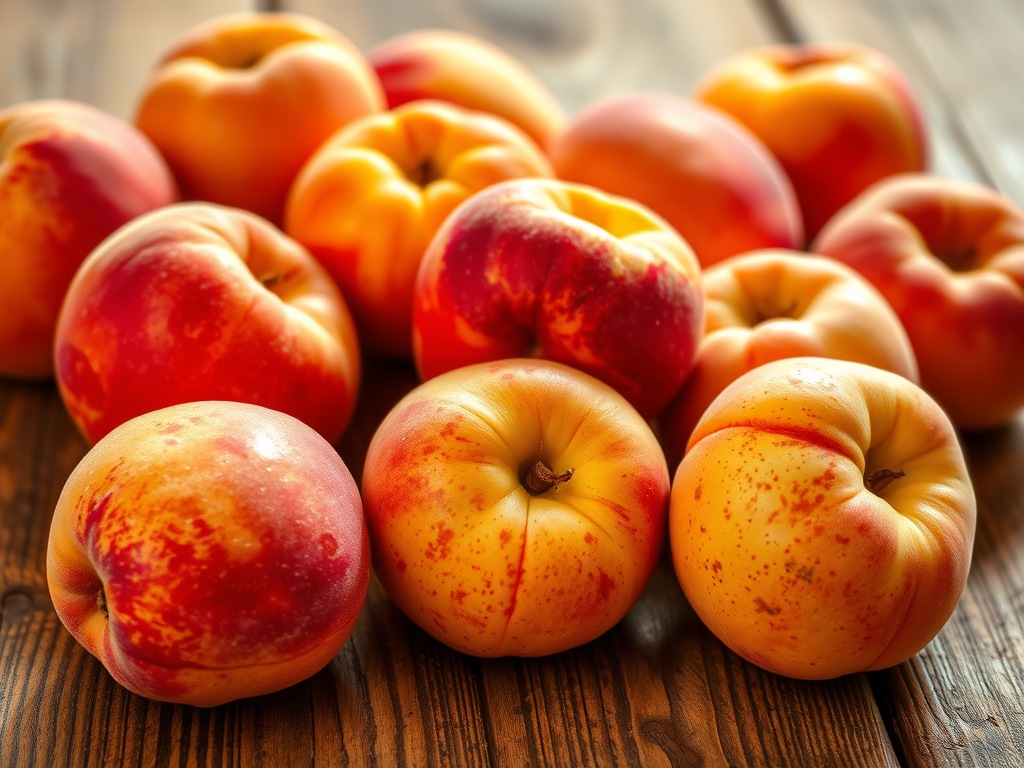
The Queen Nectarine isn’t a distinct historical fruit with a unique healing tradition. It refers to a cultivar of the nectarine (Prunus persica), which is essentially a smooth-skinned peach.
Nectarines were first domesticated in China over 2,000–4,000 years ago and spread to Persia, Greece, and Europe by the 1600s. They spread via trade routes to Persia, Greece, and Rome, and were cultivated in Europe by the 1600s. Their smooth skin results from a recessive genetic mutation, and cultivation practices have since refined them into freestone and clingstone varieties grown worldwide.
They are primarily known for their sweet, juicy flesh rich in vitamins A and C, but there is no record of a “Queen Nectarine” being specifically cultivated by a named individual or used in ancient healing practices. Instead, nectarines in general were valued for nutritional benefits and digestive support, rather than formal medicinal healing.
🌸 What Nectarines Are Known For
- Smooth skin: Unlike peaches, nectarines lack fuzz due to a recessive genetic trait.
- Flavor & nutrition: Sweet, juicy flesh; rich in vitamin A, vitamin C, potassium, and fiber.
- Culinary uses: Eaten fresh, cooked in jams, pies, conserves, or dried.
- Symbolism: In Chinese culture, peaches and nectarines were often associated with longevity and vitality, though this was more symbolic than medicinal.
🌍 Origins of Nectarines
- China (Yangtze River Valley):
- Archaeological and historical evidence shows peaches and nectarines were cultivated here over 4,000 years ago.
- Farmers selectively bred peaches for sweetness, size, and smooth skin, leading to the nectarine’s development.
- Genetic mutation:
- Nectarines differ from peaches due to a recessive allele that prevents fuzz from forming on the skin.
- This mutation likely occurred naturally and was favored by growers for its appealing texture.
- Spread along trade routes:
- From China, nectarines traveled west via the Silk Road, reaching Persia and the Mediterranean.
- The Romans cultivated them extensively, integrating them into orchards across Europe.
- European introduction:
- By the early 1600s, nectarines were recorded in England and later spread across Europe.
🌱 Cultivation Practices
- Tree characteristics:
- Small to medium-sized, usually pruned to 3–4 meters tall for orchard management.
- Glossy green lance-shaped leaves, pink or white blossoms in spring.
- Fruit development:
- The fruit develops from a single ovary, with one seed inside a hard pit.
- Flesh can be white, yellow, or red, with skin ranging from golden to deep red.
- Varieties:
- Freestone: Stone separates easily from flesh.
- Clingstone: Flesh adheres firmly to the pit.
- Modern production:
- Today, nectarines are grown in China, the United States, Italy, Spain, and Greece as major producers.
- They thrive in warm temperate climates, requiring cold winters for dormancy and hot summers for ripening.
🍑 Cultural & Symbolic Notes
- In Chinese tradition, peaches and nectarines symbolized longevity and vitality, though nectarines specifically were not singled out.
- Romans and Greeks valued them for culinary uses and ornamental beauty.
Nectarines originated in China through natural genetic mutation, spread westward via trade, and became a staple fruit in Europe by the 1600s. Cultivation practices emphasize pruning, climate control, and varietal selection, with modern orchards producing nectarines worldwide.
🌿 Healing & Traditional Uses
Traditionally, nectarines were valued not only as food but also for their cooling, restorative properties. In Chinese medicine, they were used to reduce fever, soothe sore throats, aid digestion, and relieve constipation. Folk remedies also applied nectarine poultices to minor wounds or skin irritations. Modern science now validates some of these uses, highlighting their antioxidants, vitamins, and fiber for immune support, skin health, and digestive wellness
🌿 Healing & Traditional Uses of Nectarines
🏮 Ancient Chinese Medicine
- Cooling effect: Nectarines were considered a “cooling fruit,” used to balance internal heat.
- Fever reduction: Consumed fresh or as infusions to help lower body temperature.
- Sore throat relief: Juicy flesh and soothing properties made them useful for throat irritation.
- Digestive aid: Fiber-rich flesh acted as a gentle laxative, relieving constipation and supporting bowel health.
🌱 Folk Remedies
- Skin poultices: Crushed fruit or leaves applied to minor wounds, rashes, or irritations to encourage healing and prevent infection.
- Vitality & longevity: Symbolically linked to peaches, nectarines were thought to promote vitality and long life.
- Herbal blends: Combined with ginger for digestive comfort, or chamomile for calming tonics and better sleep.
🍑 Nutritional Healing
- Immune support: Vitamin C and antioxidants helped strengthen resistance to illness.
- Skin health: Vitamin A and copper supported collagen production and skin repair.
- General vitality: Nectarines were seen as restorative foods, boosting energy and resilience.
🔬 Modern Scientific Validation
- Antioxidants: Phenolic compounds and carotenoids protect against oxidative stress.
- Anti-inflammatory potential: Lab studies suggest nectarines may reduce inflammation and inhibit abnormal cell growth.
- Chronic disease prevention: Their compounds are being studied for roles in lowering risks of cardiovascular disease and certain cancers.
🧾 Summary
- Traditionally: Nectarines were used in Chinese medicine and folk remedies for cooling, digestion, fever, sore throats, and skin healing.
- Symbolically: They carried associations with longevity and vitality, much like peaches.
- Today: Science confirms their antioxidant, anti-inflammatory, and nutrient-rich profile, making them a fruit that bridges ancient healing traditions with modern nutrition.
🍑 Key Modern Health Benefits of Nectarines
- Rich in nutrients: One medium nectarine has ~63 calories, 2.4 g fiber, 11 g sugar, plus copper, potassium, niacin (B3), and vitamin C.
- Supports digestion: Fiber (both soluble and insoluble) helps regulate bowel movements, prevent constipation, and fuel gut bacteria.
- Boosts heart health: Antioxidants (like chlorogenic acid, flavonoids, lutein, and vitamin C) reduce oxidative stress and inflammation in blood vessels, while potassium helps regulate blood pressure.
- Aids weight management: Low-calorie, high-fiber content promotes fullness and supports healthy metabolism.
- Skin vitality: Copper stimulates collagen production, niacin protects against sun damage, and vitamin A supports healthy skin.
- Cancer risk reduction: Polyphenols and antioxidants may help inhibit cancer cell growth, particularly in lung and breast cancer studies.
- Pregnancy support: Potassium may lower blood pressure, reducing risks during pregnancy.
🌿 Antioxidant Power
Nectarines are especially high in vitamin C, beta-carotene, lutein, zeaxanthin, and chlorogenic acid. These compounds help neutralize free radicals, which are linked to aging, diabetes, Alzheimer’s, and cardiovascular disease.
- Then: Nectarines were cultivated in China thousands of years ago, valued for sweetness and symbolic vitality.
- Now: They’re recognized as a nutrient-dense, antioxidant-rich fruit that supports digestion, heart health, skin, weight management, and disease prevention.
So while the “Queen Nectarine” doesn’t have a unique healing origin story, modern science shows nectarines in general are a powerful ally for wellness.
✅ Summary
: The “Queen Nectarine” is best understood as a cultivar name within the broader nectarine family. Nectarines were first cultivated in China thousands of years ago, valued for their sweet taste and nutritional richness, and symbolically tied to longevity. They were not originally cultivated by a single known person, nor were they first used for a specific healing practice beyond general nutritional benefits.
🍊 Vitamin Profile of Nectarines
Nectarines are rich in vitamins A, C, E, and B3 (niacin), plus minerals like potassium and copper, making them excellent for immune health, skin vitality, and digestion. In the kitchen, they shine in both sweet and savory dishes — from salads and salsas to cobblers, cakes, and grilled mains.
- Vitamin A (beta-carotene precursor): Supports eye health and skin repair.
- Vitamin C: Boosts immunity, collagen production, and iron absorption.
- Vitamin E: Protects cells from oxidative stress.
- Vitamin B3 (Niacin): Aids metabolism and skin health.
- Potassium: Helps regulate blood pressure and fluid balance.
- Copper: Essential for collagen formation and energy production.
- Fiber: Supports digestion and satiety.
👉 One medium nectarine (~142 g) provides about 63 calories, 2.4 g fiber, 11 g sugar, 13% DV vitamin C, 9% DV vitamin A, and 6% DV niacin.
🍴 Culinary Uses
Nectarines are versatile in both sweet desserts and savory pairings. Their sweet-tart flavor and firm texture make them ideal for baking, grilling, and fresh salads.
Here are some popular ways to use them:
- Fresh: Sliced into fruit salads, smoothie bowls, or eaten raw.
- Desserts: Cobblers, crisps, upside-down cakes, ice cream, and tarts.
- Savory dishes: Grilled nectarines with balsamic glaze, nectarine salsa for fish or chicken, or paired with prosciutto on pizza.
- Drinks: Infused waters, smoothies, and sangrias.
- Preserves: Jams, compotes, and chutneys.
Here’s a recipe collection to inspire you:

Nectarine Upside-Down Cake
Damn Delicious
This recipe has a rating of 4.8 stars from 17 reviewers.
4.8 (17)
1h 15m · 406 cals · 8 servings
Ingredients
- •2 cups All-Purpose Flour
- •1 cup Sugar
- •1 teaspoon Baking Soda
- •0.5 teaspoon Salt
- •1 cup Buttermilk
- •0.5 cup Unsalted Butter
- •2 Large Eggs
- •0.5 cup Brown Sugar
- •4 Nectarines
🧾 Summary
- Nutritional boost: Vitamins A, C, E, niacin, potassium, and copper woven into every course.
- Culinary versatility: Nectarines shine raw, grilled, baked, and infused.
- Seasonal charm: This menu celebrates their sweet-tart flavor across savory and sweet dishes.
🚫 Who Should Avoid or Limit Nectarines
- People with allergies to stone fruits (peaches, plums, cherries):
- Nectarines belong to the same family (Prunus persica). Allergic reactions can include itching, swelling, or more severe responses.
- Individuals with oral allergy syndrome (OAS):
- Those allergic to birch pollen may experience tingling or itching in the mouth when eating nectarines.
- Diabetics or those monitoring blood sugar:
- Nectarines are naturally sweet (about 11 g sugar per medium fruit). They can be eaten in moderation, but portion control is important.
- People with kidney disease:
- Nectarines are high in potassium. Those with impaired kidney function may need to limit potassium-rich foods.
- Digestive sensitivity:
- The fiber content may cause bloating or discomfort in people with irritable bowel syndrome (IBS) or sensitive digestion.
- Infants under 1 year old:
- Whole pieces can pose a choking hazard. Pureed nectarines are safer if introduced as part of weaning.
✅ Summary:
Most people can enjoy nectarines safely, but those with fruit allergies, OAS, kidney disease, or blood sugar concerns should be cautious.
⚠️ Disclaimer
I’m not a medical professional. The information above is general and educational — it should not replace medical advice. If you have allergies, chronic conditions (like diabetes or kidney disease), or concerns about introducing nectarines into your diet, consult a qualified healthcare provider before making changes.
Fresh nectarines are not available year-round — they disappear outside their short harvest season and in regions where the climate doesn’t support stone fruit cultivation.
🌍 Regions Where Fresh Nectarines Are Rare or Unavailable
- Cold northern climates:
- Countries like Canada (outside southern provinces), Scandinavia, northern Russia, Iceland cannot grow nectarines outdoors due to long, harsh winters.
- Imports may appear in stores, but locally grown fresh nectarines are absent.
- Tropical regions:
- Central Africa, Southeast Asia, equatorial South America lack the cold winter dormancy nectarines require.
- Fresh nectarines are rarely grown locally and usually only available as imports.
- Arid deserts without irrigation:
- Parts of the Middle East and North Africa (Saudi Arabia, Yemen, Algeria, Libya) cannot sustain nectarine orchards without heavy irrigation.
- Fresh nectarines are scarce or absent in local markets.
📅 Seasonal Gaps in Producing Regions
Even in areas where nectarines thrive, they are strictly seasonal:
- California (USA): May – September
- Michigan & Midwest (USA): July – August
- Southern Europe (Spain, Italy, Greece): Late spring – summer
- Southern Hemisphere (Chile, Australia): December – March
Outside these windows, fresh nectarines are not available — only imported or stored fruit may be found.
🧾 Summary
- Unavailable locally: Cold northern zones, tropical regions, and deserts without irrigation.
- Seasonal only: Even in producing regions, nectarines vanish outside their harvest months.
- Imports fill gaps: Supermarkets may stock them off-season, but they’re not truly fresh.
 EJADA
EJADA 
Leave a comment