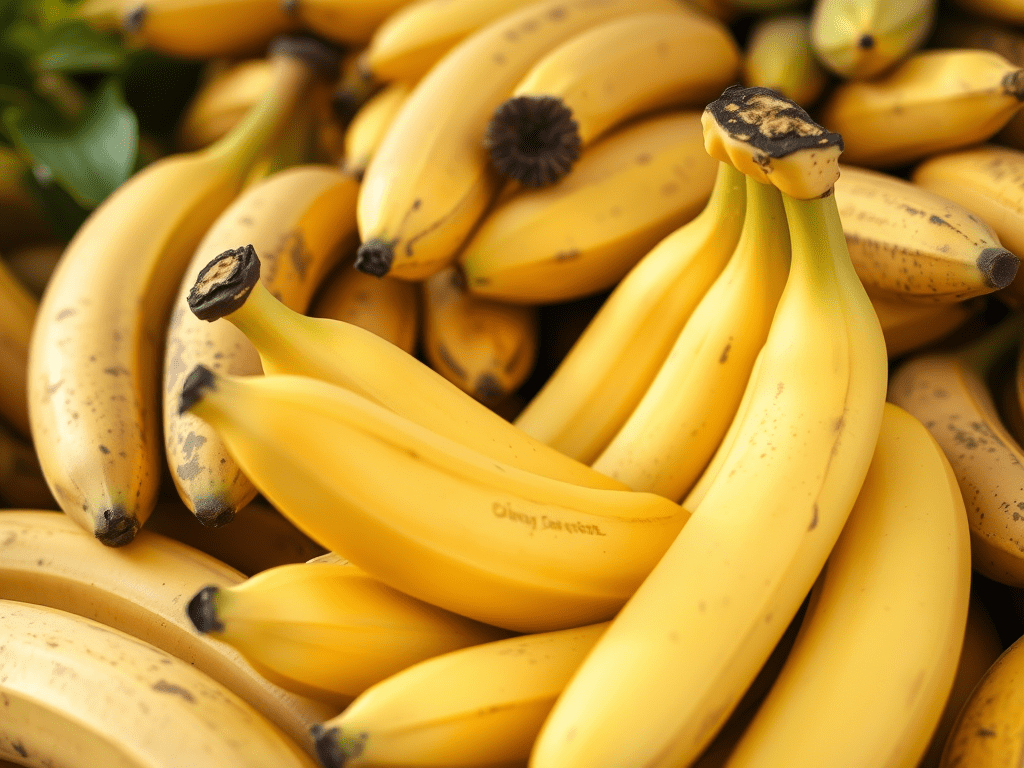
The Queen Banana traces its origins to ancient India and Southeast Asia, where it was first cultivated over 5,000 years ago. Revered as kadali phalam in Sanskrit, bananas became sacred in Hindu rituals, symbols of fertility in African folklore, and offerings of prosperity across Asia. Today, they remain both a nutritional staple and a ceremonial fruit, woven into medicine, myth, and everyday life.
🌸 Origins of the Queen Banana
- Earliest cultivation: Bananas (Musa spp.) were domesticated in Southeast Asia around 8000 BCE, with India playing a central role in their spread.
- Ancient India: Known as kadali phalam, bananas were part of the “mukkani” trio of sacred fruits (banana, mango, jackfruit).
- Global spread: Alexander the Great encountered bananas in India and introduced them to the Middle East. Arab traders carried them to Africa, and by the 17th century, they reached Europe.
- Modern dominance: The Cavendish banana, cultivated in England in 1835, became the most common variety worldwide.
🍌 Queen Banana (Lady Finger / Sucrier)
- Size: Small, slender (3–5 inches long).
- Flavor: Very sweet, with notes of honey, caramel, and vanilla.
- Texture: Creamy, velvety flesh.
- Use: Best eaten fresh, in fruit salads, or paired with chocolate/peanut butter.
- Cultivation: Grown widely in Southeast Asia, Australia, and tropical regions.
🍌 Cavendish Banana (Most Common)
- Size: Medium, 6–9 inches long.
- Flavor: Mild, classic banana taste.
- Texture: Soft, creamy flesh.
- Use: Everyday snacking, smoothies, baking (banana bread).
- Cultivation: Dominates global trade; grown in Latin America, Asia, and Africa.
🍌 Red Banana
- Size: Shorter, plumper than Cavendish.
- Flavor: Sweet with hints of raspberry or mango.
- Texture: Dense, creamy flesh with pinkish tones.
- Use: Eaten raw, in desserts, parfaits, or smoothies.
- Nutrients: Higher antioxidants (beta-carotene, vitamin C).
🍌 Blue Java Banana (Ice Cream Banana)
- Size: Medium, with silver-blue skin when unripe.
- Flavor: Sweet, vanilla-like taste (nicknamed “ice cream banana”).
- Texture: Soft, aromatic flesh.
- Use: Smoothies, frozen desserts, eaten raw.
- Cultivation: Popular in Hawaii and Southeast Asia.
🍌 Gros Michel (Historic Variety)
- Size: Similar to Cavendish.
- Flavor: Richer, creamier, more intense banana flavor.
- History: Once the dominant export banana until wiped out by Panama disease in the mid-20th century.
📊 Comparison Table
| Variety | Size | Flavor Profile | Texture | Best Use |
|---|---|---|---|---|
| Queen (Lady Finger) | Small, slender | Honey, caramel, vanilla | Creamy, velvety | Fresh eating, desserts |
| Cavendish | Medium | Mild, classic banana | Soft, creamy | Everyday snacking, baking |
| Red Banana | Short, plump | Sweet, raspberry/mango | Dense, creamy | Raw, parfaits, smoothies |
| Blue Java | Medium | Vanilla, ice cream-like | Soft, aromatic | Smoothies, frozen treats |
| Gros Michel | Medium | Rich, intense banana | Creamy, firm | Historic export, desserts |
🌿 Medicinal Uses of Bananas — Then
Banana Fruit:
Used to soothe ulcers and intestinal disorders, as bananas neutralize stomach acidity.
Applied for diarrhea and constipation as part of the BRAT diet (bananas, rice, applesauce, toast).
Ripe fruit was considered a gentle laxative and a remedy for sore throats and chest pain.
Banana Flowers:
Cooked flowers given to diabetics to help regulate blood sugar.
Used to treat bronchitis, constipation, ulcers, and menstrual cramps.
In traditional medicine, believed to increase milk production in lactating mothers.
Banana Stem & Sap:
Stem juice used as a diuretic and for kidney stones.
Sap applied to burns, wounds, insect bites, and hemorrhoids.
Ashes of unripe peel/leaves used for dysentery and malignant ulcers.
Banana Leaves:
Used as poultices for burns and skin afflictions.
Symbolically employed in rituals for purity and healing.
Banana Roots:
Decoctions for digestive disorders, dysentery, asthma, and sore throats.
Infusions used for anemia and blood disorders.
🌱 Medicinal Uses of Bananas — Now
Heart Health:
Rich in potassium and magnesium, bananas help regulate blood pressure and reduce stroke risk.
Digestive Health:
Contain soluble fiber (pectin) and resistant starch, supporting gut microbiome balance and bowel regularity.
Blood Sugar Control:
Unripe bananas slow glucose absorption, improving insulin sensitivity.
Mood & Brain Function:
High in vitamin B6, aiding production of serotonin and dopamine for mood regulation.
Exercise Recovery:
Provide natural sugars, potassium, and magnesium to restore glycogen and electrolytes post-workout.
Antioxidant Protection:
Contain dopamine, catechins, and vitamin C, reducing oxidative stress and supporting long-term health.
Weight Management:
Low in fat, high in fiber, bananas promote satiety and help regulate appetite.
🍌 Macronutrients (per medium banana, ~118 g)
- Calories: ~105
- Carbohydrates: ~27 g (mainly natural sugars and starch)
- Protein: ~1.3 g
- Fat: ~0.3 g (very low)
- Fiber: ~3 g (supports digestion and satiety)
🌿 Key Vitamins
- Vitamin B6: Essential for brain health, metabolism, and red blood cell production. One banana provides ~25% of daily needs.
- Vitamin C: Supports immunity, collagen production, and antioxidant defense.
- Vitamin A (beta-carotene precursor): Present in small amounts, helps with vision and skin health.
- Folate (B9): Important for cell division and fetal development.
⚡ Essential Minerals
- Potassium: Bananas are famous for this—helps regulate blood pressure, nerve signaling, and muscle contraction.
- Magnesium: Supports muscle function, bone health, and energy metabolism.
- Manganese: Contributes to antioxidant defenses and bone development.
- Copper: Aids in iron absorption and red blood cell formation.
🛡️ Antioxidants & Phytochemicals
- Dopamine & Catechins: Natural antioxidants that reduce oxidative stress.
- Resistant starch (in unripe bananas): Acts like fiber, feeding beneficial gut bacteria.
- Pectin: A soluble fiber that helps regulate blood sugar and cholesterol.
🌿 Rituals and Symbolism of the Queen Banana
✨ Hindu Traditions
- Offerings in Temples & Weddings: Bananas symbolize fertility, prosperity, and growth. Banana plants are often placed at entrances during weddings and festivals like Diwali to invoke blessings.
- Sacred Leaves: Banana leaves are used as eco-friendly plates in rituals, symbolizing purity and renewal.
- Mythology: Lord Vishnu is sometimes depicted holding a banana, reinforcing its divine association.
🪷 Buddhist Practices
- Ceremonial Offerings: Bananas are offered in temples as symbols of abundance and mindfulness, reminding practitioners of life’s impermanence.
- Decorations: Banana leaves and fruits adorn shrines, emphasizing simplicity and spiritual renewal.
🌍 African & Southeast Asian Traditions
- Initiation Rites & Ancestral Worship: Bananas represent community strength, continuity, and gratitude. They are included in harvest ceremonies to honor the cyclical nature of life.
- Textiles & Art: Banana sap was used as dye in African societies, while Japan cultivated banana fibers for ceremonial kimonos.
🌙 Islamic Symbolism
- Fruit of Paradise: The Quran mentions bananas as one of the fruits of heaven, symbolizing blessings and divine abundance.
- Ritual Use: Bananas are eaten during Ramadan to break fast, embodying gratitude and renewal.
✝️ Christian Interpretations
- While not explicitly biblical, bananas are interpreted as symbols of God’s abundance and blessings. Their clustered growth has been linked to the Holy Trinity.
🎭 Popular Culture & Folklore
- Comedy & Literature: The banana peel became iconic in slapstick humor, symbolizing folly and human vulnerability.
- Music & Art: From Harry Belafonte’s “Banana Boat Song” to the pop group Bananarama, bananas became cultural icons of joy and sensuality.
- Dream Symbolism: Ripe bananas symbolize growth and abundance, while green bananas represent potential and transformation.
🍞 Classic Comfort
The Beaver Club’s Famous Banana Bread
- Ingredients: Very ripe bananas (1 lb), sugar, baking soda, salt, eggs, flour, buttermilk, vegetable oil.
- Method: Blend bananas with sugar, soda, and salt. Mix in eggs, flour, buttermilk, and oil. Bake in loaf pans at 275°F for 2.5 hours.
- Serving: 2 loaves.
- Notes: Dark, rich flavor—improves with age and freezes well.
Banana Bread with Vanilla Maple Glaze
- Ingredients: Flour, baking soda, cinnamon, olive oil, brown sugar, maple syrup, vanilla, eggs, bananas, yogurt, walnuts.
- Method: Mix wet and dry ingredients separately, combine, bake 60–65 minutes. Drizzle maple-vanilla glaze over cooled loaf.
- Serving: 8 slices (~566 calories each).
- Notes: A festive upgrade with crunchy maple crust and aromatic glaze.
🎂 Royal Touch
Buckingham Palace Banana Bread (Queen Elizabeth’s Favorite)
- Ingredients: Self-rising flour, butter, sugar, walnuts, raisins, cherries, vanilla, eggs, ripe bananas.
- Method: Mix dry ingredients, mash bananas with eggs and vanilla, combine, bake at 350°F for ~45 minutes.
- Notes: Moist, fruitcake-like loaf served at royal teas; keeps fresh for weeks when wrapped.
🌟 Closing Reflection
The Queen Banana is more than a staple fruit—it is a symbol of fertility, abundance, and resilience. From temple offerings in India to festive breads in royal kitchens, it bridges the sacred and the everyday. Its sweetness nourishes, its leaves purify, and its blossoms heal, reminding us that food is both ritual and sustenance. In the fruit alphabet, the Queen Banana stands as a golden emblem of continuity—linking ancient traditions with modern vitality.
⚠️ Precaution
While bananas are safe for most people, certain groups should take care:
- Diabetics: Ripe bananas are higher in sugar; unripe or smaller varieties may be better choices.
- Digestive sensitivities: Bananas contain fiber and natural sugars that may cause bloating in some individuals.
- Allergies: Rarely, banana proteins can cross-react with latex allergies.
- Medicinal use: Traditional remedies using banana flowers, stems, or roots should not replace professional medical advice.
📜 Disclaimer
This post is intended for educational and cultural purposes only. Historical medicinal uses of bananas reflect traditional practices, not modern medical guidance. While bananas are generally safe as food, their use in remedies should be approached with caution. Always consult a qualified healthcare professional before using bananas or their plant parts for medicinal purposes.
 EJADA
EJADA 
Leave a comment