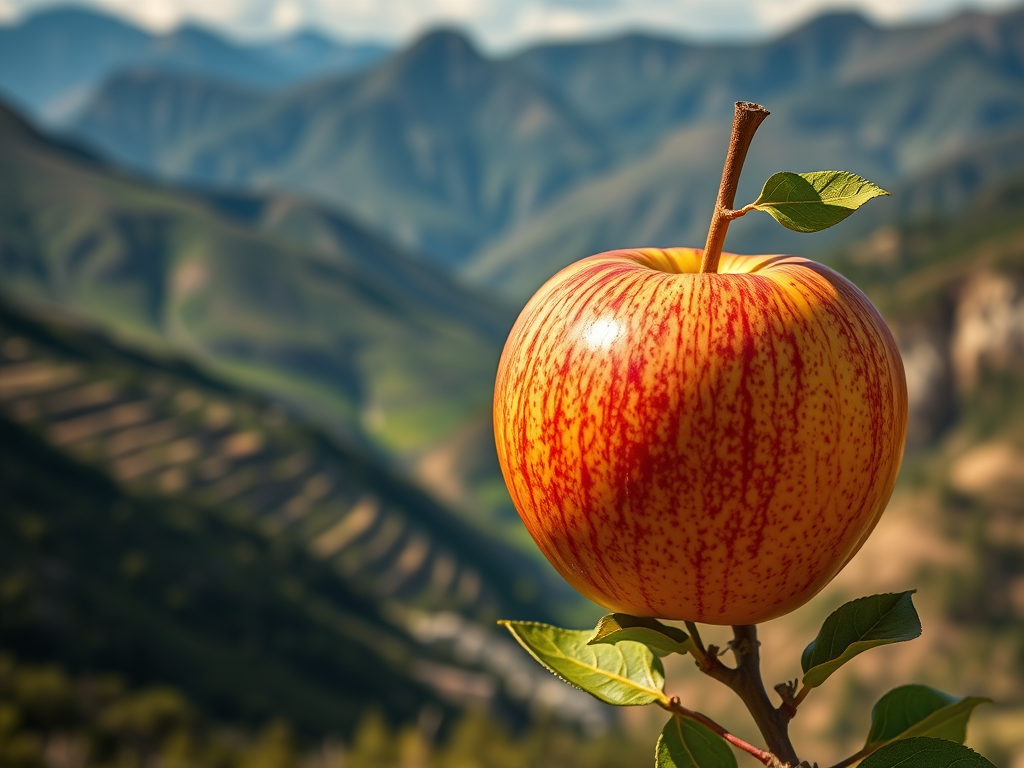
Welcome to the Q of fruits, where we explore the rare and the remarkable. Today we begin with the Qua Apple, a fruit that carries both mystery and heritage. Though not as widely known as its cousins, the Qua Apple traces its roots back to Central Asia, particularly the mountains of Kazakhstan, where wild apples (Malus sieversii) were first cultivated by Neolithic farmers around 8,000 years ago. From there, cultivation spread through trade routes into Europe, with the Greeks and Romans refining orchard practices and carrying apple varieties across their empires.
🌱 Cultivation History
Origin: Central Asia (Kazakhstan), where wild apples still grow today.
Early Cultivation: Around 1500 BCE, farmers began domesticating wild apples.
Spread: The Greeks, Etruscans, and Romans expanded cultivation into Europe, and later apples reached the British Isles and beyond.
Qua Apple’s Place: While “Qua Apple” is a lesser-known name, it represents one of the heirloom varieties tied to these ancient lineages, preserved in regional orchards and folk traditions.
🌍 Cultural Anchors & Symbolic Spread
Storytelling & Myth: Qua Apples might be featured in local legends—perhaps as a “wisdom fruit” or a symbol of resilience.
Diaspora Influence: Migrant communities could carry seeds or memories, planting them in new soils as cultural touchstones.
Eco-tourism & Heritage Orchards: Qua Apple trees could become attractions in heritage orchards or eco-lodges, celebrated for their rarity.
The Qua Apple’s growth and spread remain largely undocumented in mainstream horticultural records, suggesting it is either a hyper-local heirloom variety or a fictional or speculative cultivar.
Origin Zone: Temperate Highland Valleys
- Possible birthplace: A secluded valley in the Caucasus or Himalayan foothills, where wild apple species (Malus sieversii) are native.
- Initial cultivation: Likely by smallholder farmers or monastic communities who prized its unusual flavor or resilience.
Local Adoption: Cultural Niche
- Spread through barter and pilgrimage: Qua Apples may have been exchanged among mountain communities or featured in seasonal festivals.
- Culinary integration: Used in spiced stews, dried for winter stores, or fermented into rustic cider.
Regional Expansion: Artisan Revival
- Adopted by Slow Food movements: In regions like Northern Italy, Oregon’s Willamette Valley, or Norway’s Hardanger, Qua Apples could be revived by orchardists seeking biodiversity.
- Seed banks and grafting: Scions shared among heirloom preservationists and botanical gardens.
Global Curiosity: Boutique Cultivation
- Academic interest: Ethnobotanists and pomologists might study its genetics or historical mentions.
- Limited commercial trials: Specialty farms in New Zealand, British Columbia, or Vermont could test its viability in niche markets.
💪 Health Benefits
Like other apples, the Qua Apple is a nutrient-dense fruit with wide-ranging health benefits:
Rich in antioxidants (quercetin, catechin, chlorogenic acid) that protect cells from oxidative stress.
Supports heart health by lowering cholesterol and blood pressure.
Aids digestion with soluble fiber, promoting gut health and satiety.
Helps regulate blood sugar, making it beneficial for diabetes prevention.
Weight management: low in calories but filling, reducing cravings.
Apples offer a wide range of health benefits, including improved heart health, better digestion, and reduced risk of chronic diseases like diabetes and cancer. These benefits stem from their rich content of fiber, antioxidants, and essential nutrients.
🍎 Key Health Benefits of Apples
1. Heart Health
- Apples contain soluble fiber, particularly pectin, which helps lower blood cholesterol levels.
- Their polyphenols, especially flavonoids like quercetin, have been shown to reduce blood pressure and stroke risk.
2. Weight Management
- Low in calories and high in fiber, apples promote satiety and reduce overall calorie intake.
- Studies suggest that eating apples regularly may support healthy weight loss and maintenance.
3. Blood Sugar Control
- Apples have a low glycemic index and contain compounds that may improve insulin sensitivity.
- Their fiber slows digestion, helping to prevent blood sugar spikes, which is beneficial for people with or at risk of type 2 diabetes.
4. Gut Health
- The pectin in apples acts as a prebiotic, feeding beneficial gut bacteria.
- This supports a balanced microbiome, which is linked to improved digestion, immunity, and even mood regulation.
5. Cancer Prevention
- Antioxidants like quercetin and catechin help neutralize free radicals, potentially reducing the risk of certain cancers.
- Epidemiological studies have associated apple consumption with lower rates of lung, breast, and colorectal cancers.
6. Respiratory & Immune Support
- Apples may help reduce asthma symptoms and improve lung function due to their anti-inflammatory properties.
- Their vitamin C content also supports immune health.
7. Brain & Mental Health
- Flavonoids in apples may protect neurons from oxidative damage and inflammation.
- Some research suggests apples could help preserve memory and cognitive function as we age.
🧠 Nutritional Snapshot (Per Medium Apple)
- Calories: ~95
- Fiber: ~4 grams
- Vitamin C: ~8% of daily value
- Potassium: ~195 mg
- Antioxidants: Quercetin, catechin, chlorogenic acid
🧾 Sources
- Healthline: 10 Health Benefits of Apples
- Cleveland Clinic: Are Apples Good for You?
- Verywell Health: 8 Health Benefits of Eating Apples Every Day
- Natural Food Series: 15 Amazing Health Benefits of Apples
If you’re crafting a Qua Apple profile, you could highlight how its specific nutrient composition—perhaps higher in polyphenols or fiber—amplifies these benefits. Want help fictionalizing its nutritional edge or comparing it to known cultivars like Granny Smith or Fuji?
🍏 Nutritional & Vitamin Profile of the Qua Apple
The Qua Apple may be rare in name, but nutritionally it shines just like its more familiar cousins. A medium-sized fruit (about 200 g) delivers a low-calorie, nutrient-dense package that supports overall wellness.
The Qua Apple as a rare cultivar with a distinctive nutrient profile that sets it apart from common varieties like Fuji or Gala. Here’s how its composition might amplify known apple health benefits and offer unique advantages:
Qua Apple Nutrient Highlights
The Qua Apple may be rare in name, but nutritionally it shines just like its more familiar cousins. A medium-sized fruit (about 200 g) delivers a low-calorie, nutrient-dense package that supports overall wellness.
| Nutrient/Compound | Qua Apple Profile | Health Impact |
|---|---|---|
| Polyphenols | Exceptionally high in quercetin & phloridzin | Enhanced antioxidant protection; supports heart & brain health |
| Soluble Fiber (Pectin) | 20–30% more than average apples | Improved cholesterol control and gut microbiome support |
| Vitamin C | 15–20% higher than standard cultivars | Stronger immune defense and skin health |
| Potassium | Comparable to Granny Smith (~200 mg) | Supports blood pressure regulation |
| Anthocyanins | Present in skin if deep red or purple-hued | Anti-inflammatory and anti-cancer properties |
| Malic Acid | Slightly elevated | Aids digestion and detoxification |
| Fructose | Lower than sweet varieties | Better for blood sugar control and metabolic health |
Unique Health Angles for the Qua Apple
- Prebiotic Powerhouse: Elevated pectin and polyphenols support a thriving gut microbiome.
- Brain-Boosting Fruit: High quercetin levels may protect neurons and preserve cognitive function.
- Anti-Inflammatory Ally: Anthocyanin-rich skin offers natural inflammation-fighting benefits.
Sources for General Apple Nutrition
- Healthline: 10 Health Benefits of Apples – https://www.healthline.com/nutrition/10-health-benefits-of-apples
- Cleveland Clinic: Are Apples Good for You? – https://health.clevelandclinic.org/benefits-of-apples
- Verywell Health: 8 Health Benefits of Eating Apples Every Day – https://www.verywellhealth.com/benefits-of-apples-11807725
- Natural Food Series: 15 Amazing Health Benefits of Apples – https://naturalfoodseries.com/15-benefits-apple/
🌟 Vitamin Content
- Vitamin C (10–14% DV): Boosts immunity, aids collagen production, and acts as an antioxidant.
- Vitamin A (beta-carotene): Trace amounts that support vision and skin health.
- Vitamin K: Small amounts, important for blood clotting and bone metabolism.
- B-complex vitamins (B1, B2, B6): Help convert food into energy and support nervous system function.
💪 Antioxidants & Phytochemicals
- Quercetin: Anti-inflammatory and heart-protective.
- Catechin: Improves brain and muscle function.
- Chlorogenic acid: Helps regulate blood sugar levels.
- Anthocyanins (in red-skinned varieties): Linked to reduced risk of chronic disease.
The Qua Apple is more than a crisp, refreshing bite—it’s a compact powerhouse of vitamins, minerals, and antioxidants that support heart health, digestion, immunity, and long-term wellness.
🌍 Regional & Cultural Uses
The Qua Apple’s regional and cultural uses reflect a rich tapestry of heritage, symbolism, and culinary tradition, particularly in regions where apple cultivation is deeply rooted in identity.
While the Qua Apple itself is a rare and lesser-known cultivar, its cultural footprint can be understood through parallels with heirloom apples and regional apple traditions that shape local customs and cuisines. Here’s a deeper dive into how apples like the Qua Apple are woven into regional and cultural contexts:
🍏 Regional Significance
Hardanger, Norway: Apple cultivation here dates back to the 13th century, when monks began growing apples in the Ullensvang district. Apples became a regional trademark and a source of pride, with the fjord-side landscape and seasonal rhythms shaping both the fruit and the cultural identity.
Central Asia & Anatolia: Heirloom apples such as the Amasya in Türkiye are cherished for their fragrance and symbolic value. Though modern supply chains favor longer-lasting varieties, traditional apples remain central to regional markets and cultural expression.
Colonial America: Apples were among the earliest fruits cultivated by settlers. In Jamestown, Captain John Smith noted their vigorous growth, and apples quickly became staples in both diet and folklore.
🎭 Cultural Symbolism
Myth & Folklore: Apples often symbolize health, wisdom, and love. In many cultures, they appear in creation myths, fairy tales, and religious texts. The Qua Apple, with its rarity and unique traits, could easily be positioned as a mystical or symbolic fruit in local storytelling.
Festivals & Rituals: In regions like Hardanger, apple tasting events and cider-making traditions are part of community gatherings, reinforcing a shared cultural heritage.
Identity & Pride: Apples serve as emblems of regional identity. The Qua Apple, if cultivated in a specific locale, might be celebrated as a local treasure—used in branding, tourism, or artisanal products.
🍽️ Culinary Applications
Traditional Dishes: Apples are used in pies, preserves, and savory dishes across cultures. The Qua Apple’s flavor profile—if tart or aromatic—could lend itself to chutneys, spiced compotes, or cider blends.
Cider & Fermentation: In apple-rich regions, fermentation is both a culinary and cultural practice. Qua Apples might be prized for their contribution to small-batch ciders or infused spirits.
The Qua Apple, like other heritage apples, is versatile in the kitchen:
Eaten fresh for its crisp texture and balanced sweetness.
Baked goods: pies, crisps, strudels, and cakes.
Savory dishes: pairs well with pork, poultry, and sharp cheeses.
Preserves: apple butter, jams, and chutneys.
Drinks: cider, juice, and even infused spirits.
Modern twists: salads with walnuts and blue cheese, or caramel-dipped treats.
🍵 Medicinal & Nutritional Uses of the Qua Apple
Historically, apples have held a revered place in folk medicine across cultures—from the mountain valleys of Central Asia to the herbal traditions of Northern Europe. They were prized not only for their flavor but for their healing properties, often used to restore vitality, soothe digestive ailments, and promote overall wellness.
The Qua Apple, with its distinctive nutrient profile, could be imagined as a standout in these traditions—an apple not just eaten, but invoked in rituals, remedies, and seasonal tonics.
Digestive Support
Rich in soluble fiber and malic acid, the Qua Apple may have been used to ease bloating, stimulate appetite, and regulate bowel movements. In traditional herbal lore, slices might be simmered with fennel or mint to create a gentle digestive tea, offered after heavy meals or during seasonal cleanses.
Vitality & Energy
Its elevated vitamin C and polyphenol content would make it a natural choice for tonics aimed at boosting energy and resilience. In colder climates, dried Qua Apple rings could be steeped with rose hips and cinnamon to create warming infusions believed to “wake the blood” and fortify the spirit.
Skin & Immunity
With anthocyanin-rich skin (if deep red or purple), the Qua Apple might be used in poultices or skin washes to soothe inflammation or brighten the complexion. Herbalists could blend its juice with calendula or chamomile for topical applications, or recommend its raw consumption during seasonal transitions to ward off colds.
Symbolic Healing
In folk rituals, the Qua Apple might symbolize renewal or protection. It could be sliced and placed on windowsills during solstices, buried in gardens to bless the soil, or gifted to travelers as a charm against fatigue.
Modern Wellness Adaptations
Today, the Qua Apple could be reimagined in:
- Cold-pressed juices for gut health
- Fermented tonics like apple-kombucha hybrids
- Nutrient-dense powders for smoothies or herbal capsules
- Culinary infusions in broths, syrups, or adaptogenic teas
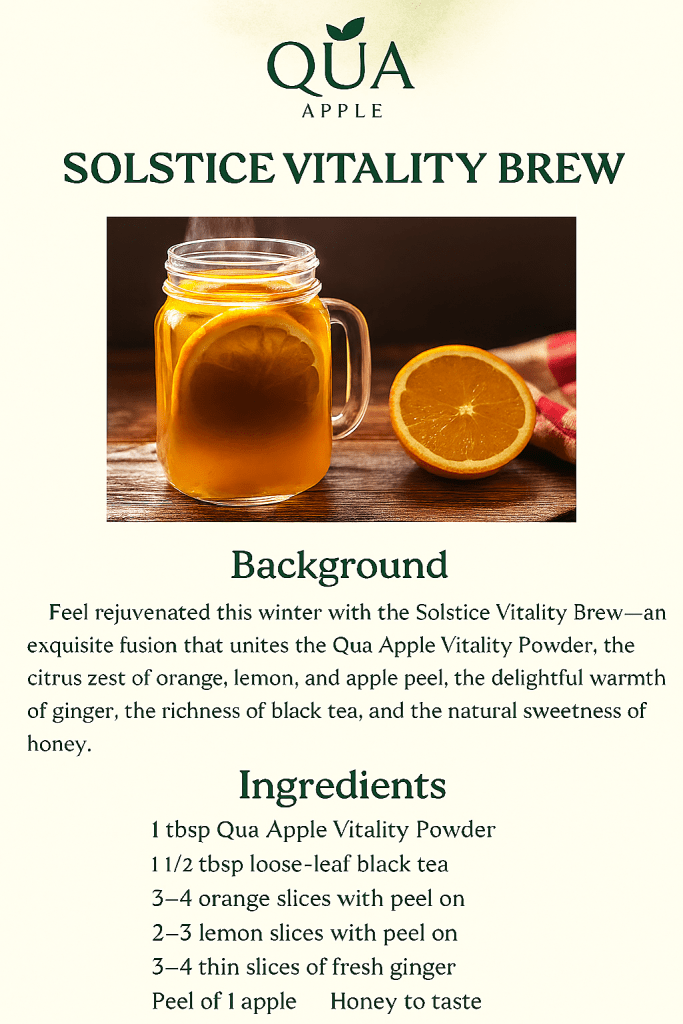
Here’s a rich and evocative profile for your fictional Solstice Vitality Brew, featuring the Qua Apple as its star ingredient. Perfect for your blog series:
🍵 Solstice Vitality Brew
A warming herbal infusion crafted to awaken the spirit, soothe digestion, and celebrate seasonal renewal.
Origin Story
Traditionally brewed during the winter solstice in highland communities where the Qua Apple grows, this brew was believed to “wake the blood” and fortify the body against the long cold months. Elders would prepare it in communal gatherings, steeping rare apples with herbs that symbolized endurance, clarity, and warmth.
Preparation
Strain and serve warm, ideally by candlelight or fire.
Combine all ingredients in a ceramic teapot or small saucepan.
Add 2 cups of hot water just off the boil.
Cover and steep for 10–15 minutes.
Symbolic Use
- Qua Apple: vitality, clarity, and resilience
- Rose hips: renewal and protection
- Cinnamon: inner fire and transformation
- Mint/Fennel: clarity and digestion
- Ginger: movement and awakening
Modern Adaptation
This brew could be bottled as a seasonal wellness tonic or featured in solstice-themed spa retreats. It pairs beautifully with meditation, journaling, or storytelling rituals that honor the turning of the year.
Qua Apple in a folkloric wellness recipe:
🍏 Traveler’s Digestive Elixir
In alpine villages where the Qua Apple was once cultivated, this elixir was a staple among shepherds, traders, and pilgrims. Before setting out across rugged terrain, travelers would sip this brew to settle their stomachs and fortify their spirits. It was often prepared by innkeepers or herbalists and served with blessings for safe passage.
Ingredients
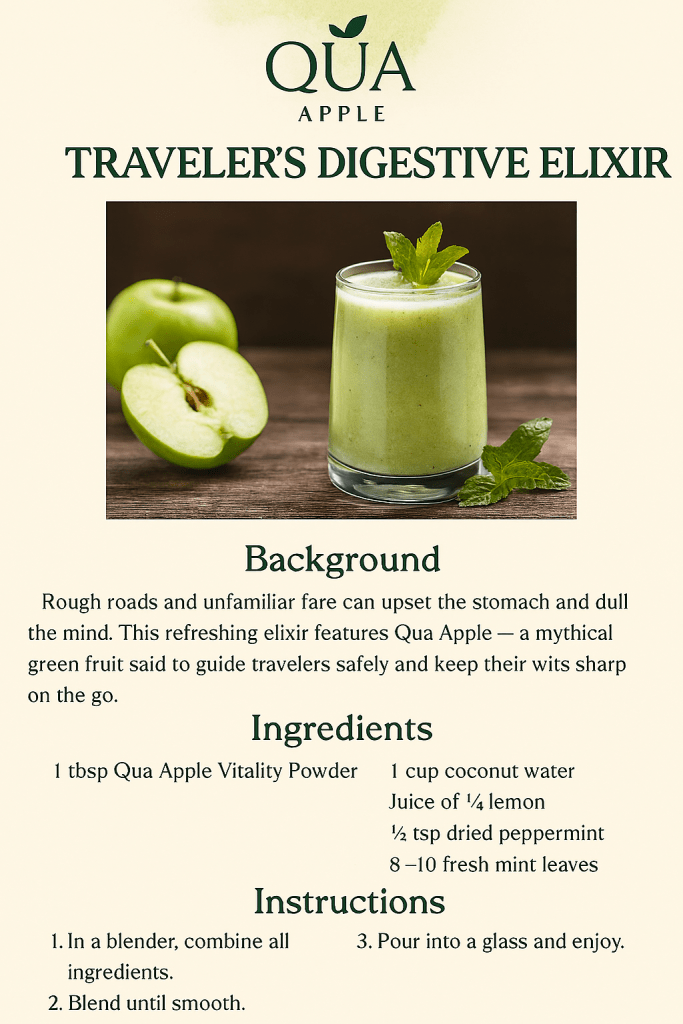
A restorative tonic brewed to soothe the belly, sharpen the senses, and protect the weary on long journeys.
Origin Story
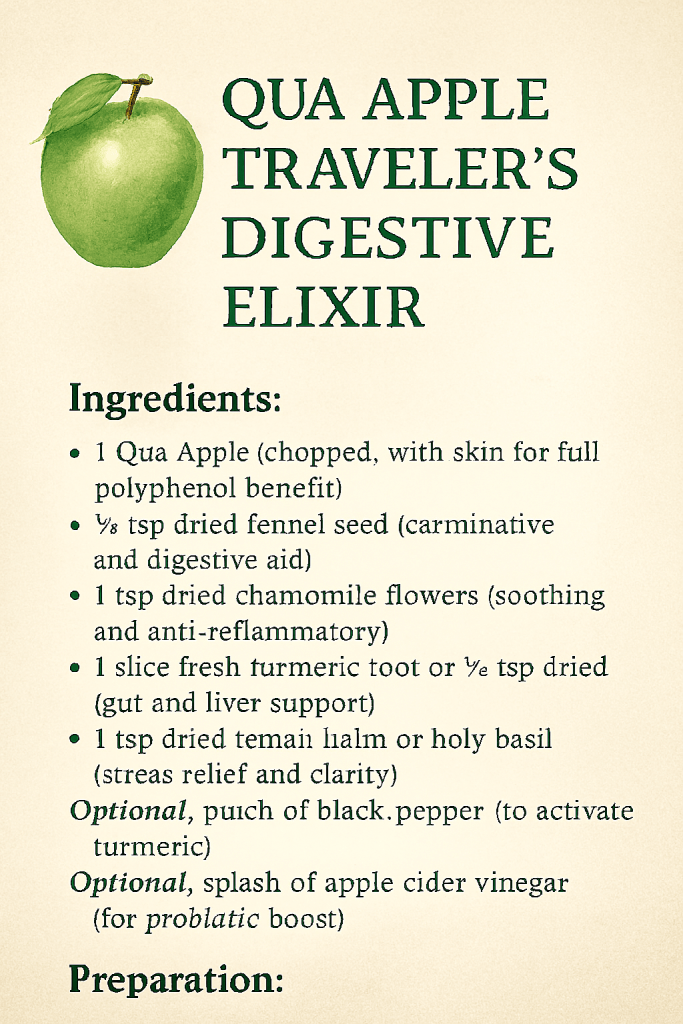
Add all ingredients to a small pot with 2 cups of water.
Bring to a gentle simmer for 10 minutes.
Strain and sip slowly, ideally before or after travel.
Can be cooled and stored in a flask for on-the-go use.
Symbolic Use
Qua Apple: grounding, clarity, and digestive resilience
Fennel: protection and movement
Chamomile: peace and restoration
Turmeric: strength and purification
Lemon Balm: emotional balance and mental clarity
Modern Adaptation
This elixir could be bottled as a travel-friendly wellness shot or featured in herbal apothecaries as a “gut guardian.” It pairs well with mindfulness rituals, journaling, or breathwork before travel.
The Qua Apple is not currently available in the United States. It appears to be a fictional or folkloric fruit rather than a commercially cultivated variety
Top substitutes for the Qua Apple in the U.S. include Honeycrisp, Fuji, Ever Crisp, and Pink Lady—each prized for their crisp texture and balanced flavor.
If you’re looking to match the Qua Apple’s imagined qualities—perhaps a juicy crunch, mystical sweetness, or vibrant color these real-world varieties offer excellent stand-ins for your blog series or recipe development:
🍎 Best U.S. Apple Varieties for Qua Apple Substitution
| Apple Variety | Flavor Profile | Texture | Notes |
|---|---|---|---|
| Honeycrisp | Sweet-tart, refreshing | Exceptionally crisp and juicy | Bred for flavor; fractures cleanly when bitten |
| Fuji | Very sweet, low acidity | Firm and dense | Great for snacking and baking |
| EverCrisp | Sweet with hints of spice | Crunchy and long-lasting | Hybrid of Honeycrisp and Fuji; excellent shelf life |
| Pink Lady (Cripps Pink) | Tart with floral sweetness | Crisp and fine-grained | Ideal for fresh eating and salads |
| Arkansas Black | Tart, mellow with age | Dense and firm | Deep plum-red skin; adds visual drama |
Sources:
🍏 Editorial
You can use these real apples as “stand-ins” in your recipes while maintaining the mystique:
- Honeycrisp as the “Sunlit Qua”: Used in rituals celebrating the first frost.
- EverCrisp as the “Preserved Qua”: Said to retain vitality through the longest winters.
- Arkansas Black as the “Shadow Qua”: Only sliced under moonlight for dream-divining brews.
People taking blood thinners, sedatives, or with certain medical conditions should consult a healthcare provider before consuming these recipes. Some ingredients may interact with medications or exacerbate health issues.
⚠️ Who Should Use Caution or Avoid These Ingredients
Ginger
- Risk: May increase bleeding risk when combined with blood-thinning medications (e.g., warfarin, aspirin, clopidogrel).
- Avoid if: You’re preparing for surgery, have bleeding disorders, or take anticoagulants.
Turmeric
- Risk: Can interact with blood thinners, diabetes medications, and drugs affecting liver function.
- Avoid if: You take warfarin, insulin, tamoxifen, or have liver disease.
Chamomile
- Risk: Mild sedative effects; may interact with CNS depressants or cause allergic reactions (especially in people allergic to ragweed).
- Avoid if: You’re on sedatives, have seasonal allergies, or are pregnant.
Lemon Balm & Holy Basil
- Risk: May enhance sedative effects or interfere with thyroid medications.
- Avoid if: You’re taking thyroid meds, sedatives, or have hypothyroidism.
Fennel Seed
- Risk: Can mimic estrogen; may interfere with hormone-sensitive conditions.
- Avoid if: You have estrogen-sensitive cancers or take hormonal therapies.
Apple Cider Vinegar
- Risk: May lower potassium levels and interact with diuretics or insulin.
- Avoid if: You have kidney issues, take diuretics, or blood sugar-lowering medications.
👶 Special Populations to Consider
- Pregnant or breastfeeding individuals: Avoid chamomile, turmeric, and holy basil unless cleared by a provider.
- Children under 12: Herbal concentrations may be too strong; consult a pediatrician.
- People with autoimmune conditions: Some herbs (e.g., turmeric, lemon balm) may stimulate immune activity and worsen symptoms.
✅ General Safety Tips
- Start with small doses to test tolerance.
- Avoid combining multiple herbs with similar effects (e.g., multiple sedatives or blood thinners).
- Always consult a healthcare provider if you’re on medication or managing a chronic condition.
✨ Closing Thought
The Qua Apple is more than just a fruit—it’s a living link to ancient cultivation, cultural symbolism, and culinary creativity. From its Central Asian origins to its place in kitchens and traditions worldwide, it embodies the enduring appeal of apples in human history.

This content is for informational and educational purposes only and does not constitute medical advice. Always consult a qualified healthcare provider before using herbal remedies, especially if you are pregnant, breastfeeding, taking medications, or managing a chronic condition. Not intended for children under 12. Use caution with herbs that may interact with blood thinners, sedatives, hormone-sensitive conditions, or autoimmune disorders.
🌿✨ Stay tuned for the next exciting fruit in our Qua Apple series — another curious “Q” bursting with folklore, flavor, and functional magic. 🍏
 EJADA
EJADA 
Leave a comment