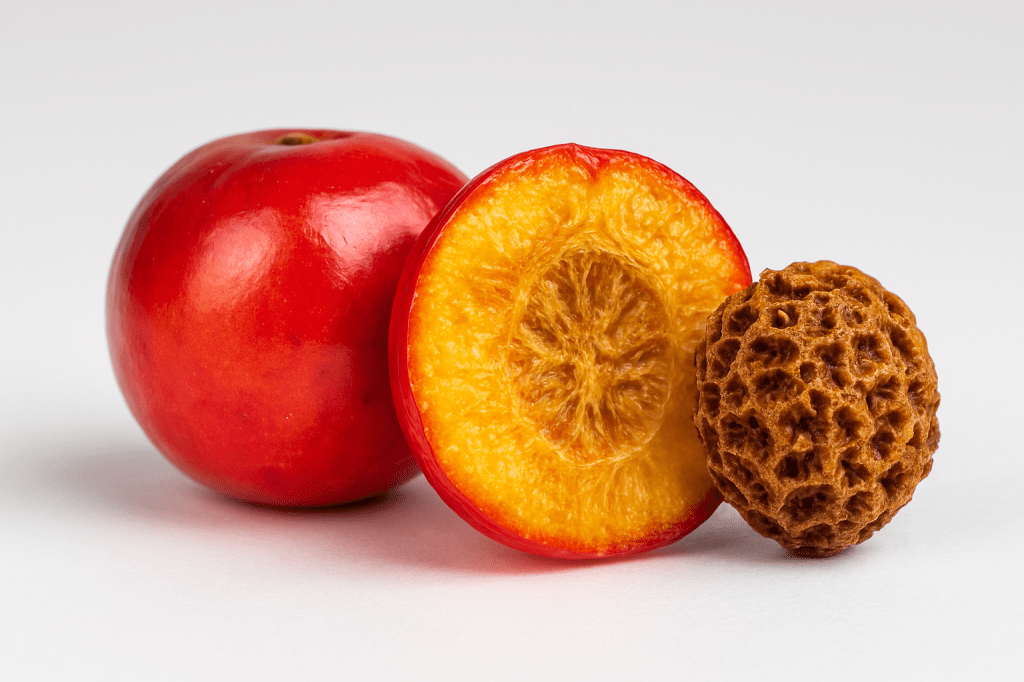
The Quandong, better known as the “native peach,” is celebrated for its vibrant red fruit and tart-sweet flavor, but lesser known for its deep ceremonial and medicinal roles in Indigenous Australian cultures. It was first cultivated and revered by Aboriginal peoples across southern and central Australia, especially in Victoria’s western plains and desert regions.
🌿 Better Known For
The Quandong, often called the “native peach,” is celebrated for its bright red fruit and tart-sweet flavor. It’s a staple of bush tucker cuisine, used in pies, jams, chutneys, and juices. Its resilience in arid environments, thanks to its hemiparasitic nature, also makes it notable as a hardy desert crop.
🌌 Little Known For
Beyond its culinary fame, Quandong holds deep ceremonial and medicinal significance. Indigenous Australians used it in rituals symbolizing renewal and ancestral connection. The leaves and bark were applied to treat skin and digestive ailments, while the hard nuts were ground into pastes or worn as protective amulets. It was also a valued trade item and features in Dreamtime stories, linking it to creation and moral teachings.
🧭 First Cultivated
The Quandong was first cultivated and managed by Aboriginal peoples of Australia, who integrated it into their food systems, trade networks, and ceremonial life for tens of thousands of years. Fossil evidence shows the fruit’s presence in southern Victoria as far back as 40 million years, and Indigenous Australians have actively used and tended it for over 50,000 years.
Today, Quandong orchards exist in South Australia and Western Australia, but the fruit remains far more significant culturally than commercially.
Fossilized Quandong remains discovered in southern Victoria date back 40 million years, showing its ancient presence in Australia’s ecosystems.
This longevity made it a stable, reliable food source in arid and semi-arid regions.
🧭 First Cultivators
Aboriginal communities across central and southern Australia were the first to cultivate and manage Quandong groves.
They practiced fire-stick farming (controlled burns) to encourage growth and fruiting, and carefully monitored host plants that Quandong trees parasitized for nutrients.
Groves were often located near sacred waterholes and ceremonial grounds, linking cultivation with spiritual practice.
🌍 Regional Spread
Quandong thrived in semi-arid and desert zones of South Australia, Victoria, New South Wales, and Western Australia.
It became a trade staple, carried along songlines and exchange routes, valued both as food and as a ceremonial item.
🔮 Cultural Cultivation
Beyond food, Aboriginal peoples cultivated Quandong for medicine, ceremony, and storytelling.
The fruit and nuts were used in Dreamtime narratives, reinforcing its role as more than just sustenance—it was a cultural anchor.
🌿 Transition to Modern Cultivation
European settlers noted its use but only began scientific domestication attempts in the 20th century.
Since the 1970s, the CSIRO (Commonwealth Scientific and Industrial Research Organisation) has worked on developing commercial cultivars, focusing on improving fruit yield and host plant compatibility.
Sources:
- Wikipedia – Santalum acuminatum
- American Gardener – Quandong (Desert Peach)
- Britannica – Quandong
- Agronomy Australia Proceedings – Where are all the Quandongs?
- Food Tank – Indigenous Crop: Quandong, the Scarlet Desert Peach
🔮 Ceremonial Uses
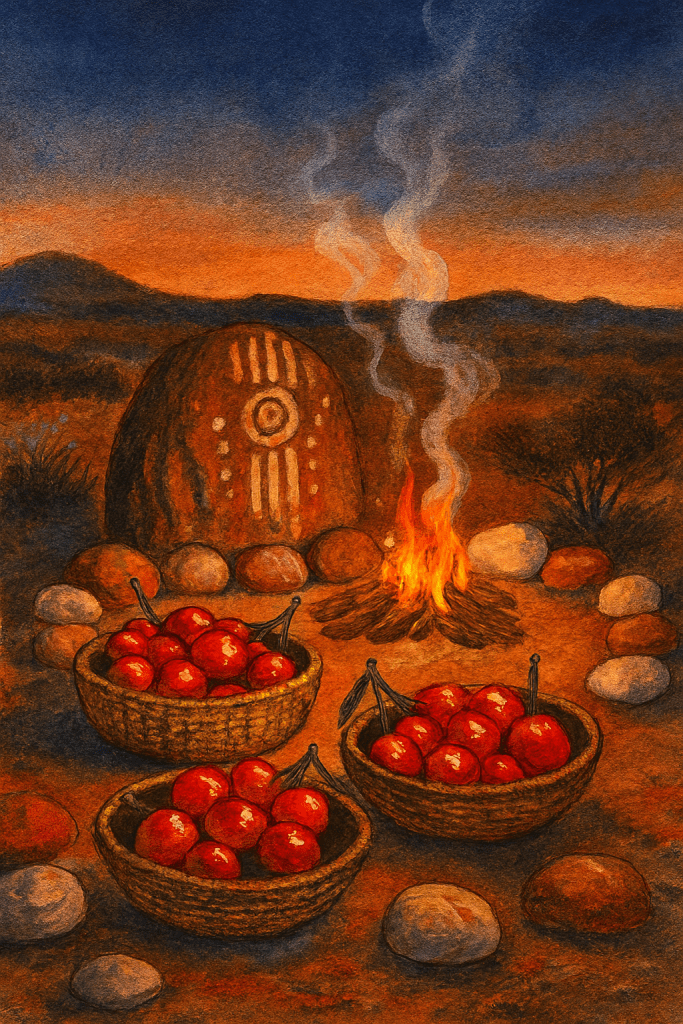
Quandong fruit was eaten during ceremonies marking rebirth, seasonal change, and spiritual cleansing. It was offered to ancestors at altars or burial sites, and its presence in Dreamtime narratives tied it to cycles of life and creation. In some traditions, the fruit was brewed into teas or shared communally to strengthen kinship bonds.
In the past, Quandong was valued by Indigenous Australians for treating digestive issues, skin ailments, and as a ceremonial food-medicine. Today, modern research highlights its high vitamin C, antioxidant, and anti-inflammatory properties, supporting immunity, skin health, and digestion.
🌿 Traditional (Then) Uses
Digestive Aid: Quandong fruit and teas made from its flesh were used as gentle laxatives and purgatives.
Skin Treatments: Crushed leaves or chewed pulp were applied to sores, boils, and wounds to reduce infection.
Pain Relief: Infusions were used to ease rheumatism and headaches.
Hair & Skin Care: Oils from crushed nuts were applied to condition hair and soothe skin.
Ceremonial Medicine: Quandong was consumed in rituals symbolizing renewal and healing, reinforcing its role as both food and medicine.
🌱 Modern (Now) Benefits
Rich in Vitamin C: Quandong contains up to twice the vitamin C of an orange, boosting immunity and collagen production.
Antioxidant Powerhouse: High in phenolic compounds and ellagic acid, which help reduce oxidative stress and inflammation.
Digestive Health: Its dietary fiber supports gut health and regularity.
Skin & Anti-Aging: Antioxidants and vitamin E (especially in the kernels) protect skin from free radical damage and support wound healing.
Cardiovascular Support: Healthy fats in the kernels (omega-3 and omega-6) may help balance cholesterol and reduce heart disease risk.
Sustainable Nutrition: Low-calorie, nutrient-dense, and drought-resistant, Quandong is increasingly recognized as a “superfruit” in modern diets.
🌿 Quandong
The “Then & Now” Medicine Chest
Then (Traditional Uses)
Brewed into teas as a digestive aid and gentle laxative
Crushed leaves and pulp applied to wounds, sores, and skin irritations
Infusions used to ease rheumatism and headaches
Kernels ground into pastes or oils for hair and skin care
Consumed in ceremonies symbolizing renewal and healing
Now (Modern Benefits)
Exceptionally high in vitamin C, supporting immunity and collagen production
Rich in antioxidants (ellagic acid, phenolic compounds) that reduce inflammation and oxidative stress
Provides dietary fiber for gut health and digestion
Kernel oils contain omega-3 and omega-6 fatty acids, supporting heart and skin health
Recognized as a sustainable “superfruit” in modern nutrition and skincare
Quandong has a rich recipe tradition in Australia, ranging from jams and pies to chutneys, crumbles, and even savory pairings with meats. It’s one of the most versatile bush fruits, used both in traditional Aboriginal cooking and in modern Australian cuisine.
🍯 Sweet Recipes
Quandong Jam – The most iconic preparation. Tart fruit is simmered with sugar and lemon juice, producing a ruby-red preserve with a tangy kick.
Quandong Pie – A classic outback dessert, often compared to apricot or rhubarb pie. The fruit is stewed with sugar and baked under a flaky crust.
Quandong Crumble – Stewed fruit topped with oats, butter, and brown sugar, baked until golden.
Quandong Muffins & Cakes – Dried or fresh quandongs folded into batter for a tart-sweet burst.
🥘 Savory Recipes
Quandong Chutney – Fruit cooked with vinegar, onion, ginger, and spices, served alongside meats or cheeses.
Quandong Sauce/Glaze – Reduced fruit purée used as a glaze for kangaroo, lamb, or poultry.
Quandong Relish – A tangy condiment for sandwiches or charcuterie boards.
🍹 Drinks & Preserves
Quandong Smoothie – Blended with yogurt or milk for a creamy, tart drink.
Quandong Paste (similar to quince paste) – A dense, sliceable fruit paste paired with cheese.
Quandong Cordial or Syrup – Concentrated fruit syrup diluted with soda water or used in cocktails.
🌿 Traditional Aboriginal Uses
Quandongs were often eaten raw or dried for long journeys.
Dried fruit was reconstituted in water and used in cakes or stews.
The kernels were sometimes roasted or ground into pastes, though more often reserved for medicinal purposes.
Sources for recipes:
Ostrali.com – 12+ Homemade Quandong Recipes
Bush Tucker Recipes – Quandong at the Aussie Table
Fork & Salt – Quandong Pie Recipe
Native Foods – Traditional Quandong Jam
In Aboriginal tradition, Quandongs were gathered in the heat of summer and dried for journeys across the desert. Later, settlers transformed this tart fruit into pies, weaving Indigenous knowledge into colonial kitchens. Today, the Quandong Pie is both a dessert and a story — a taste of resilience, trade, and shared heritage.
🥧 Quandong Pie — The Desert’s Native Peach
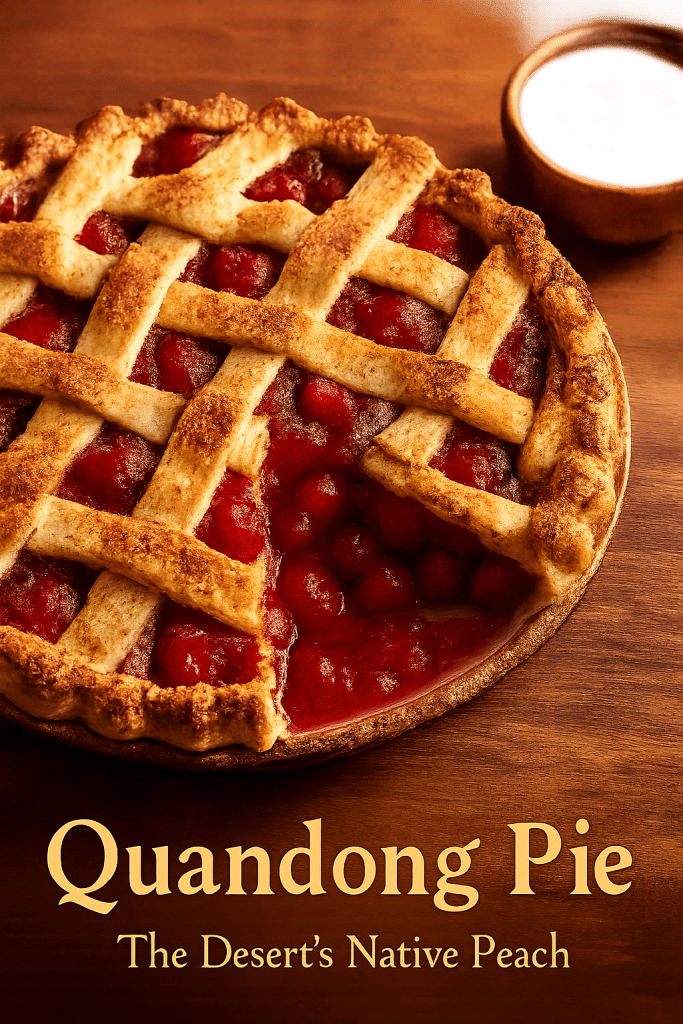
A tart, jewel-red bush fruit baked into a golden crust, carrying the flavor of Australia’s desert heart.
Ingredients
Base Pastry
- 250 g self-raising flour
- 2 tbsp caster sugar
- 120 g cold butter
- A little milk or water
Filling - 500 g prepared quandongs (fresh, frozen, or rehydrated dried)
- 1 cup caster sugar
- 1 tbsp cornflour
Directions
- Combine flour and sugar, cut butter through until crumbly. Add milk/water to form a stiff pastry. Roll out, line a greased pie plate, trim edges.
- Cover pastry with quandongs.
- Mix cornflour and sugar, sprinkle over fruit. Roll remaining pastry to cover, seal edges, spritz with water.
- Bake in a moderate oven (180 °C / 350 °F) for 30–40 minutes until golden brown.
Serve warm with cream or ice cream.
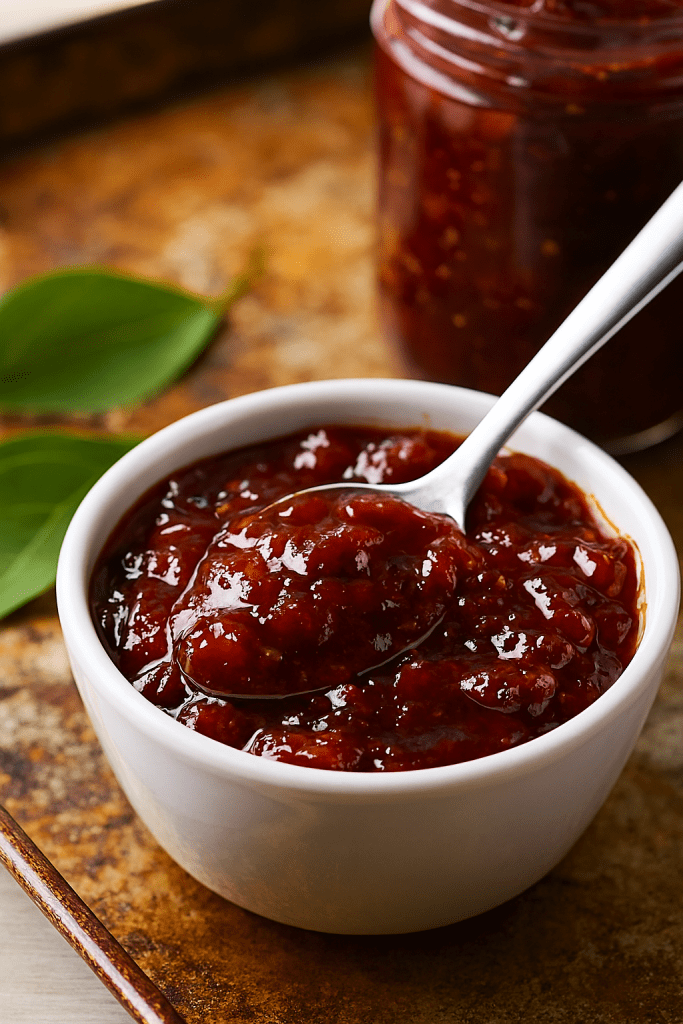
In the Songlines of the desert, Quandongs were more than food — they were medicine, memory, and trade. When simmered into chutneys, the fruit carried its story across journeys, blending native sharpness with the warmth of spice. This chutney is a modern echo of those travels, a savory preserve that bridges bush tucker and colonial kitchens.
🍴 Quandong Chutney — Songlines on the Plate
Ingredients
- 1 cup dried Quandongs (soaked overnight)
- ½ cup apple cider vinegar
- ½ cup brown sugar
- 1 small red onion, finely chopped
- 1 inch fresh ginger, grated
- 1 garlic clove, minced
- ½ tsp ground cinnamon
- ¼ tsp ground cloves
- ¼ tsp salt
- Chili flakes (optional, for heat)
Method
Spoon into sterilized jars while hot, seal, and cool.
Serving Note
Traditionally, Quandongs were eaten raw or dried. This chutney spices the fruit into a savory preserve perfect with lamb, sharp cheeses, or curries.
Drain soaked Quandongs and place all ingredients in a saucepan.
Bring to a simmer over medium heat, stirring until sugar dissolves.
Reduce heat and cook for 30–45 minutes, until thickened and glossy.
Adjust seasoning to taste.
Quandong is considered a native Australian “superfruit” thanks to its exceptionally high vitamin C, antioxidant compounds, dietary fiber, and healthy kernel oils that support immunity, skin, digestion, and heart health. Both the fruit and its kernels have been valued for centuries in Indigenous medicine and are now backed by modern nutritional research.
🌿 Key Health Benefits of Quandong Fruit
Rich in Vitamin C: Quandong contains up to twice the vitamin C of an orange, which strengthens the immune system, supports collagen production, and promotes skin vitality.
Antioxidant Powerhouse: The fruit is loaded with phenolic compounds and ellagic acid, which help combat oxidative stress, reduce inflammation, and may lower the risk of chronic diseases.
Digestive Health: High dietary fiber aids in gut health, regularity, and satiety, making it useful for weight management.
Anti-Inflammatory Effects: Traditional use as a poultice for wounds and modern studies both highlight its ability to reduce swelling and pain.
Skin & Eye Health: Antioxidants and vitamin C protect against free radical damage, supporting wound healing, anti-aging, and even eye health.
Low-Calorie, Nutrient-Dense: A healthy snack option that delivers nutrition without excess calories.
🌰 Health Benefits of Quandong Kernels
- Healthy Fats: Kernels are rich in omega-3 and omega-6 fatty acids, which support cardiovascular health, reduce inflammation, and aid brain function.
- Protein Source: Provides plant-based protein for muscle repair, energy, and satiety.
- Vitamin E & B Vitamins: Vitamin E acts as a skin-protective antioxidant, while B vitamins (niacin, folate) support energy metabolism and cell growth.
- Mineral Rich: Contains magnesium, potassium, zinc, and iron, all vital for nerve function, immunity, and oxygen transport.
🌌 Traditional Aboriginal Uses (Then)
Medicinal Teas: Infusions of fruit used as gentle laxatives and to ease rheumatism.
Skin Treatments: Crushed leaves and pulp applied to sores and infections.
Hair & Skin Oils: Kernels crushed into pastes or oils for conditioning and healing.
Ceremonial Medicine: Consumed in rituals symbolizing renewal and ancestral connection.
Sources:
[1] Greg App – 7 Benefits of Having a Quandong
[2] Holistic Health Pathways – What is Quandong?
[3] Native Foods – Quandong Kernel Health Benefits
[4] Soothi.es – Anti-Inflammatory Benefits of Quandong
[5] NaturalPedia – Quandong: Sources, Health Benefits, Nutrients, Uses
[11] Facts.net – 32 Facts About Quandong
Quandong is especially rich in Vitamin C (often higher than oranges), along with Vitamin E, folate (B9), thiamine (B1), niacin (B3), and carotenoids (beta-carotene, cryptoxanthin). It is native to Australia and mainly available through wild harvests and small commercial orchards in South and Western Australia. Outside Australia, it is rarely found fresh but may be available in dried, frozen, or processed forms (jams, chutneys, powders).
🍎 Vitamin Profile of Quandong (per 100 g flesh)
Vitamin C: ~20 mg — supports immunity, collagen, and skin health
Vitamin E (alpha-tocopherol): ~0.7 mg — antioxidant, protects skin and cells
Folate (B9): ~191 µg — essential for cell growth and repair
Thiamine (B1): ~0.04 mg — helps energy metabolism
Niacin (B3): ~0.8 mg — supports nervous system and digestion
Carotenoids: beta-carotene (~45 µg) and cryptoxanthin (~62 µg) — precursors to Vitamin A, beneficial for vision and skin
(Values vary depending on whether fruit is fresh, dried, or processed)
🌍 Availability
Native Range: Quandong (Santalum acuminatum) grows in arid and semi-arid regions of central and southern Australia.
Harvest Season: Typically late spring to summer (November–January in Australia).
Commercial Supply:
Mostly wild-harvested by Aboriginal communities and small growers.
Available in frozen pulp, dried slices, jams, chutneys, and powders for export.
Fresh fruit is rarely exported due to its short shelf life.
Outside Australia: Quandong is not widely cultivated. Specialty suppliers may offer dried fruit or powders for culinary and health uses.
Since Quandong (Santalum acuminatum) is native to Australia and not available in the U.S., the best substitutes are tart stone fruits like apricots, sour cherries, cranberries, or rhubarb. These mimic Quandong’s balance of sweet-tart flavor and can be used in pies, jams, chutneys, and sauces.
🍑 Best Quandong Substitutes in the U.S.
| Substitute | Why It Works | Best Uses |
|---|---|---|
| Apricots | Closest in flavor and texture; tangy sweetness | Pies, jams, chutneys |
| Sour Cherries | Tart, bright red fruit with similar acidity | Pies, sauces, preserves |
| Cranberries | Strong tartness, deep red color, high antioxidants | Chutneys, relishes, festive dishes |
| Rhubarb | Sharp tartness, often paired with sugar | Pies, crumbles, compotes |
| Plums | Sweet-tart balance, juicy flesh | Sauces, jams, desserts |
🌿 How to Choose the Right Substitute
- For Sweet Recipes (pies, crumbles, jams): Apricots or sour cherries are the closest match.
- For Savory Recipes (chutneys, sauces with meat): Cranberries or rhubarb give the right tang and depth.
- For Visual Impact (bright red color): Sour cherries and cranberries best replicate the striking look of Quandong.
⚠️ Precaution & Disclaimer
Traditional Knowledge: The cultural and medicinal uses of Quandong described here are drawn from Aboriginal traditions. They are shared for educational and storytelling purposes only.
Not a Substitute for Medical Advice: While Quandong is rich in vitamins and antioxidants, it should not be relied upon as a treatment for medical conditions. Always consult a qualified healthcare professional for health concerns.
Allergies & Sensitivities: As with any fruit, individuals may experience allergic reactions or digestive sensitivities. Introduce Quandong (or substitutes) gradually if you have not consumed it before.
Food Safety: Only the fruit flesh is commonly eaten. Kernels and other plant parts should not be consumed unless properly prepared, as traditional knowledge indicates specific uses that may not be safe without guidance.
Availability: Quandong is native to Australia and not widely available elsewhere. Substitutes such as apricots, sour cherries, or cranberries may be used in recipes, but they do not replicate the full nutritional or cultural profile.
🌞 Closing Thought
Don’t worry if you can’t find fresh Quandongs in the U.S., the spirit of this desert peach lives on in the kitchen. Apricots, sour cherries, cranberries, and rhubarb all make wonderful stand‑ins, carrying that same sweet‑tart brightness into pies, chutneys, and preserves. What matters most is the story you’re telling and the joy of sharing it at the table.
So whether it’s a true Quandong or a clever substitute, every slice and spoonful is a taste of connection, tradition, and creativity.
 EJADA
EJADA 
Leave a comment