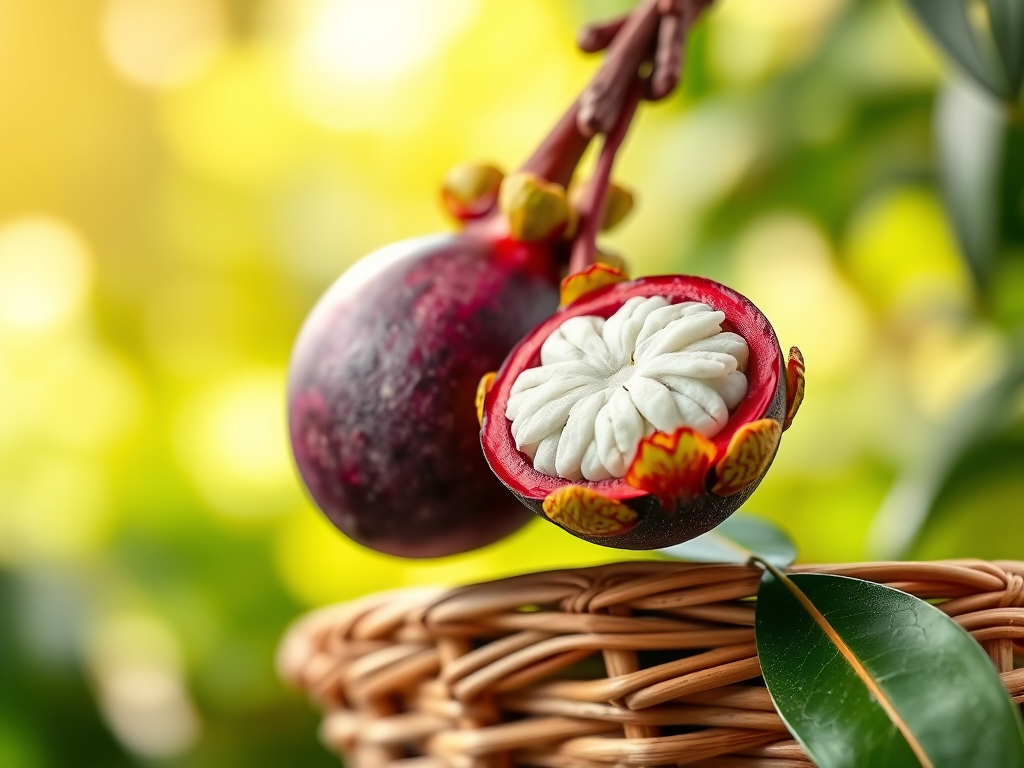
The Purple Mangosteen (Garcinia mangostana) is a tropical fruit native to Southeast Asia, often called the “Queen of Fruits.” It originated in the Sunda Islands and Moluccas of Indonesia, has been prized for centuries for its sweet-tangy flavor, medicinal uses, and cultural symbolism. It is rich in antioxidants, vitamin C, and minerals, widely used in traditional medicine, culinary dishes, and rituals, though availability outside the tropics can be limited and precautions apply for certain health conditions.
🌿 Origins & Discovery
Scientific name: Garcinia mangostana
Native region: Sunda Islands and Moluccas (Indonesia)
Historical recognition: Known in Southeast Asia for centuries; introduced to Europe in the 19th century. Queen Victoria famously offered a reward to anyone who could bring her fresh mangosteens.
First uses: Traditional medicine in Southeast Asia and China, treating inflammation, skin conditions, and digestive issues.
💪 Health Benefits
Antioxidants: Rich in xanthones, compounds with anti-inflammatory and immune-boosting properties.
Vitamin C: Supports immunity and skin health.
Fiber: Aids digestion and gut health.
Minerals: Contains potassium, magnesium, and calcium.
Traditional medicine: Used to reduce body heat in the Philippines, and as a cooling, balancing fruit in Chinese medicine.
🍊 Vitamins & Nutrients
Vitamin C (immune support, collagen production)
B vitamins (small amounts, energy metabolism)
Dietary fiber (digestive health)
Potassium, magnesium, calcium (heart, muscle, and bone health)
🎎 Ritual & Cultural Significance
Thailand: Considered the national fruit.
Philippines: Consumed for its “cooling” properties during hot seasons.
Festivals & gifts: Given as a ceremonial gift during Southeast Asian celebrations.
Royal luxury: Once reserved for kings and queens due to rarity.
🍽 Culinary Uses
Eaten fresh: Sweet, tangy white flesh inside a thick purple rind.
Desserts: Ice creams, sorbets, puddings.
Preserves: Jams, jellies, and syrups.
Beverages: Juices and smoothies, sometimes fermented into wine.
Savory pairings: Used in salads or paired with seafood/poultry for a tropical twist.
⚠️ Precautions
Allergies: Rare, but possible.
Blood thinning: Mangosteen may slow blood clotting; caution for those on anticoagulants.
Pregnancy & breastfeeding: Limited safety data—best to avoid supplements.
Supplements vs. fruit: Whole fruit is generally safe; concentrated extracts may cause side effects.
🌍 Availability
Native regions: Indonesia, Malaysia, Thailand, Philippines.
Global trade: Fresh mangosteen is seasonal and perishable, so availability outside Asia is limited.
U.S. & Europe: Often sold frozen, canned, or as juice/powder. Fresh imports are increasingly available in specialty markets during summer months.
✅ In summary: Purple Mangosteen is a fruit with deep cultural roots, medicinal history, and modern culinary appeal. It’s celebrated for its antioxidant-rich nutrition, ceremonial symbolism, and refreshing taste, but should be consumed with awareness of potential interactions and seasonal availability.
Perfect—let’s lay it out in a side‑by‑side comparison so you can see how the traditional uses of Purple Mangosteen line up (or diverge) from what modern science has confirmed so far:
📊 Purple Mangosteen: Traditional vs. Modern Findings
Tradition and science overlap most clearly in its antioxidant, digestive, and antimicrobial roles.
Science is still catching up—many traditional claims are supported by lab studies but not yet by large human trials.
Cultural significance endures: from royal courts to modern festivals, mangosteen is still revered as a fruit of luxury, healing, and balance.
Fresh Purple Mangosteen is most abundant in Southeast Asia from June to September, with extended harvests in some regions into early winter. In the U.S. and Europe, fresh fruit is rare but can be found in specialty markets during summer months, often imported from Thailand, Mexico, or Guatemala. Outside those windows, mangosteen is usually available frozen, canned, or as juice/powder.
📅 Seasonal Availability by Region
Sources: Tridge Global Seasonality Data, Low FODMAP Eating Guide, Specialty Produce.
🌍 Key Insights
Southeast Asia dominates: Thailand alone accounts for nearly half of the world’s mangosteen supply.
U.S. imports: Since 2007, mangosteen imports have been allowed if irradiated. Most U.S. supply comes from Thailand, Mexico, and Guatemala.
Europe: Imports are smaller in volume, making fresh mangosteen a luxury item.
Year-round options: Outside peak harvest, mangosteen is available as frozen pulp, canned segments, or powdered supplements.
If you want fresh mangosteen in the United States, your best chance is July–September at Asian markets or specialty grocers. For year‑round use in culinary or branding projects, frozen or powdered mangosteen is the most reliable option.
Purple Mangosteen is prized both in the kitchen and in traditional herbal medicine. Culinary uses focus on its sweet‑tart flesh in desserts, drinks, and savory pairings, while herbal uses draw on its rind, bark, and leaves for remedies against inflammation, digestive issues, and skin conditions.
🍽 Culinary Uses
Fresh fruit: The white, juicy arils are eaten raw, often chilled as a refreshing treat.
Desserts: Incorporated into ice creams, sorbets, puddings, and tropical fruit salads.
Beverages: Blended into juices, smoothies, cocktails, and even fermented into wine.
Preserves: Made into jams, jellies, and syrups.
Savory dishes: In Southeast Asia, mangosteen is sometimes paired with seafood or poultry to balance rich flavors with its tangy sweetness.
Gourmet cuisine: Increasingly used by chefs worldwide as a luxury fruit garnish or flavor accent.
🌿 Herbal & Traditional Uses
Rind (pericarp): Dried and powdered for teas or decoctions to treat diarrhea, dysentery, and skin infections.
To make dried and powdered rind (pericarp) for teas or decoctions, you’ll need to dry the rind thoroughly, then grind it into a fine powder. Here’s a step-by-step guide.
🥄 Step-by-Step: How to Dry and Powder Rind (Pericarp)
1. Harvest and Clean
- Select mature fruit with thick, healthy rinds (e.g., pomegranate, bael, citrus).
- Rinse thoroughly under cool water to remove dirt or residues.
- Pat dry with a clean towel—avoid soaking, as moisture can cause mold.
2. Cut and Prepare
- Peel the rind from the fruit, removing any pulp or inner flesh.
- Slice into thin strips or small pieces to speed up drying.
3. Dry the Rind
Choose one of the following methods:
- Air Drying: Spread pieces on a mesh screen or paper towel in a warm, dry, shaded area with good airflow. Turn daily. Takes 5–10 days.
- Dehydrator: Place on trays at 95–115°F (35–46°C) for 6–12 hours until brittle.
- Oven Drying: Set oven to lowest temp (ideally under 150°F/65°C). Place rind on a baking sheet lined with parchment. Leave oven door slightly ajar. Dry for 4–6 hours, checking frequently.
Tip: Rind is ready when it snaps cleanly and shows no moisture inside.
4. Grind into Powder
- Use a coffee grinder, spice mill, or high-speed blender.
- Pulse until you get a fine powder.
- Sift through a fine mesh strainer to remove coarse bits (optional).
5. Store Properly
- Transfer powder to an airtight glass jar.
- Label with name and date.
- Store in a cool, dark place for up to 1 year.
🍵 How to Use in Teas or Decoctions
- Tea (Infusion): Use 1 tsp of powder per cup of hot water. Steep 5–10 minutes. Strain before drinking.
- Decoction (for tougher rinds):
- Simmer 1–2 tsp of powder in 1 cup water for 15–30 minutes.
- Strain and drink warm.
Decoctions are stronger and better for extracting medicinal compounds from dense or woody rinds.
🔥 How to Make a Decoction from Rind (Pericarp)
🧪 Ingredients
- Dried rind powder or chopped pieces (e.g., pomegranate, bael, citrus)
- Water — typically 1 cup (240 ml) per teaspoon of rind
- Optional: supporting herbs (like ginger or cinnamon for flavor and synergy)
🥣 Method
- Combine the rind and water in a stainless steel or glass pot.
- Bring to a boil, then reduce to a gentle simmer.
- Simmer uncovered for 20–45 minutes. The longer the simmer, the stronger the extraction.
- Strain through a fine mesh or cheesecloth.
- Use warm or cool, depending on the application.
🧊 Storage
- Refrigerate unused decoction in a glass jar for up to 48 hours.
- Reheat gently before use — never microwave herbal preparations
Leaves & bark: Used in poultices for wounds, eczema, and inflammation.
To make a poultice from leaves and bark for wounds, eczema, or inflammation: crush or simmer the plant material, apply warm to the skin, and cover with a cloth to retain heat and moisture.
Here’s a detailed guide to help you prepare and apply it safely and effectively:
🌿 How to Make a Poultice from Leaves & Bark
- Choose and Prepare the Plant Material
- Leaves: Use fresh or dried leaves with known healing properties (e.g., plantain, calendula, comfrey).
- Bark: Use inner bark (cambium layer), not the tough outer bark. Dry and grind or simmer to soften.
- Preparation Methods
For Fresh Leaves:
- Rinse thoroughly.
- Crush or bruise into a pulp using a mortar and pestle or rolling pin.
- Optionally, lightly steam or warm in a pan with a splash of water to release juices.
For Dried Leaves or Bark: - Soak in hot water for 10–15 minutes to rehydrate.
- Simmer bark gently for 15–20 minutes to soften and extract compounds.
- Mash into a paste or mix with a binder like flaxseed meal, cornmeal, or clay.
- Apply the Poultice
- Spread the warm (not hot) paste directly on the affected area.
- Alternatively, wrap the paste in a clean muslin or cotton cloth and place it on the skin.
- Cover with a warm towel or plastic wrap to retain heat and moisture.
- Duration and Frequency
- Leave on for 20–30 minutes, or until it cools.
- Reapply 2–3 times daily as needed.
- Always use a fresh poultice each time—do not reuse.
- Aftercare
- Gently rinse the area with warm water or a mild herbal tea (like chamomile).
- Pat dry and apply a soothing balm if needed.
⚠️ Safety Tips
- Do not apply to open wounds unless the plant is known to be sterile and safe.
- Test on a small patch of skin first to check for allergic reactions.
- Avoid aluminum pots when simmering herbs—use stainless steel or glass.
Roots: Sometimes brewed in traditional medicine for menstrual regulation.
Roots like Shatavari, White Peony, and Ginger are commonly brewed in traditional medicine to help regulate menstrual cycles, often by balancing hormones, improving blood flow, and easing cramps.
Here’s how traditional systems like Ayurveda and Traditional Chinese Medicine (TCM) approach root-based remedies for menstrual health:
🌿 Common Medicinal Roots for Menstrual Regulation
Sources:
🍵 How to Brew Roots for Menstrual Support
1. Choose Your Root
- Use dried root slices or powder from a trusted herbal supplier.
- For Shatavari or White Peony, powdered form is often preferred.
2. Basic Decoction Method
- Add 1–2 teaspoons of root powder or 1 tablespoon of chopped root to 1.5 cups of water.
- Bring to a boil, then simmer for 20–30 minutes.
- Strain and drink once or twice daily, starting a few days before your expected period.
3. Optional Additions
- Combine with cinnamon, fennel, or licorice for added flavor and synergy.
- Sweeten with honey if desired.
Always consult a qualified herbalist or healthcare provider before starting any new herbal regimen, especially if you have underlying conditions or are taking medications.
Cooling fruit: In Chinese and Filipino traditions, mangosteen is considered a “cooling” food, balancing excess body heat.
Yes — in both Traditional Chinese Medicine (TCM) and Filipino herbal practice, mangosteen is revered as a “cooling” fruit, used to rebalance internal heat and soothe inflammatory conditions.
🧊 Mangosteen as a Cooling Fruit
🏮 Chinese Tradition (TCM)
- Mangosteen is classified as a Yin-enhancing food, which helps counteract excess Yang (heat).
- It’s used to treat symptoms of internal heat such as:
- Sore throat
- Skin eruptions
- Fever
- Irritability
- Often consumed fresh or as a rind decoction, especially in summer or for individuals with “hot” constitutions.
🇵🇭 Filipino Herbal Practice - Mangosteen is considered anti-inflammatory and detoxifying.
- Decoctions made from the rind, bark, or leaves are used to treat:
- Diarrhea
- Urinary tract infections
- Skin conditions
- Fever
- The fruit is also eaten to cool the body during hot weather or illness.
🧪 Cooling Properties Backed by Phytochemistry
- Xanthones (especially alpha-mangostin) in the rind have potent anti-inflammatory and antioxidant effects.
- Tannins help tighten tissues and reduce inflammation.
- Fiber supports digestion and detoxification, contributing to the cooling effect.
In Traditional Chinese Medicine and Filipino herbal practices, mangosteen is revered as a potent “cooling” fruit used to balance excess body heat and treat heat-related conditions like sore throat, high blood pressure, and skin inflammation.
🧊 Mangosteen as a Cooling Fruit in Traditional Medicine
🏮 Chinese Tradition (TCM)
- Mangosteen is considered to have strong Yin energy, which cools and nourishes the body.
- It’s used to counteract excess Yang, which manifests as internal heat — symptoms like sore throat, red eyes, fever, and hypertension.
- TCM practitioners often recommend mangosteen for heat-related disorders, especially in summer or for individuals with “hot” constitutions.
Filipino Herbal Practice
- Mangosteen leaves and bark are brewed into decoctions to treat fevers, thrush, diarrhea, and urinary infections.
- The fruit’s cooling nature is believed to help quell inflammation and restore balance, especially during hot weather or illness.
🍵 How It’s Used
- Fresh fruit is eaten for its cooling and antioxidant properties.
- Rind tea is popular in Southeast Asia — simply steep dried mangosteen rind in hot water for 10–15 minutes.
- Decoctions from bark and leaves are used externally or internally depending on the condition.
Mangosteen is also rich in xanthones, tannins, and fiber, which contribute to its anti-inflammatory and adaptogenic effects.
Absolutely — mangosteen’s reputation as a “cooling” fruit in traditional medicine is backed by its impressive phytochemical profile. Here’s a deeper look at the key compounds you mentioned and how they contribute to its healing properties:
🧪 Key Compounds in Mangosteen & Their Benefits
- Xanthones
- These are powerful polyphenolic antioxidants found primarily in the rind (pericarp).
- Known for anti-inflammatory, anti-cancer, and immune-modulating effects.
- Specific xanthones like alpha-mangostin and gamma-mangostin have been studied for their ability to inhibit inflammatory enzymes and support cellular resilience.
- Tannins
- Present in the rind and bark, tannins are astringent compounds that help:
- Tighten tissues
- Reduce bleeding
- Combat diarrhea and skin infections
- Their antimicrobial properties also make mangosteen useful in topical applications for wounds and eczema.
- Dietary Fiber
- Found in the fruit pulp, fiber supports:
- Digestive health
- Blood sugar regulation
- Detoxification
- Fiber also contributes to the fruit’s cooling effect, helping regulate internal heat and inflammation.
🌿 Adaptogenic Potential
While mangosteen isn’t classified as a traditional adaptogen like ashwagandha or rhodiola, its synergistic blend of antioxidants and anti-inflammatory agents helps the body adapt to stress, reduce oxidative damage, and restore balance — especially in heat-related or inflammatory conditions.
Would you like a ceremonial-style recipe card for mangosteen rind tea or a cooling fruit guide for summer rituals? I can help you design one with botanical motifs and dosage notes.
Sources:
Anti-inflammatory: Traditional healers valued it for reducing swelling and pain.
Immune support: Consumed during illness to strengthen recovery.
🔬 Modern Scientific Perspective
Xanthones: Unique antioxidants in the rind studied for anti-inflammatory, antimicrobial, and anticancer potential.
Vitamin C: Supports immunity and skin health.
Fiber: Aids digestion and gut balance.
Minerals: Potassium, magnesium, and calcium contribute to heart and bone health.
Caution: While whole fruit is safe, concentrated supplements may interact with blood thinners or cause side effects.
⚠️ Precautions
Supplements vs. fruit: Eating the fruit is generally safe; extracts and capsules are less studied.
Pregnancy & breastfeeding: Limited safety data—best to avoid concentrated forms.
Allergies: Rare but possible.
✅ In summary: Culinary traditions celebrate mangosteen for its luxurious flavor and versatility, while herbal practices value its rind, bark, and leaves for medicinal remedies. Modern science supports many of these uses but emphasizes moderation and caution with supplements.
📚 Cited Medical & Nutrition Sources
- Healthline – “11 Health Benefits of Mangosteen (And How to Eat It)”
Summarizes nutritional profile (vitamin C, fiber, B vitamins, manganese, copper) and highlights antioxidant compounds called xanthones. Notes potential anti‑inflammatory, anticancer, and immune‑supportive effects, but emphasizes that more human research is needed. - Instah – “12 Benefits of Purple Mangosteen: Side Effects, Nutrition”
Discusses traditional and modern uses, including weight management, immune support, anticancer potential, blood sugar regulation, and skin health. Attributes many effects to α‑mangostin and other xanthones. Also lists side effects and cautions. - WebMD – “Mangosteen: Uses, Side Effects, and More”
Provides a clinical overview of mangosteen as a supplement. Notes possible effectiveness for gum disease (periodontitis), but states there is insufficient reliable evidence for most other uses. Lists side effects (constipation, nausea, bloating), cautions for pregnancy, breastfeeding, and bleeding disorders, and warns of interactions with anticoagulants.
Nutritional value: Rich in vitamin C, fiber, and minerals.
Antioxidants: Contains unique xanthones with anti‑inflammatory and antimicrobial potential.
Evidence level: Most benefits are supported by lab and animal studies; human clinical trials are limited.
People with certain medical conditions or medication interactions should avoid mangosteen, especially if they are undergoing surgery, taking blood thinners, or managing lactic acidosis.
Here’s a detailed breakdown of who should not consume mangosteen, based on current research and traditional cautions:
🚫 Who Should Avoid Mangosteen
Patients on blood-thinning medications (e.g., warfarin, aspirin):
Mangosteen contains xanthones with anticoagulant properties, which may increase the risk of bleeding.
Individuals undergoing or recovering from surgery:
Mangosteen may slow blood clotting. It’s advised to avoid the fruit at least 2 weeks before and after surgery.
People with lactic acidosis:
Mangosteen may interfere with mitochondrial function and worsen symptoms like fatigue and nausea.
Alzheimer’s patients taking Donepezil:
Mangosteen may amplify the drug’s side effects and disrupt its efficacy.
Cancer patients undergoing chemotherapy or radiotherapy:
Mangosteen supplements may reduce the effectiveness of these treatments. Always consult a physician before use.
Individuals with acid reflux or sensitive stomachs:
Mangosteen may cause bloating, nausea, or diarrhea in those with gastrointestinal sensitivities.
⚠️ General Precautions
- Pregnant or breastfeeding individuals: Limited safety data — best to avoid unless advised by a healthcare provider.
- Allergy-prone individuals: Though rare, allergic reactions to tropical fruits like mangosteen can occur.
📚 Sources
- Mangosteen: Health Benefits & Side Effects – MyHealthopedia
- Who Should Not Eat Mangosteen – VOI.ID
🧘 Final Thought
Mangosteen is a revered fruit in many healing traditions, celebrated for its cooling, anti-inflammatory, and antioxidant properties. But like any potent botanical, it’s not universally safe. If you’re managing a health condition or taking medication, always consult a qualified practitioner before adding mangosteen to your diet.
Precautions:
May slow blood clotting → caution with anticoagulants or before surgery.
Possible digestive side effects (constipation, bloating, nausea).
Safety during pregnancy and breastfeeding is not established.
Safe use: Eating the whole fruit is generally considered safe; concentrated extracts and supplements require more caution.
✅ In summary: Medical sources agree that mangosteen is nutrient‑dense and antioxidant‑rich, with promising but not yet conclusive evidence for many traditional claims. Whole fruit is safe in moderation, but supplements should be approached carefully due to possible side effects and drug interactions.
Here’s a complete wrap-up of the mangosteen post, including sources, a disclaimer, a final reflection, and important precautions:
📚 Sources Referenced
- Traditional Chinese Medicine (TCM) texts and materia medica on Yin/Yang food energetics
- Philippine Institute of Traditional and Alternative Health Care (PITAHC) – documentation on mangosteen’s use in folk medicine
- Journal of Agricultural and Food Chemistry – studies on xanthones like alpha-mangostin
- National Center for Biotechnology Information (NCBI) – research on mangosteen’s anti-inflammatory and antioxidant properties
- Books: The Energetics of Food by Steve Gagné, The Essential Guide to Herbal Safety by Simon Mills & Kerry Bone
⚠️ Disclaimer
This information is provided for educational and cultural insight only. It is not intended to diagnose, treat, or replace professional medical advice. Always consult a qualified healthcare provider before using herbal remedies, especially if you are pregnant, nursing, taking medications, or managing a health condition.
🍈 Final Thought on Mangosteen
As we wrap up our exploration of mangosteen — the regal, cooling fruit cherished across Chinese and Filipino traditions — we honor its legacy as both a healing botanical and a flavorful ally in balancing internal heat. From its xanthone-rich rind to its soothing pulp, mangosteen offers a ceremonial pause in the alphabet of fruits.
🌿 Stay tuned for the final “P” fruit in our series: Purslane — a succulent powerhouse of omega-3s and resilience. After that, we’ll continue our journey through the alphabet, uncovering the stories, rituals, and remedies hidden in every fruit.
Let the healing continue… 🍈➡️
 EJADA
EJADA 
Leave a comment