
🌺 Pulasan: The Sweet Twist of Southeast Asia
🧬 Botanical Identity
Overview
Pulasan is a tropical fruit-bearing tree scientifically known as Nephelium ramboutan-ake, a member of the soapberry family Sapindaceae, closely related to rambutan, lychee, and longan.
Taxonomy
Kingdom: Plantae Order: Sapindales Family: Sapindaceae Genus: Nephelium Species: ramboutan-ake Synonyms: Litchi ramboutan-ake; older sources also list Nephelium mutabile.
Tree habit and size
The pulasan tree is an ornamental, evergreen tree that typically reaches 10–15 m in height with a short trunk diameter around 30–40 cm. Young branchlets are brown and hairy, and the tree produces alternate, pinnate leaves with 2–5 pairs of opposite or nearly opposite leaflets.
Leaves and flowers
Leaflets are oblong to elliptic-lanceolate, 6.25–17.5 cm long and up to 5 cm wide, dark green and slightly glossy above, pale with short silky hairs beneath. Flowers are very small, greenish, usually petalless, with 4–5 hairy sepals; they occur singly or in clusters on erect axillary or terminal panicles clothed in fine hairs.
Fruit morphology
The fruit is ovoid, 5–7.5 cm long, with a thick leathery rind that is dark red when ripe and covered in closely set conical or blunt tubercles or straight spines up to 1 cm long. Inside is a glistening white to yellowish-white aril about 1 cm thick that separates easily from the seed; the flesh is sweeter than rambutan and lychee.
Seed
Pulasan seeds are ovoid to ellipsoid, light brown, often flattened on one side and about 2–3.5 cm long. Unlike rambutan seeds, pulasan seeds are often considered readily edible raw and have a flavor likened to almonds.
Related species and distinguishing features
Pulasan is often confused with rambutan but differs by having shorter, blunt tubercles rather than long hairy spines, and by the flesh separating more easily from the seed. It belongs to the same genus Nephelium, which contains roughly 25 species native to Southeast Asia.
Habitat and altitudinal range
Pulasan, is native to the Malay Peninsula and parts of tropical Southeast Asia and thrives in humid lowland regions between roughly 110–350 m altitude. In some regions it fruits best after a long dry season.
🌍 Origins & Discovery
Native range and early cultivation
Pulasan is native to the Malay Peninsula and nearby parts of tropical Southeast Asia, long cultivated in Malaysia, Indonesia, and the Philippines where wild trees and domesticated plantings occur at low elevations.
Etymology and local knowledge
The name pulasan derives from the Malay word pulas meaning “to twist,” a reference to how the ripe fruit is opened by twisting its rind; related Visayan and Tagalog words carry the same sense of tearing or removing the skin.
First botanical description
The species was recorded in early botanical literature under the synonym Litchi ramboutan-ake and later formalized as Nephelium ramboutan-ake; Jacques Labillardière is credited with early documentation of the taxon in European botanical works.
Historical cultivation and regional importance
Pulasan has been part of regional foodways and small-scale cultivation for centuries rather than the product of a single discovery event; it is regionally important in Malaysia and the Philippines but has never achieved the wide commercial spread of its close relative, the rambutan.
Spread, introductions, and rarity outside its homeland
The tree has been introduced in other ultra-tropical areas but remains relatively rare outside Southeast Asia because it requires humid, lowland conditions and specific seasonal cues to fruit well, which limited large-scale cultivation historically and into modern times.
Ethnobotanical notes and historical uses
Traditional communities used the fruit, roasted or processed seeds, and other tree parts in local diets and preparations; seeds have been roasted or boiled to make cocoa-like beverages, and the fruit entered local culinary and medicinal practices long before European botanical records.
🧪 Medicinal & Nutritional Uses
Pulasan isn’t just a treat — it’s a tropical superfruit with healing potential:
- Anti-inflammatory: Juice used traditionally to soothe skin conditions like eczema and acne
- Antibacterial & antifungal: Folk remedies use it for minor infections
- Digestive aid: High in dietary fiber, helps regulate digestion
- Immunity booster: Rich in vitamin C and antioxidants
- Energy support: Contains B vitamins for metabolism and vitality
Its edible aril supplies vitamins, fiber, and antioxidants; other parts of the tree — seeds, leaves, roots, and rind — appear across Southeast Asian folk medicine as topical and internal remedies. Use in modern clinical practice is limited; most knowledge is ethnobotanical and nutritional rather than trial-proven.
Nutritional profile (per 100 g, approximate)
- Calories and macronutrients: Low calorie; primarily water and carbohydrates; small amounts of protein and fat.
- Fiber: Moderate, supports digestion and bowel regularity.
- Vitamin C: Contributes to antioxidant protection and immune support.
- B vitamins and minerals: Small amounts of B vitamins, iron, calcium, and copper that support metabolism and tissue health.
- Phytonutrients: Polyphenols and flavonoids that provide antioxidant activity.
Traditional medicinal uses and preparations
- Immune and general tonic: Fresh fruit eaten to support general vitality and immunity.
- Digestive aid: Fruit consumed to soothe and regularize digestion; fiber helps bulk stools.
- Antipyretic and febrifuge: Root or bark decoctions used historically to reduce fevers in some communities.
- Topical anti-inflammatory and wound care: Crushed rind or juice applied to minor skin irritations, rashes, and insect bites to reduce inflammation and microbial load.
- Antimicrobial uses: Leaf and rind extracts used in folk remedies to treat minor infections; seeds roasted or boiled and consumed as nutritive snacks or brewed into beverages.
- Parasitic and vermifuge treatments: Root or bark preparations historically used to expel intestinal worms in traditional systems.
Bioactive compounds and plausible mechanisms
- Vitamin C and polyphenols: Scavenge free radicals, support collagen synthesis, and may reduce oxidative stress.
- Flavonoids and tannins: Provide anti-inflammatory and antimicrobial activity in lab assays; can explain topical uses for skin complaints.
- Edible seed oils and fatty components (when seeds are processed): Provide calorie-dense nourishment and may yield mildly astringent, warming effects in traditional preparations.
Common traditional dosages and forms
- Fresh fruit: Eaten raw as snacks or in salads; often the default daily serving.
- Decoction: Boil roots, bark, or leaves to make a medicinal tea; used short-term for fever or digestive complaints.
- Topical poultice: Crushed rind or blended flesh applied directly to skin for a few hours.
- Roasted/boiled seeds: Prepared like a coffee/cocoa substitute or eaten as a snack; roasting reduces bitterness and possible heat-labile compounds.
Safety, precautions, and interactions
- Seed caution: While many traditions eat pulasan seeds after roasting or boiling, raw seeds may contain compounds that are bitter or mildly toxic; always heat-treat seeds before consumption.
- Allergic reactions: Rare but possible for those sensitive to Sapindaceae family fruits (lychee, longan, rambutan).
- Drug interactions and medical conditions: No well-documented interactions, but if someone is taking prescription medications, pregnant, breastfeeding, or has serious health conditions, they should consult a qualified clinician before using pulasan therapeutically.
- Quality and dose variability: Traditional preparations vary widely; therapeutic claims should be presented as traditional/ethnobotanical rather than proven medical treatments.
🍽 Culinary & Cultural Use
- Eaten fresh for its sweet, lychee-like flavor
- Used in jams, preserves, smoothies, and traditional sambal condiments in Malaysia
- The seed — unlike rambutan — is edible raw and tastes like almonds
“Twist, taste, remember — pulasan’s honeyed flesh is a seasonal adrenaline for the palate.”
Pulasan is usually eaten fresh for its sweet, lychee-like flesh and is prized locally where it grows for its delicate aroma and higher perceived sweetness compared with rambutan.
Eating fresh and table service
- How it’s eaten: Twist the rind off (the name pulasan comes from the Malay verb for “twist”), then eat the translucent aril whole or slice it into fruit salads and chilled bowls.
- Texture and flavor: Juicy, tender aril with a perfume of grape, pear, and honey; the flesh separates easily from the seed, making it ideal for casual snacking and plated desserts.
Traditional dishes and preparations
- Condiments and sambals: In parts of Malaysia and Indonesia it’s sometimes folded into spicy relishes or sambals for a sweet-heat contrast.
- Preserves and sweets: Used in jams, jellies, compotes, and syrups that perfume cakes, frozen desserts, and drinks.
- Beverages: Blended into smoothies, coolers, or lightly sweetened juices; in local practice seeds have been roasted or boiled as a cocoa/coffee analogue used in warm beverages.
Seed and secondary-ingredient uses
- Seed processing: Seeds are commonly roasted or boiled before consumption to remove bitterness and reduce heat‑labile compounds; when prepared they are eaten as snacks or incorporated into roasted blends.
- Culinary caution: Raw seeds may be bitter or contain undesirable compounds; traditional knowledge always favors heat‑treatment.
Market presence and rarity
- Local markets: Pulasan appears in wet markets and seasonal stalls across Malaysia, the Philippines, and Indonesia during the harvest window and is treated as a specialty fruit rather than a mass-market commodity.
- Outside Southeast Asia: It remains rare in global export markets because of climate limits and short shelf life, so when you find it in specialty shops it’s often sold freshly harvested or chilled for immediate use.
Cultural roles and rituals
- Seasonal treat: Harvest time is a brief seasonal pleasure; families often celebrate the bounty with shared plates and fresh‑fruit rituals.
- Names and lore: Local names (pulasan; kapulasan; bulala) encode the opening ritual and familiar domestic uses, anchoring the fruit in everyday culinary life.
Pulasan Recipes
Notes before you begin
- Prep: Twist rind to open; remove aril and separate from seed. Roast or boil seeds before eating.
- Yield: Recipes are scaled for 4 servings unless noted.
- Flavor profile: Pulasan is sweet, floral, and slightly citrusy; it pairs well with coconut, lime, ginger, chili, and mild cheeses.
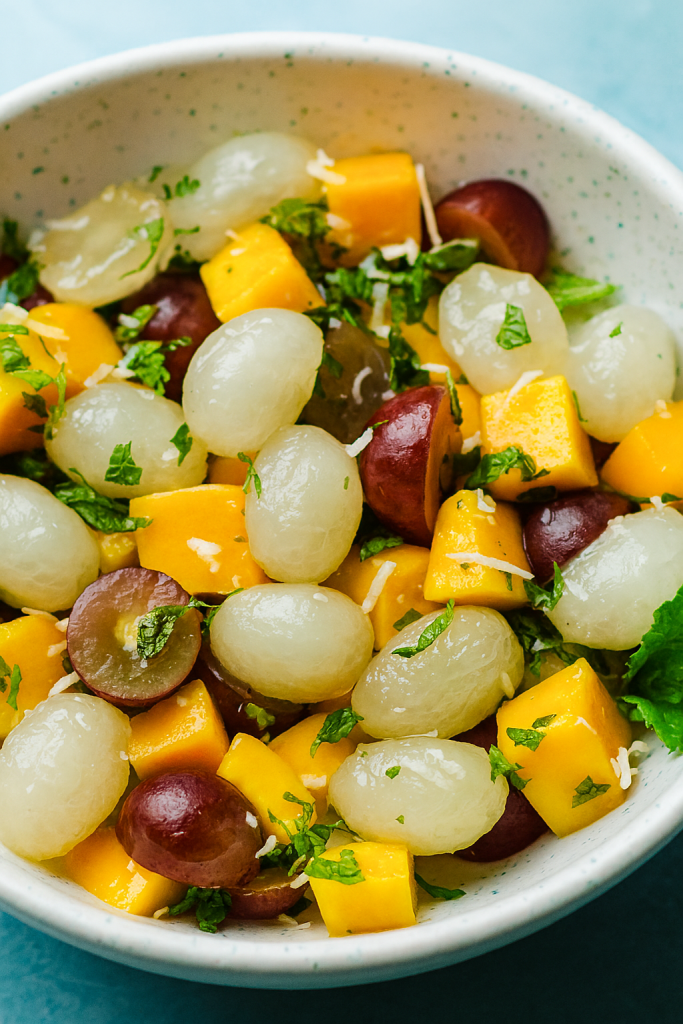
Fresh Pulasan Fruit Salad with Lime and Mint
Twist, peel, and let the honeyed arils sing alongside bright lime and cooling mint — a 10-minute seasonal salad that reads like a ritual.
Ingredients (4 servings)
- Pulasan arils: 12–16, peeled and seeds removed
- Mango: 1 small, diced
- Seedless grapes: 1 cup, halved
- Lime juice: 1 tbsp (fresh)
- Honey or maple syrup: 1 tbsp
- Fresh mint: 6–8 leaves, finely sliced
- Flaky salt: pinch
- Toasted shredded coconut: 2 tbsp (optional garnish)
Method
- In a large bowl combine Pulasan arils, diced mango, and halved grapes.
- Whisk lime juice and honey until combined, then drizzle over the fruit.
- Gently fold in sliced mint and a pinch of flaky salt to lift sweetness.
- Chill 10 minutes to let flavors marry.
- Serve in chilled bowls and finish with toasted shredded coconut if using.
Notes and safety
- Roast or boil Pulasan seeds before consuming if you plan to use them; discard raw seeds.
- Dress the salad just before serving to avoid softening; keeps 24–48 hours refrigerated.
- For a party, double the recipe and add a handful of torn basil for a savory lift.
Pulasan Coconut Chia Pudding (make-ahead breakfast)
- Ingredients: 1 cup coconut milk; 3 tbsp chia seeds; 1 tsp vanilla; 1–2 tbsp maple syrup; 8 Pulasan arils, chopped; toasted coconut for garnish.
- Method: Whisk coconut milk, chia, vanilla, and maple syrup. Refrigerate 4 hours or overnight. Stir, fold in chopped Pulasan, top with toasted coconut and extra fruit.
- Storage: Keeps 3 days refrigerated.
Pulasan and Mango Salsa (savory-sweet condiment)
- Ingredients: 10
- Pulasan arils diced; 1 ripe mango diced; 1/4 red onion finely diced; 1 small red chili minced; 2 tbsp cilantro chopped; 1 tbsp lime juice; pinch sea salt.
- Method: Combine all ingredients, adjust lime and salt to taste. Rest 15 minutes to marry flavors.
- Uses: Serve with grilled fish, chicken, or crisp tortillas.
Pulasan Jam (small-batch)
- Ingredients: 2 cups Pulasan arils; 1 cup sugar; 1 tbsp lemon juice; 1/4 tsp butter (optional, reduces foam).
- Method: Crush Pulasan lightly. Combine fruit, sugar, and lemon juice in a saucepan over medium heat. Bring to a simmer, stir frequently until thickened (20–30 minutes). Skim foam; stir in butter. Pour into sterilized jars while hot.
- Yield: About 1 cup.
- Tip: For a chunkier jam, only lightly mash fruit; for smoother, puree before cooking.

Pulasan Sorbet — silky, floral sorbet brightened with lime and mint.
Pulasan Sorbet — recipe
Ingredients (4 servings)
- Pulasan arils: 2 cups, peeled and seeds removed
- Granulated sugar: 1/2 cup
- Water: 1/2 cup (for simple syrup)
- Lime juice: 1 tbsp (fresh)
- Lime zest: 1 tsp
- Light corn syrup or honey: 1 tbsp (optional, improves scoopability)
- Pinch of salt
Method
- Make simple syrup: combine sugar and water in a small saucepan, warm while stirring until sugar dissolves; cool completely.
- Puree Pulasan arils in a blender until very smooth. Strain through a fine mesh sieve for a silkier sorbet (optional).
- Whisk Pulasan purée, cooled simple syrup, lime juice, lime zest, corn syrup or honey (if using), and a pinch of salt until uniform. Taste and adjust sweetness or lime.
- Chill the mixture until cold (1 hour) for best texture.
- Churn in an ice cream maker according to manufacturer’s instructions until soft‑serve; transfer to a shallow container and freeze 2–4 hours until firm.
- No churn method: freeze in a shallow metal pan and vigorously stir every 30 minutes as it freezes until scoopable.
- Serve scoops garnished with a lime wedge and a mint sprig.
Make-ahead and storage
- Store airtight up to 2 weeks; let soften 5–10 minutes before scooping.
Roasted Pulasan Seeds Snack (coffee/cocoa-style)
- Ingredients: Pulasan seeds from 12 fruits; 1 tsp coconut oil; pinch sea salt; optional 1 tsp cocoa powder or cinnamon.
- Method: Rinse seeds, pat dry. Roast seeds in a skillet with coconut oil over medium heat, stirring, 8–12 minutes until nutty and fragrant. Toss with salt and optional cocoa or cinnamon. Cool before serving.
- Note: Heat-treats seeds to reduce bitterness and deactivate undesirable compounds.
Serving suggestions and editorial
- Pairings: Fresh Pulasan with tangy cheeses, chilled prosecco, or coconut-based desserts.
- Copy line: “Twist, taste, keep, Pulasan’s honeyed aril turns simple recipes into seasonal rituals.”
Vitamins and health benefits
Overview
Pulasan is a nutrient‑rich tropical fruit whose edible aril supplies vitamin C, dietary fiber, trace minerals, and a range of polyphenolic compounds; much of the health literature is nutritionally focused or ethnobotanical rather than based on large clinical trials.
Vitamins and key nutrients
- Vitamin C: High relative to many tropical fruits; supports antioxidant defenses and collagen synthesis.
- Dietary fiber: Moderate; aids bowel regularity and can support satiety and weight management.
- Trace minerals: Small amounts of iron, calcium, copper, and B vitamins contribute to metabolic and tissue health.
- Phytonutrients: Polyphenols, flavonoids, and tannins that provide measurable antioxidant activity in laboratory assays.
Antioxidant, metabolic, and digestive effects
- Antioxidant protection: Vitamin C and polyphenols scavenge free radicals and may reduce oxidative stress markers in vitro.
- Metabolic support: Fiber and low calorie density help with appetite control and healthy bowel transit, which can indirectly support weight management strategies.
- Possible glycemic moderation: Traditional accounts and small nutrition summaries suggest pulasan’s fiber content may help blunt postprandial glucose spikes, but robust clinical evidence is lacking.
Traditional medicinal uses supported by phytochemistry
- Topical anti‑inflammatory and antimicrobial uses: Leaves and rind used in folk medicine for minor skin complaints, which aligns with the presence of tannins and flavonoids.
- Antipyretic and vermifuge preparations: Root and bark decoctions are reported traditionally to reduce fevers and treat intestinal parasites, consistent with historical ethnobotanical records but not confirmed by controlled clinical trials.
- Seeds as nutritive/roasted beverages: Roasted or boiled seeds are used as a cocoa/coffee analogue and supply edible oils and caloric density when processed.
Safety, precautions, and practical guidance
- Seed caution: Do not eat raw seeds; traditional practice is to roast or boil seeds before consumption to reduce bitterness and deactivate heat‑labile compounds.
- Allergies and cross‑reactivity: Individuals allergic to Sapindaceae family fruits (lychee, rambutan, longan) should exercise caution because cross‑reactivity is possible.
- Medical interactions and pregnancy: There are no well‑documented drug interactions; people who are pregnant, breastfeeding, on prescription medication, or with chronic illness should consult a qualified clinician before using pulasan therapeutically.
Who should avoid or limit Pulasan
- People with fruit allergies to Sapindaceae (lychee, rambutan, longan) — risk of cross‑reactive allergic reactions; avoid pulasan if you have known sensitivity to related fruits.
- People with diabetes or those monitoring blood sugar — pulasan is relatively high in natural sugars so portions should be limited and factored into carbohydrate targets.
- Individuals who react to seeds or who have a history of food sensitivities — seeds are treated and eaten in some traditions, but they can be bitter or cause adverse reactions in sensitive people; avoid raw seeds unless you know the variety and its preparation history.
- Infants and very young children — whole arils and seeds are choking hazards; offer appropriate age‑safe forms only.
- Anyone with a severe or uncertain medical condition, pregnant or breastfeeding people taking prescription medicine — consult a qualified clinician before using pulasan as a therapeutic food or taking concentrated traditional preparations.
Practical safety tips
- When in doubt, heat‑treat seeds (roast or boil) before consumption; traditional practice favors heat treatment for safety and palatability.
- Introduce small amounts first if you or someone in your household has never tried pulasan.
- Seek medical advice for personalized guidance if you have chronic illness, are on medications, pregnant, or breastfeeding
✅ Verified Sources on Pulasan
- Pulasan – Wikipedia Covers botanical classification, synonyms, morphology, and cultural context.
- Pulasan Fruit – FruitsInfo.com Offers nutritional values, culinary uses, and traditional medicinal applications.
- Pulasan Fruit Health Benefits – Global Food Book Details vitamin content, antioxidant properties, and traditional remedies.
- Pulasan Fruit: Health Benefits, Nutrition, Uses and Recipes – Netmeds A comprehensive guide to pulasan’s nutritional profile, culinary uses, and health benefits.
- Pulasan Health Benefits – Blend of Bites Highlights antioxidant compounds, skin and eye health, and safety considerations.
- About Pulasan – Health Benefits Times Offers botanical facts, traditional uses, and safety notes.
 EJADA
EJADA 
Leave a comment