The Prickly Pear sounds painful, but it’s really good
For just about everything from ancient healing to modern wellness. Don’t let the barbed armor fool you—beneath its spiny pads and jewel-toned fruit lies a botanical powerhouse that has nourished bodies, dyed fabrics, and soothed ailments for centuries.
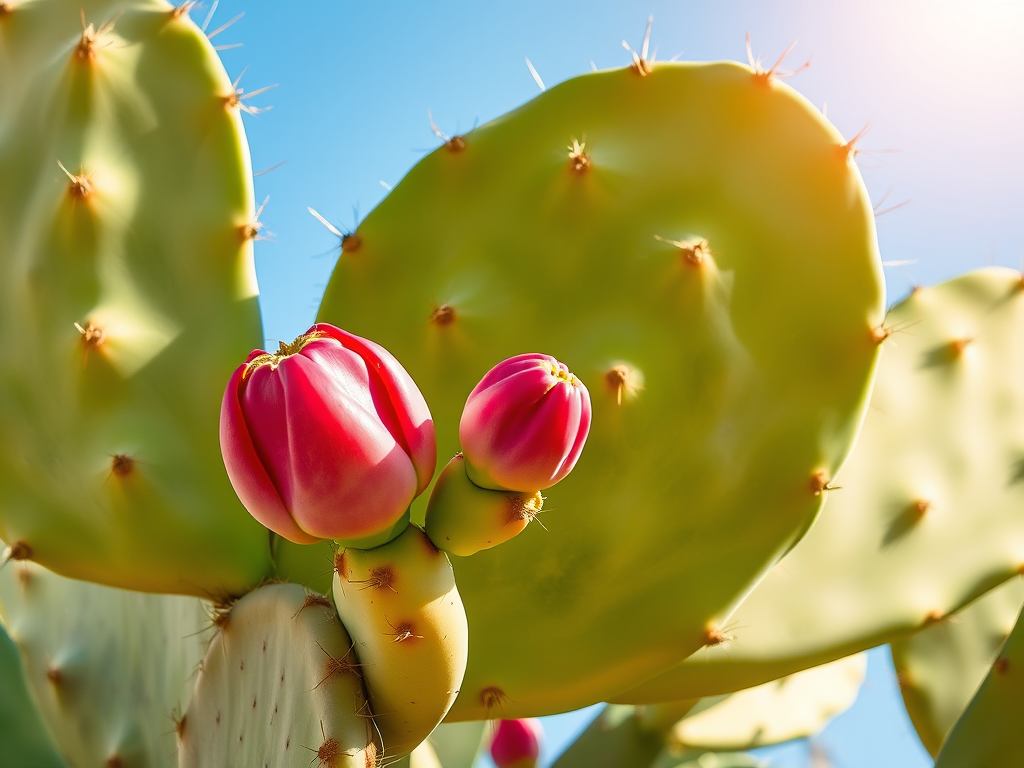
The prickly pear is a cactus with a poetic contradiction: it’s armored in spines yet overflowing with nourishment. Belonging to the genus Opuntia, it’s known for its flat, paddle-shaped pads (called nopales) and vibrant, jewel-toned fruits (called tunas).
🌵 Botanical Identity
Genus: Opuntia
Family: Cactaceae
Native Range: Arid and semi-arid regions of North and South America
Structure: Thick, fleshy pads that store water; pads may have sharp spines or tiny hair-like glochids
Flowers: Large, bisexual blooms in yellow, orange, pink, or red
Fruit: Berry-like, sweet-tart, often reddish-purple with edible pulp and hard seeds
🍽️ Edible Parts
- Pads (Nopales): Cooked or grilled for their tart, earthy flavor and mucilaginous texture
- Fruit (Tunas): Peeled and eaten raw, juiced, or made into jams and syrups
🧬 Uses Across Time
- Traditional: Medicine, food, dye, tools, and ceremonial offerings
- Modern: Superfood, skincare ingredient, ecological crop, and symbol of resilience
🌍 Cultural Significance
The prickly pear is more than a plant—it’s a legacy bearer. It appears on the Mexican flag, rooted in Aztec mythology, and continues to thrive in culinary, medicinal, and ecological rituals around the world.
🌵 What is it good for?
The prickly pear cactus (Opuntia spp.) offers edible pads (nopales) and fruit (tunas) that are rich in fiber, antioxidants, magnesium, and anti-inflammatory compounds. Traditionally, it’s been used to support digestion, blood sugar balance, and even wound healing. Today, it’s studied for its potential in managing Type 2 diabetes, cholesterol, and gastric distress.
📅 When and how is it cultivated?
Native to arid regions of the Americas, especially Mexico and the southwestern U.S., prickly pear thrives in dry, sun-drenched soils. It’s typically propagated from cuttings—just a single pad pressed into the earth can root and grow. Harvesting is a ritual in itself: spines are seared or scraped off, and the pads are sliced or diced for cooking. The fruits, ripening in late summer, are carefully peeled to reveal sweet, ruby flesh.
🧑🏽🌾 Who cultivated it first?
Indigenous peoples of Mesoamerica were the original stewards of this plant. The Aztecs revered it not only as food and medicine but also as a symbol of resilience and identity. In fact, the prickly pear appears on the Mexican flag, growing from a rock in the center of a lake—a nod to the founding of Tenochtitlán.
The prickly pear (Opuntia spp.) was first cultivated by Indigenous peoples of Mesoamerica—particularly the Aztecs, Zapotecs, and Maya—who recognized its resilience, nutritional value, and ceremonial significance long before it was named by botanists or exported across oceans.
🌵 Aztec Stewardship
The Aztecs didn’t just cultivate prickly pear—they mythologized it. According to legend, their wandering ancestors were told by the god Huitzilopochtli to settle where they saw an eagle perched on a cactus, devouring a snake. That vision became the foundation of Tenochtitlán, now Mexico City—and the prickly pear cactus still appears on the Mexican flag as a symbol of origin and endurance.
🧑🏽🌾 Traditional Cultivation Practices
Pads (nopales) were planted in dry, rocky soils with minimal irrigation
Farmers used natural compost and companion planting to protect against pests
Harvesting was done with care—spines were singed or scraped off using fire or stone tools
Fruits (tunas) were collected seasonally and used in food, dyes, and medicine
🧬 Cultural and Ecological Wisdom
These early cultivators understood the cactus’s ecological role:
It prevented soil erosion
Provided forage during drought
Offered medicinal compounds for inflammation, wounds, and digestive issues
Served as a living fence and boundary marker
🌍 Global Spread
After Columbus’s voyages, prickly pear was carried to Europe and later to Africa, Asia, and Australia. But its original cultivation—rooted in ceremony, survival, and stewardship—remains a testament to Indigenous botanical wisdom.
🧴 Used for what purposes then and now?
Then: The Prickly Pear’s Traditional Uses and Ritual Roles
Before it was bottled into antioxidant elixirs or folded into gourmet tacos, the prickly pear cactus (Opuntia spp.) was a sacred staple—woven into the daily lives, healing practices, and mythic narratives of Indigenous cultures across the Americas.
🌿 Medicinal Rituals
Pads (nopales): Boiled and applied as poultices for burns, swelling, and joint pain. The mucilage—its gel-like interior—was prized for cooling inflammation and sealing wounds.
Fruit (tunas): Juiced to treat fevers, digestive upset, and even hangovers. Some cultures used it as a mild laxative or to soothe ulcers.
Flowers and sap: Used in decoctions for urinary issues and skin conditions. The sap was also a natural adhesive and antiseptic.
🍲 Culinary Nourishment
Nopales: Sliced and grilled, stewed, or pickled—often served with beans, maize, or eggs. Their tart, earthy flavor was both refreshing and grounding.
Tunas: Peeled and eaten raw, fermented into beverages, or cooked into jams and syrups. Their vibrant hues—red, orange, purple—added ceremonial color to meals.
Seeds: Toasted and ground into flour, used in nutrient-dense cakes or porridges.
🎨 Material and Symbolic Uses
Natural dye: The cochineal insect, which lives on prickly pear pads, was harvested to produce a brilliant red dye—used in textiles, cosmetics, and art.
Spines: Repurposed as needles or tools in embroidery and ritual crafting.
Living fences: Planted around homes and fields as protective barriers—both physical and symbolic.
🪶 Ceremonial and Mythic Significance
The cactus was a symbol of endurance, protection, and divine guidance.
In Aztec cosmology, the founding of Tenochtitlán was marked by the vision of an eagle perched on a prickly pear cactus—an image now immortalized on the Mexican flag.
Offerings of fruit and flowers were made during seasonal transitions, honoring the cactus’s ability to thrive in scarcity and bloom in adversity.
Now: The Prickly Pear’s Modern Renaissance
Juiced for antioxidant-rich beverages
Incorporated into skincare for its soothing properties
Featured in modern cuisine—grilled, pickled, or candied
Studied for metabolic and anti-inflammatory benefits
In today’s wellness landscape, the prickly pear cactus (Opuntia spp.) has reemerged not just as a superfood, but as a symbol of sustainable nourishment, adaptive healing, and botanical resilience. Its uses have expanded across culinary, medicinal, cosmetic, and ecological domains—each echoing its ancestral legacy while embracing modern innovation.
🥗 Culinary Innovation
Fruit (tunas)
Juiced into vibrant beverages, blended into smoothies, or transformed into jams, syrups, and sorbets. Its sweet-tart flavor and antioxidant profile make it a favorite in functional foods.
Pads (nopales)
Featured in salads, tacos, stir-fries, and even vegan meat substitutes. Their mucilaginous texture supports gut health and satiety.
Natural coloring
Prickly pear puree is now used as a plant-based dye and flavoring agent in desserts and drinks.
🧬 Medicinal Research & Nutritional Science
Anti-inflammatory compounds: Rich in flavonoids, betalains, and phenolic acids that support joint health, liver function, and immune balance.
Blood sugar regulation: Studies show nopales may reduce postprandial glucose spikes, supporting metabolic health.
Neuroprotective effects: Emerging research suggests potential benefits for cognitive function and mood regulation.
Digestive support: High fiber content aids in regularity and gut microbiome diversity.
🧴 Cosmetic and Topical Applications
- Skin care: Extracts used in serums and creams for hydration, anti-aging, and soothing inflammation.
- Hair care: Infusions added to shampoos and conditioners for scalp health and shine.
- Wound healing: Traditional uses validated by modern studies—pads and sap help treat burns, edema, and skin irritation.
🌍 Ecological and Agricultural Impact
- Drought resilience: Cultivated in arid regions as a water-efficient crop.
- Livestock feed: Used as emergency forage during dry seasons—sheep and goats can survive months on prickly pear alone.
- Circular economy potential: Its versatility supports regenerative agriculture and low-waste production models.
🌀 Symbolic Continuity
Even as it enters clinical trials and cosmetic labs, the prickly pear remains a plant of story and spirit. Its ability to thrive in scarcity, nourish across generations, and adapt to new roles makes it a botanical metaphor for resilience and renewal.
From Ancient Healing to Modern Wellness: The Prickly Pear’s Timeless Journey
Long before wellness was a hashtag, the prickly pear was already a botanical healer rooted in ceremony, survival, and sacred stewardship.
🌿 Ancient Healing
Among the Aztecs, Mayans, and other Indigenous cultures of the Americas, the prickly pear was more than food—it was medicine, metaphor, and material.
- Medicinal pads (nopales): Boiled or grilled to soothe inflammation, treat burns, and aid digestion
- Fruit (tunas): Used to cool fevers, calm the stomach, and sweeten rituals
- Sap and pulp: Applied to wounds as a natural antiseptic
- Symbolism: Represented endurance, protection, and rebirth—its ability to thrive in harsh conditions mirrored the resilience of the people who cultivated it
🧪 Modern Wellness
Today, the prickly pear has stepped into the spotlight of nutritional science and holistic care, with studies validating what ancient healers knew intuitively.
Antioxidants: Betalains and flavonoids help combat oxidative stress
Blood sugar support: Nopales may reduce post-meal glucose spikes
Gut health: High in soluble fiber, aiding digestion and satiety
Skin care: Extracts used in serums and creams for hydration and anti-inflammatory effects
Hydration rituals: Prickly pear water and juices offer electrolyte-rich refreshment, especially in desert climates
🌀 Ceremonial Continuity: The Prickly Pear’s Enduring Spirit
What’s striking is how the prickly pear’s uses haven’t just evolved—they’ve expanded while retaining their original spirit. Whether grilled in a traditional stew or blended into a smoothie, it remains a plant of resilience, nourishment, and ritual. Its journey from sacred medicine to modern superfood isn’t a reinvention—it’s a reverent continuation.
Across centuries and cultures, this cactus has served as a botanical bridge between sacred tradition and adaptive modernity. Its ceremonial continuity lies not in static symbolism, but in its ability to evolve while preserving its essence.
🌿 Ancestral Rituals
Aztec cosmology: The founding of Tenochtitlán was marked by a divine vision eagle perched on a prickly pear cactus, devouring a serpent. This image, now emblazoned on the Mexican flag, wasn’t just myth—it was a ceremonial directive, a sacred signpost of destiny.
Offerings and transitions: Prickly pear fruit and flowers were used in seasonal rituals, honoring the cactus’s ability to bloom in adversity. It symbolized protection, endurance, and divine favor.
Healing rites: Pads were applied to wounds not just for their medicinal properties, but as part of ceremonial healing—layered with chants, gratitude, and ancestral invocation.
🧬 Modern Rituals of Care
Wellness practices: Juicing prickly pear for hydration and inflammation isn’t just functional—it’s a continuation of its role as a life-giving ally.
Skincare rituals: Applying cactus extract to soothe the skin echoes ancient poultices, now reframed through serums and creams.
Culinary reverence: Grilling nopales or crafting prickly pear sorbet becomes a quiet homage to the plant’s legacy—each bite a ritual of resilience.
🌍 Symbolic Echoes
Resilience in design: The cactus’s form—spiny, layered, and unexpectedly lush has inspired everything from architectural motifs to spiritual tattoos.
Boundary wisdom: Its thorns remind us to protect what’s sacred, to set boundaries with grace, and to bloom only where we are nourished.
Legacy stewardship: In Indigenous and ecological circles, cultivating prickly pear is an act of remembrance—a way to honor land, lineage, and the wisdom of those who thrived before us.
🌀 Editorial Reflection
Ceremonial continuity isn’t about nostalgia—it’s about honoring what endures. The prickly pear teaches us that survival can be sacred, that nourishment can be ritualized, and that even the harshest landscapes can yield beauty when approached with reverence.
🌿 Medicinal Properties of the Prickly Pear
The prickly pear has long been revered in folk medicine and is now gaining traction in scientific circles for its therapeutic potential. Its pads (nopales) and fruit (tunas) are rich in bioactive compounds that support various aspects of health:
Anti-inflammatory effects: Betalains and flavonoids help reduce inflammation, making it useful for joint pain, swelling, and skin irritation
Blood sugar regulation: Nopales may lower post-meal glucose spikes, especially in people with Type 2 diabetes
Cholesterol management: Preliminary studies suggest it may reduce LDL cholesterol and triglycerides
Liver support: Traditionally used to treat liver conditions; modern research is exploring its hepatoprotective effects
Hangover relief: Some evidence suggests it may reduce symptoms like nausea and dry mouth due to its anti-inflammatory and hydrating properties
🍊 Vitamin and Nutrient Profile
Prickly pear is more than a medicinal ally—it’s a nutritional powerhouse. One cup (149g) of raw fruit offers:
| Nutrient | Amount per Cup | % Daily Value (DV) |
|---|---|---|
| Calories | 61 | — |
| Protein | 1g | — |
| Fat | 1g | — |
| Carbohydrates | 14g | — |
| Fiber | 5g | ~19% |
| Magnesium | 30mg | ~30% |
| Vitamin C | 23mg | ~23% |
| Potassium | 220mg | ~7% |
| Calcium | 60mg | ~6% |
🧬 Key Highlights
Vitamin C: Supports immune health and collagen production
Magnesium & Potassium: Crucial for blood pressure regulation and muscle function
Calcium: Supports bone health
Fiber: Aids digestion and promotes satiety
📚 Sources Referenced
This post draws from a blend of ancestral wisdom and modern research, including:
WebMD’s overview of prickly pear cactus uses and risks
Drugs.com’s clinical summary of Opuntia ficus-indica
MedicineNet’s breakdown of benefits, side effects, and contraindications
Ethnobotanical records and Indigenous cultivation practices from Mesoamerican traditions
🚫 Who Should Avoid Prickly Pear
While prickly pear is generally safe when consumed as food, certain individuals should exercise caution or avoid it altogether:
People with diabetes: Supplements may affect blood sugar levels and interact with medications. @WEBMD
Pregnant or breastfeeding individuals: Safety data is lacking—avoid unless advised by a healthcare provider @DRUGS.COM
Children: Not enough research exists to confirm safety for pediatric use. @WEBMD
Pre-surgical patients: May interfere with blood sugar control—discontinue at least two weeks before surgery @MEDICINENET
Individuals with known allergies to cactus species: Risk of hypersensitivity reactions: @DRUGS.COM
⚠️ Disclaimer
This post is intended for informational and editorial purposes only. It does not constitute medical advice, diagnosis, or treatment. Always consult a qualified healthcare provider before using prickly pear cactus—especially in supplement form or for therapeutic purposes. Nutritional and medicinal effects may vary based on species, preparation, and individual health conditions.
 EJADA
EJADA 
Leave a comment