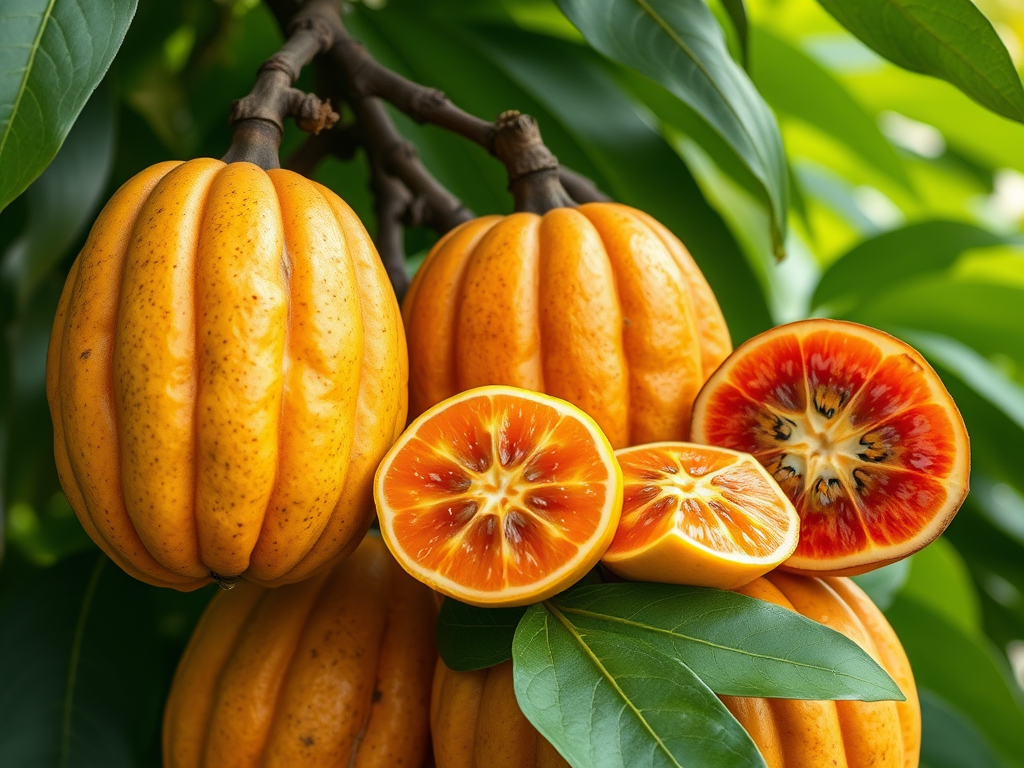
What Are the Health Benefits of Pitanga Fruit?
Pitanga fruit or surinam cherry is native to Suriname and some other South American countries like Guyana, Brazil, and Uruguay. @WebMD
🍒 Pitanga: A Botanical Jewel with Ceremonial Flair
Pitanga (Eugenia uniflora), also known as Surinam cherry or Brazilian cherry, is a tropical fruit that ripens like a whispered secret. Small and ribbed, it resembles a miniature pumpkin—typically 2 to 4 centimeters wide, with seven to eight vertical grooves that give it a sculptural elegance. Its thin skin transitions from green to orange to bright red, and in rare cases, deep maroon or nearly black. The darker the hue, the deeper the flavor—and the higher the antioxidant potential.
Inside, Pitanga holds orange-red flesh that’s juicy, tart, and slightly resinous. Each fruit contains one to three seeds, nestled like botanical punctuation marks. Its taste is polarizing: some describe it as refreshing and sweet, others as spicy and acquired. Chilling the fruit softens its bite, while a sprinkle of sugar coaxes out its hidden sweetness.
The fruit’s spicy aroma—especially when the bush is pruned, can be pungent, even nose-tingling. This volatile signature is due to its essential oils, which also contribute to its antimicrobial properties.
Pitanga isn’t just a fruit—it’s a seasonal ritual. It ripens in spring and fall, mirroring editorial transitions and emotional recalibrations. In Brazil, it’s harvested in October; in Florida, it arrives twice yearly, during the rainy seasons. It’s often used in jams, pickles, custards, and even liquors, but its raw form, chilled and slit open to release the seeds, remains the most ceremonial way to consume it.
🍒🌿 A Ritual of Nourishment: Pitanga as Offering, Wisdom
To nourish is to honor. And Pitanga (Eugenia uniflora) doesn’t merely feed—it initiates. In the ceremonial arc of healthy living, this tropical fruit becomes a botanical altar: vibrant, ribbed, and unapologetically complex. Its flavor is not a monologue—it’s a dialogue between tartness and tenderness, between legacy and recalibration.
🍒 The Offering
Pitanga arrives in the shoulder seasons—spring and fall—when transitions are tender and thresholds are porous. It ripens slowly, asking for patience. The fruit must fall into your hand willingly, a gesture of readiness. To harvest Pitanga is to receive, not to take.
Chill it. Slice it. Sprinkle it with sugar. Or let it speak raw. Each preparation is a ritual, each bite a moment of presence. The darker the hue, the deeper the wisdom. The fruit teaches us to wait, to listen, to recalibrate our expectations of sweetness.
🧪 The Wisdom
Pitanga’s nutritional profile reads like a sacred scroll:
Antioxidants: Rubixanthin, lycopene, gamma-carotene, and beta-cryptoxanthin—each compound a botanical guardian against oxidative stress.
Vitamin C: At 46 mg per cup, it supports collagen synthesis, wound healing, and radiant skin.
Vitamin A: With 130 mcg of retinol activity equivalents, it nourishes vision and immunity.
Phenolic compounds: Especially concentrated in the peel, these plant chemicals may offer anticancer and anti-inflammatory effects.
Pitanga in Traditional Medicine: A Legacy of Botanical Care
Long before Pitanga (Eugenia uniflora) became a darling of antioxidant charts and culinary experimentation, it was revered in early and traditional medicine as a gentle healer. Across Brazil, Suriname, and Uruguay, its leaves and fruits were not just consumed—they were consulted.
🍃 The Leaves: Breath and Balance
- Bronchitis: Pitanga leaves were brewed into teas to ease respiratory discomfort, especially during seasonal transitions. Their spicy, resinous aroma—when crushed—was believed to open the lungs and calm inflammation.
- Colic and Stomachache: Infusions made from the leaves were used to soothe digestive spasms and abdominal pain, often administered to children and elders during times of dietary imbalance or emotional stress.
🍒 The Fruits: Fire and Flow
- Heartburn: The ripe fruit, with its sweet-sour balance, was consumed to cool internal heat and reduce acidity.
- Stomachache: In folk practice, Pitanga’s pulp was considered a gentle digestive aid, especially when chilled and served raw or lightly sweetened.
These uses weren’t random—they were ritualized. The timing of harvest, the method of preparation, and the intention behind consumption were all part of the healing arc. Pitanga wasn’t just medicine—it was ceremony.
🧪 Modern Echoes
Early lab studies now echo this ancestral wisdom. Extracts from Pitanga leaves and fruits have shown potential antibacterial and antifungal activity against Candida, Streptococcus, and Staphylococcus aureus. While more human studies are needed, the legacy remains: Pitanga heals in layers. @WebMD
🙏 The Editorial Grace
To feature Pitanga in your healthy living narrative is to ritualize nourishment. It’s not just a fruit—it’s a metaphor for editorial clarity. A symbol of seasonal recalibration. A wink to legacy.
Pitanga reminds us that nourishment is layered:
It’s a post, but also a prayer.
It’s scientific, but also spiritual.
It’s precise, but also poetic.
🌿 Botanical Reverence
Pitanga is a member of the Myrtaceae family, cousin to guava and mountain apple. Native to Brazil, Uruguay, and Suriname, it grows as a hedge, a screen, and a symbol of resilience. The fruit’s color deepens with wisdom—green to orange to red to rare maroon—each hue a signal of its evolving antioxidant potential.
🧪 Scientific Nourishment
- Antioxidants: Rich in rubixanthin, lycopene, gamma-carotene, and beta-cryptoxanthin, Pitanga’s peel contains potent compounds that may help prevent cell damage from free radicals.
- Carotenoids: These pigments, born of photosynthesis, lend Pitanga its vibrant color and may support cardiovascular health and cancer prevention.
- Vitamin C: Essential for collagen synthesis and skin repair, Pitanga offers 46 mg per cup—an offering to wound healing and radiant skin.
- Vitamin A: With 130 mcg of retinol activity equivalents, it nourishes the eyes and immune system, guarding against night blindness and cellular fatigue.
🧪 Scientific Nourishment: Beyond the Basics
Pitanga’s nutritional profile is more than a list—it’s a living archive of biochemical generosity. While its antioxidant and vitamin content are well-documented, there’s a deeper story unfolding in its phytochemical complexity and ecological behavior.
🌱 Phytochemical Diversity
Pitanga’s bioactive compounds extend beyond carotenoids and vitamins:
Flavonoids: These polyphenolic compounds, especially quercetin and kaempferol derivatives, may contribute to anti-inflammatory and vasoprotective effects. They’re often concentrated in the peel and leaf extracts, suggesting that even the non-edible parts of the plant carry medicinal potential.
Tannins: Present in the leaves and bark, tannins offer astringent properties that may support gut health and microbial balance.
Essential Oils: The spicy aroma of Pitanga leaves and fruit is due to volatile oils rich in sesquiterpenes and monoterpenes—compounds studied for antimicrobial and mood-modulating effects.
🧬 Cellular Modulation
Early lab studies suggest Pitanga’s extracts may influence cellular behavior:
Apoptosis Induction: Certain compounds in Pitanga have shown potential to trigger programmed cell death in cancer cell lines, particularly through mitochondrial pathways.
Enzyme Regulation: Leaf extracts may inhibit enzymes like α-amylase and α-glucosidase, hinting at possible blood sugar modulation—though human trials are needed to confirm efficacy.
🌍 Ecological Intelligence
Pitanga’s resilience as a hedge plant and its invasive behavior in regions like Florida point to its adaptive phytochemistry. Plants that thrive across climates often produce secondary metabolites as defense mechanisms—many of which double as therapeutic agents in humans.
- Its ability to displace native species is linked to allelopathic compounds—biochemicals that suppress competing flora. These same compounds are now being studied for their antimicrobial and antifungal properties.
🧫 Microbial Interactions
Beyond its antifungal activity against Candida, Pitanga’s extracts have shown promise against:
- Listeria monocytogenes: A foodborne pathogen linked to severe infections, especially in immunocompromised individuals.
- Methicillin-resistant Staphylococcus aureus (MRSA): A strain of staph resistant to conventional antibiotics, where Pitanga’s essential oils may offer adjunctive support.
✍️ Pitanga as Ritual, Reverence, and Recalibration
As the final notes of summer linger in the air, Pitanga ripens like a farewell hymn—its ribbed skin catching the last golden rays, its flavor deepening into memory. This isn’t just a fruit. It’s a seasonal punctuation mark. A botanical ellipsis. A crimson comma between what was and what’s becoming.
🌿 From Botanical Wisdom to Cultural Reverence
Pitanga (Eugenia uniflora) is native to Brazil, Uruguay, and Suriname, but its cultural reach extends far beyond its roots. In Brazilian gardens, it’s a hedge of protection. In Surinamese kitchens, it’s a flavor of home. In Caribbean folklore, it’s a fruit of healing and heat—its spicy scent said to ward off spirits and soothe the breath.
Its antioxidant-rich peel and carotenoid-laced flesh are not just nutritional facts—they’re offerings. Each compound a quiet act of care. Each pigment a ritual of photosynthesis. To eat Pitanga is to ingest sunlight, resilience, and ancestral wisdom.
⚠️ Who Should Avoid Pitanga: A Disclaimer of Care
While Pitanga (Eugenia uniflora) offers antioxidant-rich nourishment and ceremonial flair, certain individuals may need to approach this fruit with caution:
🚫 Unripe Fruit Sensitivity
- Unripe Pitanga is highly resinous and unpleasant to eat. It may cause digestive discomfort or nausea.
- Editorial cue: Only harvest when the fruit drops easily into your hand. If it resists, it’s not ready to be received.
🐾 Pet Safety
- Dogs that consume Pitanga whole—including seeds—may experience stomach upset.
- Legacy note: Seeds are not edible and should be removed before serving.
👃 Respiratory Sensitivity
- Pruning Pitanga bushes releases a spicy, pungent aroma that may irritate the nose and throat—especially for those with asthma or scent sensitivities.
- Ceremonial tip: Prune mindfully, and avoid inhaling deeply near freshly cut branches.
🧬 Allergic or Immune Considerations
- Individuals with fruit allergies, especially to tropical or myrtle family plants (e.g., guava, feijoa), should consult a healthcare provider before consuming.
- Those with compromised immune systems may wish to avoid raw Pitanga due to limited human studies on its antimicrobial properties.
🧪 Medication Interactions (Pending Research)
- While early lab studies suggest Pitanga may influence enzymes linked to blood sugar regulation, no human trials confirm its safety for those with diabetes or on related medications.
- Editorial integrity: Until more research emerges, avoid therapeutic claims.
🍽️ Pitanga Recipes to Ritualize the Season
1. Chilled Pitanga Compote
A gentle way to soften the fruit’s resinous bite and coax its sweetness.
Ingredients
- 2 cups ripe Pitanga (dark red to maroon)
- 2 tbsp raw sugar or honey
- 1 tsp lemon zest
- Pinch of sea salt
Instructions
- Slit each fruit vertically and remove seeds.
- Toss with sugar, zest, and salt.
- Chill for 2–3 hours to release juices.
- Serve over yogurt, custard, or warm oatmeal.
🕊️ Ceremonial Note: Let the compote rest. It sweetens in silence.
2. Pitanga & Basil Salsa
A farewell to summer’s heat, with a peppery twist.
Ingredients
- 1 cup ripe Pitanga, chopped
- 1 small shallot, minced
- 1 tbsp fresh basil, torn
- 1 tsp apple cider vinegar
- Dash of cracked pepper
Instructions
- Combine all ingredients in a bowl.
- Let sit for 15 minutes to meld flavors.
- Spoon over grilled vegetables or fish.
🌿 Editorial Tip: This salsa recalibrates expectations—sweet, sour, herbal, and bold.
3. Pitanga Pickle Ritual
For legacy preservation—tart, tangy, and shelf-stable.
Ingredients
- 2 cups Pitanga, whole and ripe
- 1 cup white vinegar
- ½ cup water
- 1 tbsp jaggery or brown sugar
- 1 tsp mustard seeds
- 1 clove
- Pinch of turmeric
Instructions
- Heat vinegar, water, sugar, and spices until simmering.
- Pour over Pitanga in a sterilized jar.
- Seal and refrigerate for 3 days before tasting.
🧂 Legacy Note: This pickle holds memory. Each bite is a preserved moment.
4. Pitanga Farewell Jam
A poetic send-off—sweetened with gratitude.
Ingredients
- 3 cups Pitanga pulp
- 1½ cups cane sugar
- Juice of 1 lime
- Optional: 1 tsp grated ginger
Instructions
- Simmer all ingredients until thickened (about 30–40 minutes).
- Stir gently, skimming foam.
- Pour into sterilized jars and seal.
🍯 Gratitude Transition: Label each jar with a memory. Gift one. Keep one.
🙏 Gratitude-Rich Ritual
To eat Pitanga is to honor timing. The fruit must fall into your hand with ease—never forced, always offered. Chill it to soften its resinous bite. Sprinkle with sugar to coax its sweetness. Use it in jams, pickles, or custards. Or simply slit it
🍂 Farewell, Pitanga: A Seasonal Benediction
As the light softens and the air begins its slow descent into introspection, Pitanga bows out, not with fanfare, but with flavor. It leaves behind a trail of tart sweetness, a memory stitched into the tongue, a pigment pressed into the pulse of summer’s end.
We do not mourn its passing. We ritualize it.
We pickle its wisdom. We jam its joy. We archive its antioxidants with reverence.
Pitanga teaches us that nourishment is not endless, it is cyclical. That flavor, like legacy, deepens with time. That endings, when honored, become beginnings.
So we thank the fruit. We thank the season. We thank the body that received it, the hands that prepared it, the stories that shaped it.
And as autumn steps forward, we carry Pitanga’s essence, not in baskets, but in memory. Not in recipes, but in ritual.
 EJADA
EJADA 
Leave a comment