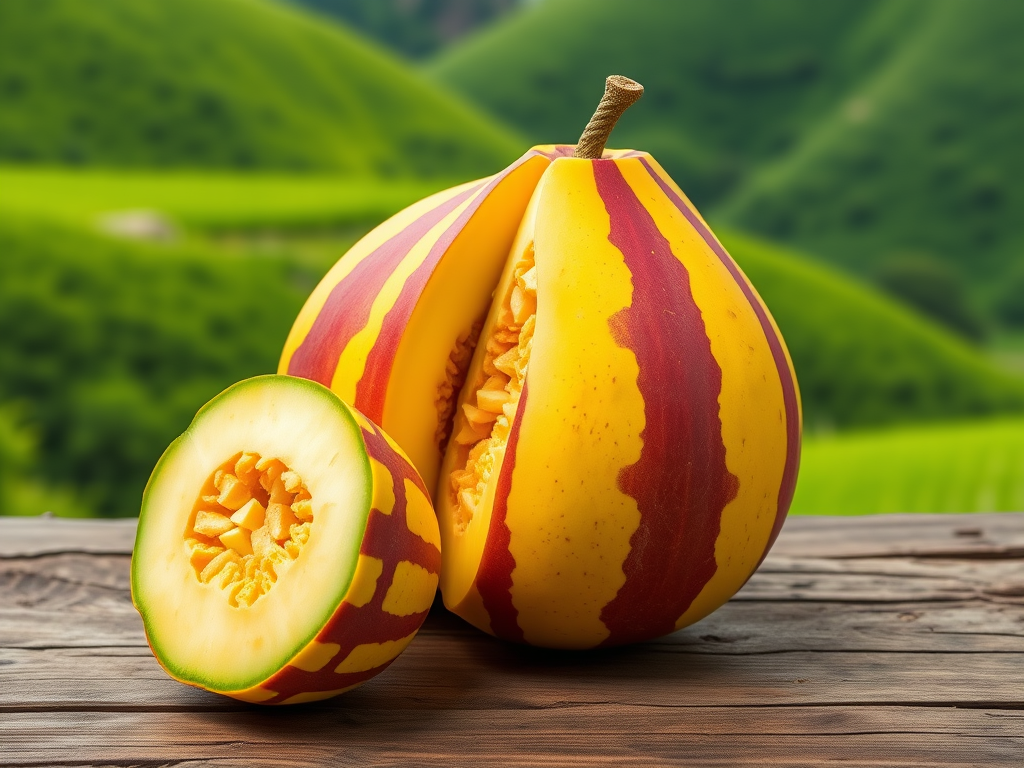
The Pepino Melon—also known as Solanum muricatum, “pepino dulce,” or “melon pear”—is a fascinating fruit with deep Andean roots and a surprisingly potent pharmacological profile.
🍈 The Pepino Melon
- Botanical Identity: A member of the Solanaceae family (nightshades), alongside tomatoes, eggplants, and potatoes.
- Appearance & Flavor: Typically oval or pear-shaped, with smooth skin that ripens to yellow or purple stripes. Its juicy flesh tastes like a blend of honeydew melon and cucumber.
- Cultivation Style: Often propagated via cuttings rather than seeds, making it a diploid species (2n = 24) with limited wild ancestry.
🌄 Origins & Cultivation History
- Native Region: Temperate highlands of South America—especially Peru, Colombia, and Chile.
- First Cultivators: Pre-Columbian Andean cultures, notably the Moche people, who even depicted the fruit in their ceremonial art.
- Historical Timeline:
- Pre-Inca Era: Cultivated in the Moche Valley, Peru.
- 16th Century: Documented by Spanish chroniclers as a coastal crop.
- 20th Century: Commercial cultivation expanded to New Zealand, Chile, and California.
🕰️ Pepino Melon: A Symbolic Cultivation Timeline
| Era | Milestone | Cultural & Botanical Significance |
|---|---|---|
| Pre-1000 BCE | Wild precursors emerge in Andean highlands | Likely evolved from ancestral Solanum species; no wild progenitor identified, suggesting early human selection shaped its form |
| 100–800 CE | Moche civilization cultivates Pepino in Peru | Depicted in ceremonial pottery; valued for flavor, symbolism, and possibly medicinal use |
| 1200–1500 CE | Inca Empire integrates Pepino into highland agriculture | Grown alongside maize and potatoes; used in trade and ritual feasting |
| 1530s CE | Spanish chroniclers document Pepino as a coastal crop | First European record; noted for its sweet taste and adaptability |
| 1600s–1800s | Remains a regional staple in South America | Cultivation persists in Peru, Colombia, and Chile; limited global spread due to fragility |
| Early 1900s | Botanical classification as Solanum muricatum | Recognized as a diploid species (2n = 24); propagated mainly by cuttings |
| 1970s–1980s | Commercial trials in New Zealand and California | Pepino enters niche markets; valued for exotic appeal and low glycemic index |
| 2000s–Present | Pharmacological studies reveal medicinal potential | Identified as antioxidant, anti-inflammatory, anticancer, and antidiabetic |
| 2020s–2025 | Functional food status emerges | Rich in polyphenols (quercetin), vitamin C, and carotenoids; explored for liver, metabolic, and neuroprotective benefits |
🌿 Medicinal & Nutritional Properties
Pepino Melon isn’t just a pretty fruit—it’s a functional powerhouse
| Property | Effect |
|---|---|
| Antioxidant | Rich in polyphenols (like quercetin) and vitamin C—scavenges free radicals |
| Anti-inflammatory | Inhibits proinflammatory cytokines and nitric oxide production |
| Anticancer | Shows selective targeting of cancer cells in early studies |
| Antidiabetic | Improves insulin sensitivity and reduces resistance3 |
| Nutritional Highlights | High in vitamin C (30–70 mg/100g), beta-carotene, minerals like Fe, Zn, Cu, Mn, Ca, and P |
It’s also low in starch and sugars, free from oxalates, and contains dietary fiber comparable to oatmeal—making it heart-friendly and digestion-supportive.
🌿 Medicinal Uses: Then vs. Now
| Era | Medicinal Use | Context & Cultural Layering |
|---|---|---|
| Pre-Columbian Andes | Digestive aid, cooling tonic, and ceremonial nourishment | Used by Moche and Inca cultures for its hydrating, soothing properties; likely consumed during seasonal transitions or ritual fasts |
| 16th–19th Century (Colonial) | Sweet fruit for fevers and inflammation | Spanish chroniclers noted its use in coastal Peru as a gentle remedy for heat-related ailments; often confused with cucumber due to its name |
| 20th Century (Folk Medicine) | Mild diuretic, liver support, and blood sugar stabilizer | In rural Chile and Colombia, pepino was brewed into teas or eaten raw to “cool the blood” and support digestion |
| 21st Century (Scientific Validation) | Antioxidant, anti-inflammatory, anticancer, antidiabetic, and hepatoprotective agent | Modern studies confirm its bioactive compounds—quercetin, chlorogenic acid, vitamin C, and polysaccharides—offer measurable health benefits |
🧪 Modern Pharmacological Highlights
- Antioxidant: Scavenges free radicals via polyphenols like hydroxycinnamic acid and flavonoids; protects against oxidative stress and chronic disease.
- Anti-inflammatory: Inhibits cytokines (TNF-α, IL-6, IL-1β), nitric oxide production, and COX-2 expression; useful in autoimmune and age-related conditions.
- Anticancer: Selectively targets tumor cells, reduces lung nodules, and modulates glutathione levels; studied in gastric and lymphoma models.
- Antidiabetic: Improves insulin sensitivity, lowers resistin expression, and supports glucose homeostasis; contains water-soluble pectin for glycemic control.
- Hepatoprotective: Leaf extracts reduce lipotoxicity and endoplasmic reticulum stress; phosphatidylcholine content supports liver health.
- Bone & Nerve Support: Promotes osteogenesis via Wnt/BMP pathways; polyphenols may protect against diabetic neuropathy and neuroinflammation.
🍈 Pepino Melon: The Mild Maverick of Modern Snacking
The Pepino Melon doesn’t shout—it whispers refreshment. With a flavor somewhere between cucumber and honeydew, it’s the introvert of the fruit bowl: subtle, hydrating, and quietly versatile.
🧺 Then: Ancestral Simplicity
- Pre-Columbian Peru: Eaten raw during seasonal feasts, likely paired with maize or tubers. Hydration was the goal, not haute cuisine.
- Inca Empire: Reserved for nobility, served chilled in ceremonial gatherings. Think of it as the original spa fruit.
- Colonial Era: Sliced and salted to cool fevers. Spanish chroniclers mistook it for a cucumber with a sweet tooth.
🍽️ Now: Fusion-Friendly & Zero-Waste
- Raw Snack: Peeled, sliced, and served with lime or Tajín. Bonus: edible skin and seeds.
- Smoothie Base: Adds hydration without overpowering other fruits.
- Salsa Star: Diced with chili, mint, and citrus—perfect for grilled fish or plant-based tacos.
- Dessert Layer: Folded into yogurt parfaits or fruit tarts for a mellow finish.
- Savory Surprise: Lightly sautéed with garlic and herbs—yes, it can handle heat.
🧪 Nutritional Overlay
| Nutrient | Amount (per 100g) | Benefit |
|---|---|---|
| Vitamin C | 30–70 mg | Immune support, collagen production |
| Fiber | ~2g | Digestive health, satiety |
| Beta-Carotene | Moderate | Eye health, antioxidant |
| Minerals (Fe, Zn, Cu, Mn) | Trace levels | Metabolic support, cellular repair |
Low in sugar, high in hydration, and free from oxalates—this fruit is a gentle companion for blood sugar balance and digestive ease.
🍽️ Culinary Uses: Then vs. Now
| Era | Culinary Use | Context & Flavor Notes |
|---|---|---|
| Pre-Columbian Andes | Raw fruit in seasonal feasts and cooling rituals | Eaten fresh for hydration and sweetness; paired with maize or tubers in highland diets; likely served during equinox feasts or transitional fasts |
| Inca Empire | Ceremonial offering and elite refreshment | Reserved for nobility or ritual gatherings; valued for its delicate sweetness and symbolic resemblance to melons |
| 16th–19th Century (Colonial) | Coastal snack and fever food | Peeled and sliced, often served with lime or salt; used to cool the body during illness or heat spells |
| 20th Century (Folk & Regional Cuisine) | Fruit salads, chilled soups, and sweet preserves | Blended into smoothies, lightly sautéed, or added to ceviche-style dishes; some regions used it in jams or fermented drinks |
| 21st Century (Global Fusion) | Sorbet, salsa, smoothie base, and zero-waste garnish | Featured in upscale fruit platters, paired with chili-lime seasoning, or folded into yogurt bowls; its edible skin and mild flavor make it ideal for raw, low-prep dishes |
🌟 Flavor Profile & Pairings
- Texture: Juicy, succulent, like a cross between pear and melon
- Taste: Mildly sweet with cucumber undertones
- Pairings:
- Citrus (lime, orange)
- Chili powder or Tajín
- Mint, basil, or cilantro
- Soft cheeses (ricotta, goat cheese)
- Tropical fruits (mango, papaya)
🍴 Modern Rituals & Zero-Waste Appeal
- Raw Snack: Peeled and sliced, often chilled
- Smoothies & Sorbets: Adds hydration and subtle sweetness
- Savory Dishes: Used in salsas, salads, or lightly sautéed
- Desserts: Layered in parfaits or fruit tarts
- Garnish: Edible skin and seeds make it a low-waste culinary gem

Pepino melon salsa
A refreshing mix of melon, red onion, jalapeño, cilantro, lime juice, and honey

Pepino Melon smoothie
Blended with banana, berries, almond milk, and lime for a hydrating snack

Pepino Melon and Feta Salad
Paired with mixed greens, mint, cilantro, red onion, and lemon dressing
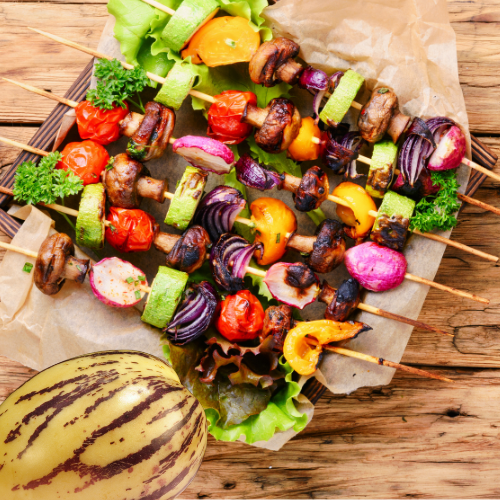
Pepino Melon Skewers
Highlighting its sweet-savory adaptability

To get these delicious ways to prepare Pepino Melon
If the Pepino Melon were a person, it’d be the one who brings cucumber water to the potluck and leaves before dessert. Quietly elegant. Unbothered by drama. Probably composts.
The Pepino Melon available in the U.S., especially in select regions and specialty stores. It’s grown domestically in California and can be found through retailers like:
- 🛒 Instacart: Offers Pepino melons from stores like Costco and Safeway, with options ranging from single fruits to bulk quantities.
- 🛍️ Safeway: Lists Pepino melons under their fresh produce section, available for delivery or pickup depending on your ZIP code.
- 🌱 Whole Foods Market: Carries Pepino melons in-store, though availability may vary by location.
They’re typically in season around September and October, but some stores stock them year-round depending on sourcing
⚠️ Safety Precautions for Pepino Melon Consumption
1. Ripeness Matters
- Underripe Pepinos can taste bland or bitter and may cause mild digestive discomfort in sensitive individuals.
- Always select fully ripe fruit—soft to the touch, aromatic, and with golden skin and purple streaks.
2. Wash Thoroughly
- Like other melons, the outer skin can harbor bacteria (e.g., Salmonella or Listeria) from soil or handling.
- Wash the fruit thoroughly before slicing to prevent cross-contamination from rind to flesh.
3. Cutting Hygiene
- Use clean knives and cutting boards. Bacteria on the skin can transfer to the edible flesh during slicing.
- Avoid cutting on porous surfaces that retain moisture or residue.
4. Storage Guidelines
- Once cut, refrigerate immediately. Pepino Melon is high in moisture and sugar, making it a prime target for bacterial growth if left at room temperature.
- Store below 40°F (4°C) and consume within 2–3 days.
5. Allergy Awareness
- Though rare, Pepino Melon belongs to the nightshade family (Solanaceae)—which includes tomatoes and eggplants.
- Individuals with nightshade sensitivities should proceed cautiously.
6. Pesticide Residue
- If not organically grown, Pepinos may carry residual agrochemicals. Washing and peeling can reduce exposure.
⚠️ Groups That Should Avoid or Limit Pepino Melon
1. Individuals with Nightshade Sensitivities
- Pepino Melon belongs to the Solanaceae (nightshade) family—alongside tomatoes, eggplants, and potatoes.
- Those with autoimmune conditions (e.g., rheumatoid arthritis, lupus) or known nightshade intolerance may experience joint pain, digestive upset, or inflammation.
2. People with Chronic Kidney Disease
- While Pepino is low in oxalates, it contains moderate potassium and trace minerals (e.g., manganese, copper).
- Individuals on renal diets should consult a healthcare provider before consuming regularly.
3. Infants Under 12 Months
- Due to its high water content and mild acidity, Pepino Melon may cause digestive upset or diarrhea in infants.
- Best introduced after 1 year, and only in small, peeled portions.
4. Those with Severe Allergies to Melons or Cucumbers
- Cross-reactivity may occur in rare cases, especially among individuals allergic to cantaloupe, honeydew, or cucumber.
- Symptoms may include itching, swelling, or oral allergy syndrome.
5. Pregnant or Breastfeeding Individuals (if unwashed or underripe)
- No direct contraindication, but underripe fruit may cause bloating or discomfort.
- Always wash thoroughly to avoid bacterial transfer from skin to flesh.
6. Immunocompromised Individuals
- Due to its high moisture content, Pepino Melon can harbor bacteria if not stored properly.
- Must be refrigerated after cutting and consumed within 2–3 days.
🪶 Closing Statement
In a world of bold flavors and overhyped superfoods, the Pepino Melon offers a soft-spoken alternative: nourishing, adaptable, and refreshingly low maintenance. Whether sliced raw or folded into fusion fare, it’s a fruit that honors simplicity without sacrificing substance.
It doesn’t demand attention—it earns it quietly, with hydrating sweetness, edible efficiency, and a flavor profile that plays well with others. From citrus salads to savory salsas, it adapts without overpowering, making it a gentle companion in both traditional and modern kitchens.
No flashy claims, no exotic drama—just a clean, versatile fruit that respects your palate and your time. In the orchard of wellness, Pepino Melon is the quiet one who always shows up, always delivers, and never asks for applause.
 EJADA
EJADA 
Leave a comment