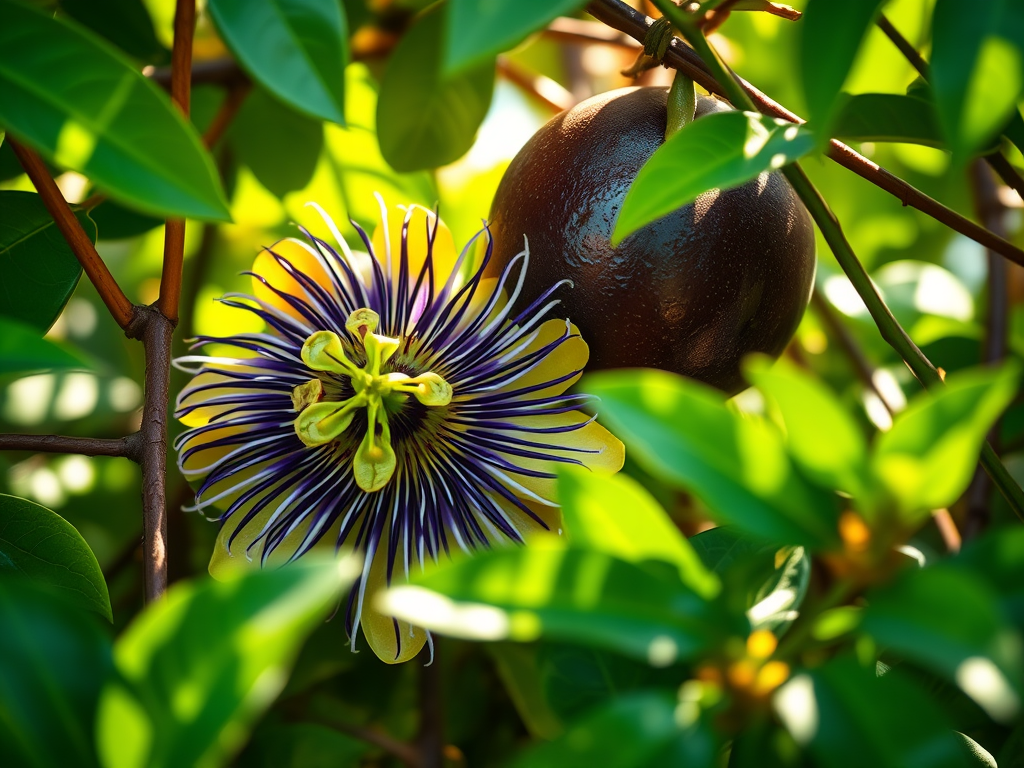
🌿 Origin Story of Passion Fruit
Passion fruit—scientifically known as Passiflora edulis—is native to South America, specifically the Amazon rainforest region spanning parts of Brazil, Paraguay, and northern Argentina2.
👣 Who First Encountered It?
Indigenous tribes in the Amazon were the earliest cultivators, using it for both medicinal and nutritional purposes.
In the 16th century, Spanish and Portuguese explorers encountered the fruit during their expeditions to the New World.
The name “passion fruit” was coined by Christian missionaries, who saw symbolic religious meaning in the flower’s structure—interpreting its floral anatomy as representing the Crucifixion of Christ (the “Passion”).
So, it began as a sacred botanical in the Amazon, was ritualized by missionaries, and eventually spread across continents through colonial trade routes. Quite the journey for a fruit that now stars in smoothies and sorbets.
🍈 Rituals and Symbolic Practices Around Passion Fruit
Passion fruit isn’t just a tangy treat—it’s a botanical with deep spiritual and cultural resonance. Across traditions, it’s been ritualized as a symbol of transformation, vitality, and divine balance. Here’s a curated trail of its ceremonial and symbolic roles:
🌺 Missionary Symbolism (16th Century Catholic Rituals)
The flower of the passion fruit was named by Spanish missionaries who saw in its structure a visual metaphor for the Passion of Christ:
Five petals and five sepals: Ten apostles (excluding Judas and Peter).
Corona filaments: Crown of thorns.
Three stigmas: Three nails.
Five anthers: Five wounds.
Used as a teaching tool in religious conversion rituals across South America.
🌿 Amazonian and Indigenous Ceremonies
Indigenous tribes in Brazil and Paraguay used passion fruit in fertility rites and healing ceremonies.
The vine’s tendrils were seen as symbols of interconnectedness, often woven into ritual garments or offerings.
The pulp was consumed during vision quests or seasonal transitions, believed to enhance clarity and emotional release.
🌞 Modern Spiritual Practices
According to contemporary spiritual guides:
Vitality Rituals: Passion fruit is used in morning meditations or sunrise ceremonies to invoke energy and joy.
Creative Invocation: Artists and writers may place the fruit on their altar or workspace to stimulate inspiration.
Transformation Ceremonies: The act of cutting open the fruit—revealing seeds within—is seen as a metaphor for inner growth and shedding old layers.
🧿 Symbolic Overlays
Duality: Its tart-sweet flavor represents the balance of light and shadow, often invoked in rituals of emotional integration.
Seed Rituals: Each seed is treated as a “wish” or “intention,” planted during solstice or equinox ceremonies to mark new beginnings3.
Color Invocation: The vibrant purple or golden shell is used in color-based healing rituals, symbolizing royalty, intuition, or abundance.
🍈 Nutritional Profile of Passion Fruit (Per 1 Small Purple Fruit)
Despite its petite size, passion fruit packs a nutrient-dense punch. Here’s a breakdown of its key values
| Nutrient | Amount | % Daily Value (DV) |
|---|---|---|
| Calories | 17 | — |
| Fiber | 2 grams | ~7% |
| Vitamin C | 9% DV | Antioxidant support |
| Vitamin A | 8% DV | Vision & immunity |
| Iron | 2% DV | Enhanced by vitamin C |
| Potassium | 2% DV | Heart & muscle health |
🔬 Additional Highlights
Polyphenols & Carotenoids: Rich in plant compounds that support anti-inflammatory and antioxidant activity
Low Glycemic Index: Helps regulate blood sugar levels
Digestive Support: High fiber content promotes gut health and regularity
🍈 Health Benefits of Passion Fruit
Passion fruit isn’t just a tropical delight—it’s a nutrient-dense powerhouse with benefits that ripple across multiple systems. Here’s a curated breakdown of its most compelling health perks:
🌿 1. Antioxidant Richness
- Loaded with vitamin C, beta carotene, and polyphenols, passion fruit helps neutralize free radicals, reducing oxidative stress and inflammation.
- May support brain health, cellular repair, and healthy aging2.
💪 2. Immune System Support
- High vitamin C content boosts immune defenses and enhances iron absorption from plant-based foods.
- May help the body fight off infections and recover faster.
🫀 3. Heart Health
- Contains potassium and is low in sodium—ideal for maintaining healthy blood pressure.
- The fiber in the seeds helps reduce cholesterol and supports vascular health.
🌾 4. Digestive Wellness
- Each small fruit delivers about 2 grams of fiber, aiding digestion and preventing constipation2.
- Supports gut microbiome balance and regularity.
🔥 5. Anti-Inflammatory Potential
- Passion fruit peel supplements have shown promise in reducing symptoms of asthma and osteoarthritis, thanks to their antioxidant load.
- May reduce joint pain and respiratory discomfort.
🧠 6. Mood and Anxiety Regulation
- Contains magnesium, which may help manage stress and anxiety levels.
- Though modest in quantity, it contributes to overall mineral balance.
🩸 7. Blood Sugar Stability
- Low glycemic index means it won’t spike blood sugar—making it a smart choice for people with diabetes.
- Seeds contain piceatannol, a polyphenol that may improve insulin sensitivity.
🍈 Cultural Symbolism of Passion Fruit
Passion fruit (Passiflora edulis) carries a rich tapestry of symbolic meanings across continents—from sacred teachings to fertility rites and celestial metaphors. Here’s a curated overlay of its cultural resonance:
✝️ Christian Missionary Symbolism
- Named by 16th-century Spanish missionaries who saw the Passion of Christ reflected in the flower’s anatomy:
- Crown-like filaments: Crown of thorns
- Three stigmas: Nails of crucifixion
- Five anthers: Wounds of Christ
- Used as a visual catechism tool in colonial South America, blending botanical observation with religious instruction.
🪶 Native American Traditions
- Seen as a symbol of fertility, abundance, and healing.
- Consumed during pregnancy to ensure vitality and used medicinally for digestive and emotional balance.
- The vine’s tendrils represented interconnectedness, often woven into ceremonial garments or offerings.
🐉 Chinese Cultural Resonance
- Revered as a fruit of divine blessings, love, and nutritional abundance.
- Its vibrant purple shell symbolizes royalty and prosperity, making it a popular gift during festivals and New Year celebrations1.
🐍 Mayan Sacred Symbolism
- Used in fertility ceremonies and medicinal rituals.
- The fruit and flower were considered sacred symbols of life force, often depicted in artwork and ceremonial design.
🌱 Universal Symbolic Themes
- Fertility: Its seed-rich pulp is a botanical metaphor for abundance and generative energy.
- Transformation: Cutting open the fruit reveals hidden complexity—used in rituals of emotional release or creative awakening.
- Duality: The sweet-tart flavor embodies balance, often invoked in spiritual practices seeking harmony.
🍈 Culinary Uses of Passion Fruit Through the Ages
From indigenous rituals to haute cuisine, passion fruit (Passiflora edulis) has evolved into a global culinary muse. Here’s a curated timeline of its edible journey:
🪶 Pre-Columbian South America
- Indigenous peoples of Brazil, Paraguay, and Argentina consumed passion fruit fresh and used its pulp in medicinal infusions and digestive tonics.
- The seeds and pulp were often fermented or mixed with herbs in ceremonial drinks.
⚔️ Colonial Era (16th–18th Century)
- Spanish and Portuguese colonizers introduced passion fruit to Europe, Africa, and Asia.
- In colonial kitchens, it was used to flavor syrups, liqueurs, and preserves, often paired with citrus or honey.
- Missionaries ritualized the flower’s anatomy, but cooks ritualized the pulp—turning it into sweet sauces for meats and fish.
🍮 19th–20th Century Expansion
- Passion fruit gained traction in Caribbean, Australian, and Hawaiian cuisines.
- Became a staple in ice creams, sorbets, jellies, and tropical cocktails.
- In Brazil and Ecuador, it was folded into mousses, custards, and layered cakes.
- In India and South Africa, it was blended into chutneys, pickles, and spiced juices.
🧁 Modern Global Cuisine (21st Century)
- Featured in Michelin-starred desserts, fusion sauces, and plant-based smoothies.
- Used in gastronomic foams, gelées, and dehydrated garnishes for upscale plating.
- Passion fruit wine, vinegar, and kombucha have emerged in artisanal circles.
- Its pulp is now a common base for vegan yogurt, nutrient-rich bowls, and low-GI snacks.
🍈 Modern Culinary Uses of Passion Fruit (2025 Edition)
Passion fruit has gone from rainforest ritual to global gourmet. Today, it’s a darling of chefs, mixologists, and plant-based innovators alike. Here’s a curated snapshot of how it’s being used across contemporary kitchens:
🧁 Desserts & Sweets
- Tarts & Pavlovas: Its tart-sweet pulp is spooned over meringues, cheesecakes, and custard bases for a tropical punch.
- Ice Cream & Sorbet: Often paired with coconut, mango, or vanilla for contrast.
- Layered Cakes: Used in mousse fillings or glaze toppings, especially in Brazilian and French patisserie.
🥗 Savory Applications
- Salad Dressings: Whisked into vinaigrettes for a tangy twist.
- Marinades: Used to tenderize and flavor fish, chicken, or tofu—especially in Caribbean and Southeast Asian cuisine.
- Salsas & Chutneys: Blended with chili, lime, and herbs for a vibrant condiment.
🍹 Beverages & Mixology
- Cocktails: Essential in tropical mixes like passion fruit mojitos, margaritas, and caipirinhas.
- Smoothies & Açai Bowls: Adds brightness and antioxidant depth.
- Fermented Drinks: Used in kombucha, kefir, and artisanal sodas.
🍽️ Gourmet & Fusion Cuisine
- Foams & Gelées: Featured in upscale plating for contrast and acidity.
- Sauces: Reduced into glazes for duck, pork, or roasted vegetables.
- Breakfast Bowls: Layered with granola, yogurt, and edible flowers for visual and nutritional appeal.
🧊 Frozen & Packaged Forms
- Frozen Cubes: Used in smoothies or as toppings for bowls and desserts.
- Concentrates & Purees: Incorporated into baking, sauces, and even savory reductions.
🍈 Passion Fruit: Cooked vs. Raw — Which Is Better?
In most cases, raw wins—nutritionally, flavor-wise, and symbolically. Here’s a breakdown of how each preparation stacks up:
🥄 Raw Passion Fruit
Pros:
- Maximizes nutrients: Vitamin C, fiber, and antioxidants like polyphenols are most potent when uncooked.
- Flavor purity: The sweet-tart balance shines when eaten fresh—ideal for smoothies, yogurt bowls, or straight from the shell.
- Digestive benefits: Raw seeds and pulp support gut health and regularity.
Common Uses:
- Spoon over desserts, blend into drinks, layer into breakfast bowls, or eat solo with a spoon.
🔥 Cooked Passion Fruit
Pros:
- Flavor concentration: Cooking reduces water content, intensifying the tartness—great for sauces, glazes, and jams.
- Versatility: Works beautifully in reductions, curds, and baked goods.
Cons:
- Heat-sensitive nutrients like vitamin C degrade during cooking.
- Texture loss: The gelatinous pulp may lose its signature mouthfeel.
🧠 Curatorial Verdict
If you’re curating for EJADA’s botanical archive or culinary trail, raw passion fruit offers more nutritional integrity and symbolic clarity—a fruit that reveals its complexity without transformation. Cooked forms are ideal for layered recipes or seasonal pacing, but they trade off some vitality for depth.
🍈 Groups That Should Be Cautious with Passion Fruit
While passion fruit is generally safe and nutrient-rich, a few groups should approach it with care due to specific sensitivities or health conditions. Here’s a curated breakdown:
⚠️ 1. People with Latex Allergies
- Passion fruit contains proteins similar to those in latex, triggering latex-fruit syndrome.
- Up to 50% of latex-allergic individuals may react to passion fruit.
- Symptoms: Itchy mouth, hives, stomach upset, or in rare cases, anaphylaxis.
Safety Tip: First-time eaters with latex allergies should try a small amount under supervision and consult an allergist.
🧪 2. Those Sensitive to Cyanogenic Glycosides
- Unripe passion fruit, especially ornamental varieties like Passiflora caerulea, may contain cyanogenic compounds that release trace cyanide.
- Ripe Passiflora edulis (the edible kind) is safe, but avoid leaves, stems, or unripe fruit.
Safety Tip: Stick to ripe, food-grade varieties and avoid chewing the rind or consuming ornamental species.
😴 3. People on Sedatives or Certain Medications
- Excessive intake of passion fruit juice may cause drowsiness or interact with sedative medications, especially in sensitive individuals.
- One case linked high juice consumption to heart rhythm issues (QT prolongation).
Safety Tip: Moderate intake and consult a healthcare provider if on sedatives or heart medications.
👶 4. Infants and Very Young Children
- The seeds may pose a choking hazard.
- Their digestive systems may be sensitive to the fruit’s acidity and fiber.
Safety Tip: Serve strained pulp or consult a pediatrician before introducing.
🍈 Referenced Sources for Passion Fruit Entry
Medical News Today – Passion Fruit Nutrition & Health Benefits (Covers antioxidants, fiber, glycemic index, and immune support)
WebMD – Passion Fruit: Health Benefits, Nutrition, Risks, and Preparation (Explores cultural symbolism, allergy risks, and culinary versatility)
Martha Stewart – How to Eat Passion Fruit: 18 Delicious Ways (Details modern culinary uses, seasonal cues, and preparation tips)
Healthline – How to Eat Passion Fruit: Instructions and Recipes (Provides historical context, safety guidance, and recipe ideas)
🍈 Botanical Disclaimer: Passion Fruit Entry
This entry is curated for ceremonial, educational, and nutritional enrichment. All information presented reflects a blend of scientific research, cultural anthropology, and culinary history. While passion fruit (Passiflora edulis) is widely consumed and celebrated, readers are advised to consider the following:
- Allergy Advisory: Individuals with latex allergies may experience cross-reactivity. Consult a healthcare provider before consumption.
- Safety Note: Only ripe, food-grade varieties are recommended. Avoid ornamental species or unripe fruit, which may contain cyanogenic compounds.
- Medical Guidance: This entry is not a substitute for professional medical advice. Those on sedatives, heart medications, or with specific health conditions should consult a physician before regular consumption.
- Editorial Integrity: Nutritional data and cultural overlays are sourced from reputable publications and curated with symbolic clarity. See full source trail below.
 EJADA
EJADA 
Leave a comment