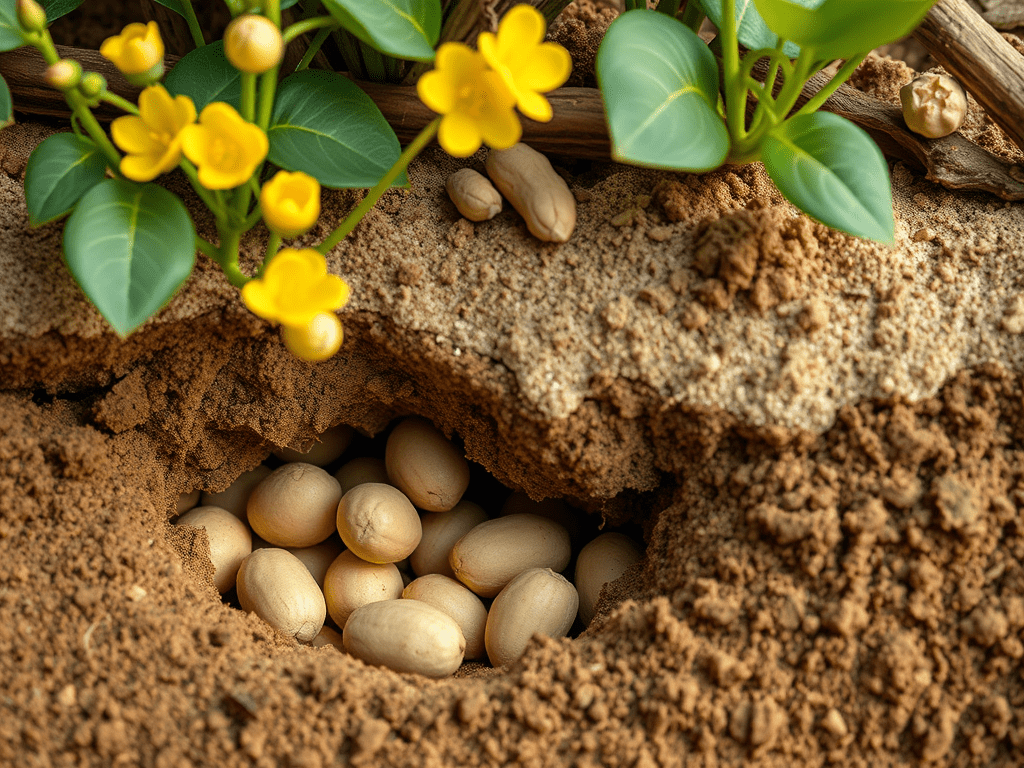
🥜 The Peanut Fruit: Earthbound Powerhouse with a Hidden Story
Despite its nutty reputation, the peanut is no tree-born treasure. It’s a fruit of the earth—literally. Botanically classified as a legume, Arachis hypogaea grows underground, defying expectations with a process called geocarpy, where the flower burrows into the soil to form its pod.
Botanically speaking, the peanut is neither a true nut nor a typical fruit—it’s a legume, but it does qualify as a fruit under scientific definitions.
🧬 Why It’s Not a Nut
- True nuts (like acorns or hazelnuts) are dry fruits with a hard shell that doesn’t split open naturally.
- Peanuts, however, grow in pods that split open, and they contain multiple seeds, which disqualifies them from being true nuts.
🌱 Why It’s Considered a Fruit
- In botanical terms, a fruit is the mature ovary of a flower that contains seeds.
- Peanuts grow underground via a process called geocarpy, where the flower sends a stalk into the soil and forms a pod containing seeds.
- The pod is the fruit, and the edible part is the seed, making peanuts a leguminous fruit.
So while they’re called “nuts” in the culinary world, peanuts are technically fruit-bearing legumes—more closely related to peas and lentils than to almonds or walnuts.
🌍 Origins & Cultivation of the Peanut Fruit
🧭 Ancient Lineage
- South American Roots: Peanuts (Arachis hypogaea) originated over 7,000 years ago in the valleys of Peru and Brazil. Indigenous cultures like the Incas ritualized them as “mani,” crafting early versions of peanut paste and using them in ceremonial offerings.
- Global Migration: Portuguese traders introduced peanuts to Africa, where they became a staple crop. From there, they journeyed to Asia and eventually North America, embedding themselves in Southern U.S. agriculture during the Civil War era.
🌱 Botanical Identity
- Legume, Not Nut: Though culinarily treated as a nut, the peanut is a legume—part of the Fabaceae family. Its unique trait, geocarpy, means the fruit develops underground after the flower wilts and sends a “peg” into the soil.
- Nitrogen Fixation: Like other legumes, peanuts enrich soil through symbiotic nitrogen-fixing bacteria in their root nodules, making them ideal for crop rotation.
🌾 Cultivation Cycle
- Climate & Soil: Peanuts thrive in warm, sandy soils with good drainage and a pH between 5.8 and 6.2. They require 120–150 frost-free days and moderate rainfall (20–40 inches annually).
- Lifecycle Stages:
- Germination: Seeds sprout and develop taproots.
- Flowering: Yellow, pea-like flowers bloom above ground.
- Pegging: Flowers send pegs into the soil, where pods form.
- Maturation: Pods mature underground over several weeks.
- Harvesting: When leaves yellow and dry, farmers uproot the plants. Peanuts are then cured and shelled for consumption or processing.
🧬 Nutritional Brilliance
- Rich in plant-based protein (25g per 100g), peanuts rival almonds in satiety and strength.
- Packed with healthy fats, especially monounsaturated and polyunsaturated varieties, they support heart health and reduce inflammation.
- Loaded with vitamin E, B vitamins, magnesium, and antioxidants like resveratrol and coenzyme Q10, peanuts nourish longevity and cellular vitality.
🩺 Health & Nutritional Benefits of the Peanut Fruit
🧬 Nutrient Density (per 100g)
| Nutrient | Amount |
|---|---|
| Calories | 567 kcal |
| Protein | 25.8 g |
| Total Fat | 49.2 g |
| — Monounsaturated | 24.4 g |
| — Polyunsaturated | 15.6 g |
| Dietary Fiber | 8.5 g |
| Vitamin E | 8.3 mg |
| Folate (B9) | 240 mcg |
| Magnesium | 168 mg |
| Potassium | 705 mg |
| Zinc | 3.3 mg |
| Iron | 4.6 mg |
❤️ Heart Health
- Peanuts are rich in monounsaturated and polyunsaturated fats, which help lower LDL (“bad”) cholesterol and reduce blood pressure.
- They contain plant sterols that block cholesterol absorption, reducing the risk of heart disease.
- Antioxidants like resveratrol, vitamin E, and coenzyme Q10 help prevent inflammation and oxidative stress. @ Cleveland Clinic
🧠 Cognitive & Cellular Support
- Niacin and folate support brain function and may protect against age-related decline.
- Peanuts contain all 20 amino acids, essential for cellular repair and longevity.
⚖️ Weight Management
- Despite being calorie-dense, peanuts promote satiety and help regulate appetite1.
- Studies show moderate peanut consumption may aid weight loss without contributing to weight gain. WebMD
🩸 Blood Sugar Regulation
- The trio of protein, fiber, and healthy fats helps stabilize blood glucose levels, making peanuts suitable for diabetic-friendly diets.
- usage & side effect
🍽 Culinary Uses of the Peanut Fruit
Versatile, nutrient-dense, and globally embraced, peanuts transcend snack status to become foundational in both sweet and savory dishes. Below are key culinary formats with their nutritional highlights:
🥜 Raw Peanuts
Use: Eaten as-is, added to trail mixes, or ground into flour. Nutrition (per 100g):
- Calories: 567 kcal
- Protein: 25.8 g
- Fat: 49.2 g (mostly healthy unsaturated fats)
- Fiber: 8.5 g
- Magnesium: 168 mg
- Folate: 240 mcg
🔥 Roasted Peanuts
Use: Popular snack, salad topper, or base for peanut butter. Nutrition (per 28g):
- Calories: 166 kcal
- Protein: 7 g
- Fat: 14 g
- Fiber: 2.4 g
- Vitamin E: 1.4 mg
- Niacin: 4.08 mg
Roasting enhances flavor and boosts antioxidant levels like resveratrol and coenzyme Q10.
🧈 Peanut Butter
Use: Spread on toast, blended into smoothies, or used in sauces. Nutrition (2 tbsp): @WebMD
- Calories: ~190 kcal
- Protein: 8 g
- Fat: 16 g
- Sugar: Varies (choose unsweetened for best health impact)
Natural peanut butter retains most of the legume’s health benefits, but added sugars and hydrogenated oils in commercial brands may reduce its nutritional integrity.
🥘 Peanut Sauce & Curries
Use: Common in Southeast Asian dishes like satay, stir-fries, and noodle bowls. Nutrition: Varies by recipe, but typically includes protein, healthy fats, and fiber. Peanut-based sauces offer a creamy texture and umami depth while delivering sustained energy.
🫘 Boiled Peanuts
Use: Southern U.S. delicacy, often seasoned and served warm. Nutrition (per 100g):
- Slightly lower fat content due to water absorption
- Retains protein and fiber
- Enhanced antioxidant bioavailability
Boiling preserves nutrients and reduces calorie density, making it a heart-friendly snack.
🕵️♂️ Little-Known Facts About the Peanut Fruit
🌱 Botanical Oddities
- Subterranean Fruit: Peanuts are one of the few plants that flower above ground but fruit below it—a process called geocarpy. After pollination, the flower stalk elongates and buries itself to form the pod underground.
- Embryo Visible: The tiny nub between two peanut halves is actually the embryo—a visible reminder that you’re eating a seed, not a nut.
🧪 Soil Alchemy
- Nitrogen Fixers: Peanuts form a symbiotic relationship with soil bacteria that convert atmospheric nitrogen into usable nutrients, enriching the soil without synthetic fertilizers.
- Crop Rotation Champions: Farmers often rotate peanuts with cotton or corn to restore soil health and reduce pest cycles.
🛰 Space & Presidents
- Moon Companion: Astronaut Alan Shepard took a peanut to the moon during his Apollo mission—a symbolic nod to its cultural reach.
- Presidential Roots: Two U.S. presidents—Thomas Jefferson and Jimmy Carter—were peanut farmers.
🍽 Culinary Quirks
- Boiled Peanuts: Considered a delicacy in the American South, boiled peanuts have a soft, bean-like texture and higher antioxidant availability than roasted ones.
- Water Efficiency: It takes only 3.2 gallons of water to produce 1 ounce of peanuts—compared to 28.7 gallons for almonds, making peanuts a more sustainable choice.
🧬 Genetic & Cultural Footprints
- Ancient Pottery: Archaeologists have found 3,500-year-old pottery shaped like peanuts in South America, suggesting deep ceremonial and cultural significance.
- Global Names: Peanuts are called groundnuts, goobers, or nguba in various cultures, reflecting their underground growth and linguistic diversity
While peanuts are nutrient-dense and widely celebrated, there are specific groups and conditions where caution—or complete avoidance—is essential. Here’s a curated breakdown based on medically reviewed
sources :@Cleveland clinic
🚫 Who Should Avoid or Limit Peanut Consumption
1. Individuals with Peanut Allergies
- Severity: Peanut allergy is one of the most common and potentially life-threatening food allergies.
- Symptoms: Ranges from mild hives and nausea to anaphylaxis, which includes difficulty breathing, swelling, and loss of consciousness.
- Precaution: Complete avoidance is necessary, including cross-contaminated foods and products containing peanut oil or flour.
2. People Prone to Kidney Stones
- Why: Peanuts contain oxalates, which may contribute to kidney stone formation in sensitive individuals.
- Advice: Consult a healthcare provider before regular consumption if you have a history of stones.
3. Those with Digestive Disorders
- Concern: High fiber content may irritate conditions like IBS, Crohn’s disease, or ulcerative colitis.
- Symptoms: Bloating, cramps, or diarrhea may occur even without an allergy.
4. Children Under Age 4
- Risk: Whole peanuts pose a choking hazard.
- Alternative: Smooth peanut butter or powdered peanuts are safer options, introduced gradually and with allergy monitoring.
5. People on Blood Thinners
- Interaction: Peanuts are high in vitamin E, which may interfere with medications like warfarin.
- Advice: Discuss with your doctor before adding peanuts to your diet.
6. Individuals Sensitive to Aflatoxins
- Issue: Peanuts can be contaminated with Aspergillus flavus, a fungus that produces aflatoxins—linked to liver damage and cancer.
- Tip: Choose brands that test for aflatoxins and store peanuts in dry, cool conditions.
7. Acne-Prone Individuals
- Observation: Some people report flare-ups with excessive peanut consumption, possibly due to hormonal or inflammatory triggers.
- Note: This is anecdotal and varies widely
🌰 Now You Know When a Nut Is a Fruit
The peanut may masquerade as a nut in snack aisles and sandwich spreads, but beneath its shell lies a leguminous truth: it’s a fruit that flowers above ground and ripens below it. From ancient South American rituals to modern heart-healthy diets, this subterranean seed has earned its place as both a nutritional powerhouse and a botanical anomaly.
So next time someone calls it a nut, you’ll know better—and you’ll know exactly when a nut is, in fact, a fruit.
 EJADA
EJADA 
Leave a comment