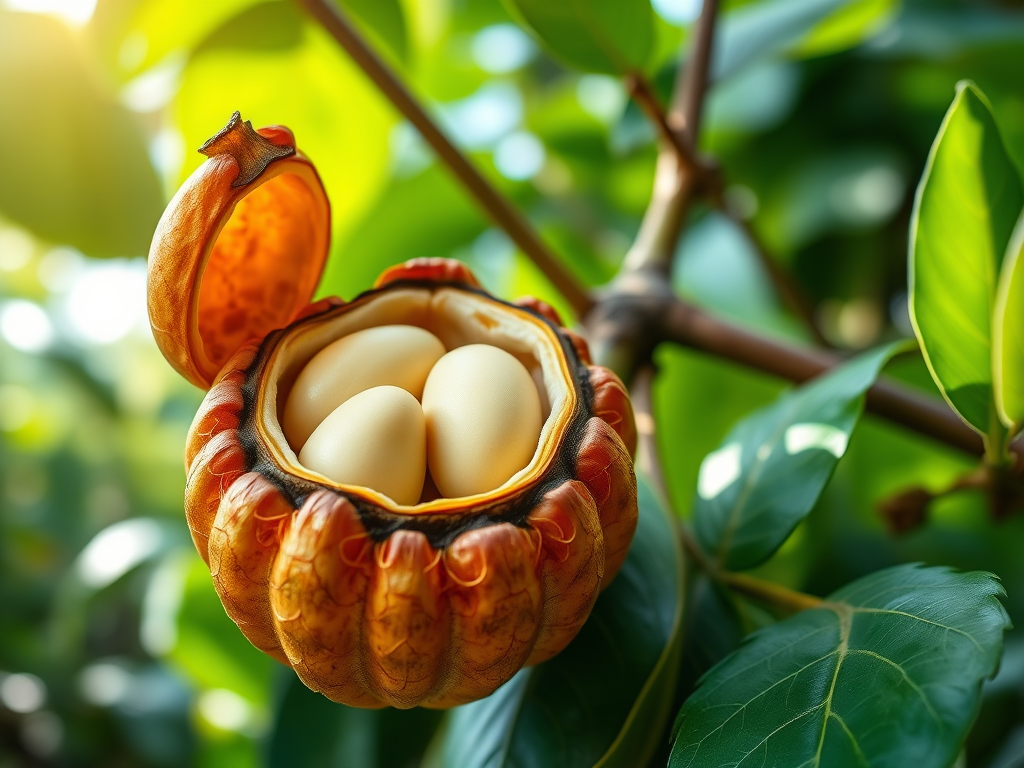
The Paradise Nut comes from the tree Lecythis zabucajo, which produces large, woody, gourd-like fruits often referred to as “monkey pots” due to their shape and the way animals interact with them.
🥥 Fruit or Nut?
Botanically: The Paradise Nut is the seed found inside the fruit of the Lecythis zabucajo tree.
Culinary Use: We call it a “nut” because it’s edible, rich in fat and protein, and behaves like other tree nuts in recipes.
Fruit Structure: The outer capsule is a hard shell with a lid (operculum), and inside are the cream-colored aril-covered seeds—those are the Paradise Nuts.
So yes, it’s technically a fruit that contains nut-like seeds, much like the Brazil nut, which comes from a related species in the same family (Lecythidaceae).
The Paradise Nut fruit earns its health-forward reputation thanks to a nutrient-rich seed core and a fruit structure that’s more than just tropical flair 🌴. Here’s why it’s a botanical powerhouse:
🥥 Why Paradise Nut Fruit Is Healthy
🌿 1. Selenium Saturation
The seeds inside the fruit are exceptionally rich in selenium, a trace mineral that:
Acts as a powerful antioxidant
Supports immune and thyroid function
May reduce cancer risk by neutralizing free radicals
💪 2. Protein & Muscle Support
Paradise nuts contain high-quality protein, aiding in:
Muscle repair and growth
Metabolic rate enhancement
Satiety and weight management
❤️ 3. Healthy Fats for Heart & Joints
Rich in monounsaturated and polyunsaturated fats, which:
Lower bad cholesterol (LDL)
Reduce inflammation
Support joint health and brain function
🧠 4. Cognitive & Mood Benefits
Selenium and healthy fats contribute to:
Improved cognitive performance
Mood regulation
Reduced risk of neurodegenerative conditions
🧬 5. Micronutrient Ensemble
Paradise Nut fruit also delivers:
Magnesium for nerve and muscle function
Phosphorus for bone health
Zinc for immunity and skin
Vitamins A, B, and E for cellular protection and energy
The Paradise Nut, from the tree Lecythis zabucajo, has a cultivation story rooted in tropical abundance and ecological intrigue 🌿. While exact dates are elusive, here’s what we know:
🌱 First Cultivation: When and Why
📍 Origins
Native to Amazonian regions including Brazil, Venezuela, Suriname, Ecuador, and the Guianas.
The tree naturally flourished in humid tropical forests, often alongside fruit bats like Phyllostomus hastatus, which played a key role in seed dispersal.
🕰️ Early Cultivation
Though not precisely dated, the Paradise Nut was introduced to tropical countries like Trinidad in the early 20th century due to the high quality of its nuts.
Jacques Huber, in 1909, noted the importance of fruit bats in dispersing seeds, suggesting that cultivation may have followed ecological observations.
🎯 Why Cultivate It?
Nutritional Value: The nuts are rich in selenium, protein, and healthy fats—making them a valuable food source.
Oil Production: The seeds yield oil suitable for cooking and domestic use.
Utility & Ornamentation: The large, woody fruit capsules were used as water vessels and decorative items.
Ecological Importance: The tree belongs to one of the most abundant families in the Amazon, contributing to biodiversity and forest structure.
🧬 Paradise Nut Fruit: Nutritional Breakdown
The edible seed inside the Paradise Nut fruit is a nutrient-dense botanical artifact, prized for its rare mineral profile and metabolic benefits. Here’s the expanded nutritional composition:
🌟 Selenium (Star Mineral)
Content: Exceptionally high—one nut may exceed daily recommended intake
Benefits:
Antioxidant protection against cellular damage
Supports thyroid hormone synthesis
Enhances immune response
May reduce cancer risk and improve mood stability
⚠️ Editorial Cue: Due to its potency, Paradise Nut should be consumed in moderation—1–2 nuts per day max.
💪 Protein
Content: High-quality plant protein
Benefits:
Muscle repair and growth
Satiety and blood sugar regulation
Thermogenic effect boosts metabolism
❤️ Healthy Fats
Types: Monounsaturated and polyunsaturated fats
Benefits:
Lowers LDL cholesterol
Reduces inflammation
Supports brain and joint health
🧠 Micronutrients
Magnesium: Calms nerves, regulates muscle function
Phosphorus: Bone strength and cellular energy
Zinc: Immune support and skin health
Vitamin E: Protects cell membranes, enhances skin elasticity
B Vitamins: Aid energy metabolism and cognitive clarity
🥣 Culinary Use Through the Years
🌿 Pre-Colonial Amazonian Use
- Indigenous communities in the Amazon harvested Paradise Nuts directly from fallen fruit capsules.
- The seeds were consumed raw or lightly roasted, often as a portable protein source during foraging or travel.
- The nut’s oil was used for cooking and medicinal salves, prized for its richness and shelf stability.
🛶 Colonial & Trade Era
- European explorers noted the nut’s high oil yield and nutritional density, leading to its introduction in tropical colonies like Trinidad.
- The fruit’s woody shell was repurposed as water vessels and ornamental containers, while the seeds entered local markets as exotic delicacies.
🍳 20th Century Expansion
- As awareness of selenium’s health benefits grew, Paradise Nuts gained traction in nutraceutical circles.
- Used in:
- Pressed oils for cooking and skincare
- Nut flours in gluten-free baking
- Trail mixes and energy bars for high-performance diets
🧁 Modern Culinary Applications
- Gourmet chefs use Paradise Nuts for:
- Nut butters with tropical fruit infusions
- Crusts for fish and tofu
- Smoothie boosters and granola blends
- Health-conscious consumers value it for:
- Selenium supplementation
- Anti-inflammatory fats
- Plant-based protein
⚠️ Editorial Note: Due to its intense selenium content, Paradise Nut is best used sparingly—1–2 nuts per day max. Overconsumption can lead to toxicity.
Here are a few recipe concepts that honor its selenium-rich profile and culinary versatility 🌿🥣
🥥 Paradise Nut Recipe Concepts
1. Tropical Paradise Nut Butter
Ingredients:
- 4 Paradise Nuts (lightly roasted)
- 2 tbsp coconut oil
- 3 pitted dates
- Pinch of sea salt
Instructions: Blend until creamy. Use as a spread on toast, drizzle over roasted squash, or swirl into oatmeal. Selenium with a side of smooth.
2. Paradise Nut & Mango Energy Bites
Ingredients:
- 3 Paradise Nuts (chopped)
- ½ cup dried mango (unsweetened)
- ¼ cup rolled oats
- 1 tbsp chia seeds
- 1 tbsp honey or agave
Instructions: Pulse in a food processor, roll into balls, chill. Snack with swagger—each bite is a tropical micronutrient bomb.
3. Selenium-Boost Smoothie
Ingredients:
- 1 Paradise Nut
- ½ cup pineapple
- ½ frozen banana
- 1 tsp grated ginger
- 1 cup coconut water
Instructions: Blend until frothy. Sip slowly. Your thyroid will send thank-you notes.
4. Paradise Nut Crusted Tofu
Ingredients:
- 4 Paradise Nuts (crushed)
- 1 block firm tofu (pressed and sliced)
- 2 tbsp tamari
- 1 tsp smoked paprika
- 1 tbsp olive oil
Instructions: Marinate tofu in tamari and paprika. Coat with crushed nuts. Pan-fry until golden. Serve with roasted root vegetables or a citrus slaw.
aradise Nut (Lecythis zabucajo) is not widely available commercially in the U.S., and sourcing it can be a bit of a botanical treasure hunt 🌰🔍
Here’s the breakdown:
Availability in the U.S.
- Not commonly sold in mainstream grocery stores or health food chains.
- Occasionally available through specialty tropical fruit forums, seed exchanges, or rare plant collectors—but often for trade rather than sale.
- Some growers in Hawaii and Puerto Rico have cultivated it in tropical zones, but it remains niche and not part of large-scale agriculture.
🛑 Why It’s Rare
- The tree requires humid, tropical conditions—not suitable for most U.S. climates outside of protected zones.
- Its selenium concentration makes it a regulated item in some contexts, as overconsumption can lead to toxicity.
- The fruit’s large woody capsule and slow growth cycle make it less commercially viable than other nuts like almonds or cashews.
🚫 Paradise Nut Precautions
1. Selenium Toxicity Risk
- Why it matters: Paradise Nuts contain extremely high levels of selenium—just one nut may exceed the daily recommended intake.
- Symptoms of overconsumption:
- Hair loss
- Gastrointestinal distress
- Fatigue
- Nerve damage in extreme cases
🧠 Editorial Cue: Limit intake to 1–2 nuts per day. Treat it as a micronutrient supplement, not a snack bowl filler.
🙅♀️ Who Should Avoid Paradise Nuts
1. Individuals with Tree Nut Allergies
- Paradise Nut is a true tree nut from the Lecythidaceae family.
- May trigger allergic reactions ranging from mild hives to severe anaphylaxis.
2. Pregnant or Breastfeeding Individuals
- Due to the potency of selenium, it’s best to avoid unless cleared by a healthcare provider.
- No established safe dosage for Paradise Nut during pregnancy.
3. Children Under 12
- Their smaller body mass makes them more susceptible to selenium toxicity.
- Best to avoid unless medically supervised.
4. People with Selenium-Sensitive Conditions
- Those with thyroid disorders, autoimmune conditions, or selenium supplementation should consult a physician before consuming.
- Paradise Nut may interact with existing treatments or push selenium levels too high.
5. Anyone on Selenium Supplements
- Combining Paradise Nut with supplements can lead to selenium overdose.
- Always check total daily intake from all sources.
⚠️ Paradise Nut Disclaimer
This botanical entry is provided for educational and informational purposes only. Paradise Nuts (Lecythis zabucajo) contain exceptionally high levels of selenium. While selenium is an essential trace mineral, excessive intake may lead to toxicity. Symptoms of overconsumption include gastrointestinal distress, fatigue, hair loss, and nerve damage.
Recommended intake: no more than 1–2 nuts per day. This product is not intended to diagnose, treat, cure, or prevent any disease.
Do not consume if you:
- Have a tree nut allergy
- Are pregnant, breastfeeding, or under age 12
- Are taking selenium supplements or have selenium-sensitive conditions
- Have not consulted a healthcare provider regarding its use
Always consult a qualified medical professional before introducing new botanical artifacts into your diet.
 EJADA
EJADA 
Leave a comment