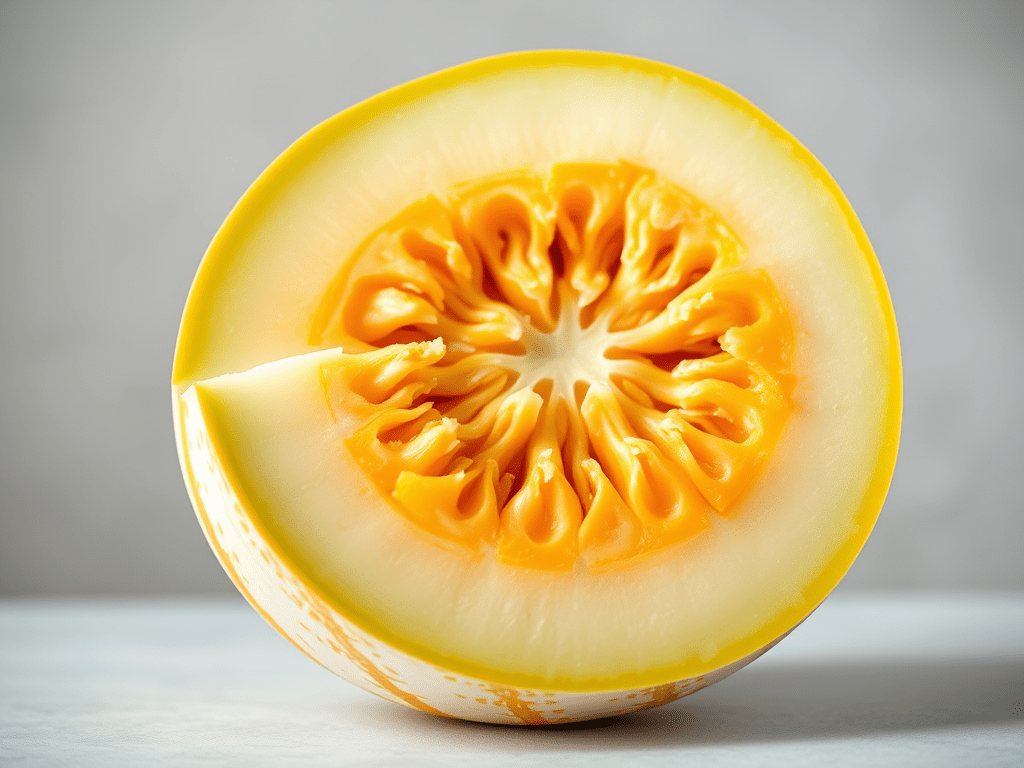
The Oriental melon, also known as Korean melon or by its regional names like chamoe in Korean and makuwa uri in Japanese, is a small, oblong fruit with a vibrant yellow skin and white stripes. It belongs to the Cucumis melo species and is part of the makuwa cultivar group
🍈 Quick Facts About Oriental Melon
- Origin: Likely from eastern India, spread through China via the Silk Road, and introduced to Korea and Japan.
- Flavor: A refreshing blend between honeydew melon and cucumber—mildly sweet and crisp.
- Texture: Firm flesh with edible seeds and a thin rind that can be eaten or peeled.
- Nutrition:
- High in Vitamin A and Vitamin C
- Contains calcium
- Hydrating (about 90% water)
- May help with digestion, blood pressure, and cholesterol.
Oriental melon (especially the Korean variety known as chamoe) is more than just a refreshing summer treat. It’s a nutritional powerhouse with a wide range of health benefits that make it a smart addition to your diet.
🧬 1. Rich in Vitamin C
- One cup contains 37.3 mg of Vitamin C, covering up to 62% of your daily needs.
- Supports immune function, collagen production, and helps fight free radicals.
- Aids in iron absorption, which is crucial for energy and oxygen transport.
❤️ 2. Cardiovascular Health
- High in potassium, which helps:
- Lower blood pressure by relaxing blood vessels
- Flush out excess sodium
- Completely cholesterol-free, making it heart-friendly.
⚖️ 3. Weight Management
- Low in calories (about 170 kcal per cup) and high in fiber (11g per cup).
- Keeps you full longer, supports digestion, and helps regulate appetite.
- Great for low-carb diets: only 4g net carbs per serving.
💧 4. Hydration & Detox
- Composed of over 90% water, making it excellent for hydration.
- Helps flush toxins and maintain electrolyte balance, especially in hot weather or after exercise.
🧠 5. Antioxidant Protection
- Contains beta-carotene and Vitamin C, which reduce oxidative stress and inflammation.
- May help protect against chronic diseases like cancer and diabetes.
🦴 6. Bone & Muscle Support
- Provides calcium and iron, supporting bone density and oxygen transport.
- The potassium content also helps prevent muscle cramps and supports nerve function.
🌿 Bonus: Digestive Health
- The fiber content aids in regular bowel movements and may help prevent constipation.
- Gentle on the stomach, making it suitable for people with sensitive digestion.
Whether you’re slicing it into salads, blending it into smoothies, or pickling it for a tangy side dish, Oriental melon brings a lot more to the table than just sweetness

Oriental Melon Detox SmoothieIngredients:
- 1 cup Oriental melon, peeled and chopped
- ½ cup cucumber, sliced
- ½ inch fresh ginger, peeled
- Juice of ½ lemon
- ½ cup coconut water (for electrolytes)
- A handful of fresh mint leaves
- Optional: 1 tsp chia seeds or flaxseeds for fiber
- Ice cubes (as needed)
🌀 Instructions:
Serve chilled—best enjoyed immediately!
Add all ingredients to a blender.
Blend until smooth and frothy.
Taste and adjust lemon or mint to your liking.
This smoothie is light, cooling, and perfect for mornings or post-workout refreshment
Why It Works:
- Cucumber and coconut water flush toxins and restore electrolytes.
- Ginger aids digestion and reduces inflammation.
- Lemon boosts liver detox and adds a zesty kick.
- Oriental melon hydrates and provides Vitamin C.
- Mint soothes the stomach and freshens breath
🌱 Cultural Significance
- In Korea, chamoe is a beloved summer fruit and often pickled into a side dish called chamoe-jangajji.
- In Japan, makuwa uri has historical roots dating back to the Jōmon period and was once so common that the word uri (melon) referred specifically to it.
The Oriental melon (Cucumis melo, Makuwa Group) has a rich and ancient history of cultivation
🌍 Origins and Early Cultivation
Eastern India is believed to be the original source of the Oriental melon, based on genetic studies.
It spread to China via the Silk Road, and from there to Korea and Japan, where it became deeply embedded in local agriculture and cuisine.
🏺 Historical Evidence
- In Japan, Oriental melon seeds have been found in Jōmon period archaeological sites, suggesting cultivation as far back as 10,000 years ago.
- The name makuwa uri comes from the village of Makuwa in ancient Mino Province, now part of Gifu Prefecture, which was famous for its melons as early as the 2nd century AD.
- In Korea, it was likely introduced during the Three Kingdoms period (roughly 1st–7th century AD), and has since become a staple summer fruit.
So while exact dates are hard to pin down, Oriental melon has been cultivated for thousands of years, with archaeological and historical records pointing to its deep roots in East Asian agriculture.
The cultivation of Oriental melon has evolved dramatically over the centuries—from ancient hand-tended plots to high-tech greenhouse operations.
🏺 Ancient Beginnings
Origins: Likely domesticated in eastern India, then spread to China, Korea, and Japan via trade routes like the Silk Road.
Traditional methods: Early farmers relied on natural rainfall, manual labor, and local seed varieties. Cultivation was seasonal and limited to small-scale farming.
🌾 Regional Expansion & Cultural Integration
In Japan, the melon was widely grown during the Jōmon period, with the name makuwa uri linked to a village famous for its melons as early as the 2nd century AD.
In Korea, it became a summer staple, with cultivation expanding during the Three Kingdoms period. Today, Seongju County produces over 70% of Korea’s Oriental melons.
🚜 Modern Agricultural Advances
Greenhouse farming: Widely adopted in Korea and Japan to control temperature, humidity, and pests—extending the growing season and improving yield.
Drip irrigation & fertigation: These techniques allow precise water and nutrient delivery, boosting efficiency and fruit quality.
Genetic improvement: Breeding programs have developed varieties with better sweetness, disease resistance, and shelf life3.
🌍 Globalization & Market Adaptation
Though still most popular in East Asia, Oriental melons are now exported to international markets, especially where Asian communities reside.
Packaging, branding, and cold-chain logistics have made it possible to maintain freshness across long distances.
From humble beginnings to high-tech farming, the Oriental melon has journeyed through time as both a cultural icon and a modern agricultural success.
🍈 Evolution of Oriental Melon Varieties
Over centuries, farmers and breeders have selectively cultivated Oriental melons to improve taste, yield, and resilience:
Traditional Varieties: Early types like makuwa uri in Japan and euncheon-chamoe in Korea were small, mildly sweet, and adapted to local climates.
Modern Breeding:
In 1957, the euncheon-chamoe variety was introduced from Japan to Korea and quickly became dominant due to its sweetness and productivity.
Breeding programs have since focused on enhancing disease resistance, shelf life, and uniformity in size and sweetness.
Genetic Studies: Techniques like RAPD analysis have revealed that Oriental melons hybridize easily with other melon types, leading to greater genetic diversity.
🌡️ Climate Change & Cultivation Shifts
Climate change is reshaping how Oriental melons are grown:
Temperature Sensitivity: Oriental melons thrive in moderate temperatures (24–28°C daytime), but rising heat can stress plants and reduce yields.
CO₂ Enrichment: Studies show that increasing CO₂ levels in greenhouses boosts photosynthesis, sugar content, and overall fruit quality.
Water Management: In arid regions like Morocco, local melon landraces have shown better adaptability to drought and heat, helping maintain yields under climate stress.
Greenhouse Innovation: Solar greenhouses in northern China now use CO₂ supplementation and plastic mulching to counteract winter cold and low light.
🌱 What’s Next?
Precision Agriculture: Sensors and data-driven farming are helping optimize water, nutrients, and climate control.
Sustainable Practices: Breeders are focusing on varieties that require less water and resist pests naturally.
Flavor Diversity: New cultivars aim to cater to global tastes—some sweeter, some crunchier, some even with exotic aromas.
🥗 How to Enjoy It
- Eat it fresh—skin and seeds included if you like!
- Slice into salads or serve chilled as a snack.
- Try it pickled for a tangy twist.
It’s a fruit with a gentle sweetness and a long cultural journey.
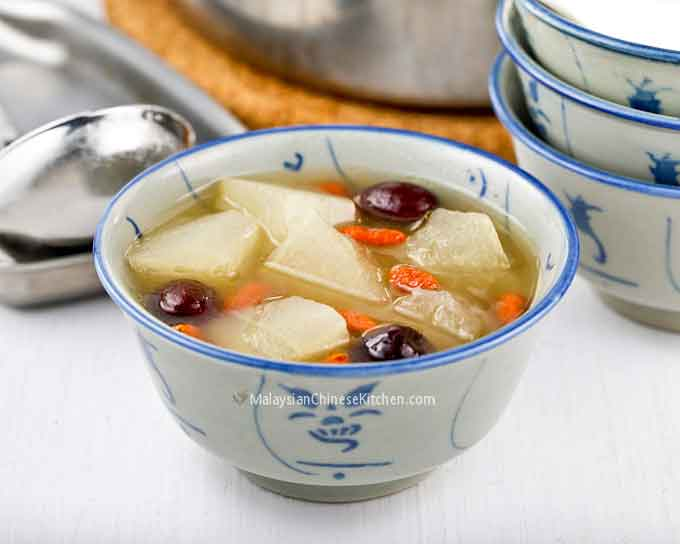
Winter Melon Soup (Tong Kua Tong) is a soothing and nutritious soup with cooling properties. Perfect on a warm day but just as comforting on a cool day. Recipe @Malaysian Chinese Kitchen
The Winter Melon Soup (Tung Kua Tong) featured in the recipe contains approximately 115 kcal per serving. Here’s a breakdown of its nutritional value based on the ingredients and preparation:
🥣 Nutritional Highlights (Per Serving)Of TheWinter Melon Soup
| Nutrient | Approximate Value |
|---|---|
| Calories | 115 kcal |
| Protein | Moderate (from chicken carcass) |
| Fat | Low |
| Carbohydrates | Low to moderate (from melon, dates, goji berries) |
| Fiber | Mild (from winter melon and berries) |
| Vitamins | Vitamin C, A (from goji berries and melon) |
| Minerals | Potassium, Iron (from dates and goji berries) |
🌿 Health Benefits of the Melon Soup
- Cooling properties: Winter melon is known in traditional Chinese medicine for its ability to cool the body.
- Hydration: High water content helps with hydration.
- Antioxidants: Goji berries and red dates offer immune-boosting antioxidants.
- Low fat: Especially when made with roasted chicken carcass, which yields a rich broth with minimal fat.
The nutritional information for Winter Melon Soup (Tung Kua Tong)—specifically the 115 kcal per serving—is cited from the recipe published on Malaysian Chinese Kitchen. The recipe includes ingredients like roasted chicken carcass, winter melon, red dates, and goji berries, and provides a full breakdown of preparation steps along with the calorie count.
This soup is light, nourishing, and perfect for both warm and cool weather.
🍈 1. Chamoe Salad with Mint & Lime
A refreshing summer salad:
- Ingredients: Oriental melon, fresh mint, lime juice, honey, pinch of salt
- Instructions: Peel and slice the melon, toss with chopped mint, drizzle with lime juice and honey. Chill before serving.
🥢 2. Chamoe Kimchi (Melon Pickle)
A Korean twist on pickling:
- Ingredients: Sliced melon, garlic, gochugaru (Korean chili flakes), fish sauce, sugar, salt
- Instructions: Mix ingredients and let ferment for 1–2 days. It’s crunchy, spicy, and tangy.
🍧 3. Melon Shaved Ice (Chamoe Bingsu)
Perfect for hot days:
- Ingredients: Shaved ice, sweetened condensed milk, melon balls, vanilla ice cream
- Instructions: Layer shaved ice with melon and drizzle with condensed milk. Top with ice cream.
🍹 4. Chamoe Smoothie
Light and hydrating:
- Ingredients: Melon, Greek yogurt, honey, ice cubes
- Instructions: Blend until smooth. Add mint or basil for a twist.
🍮 5. Melon Jelly Cups
A fun dessert:
- Ingredients: Melon juice, gelatin, sugar, lemon juice
- Instructions: Heat juice with sugar and gelatin, pour into molds, chill until set.
These recipes highlight the melon’s crisp texture and subtle sweetness.
While it’s often enjoyed fresh or pickled, its crisp texture and mild sweetness make it a surprisingly versatile ingredient in savory dishes too.
🍳 1. Oriental Melon Stir-Fry with Chicken & Ginger
Inspired by Cantonese-style fuzzy melon dishes:
- Ingredients: Oriental melon (peeled and sliced), chicken breast, fresh ginger, garlic, soy sauce, sesame oil
- Flavor profile: Light and savory with a hint of sweetness from the melon
- Tip: Stir-fry melon until just tender—it absorbs the sauce beautifully without turning mushy
🌮 2. Melon & Shrimp Tacos with Chili-Lime Slaw
A Korean-Mexican fusion twist:
- Ingredients: Grilled shrimp, julienned Oriental melon, cabbage slaw with lime juice and gochujang
- Flavor profile: Sweet, spicy, and tangy
- Serving: Use soft corn tortillas and top with cilantro and toasted sesame seeds
🍜 3. Chamoe Ramen Bowl
A refreshing take on cold ramen:
- Ingredients: Chilled ramen noodles, sliced melon, soft-boiled egg, cucumber, sesame dressing
- Fusion: Combines Korean summer flavors with Japanese noodle culture
- Optional: Add grilled tofu or pork belly for protein
🥟 4. Melon & Pork Dumplings
A savory-sweet dumpling filling:
- Ingredients: Ground pork, finely chopped Oriental melon, garlic chives, soy sauce
- Texture: Melon adds moisture and a subtle crunch
- Serving: Pan-fry or steam, then dip in black vinegar and chili oil
🍲 5. Melon Coconut Curry
Thai-inspired fusion:
- Ingredients: Oriental melon chunks, coconut milk, red curry paste, basil, fish sauce
- Flavor profile: Creamy, spicy, and slightly sweet
- Pairing: Serve with jasmine rice or rice noodles
These dishes show how Oriental melon can go far beyond fruit bowls.
While Oriental melon is generally safe and nutritious for most people, there are a few groups who should limit or avoid consuming it due to specific health concerns:
🚫 Groups That May Need Caution
1. People with Irritable Bowel Syndrome (IBS)
- Oriental melon contains fructose, which can be a trigger for those on low-FODMAP diets.
- May cause bloating, gas, or diarrhea if consumed in excess.
2. Individuals with Diabetes
- Though lower in sugar than some fruits, Oriental melon still contains natural sugars (fructose).
- Diabetics should consume it in moderation, ideally paired with protein or fiber to slow sugar absorption.
3. Patients with Kidney Disease
- Oriental melon is high in potassium, which can be problematic for those with chronic kidney conditions.
- Excess potassium can lead to hyperkalemia, a serious electrolyte imbalance.
4. People with Melon Allergies
- Though rare, some individuals may experience oral allergy syndrome or more severe reactions like hives, swelling, or digestive upset.
- If symptoms occur, medical advice is essential.
🧠 Pro Tip
Even for those in these groups, small portions may still be tolerable. It’s always best to consult a healthcare provider if you’re unsure how melon fits into your dietary needs.
Melon Matters: When You Should Avoid Eating Melon
 EJADA
EJADA 
Leave a comment