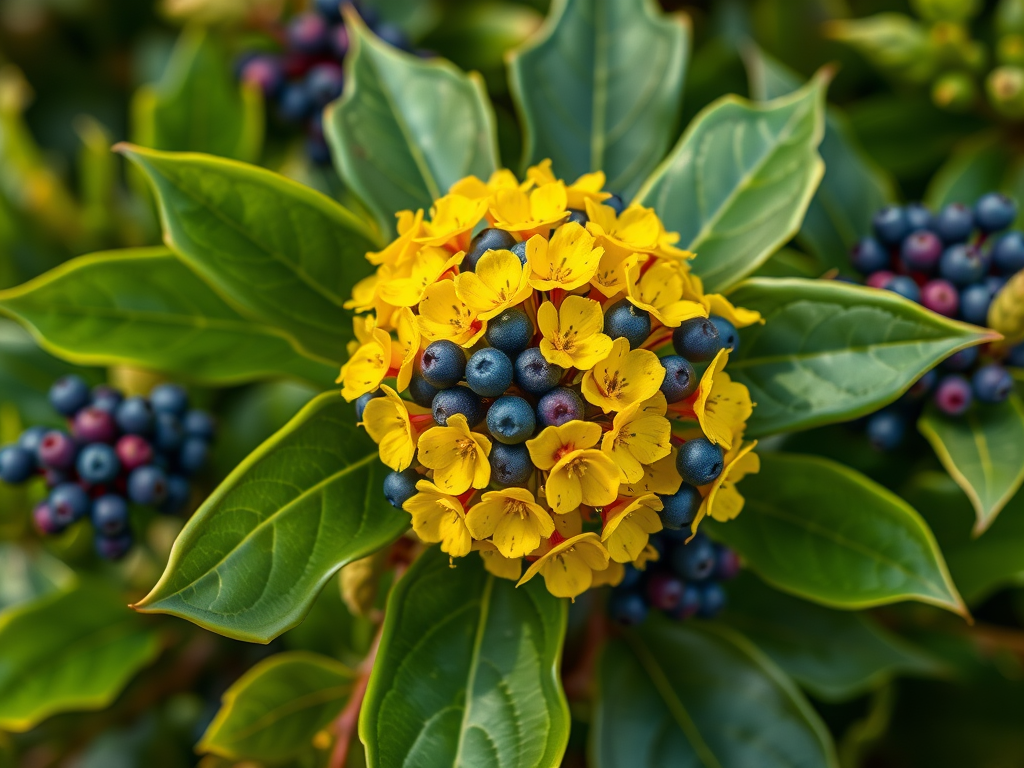
The Oregon Grape is a fascinating plant with a lot going for it 🌿.
🌼 Botanical Profile
Scientific Name: Berberis aquifolium (also known as Mahonia aquifolium)
Family: Berberidaceae
Type: Evergreen shrub
Native Region: Western North America, especially the Pacific Northwest
State Flower: It’s actually the official state flower of Oregon!
🌱 Appearance & Growth
Leaves: Holly-like, dark green, and leathery with spiny edges
Flowers: Bright yellow clusters bloom in spring
Fruit: Deep blue-purple berries that resemble grapes (but taste quite tart!)
Size: Typically grows 3–6 feet tall and 2–5 feet wide
🌿 Uses & Benefits
Ornamental: Popular in landscaping for its year-round foliage and vibrant flowers
Wildlife: Attracts bees, butterflies, and birds
Medicinal: Contains berberine, known for its antimicrobial and anti-inflammatory properties
Cultural: Native Americans used it for dyes, medicine, and food—though the berries are sour, they were often dried or made into jelly
The Oregon Grape (Mahonia aquifolium) wasn’t cultivated in the traditional agricultural sense like wine grapes or corn, but it has a rich history of use and propagation.
🌿 Historical Cultivation & Use
Native Use: Indigenous peoples of the Pacific Northwest used Oregon Grape for centuries,primarily for medicinal purposes. They harvested the roots and bark for teas and tinctures to treat infections and digestive issues.
Botanical Recognition: It was formally described in the early 19th century by botanists exploring the western United States.
Cultivation Begins: While exact dates are hard to pin down, Oregon Grape began appearing in gardens and landscapes in the mid-to-late 1800s, especially after settlers recognized its hardiness and ornamental value.
Modern Landscaping: By the 20th century, it became popular in native plant gardens and xeriscaping due to its drought tolerance and evergreen foliage.
Unlike crops bred for food, Oregon Grape was “cultivated” more for its resilience, beauty, and medicinal properties
🌤️ Growing Conditions
Light: Prefers partial shade but tolerates full sun in cooler climates
Soil: Well-drained, slightly acidic to neutral
Hardiness Zones: USDA zones 5–9
Watering: Moderate; drought-tolerant once established
Oregon Grape berries are edible—but with a twist 🍇.
🫐 What They Taste Like
The berries are very tart, almost sour, and not sweet like true grapes.
Because of their intense flavor, they’re rarely eaten raw in large quantities.
🍯 How People Use Them
Jams & Jellies: Often sweetened and cooked down to make preserves.
Juices & Syrups: Blended with sweeter fruits or sugar to balance the bitterness.
Medicinal Uses: Traditionally used by Indigenous peoples for digestive health and immune support.
A Few Cautions
Make sure you’ve correctly identified the plant—some lookalikes can be toxic.
The berries are safe, but the roots and bark contain berberine, a compound with strong medicinal effects that should be used cautiously and not consumed without guidance.
Oregon Grape is more than just a pretty shrub—it’s a powerhouse of health benefits, especially thanks to its active compound, berberine 🌿.
Key Nutritional Components
Berberine: A potent alkaloid with antimicrobial, anti-inflammatory, and antioxidant properties@ verywellhealth
Vitamin C: Supports immune health and collagen production
Vitamin A & K: Good for vision, immunity, and bone health
Minerals: Contains potassium, calcium, and magnesium for nerve and muscle function
Fiber: Aids digestion and promotes satiety
Low in Calories: Nutrient-dense without being calorie-heavy @ 18 Health Benefits
💪 Health Benefits
Immune Support: Antioxidants and vitamin C help fight infections and boost immunity
Digestive Health: Berberine and fiber support gut function and may relieve stomach issues
Skin Conditions: Topical creams with Oregon Grape have shown promise in treating psoriasis and eczema
Blood Sugar Control: Berberine may improve insulin sensitivity and help regulate blood sugar levels
Heart Health: Antioxidants and anti-inflammatory effects may reduce risk factors for heart disease
Weight Management: Fiber and low calorie content help with appetite control
(Oregon grape contains berberine, a powerful plant compound that may relieve many health conditions. This herb is available in various supplements, oils, creams, and extracts. @Healthline)
⚠️ Things to Keep in Mind
Berries vs. Root: The berries are safe to eat in moderation, but the root (used medicinally) should be taken with guidance.
Supplement Caution: Not all supplements are regulated—look for third-party testing and consult a healthcare provider before use
It’s a wild-foraged gem with a surprising resume.
The root of the Oregon Grape is a medicinal marvel—used for centuries and still valued today for its potent health benefits. Here are some of the most effective and traditional ways to use it 🌿
🧪 1. Herbal Tincture
How it works: The root is soaked in alcohol or glycerin to extract its active compounds, especially berberine.
Uses: Supports liver function, digestion, and immune health.
Tip: Take in small doses (usually drops) under guidance from a herbalist or naturopath.
🍵 2. Decoction (Root Tea)
How it works: Simmer chopped or powdered root in water for 15–30 minutes.
Uses: Helps with indigestion, bloating, and detoxification.
Flavor warning: It’s bitter! Often blended with milder herbs like peppermint or ginger.
🧴 3. Topical Creams & Salves
How it works: Extracts from the root are infused into creams or ointments.
Uses: Treats skin conditions like psoriasis, eczema, and acne thanks to its anti-inflammatory and antimicrobial properties.
💊 4. Capsules or Powder
How it works: Dried root is ground and encapsulated or used as a powder.
Uses: Convenient for digestive and immune support, especially for those who dislike tinctures or teas.
Caution: Not for long-term daily use—can disrupt gut flora if overused.
🧼 5. Infused Oils or Soaps
How it works: Root is steeped in oil or added to soap formulations.
Uses: Gentle antimicrobial cleansing for sensitive or irritated skin.
⚠️ Safety Tips
Berberine is powerful: Avoid during pregnancy, breastfeeding, or with certain medications (especially antibiotics or blood pressure meds).
Start small: Always begin with low doses and consult a healthcare provider if unsure.
Not for kids: Oregon Grape root is generally not recommended for young children.
Resources:
The Oregon Grape is deeply woven into the cultural fabric of the Pacific Northwest, especially among Indigenous communities and Oregonians
Indigenous Traditions
Sacred Symbolism: Native American tribes of the Pacific Northwest regarded Oregon Grape as a sacred plant, symbolizing resilience and adaptability.
Ceremonial Use: It was used in traditional ceremonies and healing practices, with its roots and bark employed to treat infections, digestive issues, and skin conditions.
Food & Medicine: The berries were consumed (often dried or cooked), and the plant was a staple in herbal medicine long before European settlers arrived.
🏞 Oregonian Identity
State Flower: Oregon Grape was officially designated as Oregon’s state flower in 1899, chosen to reflect the state’s natural beauty and hardy spirit.
Symbol of Resilience: Its evergreen leaves and vibrant yellow blossoms represent the ability to thrive in diverse climates—mirroring the values of the people who live there.
Regional Pride: It’s seen as a botanical ambassador, promoting Oregon’s image and even boosting tourism and local product recognition.
🔮 Folklore & Magic
Protective Talismans: In folk traditions, Oregon Grape was believed to ward off negative energy. Placing three branches at a threshold was said to keep enemies at bay.
Spiritual Lessons: Its bitter fruit and healing properties symbolize the balance between challenge and growth—teaching that strength and compassion must coexist.
European Mythology: When introduced to Europe, it was often confused with barberry and inherited some of its magical associations, including protection and purification.
The Oregon Grape isn’t just a plant—it’s a story of survival, healing, and identity. @ thepracticalherbalist
Oregon Grape may not be sweet like its namesake, but it’s a wild culinary gem for adventurous cooks 🍇
🍯 Culinary Uses of Oregon Grape Berries
Jam & Jelly: The berries’ tartness makes them perfect for preserves when sweetened. Think of it like wild blueberry jam with a punch.
Syrup & Cordial: Cooked berries can be transformed into a rich syrup or cordial—great for cocktails, mocktails, or drizzling over pancakes.
Sauces: Pair with game meats or poultry. Their bold flavor complements venison, duck, or roast chicken.
Fruit Leather: Blend with apples or other sweet fruits, then dehydrate for a tangy snack.
Wine or Fermented Drinks: Some foragers experiment with Oregon Grape wine or mead, though it’s definitely an acquired taste.
🌼 Bonus: Edible Flowers
- Lemonade or Sorbet: The bright yellow blossoms can be steeped to make a floral lemonade or frozen into a refreshing sorbet.
- Garnish: Use the flowers as a decorative, edible touch on salads or desserts.
🧂 Flavor Notes & Tips
- Tart & Bold: Oregon Grape berries are intensely sour, so they’re rarely eaten raw.
- Best When Cooked: Cooking mellows the bitterness and brings out a deep, almost blackcurrant-like flavor.
- Harvest Timing: Late summer to early fall is ideal when berries are deep blue-purple and ripe.
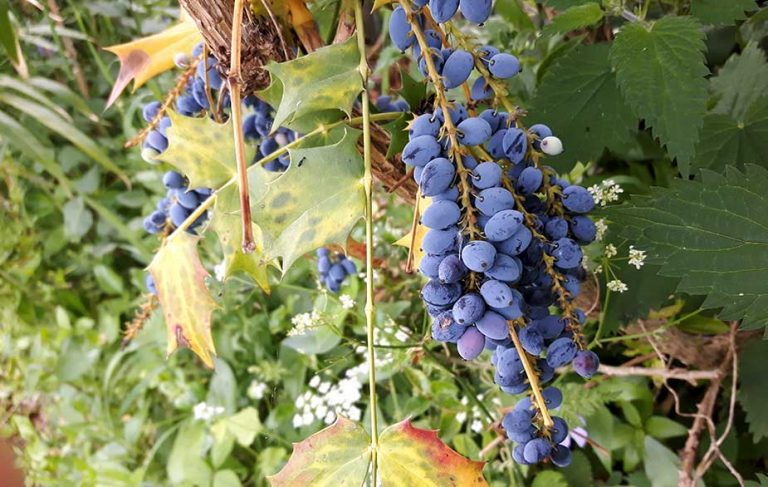
Oregon Grape is a common ornamental shrub in parks and gardens that is not actually related to Grape Vine. The berries are of interest to the forager and are best used to make a number of preserves.
Oregon Grape Jelly Recipe
Yield: About 3 jars (250ml each) Source: Joybilee Farm
🧾 Ingredients
- 10 cups Oregon grape berries (washed, stems optional)
- ½ cup water
- 2 cups organic sugar
- ¼ cup lemon juice
- ¼ tsp butter (optional, reduces foaming)
- ½ package liquid pectin
👩🍳 Instructions
Simmer the berries: Place berries and water in a saucepan. Simmer for 15 minutes, mashing with a potato masher to release juice.
Strain the juice: Pour into cheesecloth or a jelly bag. Let drain naturally, then press for extra juice (note: pressing may cloud the jelly but increases yield).
Measure juice: You need 4 cups. If short, top up with water.
Cook the jelly: Add juice, sugar, lemon juice, and butter to a saucepan. Bring to a boil.
Add pectin: Stir in liquid pectin and boil for 5 minutes until jelly stage is reached (it should sheet off the spoon).
Jar it up: Pour into sterilized jars, seal with lids, and process in a boiling water bath for 5 minutes.
Cool & store: Let jars cool, remove rings, label, and store in a cool, dry place.
🌿 Oregon Grape is native to the Pacific Northwest and widely available across the U.S. depending on what you’re looking for—whether it’s the plant itself, berries, or herbal products. Here’s how to find it:
🏞️ Wild & Cultivated Plants
Native Habitat: Oregon Grape grows naturally in forests and mountainous regions of Oregon, Washington, Northern California, and parts of Idaho and Montana.
Nurseries & Garden Centers: You can often find Oregon Grape plants at native plant nurseries or garden centers, especially in the western U.S. Look for Mahonia aquifolium (its botanical name).
U-Pick Farms: Some farms in Oregon offer grape picking, though it’s mostly table or wine grapes. Oregon Grape is less common in U-pick settings but may be found in specialty orchards.
🧪 Herbal & Medicinal Products
Health Stores: Chains like Whole Foods, Sprouts, and local co-ops often carry Oregon Grape root in tincture, capsule, or dried form.
Online Retailers:
Mountain Rose Herbs – specializes in organic Oregon Grape root.
iHerb and Amazon – offer a wide range of supplements and extracts.
🍷 Wine Grapes (Not Oregon Grape specifically)
If you’re looking for grapes for winemaking, Oregon has a rich wine culture with 23 federally recognized grape-growing regions (AVAs) like Willamette Valley and Rogue Valley. These are mostly for wine grapes, not Oregon Grape, but still worth exploring if you’re into viticulture.
🍇 Tart but Mighty: The Oregon Grape Wrap-Up
Oregon Grape is a wild treasure—tart but mighty, with berries that pack a punch and roots steeped in centuries of healing tradition. Whether you’re crafting a tangy jelly, brewing a medicinal tea, or blending a skin-soothing salve, this plant offers a unique blend of flavor and function.
⚠️ Precaution
While Oregon Grape berries are safe in moderation, its roots contain berberine, a powerful compound that can interact with medications and affect gut flora. Always consult a qualified herbalist or healthcare provider before using root-based remedies—especially if you’re pregnant, nursing, or managing chronic conditions.
📜 Disclaimer
This information is for educational purposes only and is not intended as medical advice. Always seek professional guidance before using herbal products for health or nutrition.
Ready to forage, cook, or craft with confidence? Oregon Grape is waiting to be rediscovered—one tart bite at a time.
 EJADA
EJADA 
Leave a comment