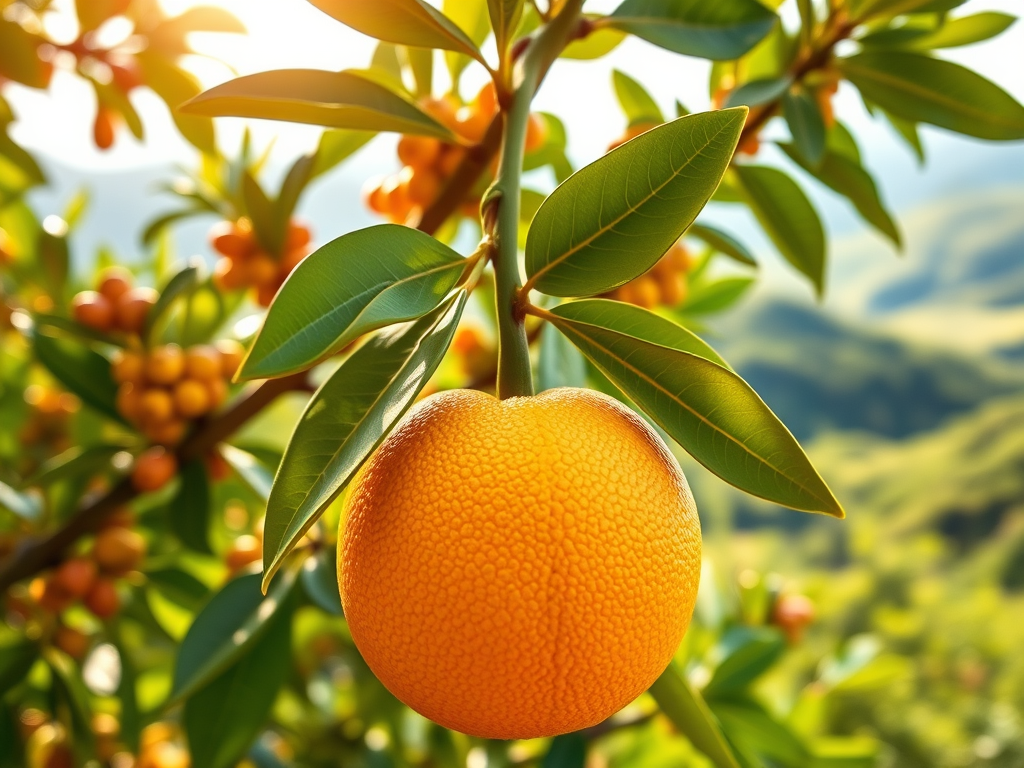
The Orangelo, also known as Chironja in Puerto Rico, is a vibrant citrus hybrid that combines the best traits of an orange (Citrus sinensis) and a grapefruit (Citrus paradisi)
In the misty highlands of Puerto Rico, where coffee trees stretch toward the sun and the soil hums with life, a curious fruit emerged—bright as a sunrise and sweet as a Caribbean breeze. The Orangelo, or Chironja, wasn’t bred in a lab or summoned by science. It was nature’s own improvisation: a spontaneous hybrid of orange and grapefruit, discovered in 1956 by horticulturist Carlos G. Moscoso.
Though it doesn’t carry the weight of ancient rituals or sacred ceremonies, the Orangelo has become a quiet emblem of the island’s spirit—resourceful, vibrant, and full of flavor. It’s a fruit that tells a story: of land, of legacy, and of the joyful surprises that grow when tradition meets serendipity.
Whether juiced into a cocktail, folded into a sorbet, or simply peeled and savored under the sun, the Orangelo invites us to taste not just sweetness—but the soul of Puerto Rico itself.
🌱 Origin & Cultivation
- Discovered: In 1956, by Carlos G. Moscoso, a horticulturist with the Agricultural Extension Service of the University of Puerto Rico.
- Location: It was found growing spontaneously among shade trees on coffee plantations in the Puerto Rican highlands.
- Name: “Chironja” is a portmanteau of china (Puerto Rican Spanish for orange) and toronja (grapefruit).
- Propagation: Typically cultivated through grafting, ensuring consistency in fruit quality.
🌺 Orangelo in Puerto Rican Culture
While the Orangelo doesn’t have deep ceremonial roots or ancient traditions tied to it, its origin story and local embrace reflect key aspects of Puerto Rican identity:
1. Symbol of Agricultural Ingenuity
- Discovered in 1956 by Carlos G. Moscoso, the Orangelo wasn’t engineered—it was spontaneously born in the shade of coffee trees in the highlands.
- This mirrors Puerto Rico’s legacy of resourcefulness, where nature and human observation come together to create something new and valuable.
2. Linguistic Flavor
- The name Chironja is a fusion of china (local slang for orange) and toronja (grapefruit), showcasing the island’s playful and adaptive use of language.
- This linguistic creativity is a hallmark of Puerto Rican culture, where Spanish blends with African, Taíno, and American influences.
3. Culinary Integration
- Though not ceremonial, Orangelo is often enjoyed in rural households, especially in mountainous regions where it naturally thrives.
- It’s used in juices, desserts, and home remedies, reflecting the island’s tradition of using local produce for both nourishment and wellness.
4. Cultural Identity
- The Orangelo is a quiet emblem of Puerto Rican pride—a fruit that’s uniquely theirs, born from their soil, and named in their dialect.
- It’s often highlighted in local agricultural fairs and educational programs, reinforcing its role in community heritage.
🍽️ Culinary & Practical Uses
- Flavor: Sweeter than grapefruit, with a bright citrus tang. Easier to peel and more vibrant in color.
- Consumption:
- Eaten fresh (often halved like a grapefruit)
- Juiced for refreshing beverages
- Used in salads, desserts, sauces, and even cocktails @holistichealth
- Nutrition:
- Rich in Vitamin C
- Contains dietary fiber
- Offers antioxidants and essential minerals like potassium and magnesium@ 35 Facts
🌟 Fun Fact
Its discovery was accidental—nature’s own little experiment in citrus crossbreeding. And it turned out deliciously well.
The Orangelo (or Chironja) is a citrus hybrid that blends the sweet zest of an orange with the tangy punch of a grapefruit—and its health benefits are just as vibrant as its flavor.
🧠 Top Health Benefits of Orangelo
Here’s what makes this fruit a nutritional powerhouse:
1. Immune System Support
- Packed with Vitamin C, which boosts immune defenses and helps fight off infections.
- Supports collagen production, aiding in wound healing and skin health.
2. Digestive Health
- Rich in dietary fiber, which promotes regular bowel movements and supports gut microbiota.
- Helps prevent constipation and improves overall digestive efficiency.
3. Heart Health
- Contains potassium, which helps regulate blood pressure and supports cardiovascular function.
- The flavonoids (like hesperidin) may reduce inflammation and improve blood vessel function.
4. Antioxidant Protection
- Loaded with antioxidants that combat oxidative stress and reduce the risk of chronic diseases.
- May help protect cells from damage that leads to aging and disease.
5. Hydration & Skin Glow
- High water content keeps you hydrated.
- Vitamin C and antioxidants contribute to radiant skin and may reduce signs of aging.
6. Weight Management
- Low in calories and high in fiber, making it a great snack for satiety without the guilt.
- May help reduce visceral fat when included in a balanced diet.
🧪 Nutritional Snapshot (approximate per 100g)
| Nutrient | Amount | Benefit |
|---|---|---|
| Vitamin C | ~90% DV | Immune support, skin health |
| Fiber | ~2.5g | Digestive health |
| Potassium | ~170mg | Heart and muscle function |
| Folate | ~9% DV | Cell growth, metabolism |
| Calories | ~47 kcal | Low-calorie energy source |
Orangelo is like nature’s multivitamin wrapped in citrus sunshine. Want ideas for how to use it in smoothies or salads? I’ve got some juicy suggestions
@ 8 Health
BenefitsOrangelos are also rich in Vitamin C, potassium, and antioxidants, making them a great choice for immune support and heart health
🍽️ Easy & Tasty Orangelo Recipes
1. Orangelo Sunrise Smoothie
Ingredients:
- 1 Orangelo, peeled and segmented
- 1 banana
- ½ cup Greek yogurt
- 1 tsp honey
- Ice cubes
Instructions: Blend all ingredients until smooth. Garnish with a mint leaf and enjoy a refreshing, vitamin-packed start to your day.
2. Orangelo Citrus Salad
Ingredients:
- 2 Orangelos, segmented
- 1 avocado, sliced
- Mixed greens (arugula, spinach)
- Feta cheese crumbles
- Olive oil + balsamic vinegar
Instructions: Toss everything together. The sweet-tart Orangelo pairs beautifully with creamy avocado and tangy feta.
3. Grilled Orangelo Glaze for Chicken or Fish
Ingredients:
- Juice of 2 Orangelos
- 1 tbsp soy sauce
- 1 tsp grated ginger
- 1 tsp brown sugar
Instructions: Simmer until slightly thickened. Brush over grilled chicken or fish for a tropical twist.

Nedicks Orange
This recipe has a rating of 4.8 stars from 18 reviewers.
4.8 (18)
8 min · 150 cals · 1 servings
Ingredients
- •2 ounces Orange Juice
- •1 ounce Vodka
- •0.5 ounce Sugar Syrup
- •6 Ice Cubes
Shop ingredients on Instacart
Instructions
- Fill a cocktail shaker with ice cubes.
- Add the orange juice, vodka, and sugar syrup to the shaker.
- Shake well until the mixture is well combined.
- Strain the cocktail into a glass filled with ice cubes.
- Garnish with an orange slice and serve
🍮 Orangelo Sorbet
A refreshing dessert that’s light, tangy, and perfect after a summer meal.
Ingredients:
- 1 cup Orangelo juice
- ½ cup water
- ⅓ cup sugar
- 1 tsp lemon juice
- Zest of 1 Orangelo
Instructions:
- In a saucepan, heat water and sugar until dissolved. Let cool.
- Mix in Orangelo juice, lemon juice, and zest.
- Pour into a shallow dish and freeze, stirring every 30 minutes until slushy.
- Serve in chilled bowls with mint leaves.
Orangelo isn’t just a fruit—it’s a flavorful way to nourish your body, elevate your recipes, and add a splash of sunshine to your day.
🌟 Final Zest: More Than Just a Fruit
The Orangelo isn’t just a hybrid citrus—it’s a flavorful metaphor for Puerto Rico itself. Born from the island’s fertile soil and linguistic flair, it reflects a culture that thrives on creativity, resilience, and the unexpected beauty of nature’s improvisation.
Whether you’re sipping it in a cocktail, savoring it in a sorbet, or simply admiring its story, the Orangelo invites you to taste more than sweetness—it offers a slice of heritage, a splash of health, and a burst of tropical joy.
So next time you reach for citrus, let it be one that carries a story. Let it be Orangelo.
The Orangelo (Chironja) is a specialty citrus fruit and its availability can be a bit limited depending on where you are in the U.S. Here’s what you need to know:
🗓️ Seasonal Availability
- Harvest Season: Typically available during late winter to early spring, especially in regions with subtropical climates like Florida, California, and Puerto Rico.
- Growing Regions: While native to Puerto Rico, Orangelo is occasionally grown in parts of the U.S. with similar climates, though it’s not as widely cultivated as oranges or grapefruits.
🛒 Where to Find It
- Local Farmers Markets: Some markets in Florida or California may carry it during peak season.
- Specialty Citrus Growers: Farms like Pearson Ranch offer seasonal citrus shipping across the U.S. and may carry rare varieties—though Orangelo isn’t always listed, you can contact them directly for availability.
- Online Produce Retailers: Occasionally available through niche fruit delivery services or tropical fruit boxes.
🌍 Outside the U.S.
- In Puerto Rico, Orangelo is more commonly found in local markets and rural areas, especially in the central highlands where it was first discovered.
 EJADA
EJADA 
Leave a comment