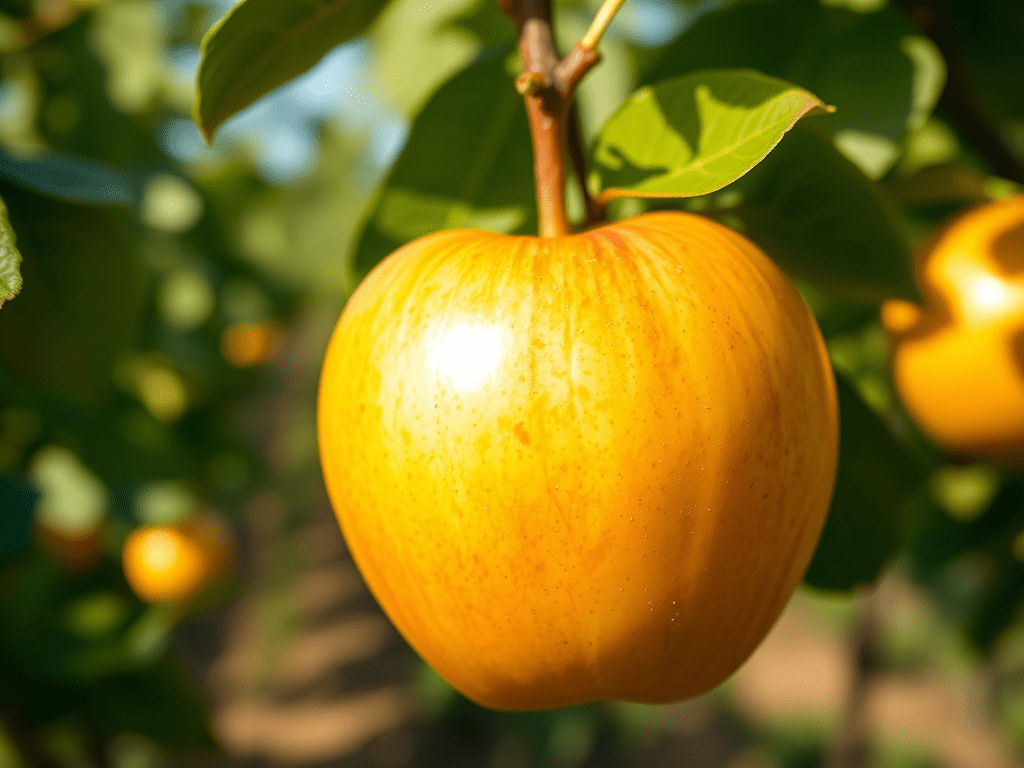
An apple a day—does it really keep the doctor away? “Maybe it depends… is it an Opal Apple?”
Golden, crisp, and resistant to decay, the Opal Apple isn’t just a fruit—it’s a ritual of renewal. With its natural immunity to browning and its rich antioxidant profile, it offers more than nourishment. It offers integrity. Each bite is a quiet rebellion against spoilage, a luminous gesture toward vitality.
Origins and Cultivation
The Opal® apple (cultivar ‘UEB 32642’) emerged from a chance cross between Golden Delicious and Topaz apples in the Czech Republic during the late 1990s. Developed by the Institute of Experimental Botany in Prague, it was trialed across more than sixty European orchards before its commercial debut in 2010. Today, Opal apples thrive in temperate zones—from Central Europe to Washington State—valued for their golden hue and disease resistance.
Climate and Soil Requirements
Opal® apples flourish in temperate regions that offer distinct seasons and ample chill hours. They require:
- Well-drained loamy soils with pH between 6.0 and 7.0
- Annual winter chilling (800–1,000 hours below 7 °C) to break dormancy
- Full sun exposure (at least 6–8 hours daily) to ensure optimal sugar development and skin coloration
Propagation and Rootstock Selection Propagation begins in certified nurseries via grafting ‘UEB 32642’ scions onto vigorous, disease-resistant rootstocks. Common choices include:
- M.9 for dwarfing trees and early fruiting
- M.26 for moderate vigor and cold hardiness
- MM.111 for full-size trees in regions prone to drought or heavy soils
Orchard Establishment and Spacing Young trees are planted in spring or late winter at spacings of 3–4 m between rows and 1–1.5 m within rows. This configuration balances:
- Canopy aeration to reduce disease pressure
- Ease of mechanized pruning and harvesting
- Efficient land use in high-density plantings
Pollination and Floral Management Opal apples are self-sterile and depend on cross-pollination. Growers interplant compatible apple cultivars such as Gala or Honeycrisp at every fourth tree to:
- Attract pollinators (honeybees, wild bees)
- Ensure fruit set consistency and yield stability
- Synchronize bloom periods for effective pollen transfer
Integrated Pest and Disease Management Although Opal’s low polyphenol oxidase trait is prized for non-browning, it does not confer disease resistance. Optimal IPM strategies include:
- Regular scouting for apple scab, codling moth, and powdery mildew
- Targeted fungicide applications during critical growth stages
- Beneficial insect releases (lacewings, predatory mites) and pheromone mating disruption
- Canopy thinning through pruning to improve air movement and spray coverage
Harvesting and Post-harvest Handling Picked at peak maturity in mid-to-late season, Opal apples are:
- Hand-harvested into padded bins to prevent bruising
- Rapidly cooled to 0–2 °C in humidity-controlled rooms
- Often pre-sliced and packaged under modified atmospheres, leveraging their slow-to-brown flesh for up to 6–8 hours of display without discoloration
Geographical Adaptations First trialed across 63 European orchards, Opal apples now thrive in:
- Central and Western Europe (Austria, Italy, Spain, Germany, Slovenia, France, UK)
- Eastern Washington’s FirstFruits Farms in the United States
- Expanding plantings in Australia, New Zealand, South Africa, and parts of South America
Medicinal Uses
While the Opal apple itself lacks centuries-old folk-medicine records, its nutrient profile mirrors that of traditional healing apples:
- Immune support through abundant vitamin C
- Digestive regulation via dietary fiber
- Anti-inflammatory action from polyphenols and flavonoids
- Blood-sugar stabilization courtesy of its balanced sugar-fiber ratio.
Expanded Medicinal Uses of the Opal Apple
Immune Support and Anti-Inflammatory Action
Opal apples deliver a robust dose of vitamin C, a cornerstone antioxidant that enhances white-blood-cell function and promotes collagen synthesis for healthy skin and mucosal barriers. Their rich complement of flavonoids (notably quercetin and catechins) and polyphenols exerts anti-inflammatory effects by modulating pro-inflammatory enzymes, helping to quell chronic, low-grade inflammation linked to metabolic and cardiovascular conditions.
Glycemic Control and Cardiovascular Health
The balanced ratio of natural sugars and soluble fiber in Opal apples slows glucose absorption, flattening post-prandial blood-sugar spikes and supporting insulin sensitivity. Meanwhile, chlorogenic acid and other phenolic compounds inhibit LDL oxidation, contribute to healthy cholesterol levels, and improve endothelial function—key factors in sustaining vascular integrity and reducing cardiovascular risk.
Digestive Regulation and Microbiome Nurturing
High levels of both soluble and insoluble dietary fiber feed beneficial gut microbes, fostering a balanced microbiome that aids in nutrient absorption, regular bowel movements, and toxin elimination. This prebiotic effect helps maintain gut-barrier health, potentially reducing systemic inflammation and fortifying the body’s natural defenses.
Cellular Defense and Detoxification
Opal apples’ unique non-browning trait preserves antioxidant activity longer after slicing, ensuring maximal preservation of chlorogenic acid and polyphenols that neutralize free radicals at the cellular level. These phytonutrients support phase II liver detoxification enzymes, enhancing the body’s ability to clear environmental toxins and oxidative by-products.
Ceremonial and Ritual Uses
Though born of modern breeding, the Opal Apple carries the archetypal power of its ancestral kin. Its luminous skin and unfading flesh invite practitioners to weave fresh ritual expressions from the old tree of symbol and ceremony.
Altar Offerings of Enduring Radiance
Opal slices laid on an altar remain crisp well beyond the hour, embodying an unbroken circle of life.
- Whole apples can stand upright amid candles and crystals, their golden glow mirroring the sun’s warmth.
- Halved cross-sections reveal the star-pattern core, a living pentacle that anchors protective magic.
Divination and Oracular Practices
The non-browning star at an Opal’s heart becomes a talisman of insight.
- Fresh slices float in bowls of clear water; the orientation of each star guides yes/no or directional queries.
- Dried segments strung as pendulums carry the same pattern, swinging to reveal hidden currents in a seeker’s path.
Modern ritualists prize apples as symbols of healing and protection. When sliced horizontally, the star-shaped core recalls a pentagram of warding. Though the Opal apple is a recent cultivar, its natural resistance to browning makes it ideal for long-lasting altar offerings, divination tokens, and seasonal ritual décor.
Protective Charmcraft and Threshold Wardings
Dried Opal wedges resist mold and decay, perfect for enduring talismans.
- Bound in black-and-gold cord, they hang above doorways to shield the household from unwanted energies.
- Carved into small disks, they nestle into key-chains or pouches, carrying silent warding on every journey.
Seasonal and Harvest Observances
Opal Apples become living markers of cyclical turning.
- At the autumn equinox, a circle of apples commemorates the day’s balance, each fruit lighting candles to honor both light and dark.
- Lammas or Lughnasadh tables adorned with Opals celebrate the first grain harvest, echoing abundance and communal gratitude.
Rites of Renewal and Remembrance
Their steadfast flesh symbolizes memory and rebirth.
- In a remembrance rite, a single Opal is sliced and placed beside photos or mementos, its slow decay mirroring the persistence of love.
- During New Year’s dawn ceremonies, apple-infused steam fills enclosed spaces, washing away past burdens and sowing seeds of fresh possibility.
Sacred Libations and Anointing Waters
Opal Apple infusions amplify healing vows.
- Thinly sliced and steeped in spring water, the apples yield a pale-gold tonic used to anoint wrists and temples for clarity.
- A rich cider base, lightly spiced with cinnamon or clove, becomes a communal cup in vows of unity, its golden hue sealing bonds of trust.
Culinary Applications
Opal apples excel both raw and cooked:
- Eaten fresh for crisp sweetness and slow oxidation
- Pre-sliced in salads, cheese boards, and lunchboxes
- Baked into tarts, pies, and preserves without losing structure
- Shredded into slaws or layered on toast—its non-browning trait preserves visual appeal
Culinary Recipes with Opal Apples
Recipe 1: Dew-Harvested Fennel & Opal Slaw
A fresh beginning to any meal—light, crisp, and radiantly golden.
Ingredients
- 2 Opal apples, thinly sliced
- 1 small fennel bulb, shaved
- 2 tablespoons extra-virgin olive oil
- 1 tablespoon lemon juice
- Pinch of sea salt and cracked black pepper
- 1 tablespoon chopped fresh dill
Method
- In a bowl, whisk olive oil, lemon juice, salt, and pepper.
- Add Opal slices and fennel; toss gently until coated.
- Let rest 10 minutes for flavors to marry, then finish with fresh dill.
Symbolic Note The star-core of each apple slice mirrors the dawn star, inviting clarity before the day’s journey.
Recipe 2: Fireside Quinoa-Carrot & Opal Hash
A grounding, savory ritual—sweet and earthy in equal measure.
Ingredients
- 1 cup cooked quinoa (cooled)
- 1 Opal apple, diced
- 1 large carrot, grated
- 2 cloves garlic, minced
- 1 tablespoon ghee or coconut oil
- ½ teaspoon ground cumin
- Fresh parsley for garnish
Method
- Warm ghee in a skillet over medium heat; sauté garlic until fragrant.
- Stir in carrot and apple; cook 3–4 minutes until edges brown.
- Add quinoa and cumin; toss until heated through.
- Plate and scatter parsley as a blessing of renewal.
Symbolic Note Quinoa’s ancient grain wisdom meets the Opal’s golden promise, anchoring body and spirit around the hearth.
Recipe 3: Hearth-Baked Pecan-Opal Loaf with Cypress Honey
A richer, communal offering—sweetened by memory and bound by earth.
Ingredients
- 2 cups spelt flour
- 1 teaspoon baking powder
- ½ teaspoon sea salt
- 2 eggs, beaten
- ½ cup plain yogurt
- ½ cup chopped pecans
- 1 Opal apple, peeled and chopped
- ¼ cup cypress-infused honey (or wildflower honey)
Method
- Preheat oven to 175 °C (350 °F).
- Whisk flour, baking powder, and salt.
- In a second bowl, blend eggs, yogurt, honey, apples, and pecans.
- Fold dry ingredients into wet; pour into a greased loaf pan.
- Bake 40–45 minutes until a skewer comes out clean.
Symbolic Note Each slice carries the resilience of the apple and the grounding wisdom of pecan—and the honey seals the covenant of sweetness between eater and earth.
Vitamins and Nutritional Profile
Each Opal apple delivers a spectrum of micronutrients:
- Vitamin C for collagen synthesis and antioxidant defense
- B-complex vitamins (B6, niacin, riboflavin, folate) for energy metabolism
- Minerals: potassium (fluid balance), calcium (bone health), magnesium and copper (connective-tissue support)
- Dietary fiber to promote satiety, gut motility, and glycemic control
Vitamins and Nutritional Profile (Expanded)
Each Opal® apple brims with a spectrum of vitamins that support body and spirit. Beyond its abundant vitamin C content—key for immune resilience and collagen synthesis—it offers a suite of B-complex vitamins (B6, niacin, riboflavin, folate) that fuel energy metabolism and neurological function. Opals also contribute vitamins A and E, which nurture vision health and reinforce cellular membranes against environmental stress.
Mineral harmony in the Opal apple underpins fluid balance, tissue repair, and skeletal strength. Potassium regulates blood pressure and muscle contractility, while calcium fortifies bones. Magnesium and zinc act as cofactors in hundreds of enzymatic reactions, supporting everything from connective-tissue integrity to antioxidant defenses. Phosphorus rounds out this matrix, ensuring cellular energy transfer and DNA maintenance.
Dietary fiber in Opal apples is both soluble and insoluble, offering dual nourishment for the gut and microbiome. Soluble pectin slows glucose absorption, flattening blood-sugar peaks and extending stable energy—a boon for rituals of mindful consumption. Insoluble fiber sweeps the digestive tract, promoting regularity and toxin clearance. Their low glycemic index makes Opals an ideal ritual snack that sustains rather than spikes vitality.
A potent antioxidant arsenal distinguishes the Opal apple’s golden flesh. Flavonoids (quercetin, catechins), polyphenols, and chlorogenic acid neutralize free radicals, quell inflammation, and reinforce phase II liver-detox pathways. This means each crisp bite delivers a micro-dose of cellular defense, helping to counteract daily oxidative stress and support long-term wellness rituals.
With a modest calorie count and high water content, Opal apples hydrate while they nourish. Their natural sugars—predominantly fructose—provide a gentle lift of energy without the crash of refined sweets. In a ceremonial context, their clean, hydrating profile makes each slice a libation for revitalization, inviting practitioners to sip and savor pure vital essence.
Primary Health Benefits
- Strengthened immunity and reduced inflammation from vitamin C and phytonutrients
- Improved digestive regularity and microbiome balance via soluble and insoluble fiber
- Cardiovascular protection through antioxidant scavenging and cholesterol modulation
- Steady energy release and appetite management aided by natural sugars and fiber
- Cellular defense against oxidative stress courtesy of flavonoids, polyphenols, and chlorogenic acid
Expanded Primary Health Benefits
Metabolic Regulation and Weight Management
Opal apples’ high dietary fiber promotes satiety, curbing overeating and supporting healthy weight maintenance. Their low glycemic index prevents rapid blood-sugar spikes, making them a smart snack for stabilizing energy levels throughout the day. Regular consumption has been linked to reduced risk of obesity and improved metabolic markers.
Cardiovascular Protection
Rich in flavonoids, chlorogenic acid, and polyphenols, Opal apples help inhibit LDL (“bad”) cholesterol oxidation and support healthy endothelial function. Soluble fiber further lowers serum cholesterol by binding bile acids in the gut. Together, these compounds contribute to reduced inflammation in blood vessels and a lower risk of heart disease.
Blood Sugar Balance
The combination of soluble pectin and insoluble fiber slows carbohydrate absorption, flattening post-meal glucose curves and enhancing insulin sensitivity. This glycemic control makes Opals a valuable ally for those managing prediabetes or type 2 diabetes. Their natural fructose sweetness provides a gentle energy lift without the crash of refined sugars.
Digestive and Microbiome Support
Opal apples’ dual fiber profile feeds beneficial gut bacteria, promoting regular bowel movements and reinforcing the intestinal barrier. This prebiotic effect helps prevent dysbiosis and supports efficient nutrient absorption and toxin elimination. A balanced microbiome also plays a key role in immune regulation and mood stability.
Antioxidant Defense and Cellular Health
The golden flesh of Opal apples retains higher levels of antioxidants—such as quercetin, catechins, and chlorogenic acid—due to its natural non-browning trait. These phytonutrients scavenge free radicals, reduce oxidative stress, and bolster phase II liver detox enzymes. Over time, consistent intake supports healthy aging and cellular resilience.
Immune System Enhancement
Abundant vitamin C in Opal apples boosts the production and activity of white blood cells, enhancing pathogen defense and supporting skin and mucosal barrier integrity. Concurrent antioxidant support from polyphenols further protects immune cells from oxidative damage during inflammatory responses.
Hydration and Nutrient Density
With over 85% water content and a modest calorie count, Opal apples hydrate while nourishing the body with essential vitamins and minerals. Their low-calorie sweetness makes them a refreshing, guilt-free snack that sustains energy without added sugars or empty calories.
Is this apple more nutrient than any other apple?
No, Opal apples aren’t significantly “healthier” than other varieties. All apple cultivars deliver very similar macro- and micronutrient profiles, with only minor shifts in specific antioxidant types and amounts.
Nutritional differences among apple varieties tend to be quite small. What really varies is the mix of polyphenols that give each cultivar its color and flavor—red-skinned apples boast more anthocyanidins, while yellow-fleshed types like Opal carry chlorogenic acid within their flesh.@ Healthline
Overall, though, every apple you choose will supply beneficial fiber, vitamins, minerals, and antioxidants at comparable levels@ Cleveland Clinic.
There’s no evidence that Opal apples exceed other apples in vitamins or fiber. In fact, the USDA reports an average large apple of any kind contains about 23 g of sugars, 5.4 g of fiber, and under 1 g each of protein and fat. Opal’s claim to fame is its natural non-browning trait—convenient for presentation, not a marker of superior nutrition. @ Cleveland Clinic.
No specific population needs to avoid Opal apples outright, but the same caveats that apply to apples in general hold true:
- Individuals with fructose malabsorption or IBS on a low-FODMAP diet may need to limit servings, since apples are high in fructose and fermentable fibers.
- Those with oral allergy syndrome—often linked to birch-pollen sensitivities—can experience itching or swelling in the mouth when eating fresh apples.
- People managing chronic kidney disease on a low-potassium diet should monitor total fruit-borne potassium intake, including apples.
- Anyone with gastroparesis or motility issues may find high-fiber fruits like apples slow gastric emptying and cause discomfort.
- Diabetics don’t need to avoid apples but should count apple carbs (about 23 g of sugar and 5.4 g of fiber per large apple) in their meal planning.
Potential Medication Interactions with Opal Apples
While no studies have focused exclusively on the Opal® cultivar, its flesh and juice share the same bioactive compounds found in other apples. These phytonutrients can modulate drug transporters and, to a lesser extent, metabolic enzymes—altering the absorption and effectiveness of certain medications.
Key Interaction Pathways
- OATP Inhibition Apple-derived flavonoids and other polyphenols can inhibit organic anion‐transporting polypeptides (OATP) such as OATP2B1 in the intestinal wall, reducing the oral uptake of drugs like fexofenadine, aliskiren, and atenolol.
- CYP3A4 Modulation Flavonoids in apples may weakly affect cytochrome P450 enzymes (notably CYP3A4), but the impact is generally minor compared with grapefruit.
- P-Glycoprotein Effects Apples contain low levels of furanocoumarins that can inhibit P-glycoprotein; concentrated juices or extracts may still warrant caution when taken alongside P-gp substrate drugs.
Practical Guidance
- Space apple consumption and medication dosing by at least two hours.
- When using apple juice or concentrate therapeutically, consult a healthcare provider if your prescriptions include OATP substrates or narrow-therapeutic-index drugs.
- Always inform your practitioner about high intake of apple products when discussing medication management. @ Meds Safe
Well, good news: even if an apple a day does not keep the doctor away, every variety—from Opal to Fuji—will always deliver that natural, sweet, crisp taste that nourishes body and spirit.
Disclaimer: This information is provided for educational and ritual context only and is not a substitute for professional medical advice. Always consult a qualified healthcare practitioner regarding dietary choices and possible interactions with medications.
The Opal Apple Tree – Minneopa Orchards
Opal Apples Never Brown—But Are They Safe to Eat? – The Healthy
Magical Properties of Fruits and Their Ritual Uses for Modern Witches
 EJADA
EJADA 
Leave a comment