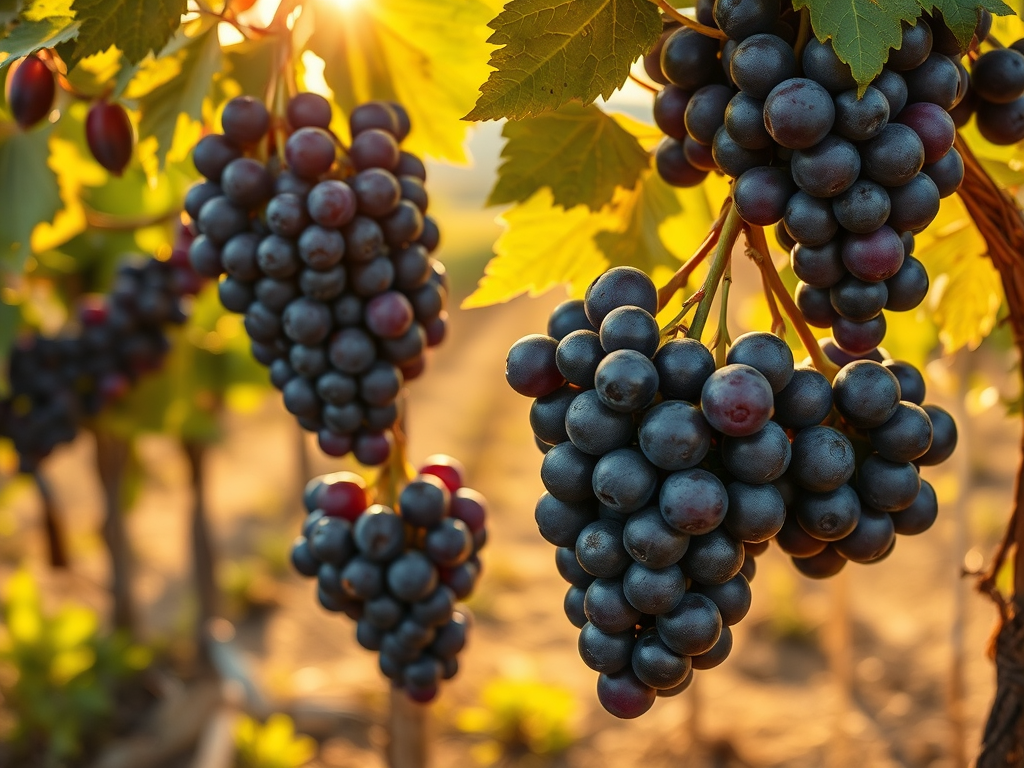
Oeillade Noire grapes are a rare and evocative variety with deep roots in southern France, especially the Languedoc and Provence regions. Their value lies not just in their flavor, but in their cultural and botanical significance.
Oeillade Noire grapes trace their origins to the Languedoc-Roussillon and Midi-Pyrénées regions of southern France, where they were first cultivated as early as the 18th century, possibly earlier.
Though exact dates are elusive due to limited documentation, their presence in historical vineyard registries and herbarium collections—like the Vassal-Montpellier archive—suggests deep ancestral ties to Mediterranean viticulture.
🌿 Cultivation Highlights
Native Region: Southern France, especially Languedoc-Roussillon and Midi-Pyrénées
Earliest Records: Mid-to-late 1700s, with formal documentation appearing in INRA (French National Institute for Agricultural Research) archives by the mid-20th century
Traditional Use: Both wine and table grape, often confused with Cinsaut but genetically distinct
🍇 Ritual & Culinary Uses
Wine & Table Grape: Traditionally used for both winemaking and fresh consumption. When vinified, they yield light-bodied, aromatic reds with notes of confit strawberry, blackberry, wild herbs, and a whisper of liquorice.
Carbonic Maceration: Often fermented whole-cluster in cement vats using native yeasts—preserving their delicate aromatics and purity.
Seasonal Symbolism: Harvested in early autumn, they echo themes of transition, ancestral labor, and soil reverence.
🌿 Botanical & Ancestral Significance
Near-Extinct Heirloom: Once nearly lost post-phylloxera and war, now revived by passionate vignerons like Thierry Navarre, who treat the vines as living memory vessels.
Schist Soil Adaptation: Thrives in permeable brown schist, forcing deep root growth—symbolic of resilience and ancestral grounding.
❤️ Health & Ritual Integrity
Rich in Resveratrol: Like other black grapes, they contain antioxidants linked to heart health and anti-inflammatory benefits.
Botrytis Sensitivity: Vulnerable to bunch rot, which makes them a fragile but ethically rich choice—requiring careful, manual harvesting and soil stewardship.
🍷 Health Resonance: The Fragile Power of Oeillade
Oeillade Noire is not a superfood—it’s a symbolic healer, a grape that whispers rather than shouts. Its health properties are subtle but meaningful:
- Resveratrol-rich skin: Like other dark-skinned grapes, it contains polyphenols that support cardiovascular health, reduce inflammation, and may aid cellular repair.
- Low alcohol yield: Wines made from Oeillade tend to be light-bodied and lower in alcohol, aligning with mindful consumption and ritual moderation.
- Native yeast fermentation: Often vinified with indigenous yeasts, preserving gut-friendly microbial diversity and honoring terroir-specific microbial ecosystems.
- Manual harvest ethics: Hand-picked in September, reinforcing slow labor, seasonal attunement, and ethical land stewardship.
⚠️ Disclaimer: While Oeillade Noire contains compounds associated with health benefits, it is not a medicinal grape. Its value lies in ritual context, ancestral symbolism, and ethical cultivation—not in therapeutic claims.
🌿 Ritual Integrity: A Grape of Glancing Moments
Oeillade Noire is a grape of liminality—harvested at twilight, fermented in silence, and consumed in fleeting joy. Its ritual power emerges from its fragility:
- Botrytis Sensitivity: Vulnerable to rot, it demands care and timing—symbolizing the delicate balance between decay and preservation.
- Carbonic Maceration: Fermented whole-cluster for 8 days, a process that preserves its aromatic purity and evokes themes of containment, breath, and transformation.
- Schist Soil Rooting: Grown in permeable brown schist, forcing deep root growth—mirroring ancestral grounding and the search for hidden nourishment.
- Twilight Harvest: Picked in early autumn, often at dusk, invoking transitions, endings, and the sacred pause before winter.
🧬 Nutritional Values: Subtle, Symbolic Nourishment
Though not extensively studied in modern nutrition databases, Oeillade Noire shares properties with other dark-skinned grapes:
| Nutrient | Approximate Benefit |
|---|---|
| Resveratrol | Antioxidant linked to heart health & longevity |
| Vitamin C | Supports immunity and collagen synthesis |
| Potassium | Aids in fluid balance and nerve function |
| Polyphenols | Anti-inflammatory and cellular protective |
| Low Glycemic Load | Gentle on blood sugar when consumed whole |
⚠️ Disclaimer: Nutritional values are inferred from similar grape varieties. Oeillade Noire is not a therapeutic food and should be consumed within a balanced, culturally respectful diet.
🧬 Unique Health Benefits of Oeillade Noire
1. Resveratrol-Rich Skins
- Like other dark-skinned grapes, Oeillade Noire contains resveratrol, a polyphenol linked to:
- Cardiovascular support
- Anti-inflammatory effects
- Cellular protection against oxidative stress
2. Low Alcohol Yield in Wine
- Wines made from Oeillade are light-bodied and low in alcohol, supporting:
- Mindful consumption rituals
- Reduced liver strain
- Gentle metabolic impact
3. Native Yeast Fermentation
- Often fermented with indigenous yeasts, which may:
- Preserve microbial diversity
- Support gut health through natural fermentation
- Reinforce terroir-specific microbial storytelling
4. Seasonal Antioxidant Boost
- Harvested in early autumn, the grapes offer:
- A seasonal dose of Vitamin C, potassium, and polyphenols
- Gentle immune support
- Hydration and electrolyte balance when consumed fresh
⚠️ Precautionary Notes
- Botrytis Vulnerability: Highly sensitive to bunch rot, requiring ethical harvesting and immediate consumption.
- Short Shelf Life: Best consumed fresh or fermented soon after harvest. Avoid long storage or transport.
🛡️ Suggested Disclaimer: “Oeillade Noire is honored here as a ritual grape. Its health benefits are symbolic and seasonal—not medicinal. Consume with reverence and care.”
🍽️ Culinary Uses: A Grape of Glance and Grace
Oeillade Noire is traditionally used as both a table grape and a wine grape, though its culinary applications are rare and regionally specific:
Fresh Consumption: Its soft skin and juicy pulp make it ideal for mindful eating rituals—served whole, paired with aged cheeses, or layered into seasonal fruit offerings.
Light Red Wines: Often vinified using carbonic maceration, yielding delicate, aromatic wines with notes of wild strawberry, violet, and schist minerality.
Infusions & Syrups: Can be transformed into ancestral syrups or tinctures—used in ceremonial drinks or botanical storytelling.
Grape Leaf Use: While not widely documented for Oeillade specifically, grape leaves from cultivated varieties are often used in Mediterranean dishes like dolmas. If leaves are harvested, they must be untreated and pesticide-free
May help lower risk of obesity and type 2 diabetes
Metabolic syndrome, obesity and related conditions, such as heart disease, are the most prevalent nutrition-related issues in the United States: according to Dr Axe
⚠️ Precautions: Fragility as a Form of Wisdom
Oeillade Noire demands care—not just in cultivation, but in consumption:
- Botrytis Sensitivity: Highly vulnerable to bunch rot, making it unsuitable for mass storage or careless handling.
- Short Shelf Life: Best consumed fresh or immediately after fermentation—its delicate skin and pulp degrade quickly.
- Pesticide-Free Requirement: If using leaves, ensure they are from untreated vines. Wild or sprayed leaves may contain harmful compounds.
- Not Medicinal: While rich in symbolic and antioxidant value, it should never be positioned as a cure or health supplement.
🛡️ Suggested Disclaimer: “This entry honors Oeillade Noire as a ritual grape. It is not intended for therapeutic use. Handle with care, consume with reverence.”
🌒 Closing Reflection: The Glance That Nourishes
Oeillade Noire is not a grape to be bought—it is a grape to be remembered. Fragile in skin, fleeting in season, and rooted in schist, it embodies the ancestral tension between decay and revival. Its twilight harvest is a ritual of care, its fermentation a whisper of transformation.
In the lineage of Mediterranean fruits. It does not shout its benefits, but glances back at us with quiet power. To consume it is to participate in a story of soil, labor, and loss. To name it is to reclaim a botanical memory nearly erased.
 EJADA
EJADA 
Leave a comment