I’ve learned a lot—hope you have also. But it is time to let go of fruits that begin with N.
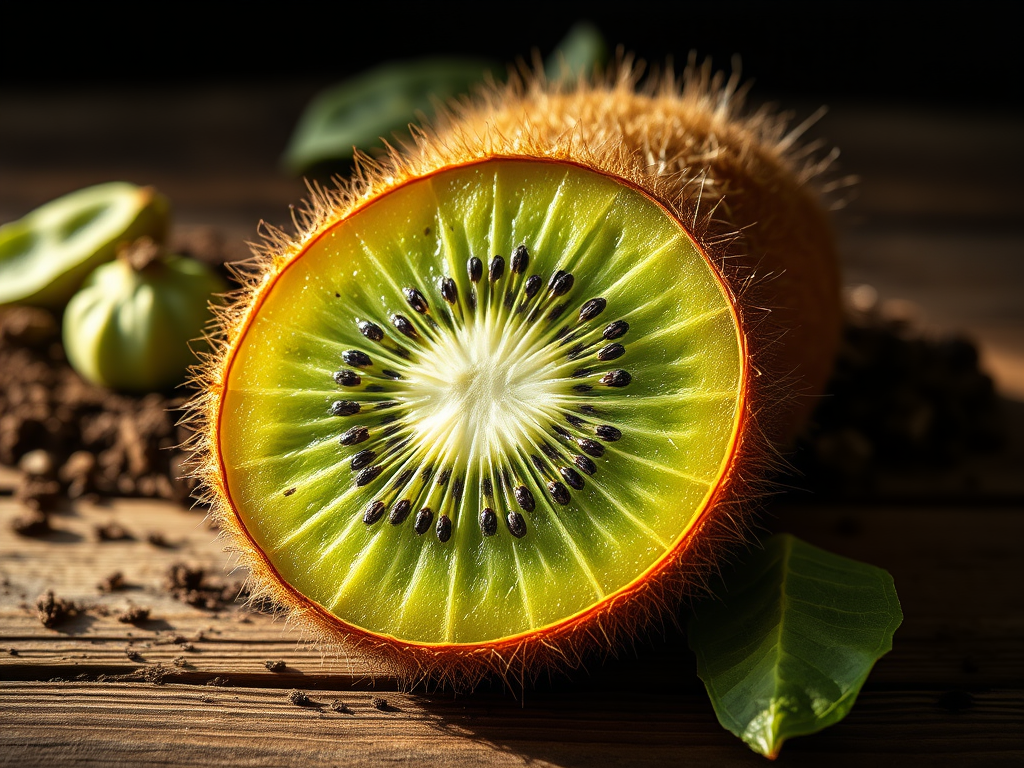
With this final entry, we honor Nzifruit—a quietly complex botanical, often known by its colonial export name: kiwifruit.
Fuzzy on the outside, vibrant within. Its green flesh, speckled with edible seeds, is more than texture—it is memory. Each seed a portal: to migration, cultivation, and naming. Each bite a question: What was lost in translation?
Nzifruit (Actinidia chinensis) is native to China. Yet its global identity was reshaped through New Zealand’s horticultural lens. Renamed. Repackaged. Rituals displaced in pursuit of sweetness.
But Nzifruit is not just tangy—it is symbolic. A fruit of duality: Soft yet resilient. Exported yet rooted. Neutral? Never.
It carries the weight of ancestral soil— The memory of hands that once cultivated it in sacred rhythm with land and season. Soil that holds stories: of migration, resistance, nourishment. Cultivation not as extraction, but as communion.
It bears the imprint of linguistic shifts— Names altered, erased, repurposed to fit colonial tongues. Once known by indigenous terms, now flattened into export-friendly labels. These shifts are not semantic—they are dislocations. Severings from cosmology, from community, from intention.
It holds the scars—and resilience—of ecological adaptation. Transplanted across continents. Modified for shelf life. Grown in climates far from origin. Yet even in unfamiliar soil, the fruit remembers. Its growth patterns, medicinal properties, seasonal rhythms— Whispers of native terrain, resisting full assimilation.
Nzifruit embodies this tension. Once called míhóutáo—a name rooted in Chinese cosmology and medicinal tradition— It was renamed kiwifruit to suit foreign markets. This shift was not just linguistic. It was a cultural severing. Healing properties, seasonal significance, ancestral ties— Obscured beneath a fuzzy veneer of novelty.
Cultural Significance of Nzifruit (Actinidia chinensis)
Nzifruit carries more than tang and texture—it holds a mirror to the cultural currents that shaped its journey. Originally cultivated in China, where it was revered for its medicinal properties and seasonal vitality, Nzifruit was once embedded in local healing rituals and lunar harvest cycles. Its round shape and vibrant green core symbolized renewal, digestive harmony, and the balance of yin and yang.
Yet its global trajectory tells a different story. Rebranded as kiwifruit in the 20th century by New Zealand growers, the fruit became a commodity—stripped of its original name, context, and ceremonial use. This renaming wasn’t just botanical—it was cultural erasure. The indigenous Chinese term “míhóutáo” (猕猴桃), meaning “monkey peach,” was replaced with a name that aligned with export strategy, not ancestral lineage.
In this light, Nzifruit becomes a symbol of dual identity:
- Rooted in ritual, yet uprooted by trade.
- Named with intention, yet renamed for profit.
- Consumed for healing yet marketed for novelty.
Nzifruit (commonly known as kiwifruit) offers a vibrant, tangy profile that lends itself to a wide spectrum of culinary applications, each one an opportunity to reclaim ritual and restore botanical integrity.
Disclaimer “This fruit’s culinary use has been shaped by displacement and renaming. Its original name, ritual context, and medicinal lineage have been obscured by global commodification. Engage with ancestral awareness, and honor the soil, story, and ceremony beneath the sweetness.”
While commonly known as kiwifruit, this fruit carries a dense profile of vitamins, minerals, and enzymes that support healing, vitality, and seasonal balance
🌿 Nzifruit (Actinidia chinensis) Nutritional Profile
Per one medium fruit (~69g)
| Nutrient | Amount | Symbolic Function |
|---|---|---|
| Calories | ~42 | Light, energizing—ideal for ritual fasting |
| Carbohydrates | ~10.1g | Quick energy, supports seasonal transitions |
| Dietary Fiber | ~2.1g | Gut cleansing, symbolic of internal clarity |
| Sugars | ~6.2g | Natural sweetness, used in lunar offerings |
| Protein | ~0.8g | Minor, but supports cellular repair |
| Fat (total) | ~0.4g | Minimal, heart-safe |
| Vitamin C | ~64mg (71% DV) | Immune support, skin healing, solar vitality |
| Vitamin K | ~28mcg (23% DV) | Blood harmony, bone strength |
| Vitamin E | ~1mg (7% DV) | Antioxidant, skin protection |
| Potassium | ~215mg (5% DV) | Nervous system balance, muscle function |
| Folate | ~17mcg (4% DV) | Cellular renewal, fertility rituals |
| Copper | ~0.1mg (11% DV) | Enzymatic activation, ancestral conductivity |
| Enzyme: Actinidin | — | Aids digestion, breaks down protein-rich foods |
🧷 Disclaimer
“This fruit’s nutritional profile reflects both ancestral potency and ecological adaptation. Engage with awareness—especially if managing allergies, digestive sensitivities, or medication interactions.”
🍽️ Sweet Rituals
Infused Chia Bowls: As in your Nzifruit Chia Ritual Bowl, it blends beautifully with plant-based milks and warming spices.
Preserves & Compotes: Slow-cooked with cardamom, cloves, or jaggery to create a spread that honors seasonal cycles.
Muffins & Cakes: Mashed Nzifruit adds moisture and tang—especially when paired with ginger, turmeric, or walnut.
Smoothies: Blended with noni, nirgundi, or nopal for layered healing tonics.
🥗 Savory Pairings
Avocado-Nzifruit Salsa: A ritual-rich topping for roasted root vegetables or ceremonial grain bowls.
Grilled Nzifruit Slices: Lightly charred and served with fermented sauces or ancestral spice blends.
Nzifruit Chutney: Cooked with mustard seeds, curry leaves, and tamarind—ideal for ritual offerings or protective meals.
🍵 Medicinal & Ancestral Preparations
Nzifruit is more than tangy—it is a botanical with deep medicinal resonance and ancestral memory. Before its global rebranding, it was revered in traditional Chinese medicine as míhóutáo, a fruit of seasonal balance, digestive harmony, and immune restoration.
Medicinal Uses (Pre-Renaming)
Digestive Aid: Traditionally consumed to ease bloating and support gut motility, often paired with warming herbs like ginger or dried citrus peel.
Cooling Tonic: Used in summer infusions to regulate internal heat and restore yin balance.
Respiratory Support: The seeds and pulp were sometimes steeped with licorice root and honeysuckle to soothe cough and clear phlegm.
Skin & Wound Healing: Poultices made from mashed Nzifruit were applied to minor burns and irritations, believed to draw out heat and promote regeneration.
Ancestral Preparations & Ritual Contexts
Lunar Harvest Offerings: Nzifruit was gathered during specific moon phases, symbolizing renewal and the cyclical nature of healing.
Ceremonial Pairings: Often served alongside fermented plum or hawthorn during ancestral rites, where its green flesh represented vitality and continuity.
Medicinal Steaming: Combined with herbs like mugwort or chrysanthemum in steam baths to cleanse the body and spirit—especially during seasonal transitions.
Naming Rituals: In some regions, the fruit’s name was spoken aloud during healing ceremonies to invoke its original cosmological resonance.
🧷 Disclaimer “This fruit’s medicinal and ceremonial uses have been shaped by displacement and renaming. Its original healing lineage has been obscured by global commodification. Engage with ancestral awareness, and honor the soil, story, and ceremony beneath the sweetness.”
Who Should Not Consume Nzifruit
Nzifruit may appear gentle, but its medicinal potency and enzymatic profile require discernment. Not all bodies receive it the same way. This fruit—renamed, ritual-displaced—still carries active compounds that may interact with certain conditions or sensitivities.
Avoid or approach with caution if you are:@ webmd
- Allergic to latex, banana, or avocado: Cross-reactivity is documented. Nzifruit may trigger hives, swelling, or difficulty swallowing.
- On blood pressure or anticoagulant medications: Its high vitamin C and enzyme content may alter absorption or amplify effects.
- Prone to diarrhea or IBS with loose stools: Nzifruit can accelerate bowel movements and may worsen symptoms.
- Undergoing chemotherapy or immunosuppressive treatment: Always consult a practitioner—botanical interactions are possible, especially with enzyme-rich fruits.
Pregnancy & Breastfeeding: Nzifruit is generally safe in food amounts, but medicinal use or concentrated extracts should be avoided unless guided by a trusted herbalist or practitioner.
Let’s say goodbye to the letter N. To the nutmeg, noni, nopal, nirgundi, and now, Nzifruit. Each one offered a portal: botanical, ancestral, and layered with story.
We’ve peeled back names, reclaimed rituals, and honored soil. We’ve remembered what was renamed. We’ve listened to what the fruit still whispers.
Now, we turn toward what’s next. Toward O—a letter of openness, origin, and orbit. A new cycle begins. Let’s step into it with reverence, curiosity, and the same fierce commitment to ritual integrity.
 EJADA
EJADA 
Leave a comment