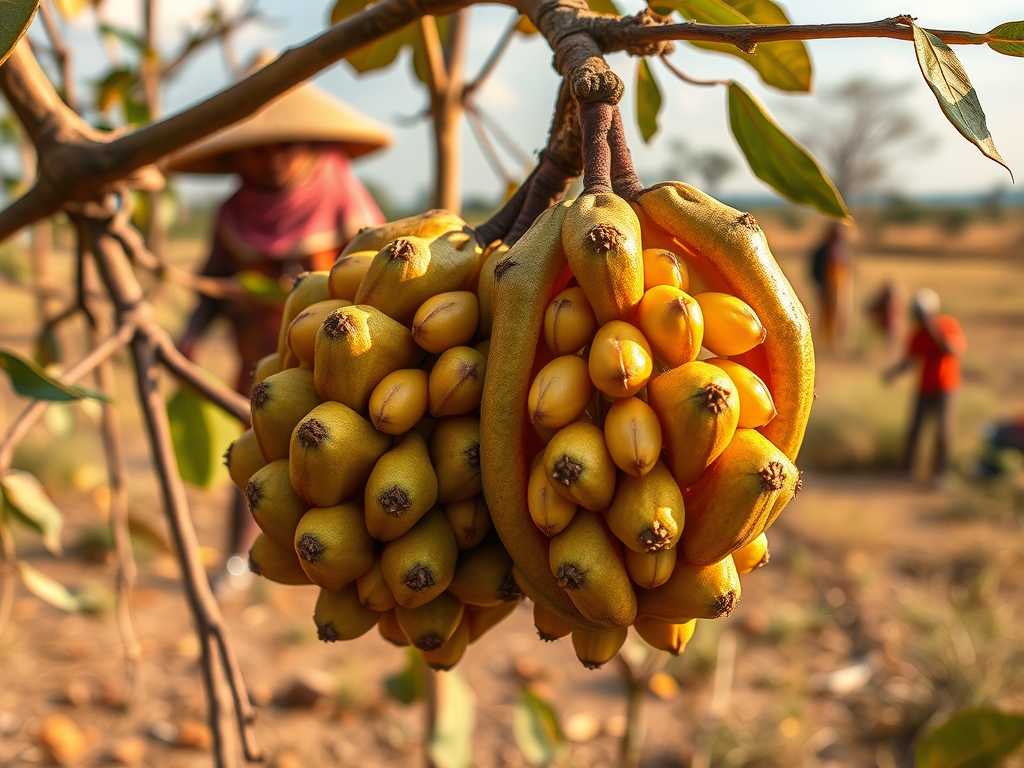
What is Néré Fruit?
Parkia biglobosa, commonly known as Néré or African locust bean, is a multipurpose deciduous tree in the Fabaceae family. It can grow up to 30 m tall, features grey-brown bark, bipinnate leaves, and clusters of red or orange flowers. Its mature pods contain sweet pulp and edible seeds used for food, condiments, and traditional medicine.
Cultivation and Producers
Néré is native to the Sudanian and Sahelian savannas of West and Central Africa, ranging from Senegal to Uganda. It thrives in agroforestry parklands managed by local rural communities.
Farmers harvest ripe pods during the dry season, then hull, sun-dry, and process the pulp into flours coded FN, FW, and FK based on provenance (Niofoin, Waragniéré, Kanoroba) for local consumption and valorisation studies.
Vitamin and Nutrient Profile
| Component | Amount per 100 g |
|---|---|
| Protein | 6.56 % |
| Fat | 1.80 % |
| Crude Fibre | 11.75 % |
| Ash | 4.18 % |
| Carbohydrate | 67.30 % |
| Total Carotenoids | 49 175 µg |
| Ascorbic Acid (Vitamin C) | 191.20 mg |
| Crude Saponins | 17.80 mg |
| Tannins | 81.00 mg |
| Total Phenols | 204.60 mg |
| Hydrocyanic Acid | 17.30 mg |
Source: Fruits Info (Parkia biglobosa nutritional analysis).
Health Benefits
Néré fruit is high in dietary fiber, promoting healthy digestion and acting as a natural laxative; it may also enhance satiety and support weight management.
Its rich antioxidant content (carotenoids, phenols, saponins) scavenges free radicals, potentially delaying aging and reducing oxidative stress.
The high ascorbic acid (vitamin C) level bolsters immune function, contributes to anti-inflammatory actions, and aids in skin health and wound repair.
Traditional medicinal applications include using the bark as a mouthwash and vapor inhalant for toothache and ear complaints, and macerated baths for conditions like leprosy. Decoctions treat respiratory infections (bronchitis, pneumonia), fevers, malaria, gastrointestinal disorders (diarrhea, colic, vomiting), skin infections, and venereal diseases, among others.
Fermented seeds yield soumbala or dawadawa, a protein-rich condiment providing essential amino acids (e.g., lysine), riboflavin, vitamin C, essential fatty acids, and minerals. This enhances the nutrient density of staple-based diets in West African communities.
The cultural significance of the néré fruit (Parkia biglobosa) is profound—it’s not just a tree, but a living symbol of heritage, nourishment, and social connection across West Africa.
Cultural Keystone of West African Communities
Here’s how it resonates:
Here’s how it resonates:
Ritual & Ancestral Use: Fermented néré seeds (soumbala) are central to traditional ceremonies, offerings, and communal meals. Their use dates back to at least the 14th century.
Women’s Empowerment: Women are the primary harvesters and processors of néré pods. They hold use rights even when land ownership is restricted, making néré a source of both nutrition and income.
Social Dynamics: The tree mediates access rights, inheritance customs, and inter-community relationships. Its presence influences land tenure, gender roles, and even migratory patterns.
🍲 Culinary & Medicinal Legacy
Soumbala Condiment: A fermented seed paste rich in lysine, riboflavin, vitamin C, and essential fatty acids. It’s a staple in stews and porridges, especially in millet- and sorghum-based diets.
Pulp & Pods: The sweet pulp is eaten fresh or turned into drinks and sweets. It’s a source of energy, carotenoids, and vitamins A, B, and C.
Traditional Medicine: Bark, leaves, and seeds are used to treat everything from toothaches and skin infections to malaria and sterility.
🌱 Ecological & Spiritual Stewardship
Nitrogen-Fixing Tree: Néré enriches soil and supports agroforestry systems. It’s often retained or planted intentionally by farmers for its ecological benefits.
Symbol of Resilience: Despite threats from land clearing and climate change, néré remains a protected species in many regions. Its conservation is tied to preserving cultural identity and biodiversity.
The néré fruit (Parkia biglobosa), also known as African locust bean, is a culinary powerhouse with deep cultural roots and bold flavor versatility
Here’s how it’s used across traditional and modern kitchens:
🍲 Traditional Culinary Uses
Soumbala (Fermented Seeds): Making Soumbala—the fermented seed condiment from néré (Parkia biglobosa)—is a beautiful blend of ancestral technique, microbial magic, and culinary patience.
🧂 Step-by-Step: Traditional Soumbala Preparation
1. Harvest & Clean the Seeds
- Collect ripe néré pods and extract the seeds.
- Boil seeds for several hours to soften and loosen the tough outer shells.
- Pound or rub the seeds to remove the husks, then rinse thoroughly.
🎥 How to make African locust beans.#locustbean #locusts shows the full boiling and dehulling process with practical visuals.
2. Cook the Dehulled Seeds
- Simmer the cleaned seeds for 3–4 more hours until soft.
- Drain and cool slightly.
🎥 How To Ferment Locust Beans At Home Rich In Probiotics explains how to prepare the seeds for fermentation and highlights probiotic benefits.
3. Fermentation
- Pack the cooked seeds into a clean container or wrap in banana leaves.
- Leave in a warm, dark place for 2–3 days to ferment naturally.
- The aroma will become pungent and savory—this is the umami transformation.
🎥 My West African Pantry Essential: Fermented Locust Beans + … offers a rich cultural overview and shows how fermentation enhances flavor.
4. Form & Store
- Mold fermented seeds into balls, patties, or granules.
- Optional: Add salt to extend shelf life.
- Dry in the sun or store in a cool place.
🎥 Exploring Fermented Locust Beans in African Cuisine explores the diversity of soumbala forms and how they’re used across West Africa.
🍲 Bonus: Cook with Soumbala
- Use in stews, sauces, or rice dishes like riz au soumbala.
- 🎥 Riz au Soumbala: Delicious Fermented Locust Beans Recipe walks you through a full dish featuring soumbala as the star.
🌍 Cultural Insight
🎥 Iru: Nigerian Fermented Locust Beans Explained dives into regional variations like iru, dawadawa, and netetou, showing how soumbala connects communities across languages and traditions.
The seeds are crushed, fermented, and molded into balls or granules used as a savory, umami-rich condiment in stews, soups, and porridges. It’s a staple in West African cuisine, often paired with millet, sorghum, or yam-based dishes.
Fresh Pulp: The sweet pulp surrounding the seeds is eaten raw or turned into drinks and sweets. It’s high in energy, carotenoids, and vitamins A, B, and C.
Soumbala Variants: Known by many names—iru, dawadawa, afitin, soumbara—depending on the region, it’s used in sauces, rice dishes, and even as a meat substitute due to its rich flavor.
🍯 Modern & Creative Culinary Applications
Jams & Jellies: The pulp’s natural sweetness makes it ideal for preserves.
Curries & Pickles: Adds depth and tang to spicy dishes.
Syrups & Sauces: Can be reduced into a thick, vitamin-rich syrup for drizzling over roasted vegetables or grains.
Energy Bars & Flour Blends: The dried pulp can be milled into flour and used in baked goods or raw snacks.
Smoothies & Sorbets: Blend the pulp with water, honey, and ice for a refreshing drink, or freeze with sugar to make sorbet.
🍹 Néré Smoothie: “Sunroot Elixir”
Ingredients:
- 2 tbsp néré pulp flour (FN, FW, or FK)
- 1 ripe banana
- 1 cup coconut water or baobab juice
- 1 tsp grated ginger
- 1 tsp lime juice
- Optional: ½ tsp moringa powder or hibiscus petals
Instructions:
- Blend all ingredients until smooth.
- Garnish with dried néré pulp or sesame seeds.
- Serve chilled with a QR-coded ritual guide.
🌀 Flavor profile: Tangy, earthy, and energizing—rich in vitamin C, B-complex, and ancestral resonance.
🍧 Néré Sorbet: “Ancestor’s Chill”
Ingredients:
- 2 cups seasonal fruit (e.g. mango, pineapple, or tamarind)
- 1 banana (for texture)
- 1 cup coconut milk or baobab nectar
- 2 tbsp néré pulp flour
- Optional: pinch of cayenne or cinnamon
Instructions:
- Blend all ingredients into a thick puree.
- Freeze in a container for 1–2 hours.
- Re-blend for smooth consistency.
- Freeze again until softly set (another 1–2 hours).
- Scoop and serve.
🌀 Flavor profile: Creamy, tangy, and deeply nourishing—ideal for summer rituals or archive storytelling.
🍹 Néré Smoothie: “Sunroot Elixir”
Estimated per 1 serving (approx. 300 ml)
| Nutrient | Amount | Benefits |
|---|---|---|
| Calories | ~180 kcal | Light and energizing |
| Carbohydrates | ~38 g | Natural sugars from banana and coconut water |
| Dietary Fiber | ~5 g | Gut health, satiety |
| Protein | ~3 g | From banana and néré pulp |
| Vitamin C | ~120 mg | Immunity, antioxidant boost |
| Vitamin B-complex | Moderate | Energy metabolism, brain support |
| Vitamin A & E | Trace | Skin and cellular health |
| Potassium | ~400 mg | Electrolyte balance, muscle function |
| Iron | ~1.2 mg | Oxygen transport, energy |
| Total Carotenoids | ~25,000 µg | Eye health, antioxidant protection |
🌀 Néré pulp flour contributes high vitamin C (up to 191.2 mg/100g) and carotenoids (up to 49,175 µg/100g).
🍧 Néré Sorbet: “Ancestor’s Chill”
| Nutrient | Amount | Benefits |
|---|---|---|
| Calories | ~220 kcal | Naturally sweet, low-fat treat |
| Carbohydrates | ~54 g | Mostly fruit sugars and pulp |
| Sugars | ~52 g | From mango, banana, and pulp |
| Dietary Fiber | ~3 g | Aids digestion |
| Protein | ~1.6 g | Light protein from fruit and pulp |
| Vitamin C | ~90 mg | Antioxidant, immune support |
| Potassium | ~300 mg | Hydration, nerve function |
| Iron | ~0.3 mg | Supports blood health |
| Fat | ~0.1 g | Virtually fat-free |
🌀 This sorbet is hydrating, antioxidant-rich, and ideal for ritual refreshment.
The néré fruit (Parkia biglobosa) is not widely available in mainstream U.S. grocery stores, but it can be sourced through specialty African markets, online retailers, or diaspora communities that import traditional ingredients.
Here’s what you need to know:
Where You Might Find It in the U.S.
- African Grocery Stores: Look for stores that stock West African staples like soumbala, dawadawa, or iru—these are fermented néré seed products.
- Online Retailers: Some platforms offer dried néré pulp or soumbala balls. Search for terms like “African locust bean,” “soumbala,” or “fermented locust seed.”
- Diaspora Communities: Cities with strong West African populations (e.g., New York, Atlanta, Houston) often have access through local markets or cultural festivals.
🌿 What’s Typically Available
| Form | Availability in U.S. | Notes |
|---|---|---|
| Fermented seeds (Soumbala/Iru) | ✅ Yes, in specialty stores | Often sold dried or frozen |
| Dried pulp flour | ⚠️ Limited | Rare, but possible via import |
| Fresh pods | ❌ Not available | Not imported due to perishabilit |
✅ Who Should Consume Néré Fruit
🌿 Health-Conscious Individuals
- Gut Health Seekers: Néré pulp is rich in dietary fiber and acts as a natural prebiotic, promoting digestion and regularity.
- Immunity Boosters: With up to 191.2 mg of vitamin C per 100g, it’s excellent for immune support.
- Plant-Based Dieters: Soumbala (fermented seeds) offers protein, lysine, and essential fatty acids—ideal for vegans and vegetarians.
🧘🏽♀️ People Practicing Ritual or Ancestral Wellness
- Those honoring West African traditions or exploring ritual-rich healing will find néré deeply symbolic and functional—used in offerings, communal meals, and seasonal rites.
🧠 Mental & Emotional Wellness Advocates
- Traditional use includes support for anxiety, depression, and inflammation, thanks to its phenolic compounds and micronutrient profile.
👩🏽🌾 Women in Agricultural or Entrepreneurial Roles
- In many regions, women control the harvesting and processing of néré, making it a symbol of empowerment and economic independence.
⚠️ Who Should Be Cautious
- People with Legume Allergies: Néré is part of the Fabaceae family—those allergic to legumes should consult a health professional.
- Sensitive Digestive Systems: The fermented seeds (soumbala) can be pungent and intense; start with small amounts.
- Children Under 2: Due to its strong flavor and fermentation, it’s best introduced gradually and in diluted forms.
⚖️ Néré Product & Recipe Disclaimer
The information, recipes, and product concepts shared in this archive are intended for educational and cultural storytelling purposes only. EJADA does not claim medical authority, and these offerings are not intended to diagnose, treat, cure, or prevent any disease.
Néré fruit and its derivatives (including soumbala, pulp flour, and fermented seeds) may not be suitable for individuals with legume allergies, digestive sensitivities, or specific dietary restrictions. We recommend consulting a qualified healthcare provider before introducing new ingredients into your diet, especially if pregnant, nursing, or managing a health condition.
All nutritional data is estimated based on available sources and may vary depending on preparation methods, sourcing, and individual needs.
EJADA supports ethical sourcing and cultural preservation. We encourage users to respect traditional knowledge and engage with these ingredients mindfully and responsibly.
🍂 Closing Reflection: Good Fruit Are Strange Fruit
Good fruit nourishes. Strange fruit remembers.
The néré pod doesn’t just feed—it ferments memory, stirs ancestral fire, and leans into the soil of resistance. It is good because it heals. It is strange because it refuses to be forgotten.
Even as branches bend and seasons shift, the néré fruit remains—leaning into memory, flavor, and ritual. It is the kind of fruit that doesn’t just nourish the body, but stirs the archive of the soul. From fermented wisdom to pulp-rich elixirs, it whispers of women’s hands, ancestral fire, and ecological grace.
In every pulp-swirled smoothie and fermented seed ball, we taste the tension: sweetness layered over survival, ritual wrapped in resilience. This fruit is not passive—it is active, pungent, and unapologetically rooted.
 EJADA
EJADA 
Leave a comment