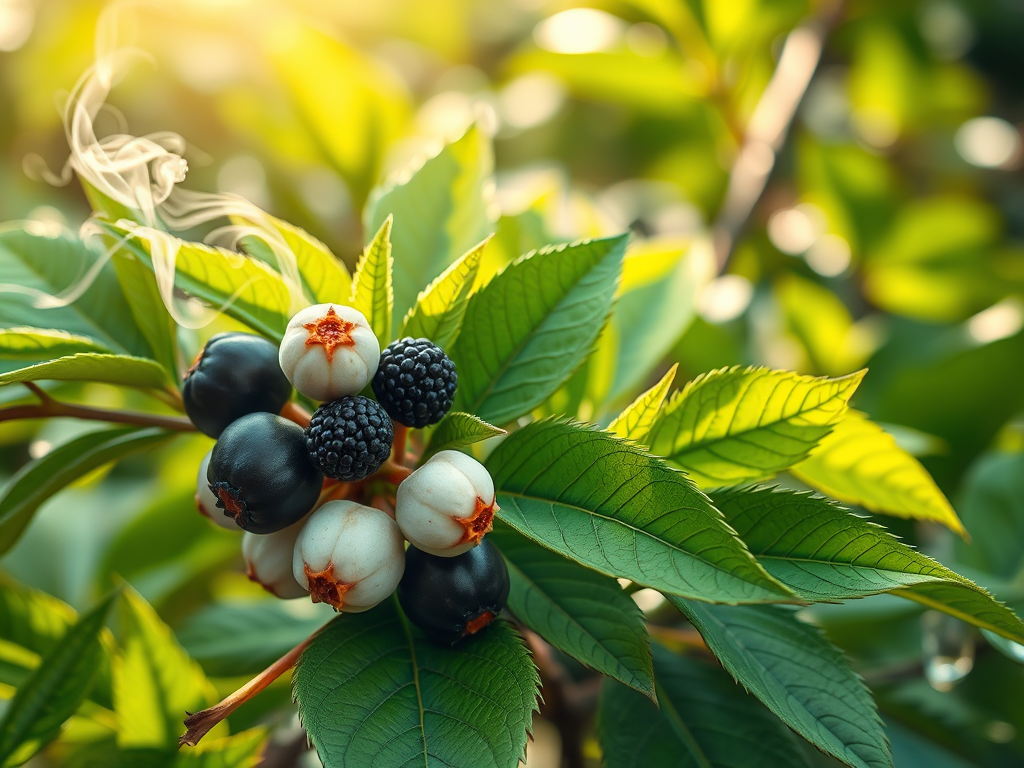
🌿 Nirgundi (Vitex negundo): A Medicinal Marvel with Aromatic Power
Botanical Identity:
Common names: Nirgundi, Five-leaved Chaste Tree, Sindhuvara, Sambhalu
Family: Verbenaceae
Native to: South and Southeast Asia, especially India and the Himalayan foothills
Growth: Shrub or small tree up to 4.5 meters tall
Aroma: Leaves and fruits emit a distinct, sharp fragrance—often used in oils and fumigation rituals
“Nirgundi (Vitex negundo linn) is the five-leaved chaste with many Ayurvedic properties and in Sanskrit it means which is useful in healing various ailments, including Asthma, Muscle Spasms, and Anxiety.” @ Planetayurveda.
🌿 Little-Known Facts About Nirgundi Fruit
1. 🔮 Dual-Colored Fruit
- Nirgundi bears small, round fruits that range from white to black, often appearing mottled or mixed in color.
- This duality is symbolic in some traditions—white for purity, black for protection—making it ideal for ritual blends that balance opposing energies.
2. 🌸 Flower Color Determines Fruit Type
- There are two botanical varieties:
- Blue-flowered Nirgundi (called Nirgudi)
- White-flowered Siduwar
- The fruit from each variety carries slightly different taste profiles and healing properties, with white-flowered types being more bitter and pungent.
3. 🧬 Hormone-Modulating Properties
- Nirgundi fruit contains terpenoids and flavonoids that act as natural hormone regulators, especially in reducing excess estrogen and calming uterine spasms.
- This makes it a powerful ingredient in menstrual and postpartum rituals, though it’s rarely marketed that way.
4. 🐛 Natural Pest Repellent
- The fruit and leaves emit a strong, pungent aroma when crushed, which acts as a natural insect repellent.
- In rural traditions, dried fruit is hung in granaries or burned to protect crops and stored grains.
5. 🧘♀️ Used in Yogic Fasting Rituals
- In some yogic lineages, Nirgundi fruit paste is consumed during seasonal fasts to aid detoxification and mental clarity.
- Its bitter profile is said to sharpen focus and reduce cravings, aligning with spiritual discipline.
6. 🕉️ Mentioned in the Vamana Purana
- Nirgundi is referenced in the Vamana Purana as a sacred forest tree used in religious rites and healing ceremonies.
- Its fruit was believed to absorb negative energies and restore elemental balance.
🧪 Traditional Healing Applications
Nirgundi’s aromatic fruits and leaves are packed with bioactive compounds like flavonoids, alkaloids, and essential oils. These give it a wide spectrum of therapeutic uses across Ayurveda, Siddha, Unani, and Chinese medicine:
Anti-inflammatory & Analgesic: Used in poultices and oils to relieve joint pain, arthritis, and muscle spasms
Respiratory Support: Treats bronchitis, asthma, and chronic cough
Skin & Wound Care: Antifungal and antibacterial properties aid in healing ulcers and skin infections
Reproductive Health: Traditionally used to regulate menstruation and reduce libido in spiritual disciplines
Mental Clarity: Helps with anxiety, headaches, and cognitive focus
Digestive Aid: Treats abdominal pain, intestinal worms, and spleen disorders “Read more” @ Ayurvedicindia.info
🌿 Nirgundi Health Benefits & Why It Works
| Benefit | Why It Works | Ideal Use Case |
|---|---|---|
| 🧘♂️ Pain Relief & Anti-Inflammatory | Contains Fridelin, ursolic acid, and flavonoids that inhibit prostaglandins and COX-2 enzymes—key drivers of pain and inflammation | Joint oils, muscle balms, arthritis kits |
| 🌬️ Respiratory Support | Root extracts like Vitexoside and Negundin A reduce bronchial inflammation and suppress allergic cell infiltration | Asthma blends, bronchitis teas, vapor infusions |
| 🧠 Anxiety & Mental Clarity | Rich in linalool, flavonoids, and terpenoids that modulate serotonin and dopamine, promoting calm and focus | Meditation oils, sleep rituals, brain tonics |
| 🌡️ Fever & Immune Boosting | Contains spathulenol, farnesol, and terpinyl acetate—natural antipyretics and immune modulators | Herbal teas, fever relief kits, immunity badges |
| 🩺 Liver Protection | Negundoside and agnuside reduce liver enzyme markers and protect against toxin-induced damage | Detox blends, liver support capsules |
| 💪 Arthritis & Muscle Spasms | Heated leaf extracts block vascular permeability and prostaglandin release, easing pain and stiffness | Topical compresses, warming oils |
| 💨 Antibacterial & Antifungal | Active compounds like d-guaiene, hexadecenoic acid, and flavone glycosides inhibit pathogens like E. coli, S. aureus, and Cryptococcus | Wound cleansers, skin balms, oral rinses |
| 💫 Hormonal Balance & Menstrual Relief | Terpenoids and linalool ease cramps, regulate cortisol, and act as mild estrogen mimics | Menstrual kits, uterine support blends |
| 🧬 Antioxidant & Anti-aging | Packed with Vitamin C, carotene, and flavones that neutralize free radicals and protect tissues | Skin serums, rejuvenation rituals |
| 🫁 Diabetes Support | Methanolic leaf extracts show anti-hyperglycemic activity, helping regulate blood sugar | Herbal capsules, diabetic-friendly infusions |
🌿 Nutritional & Phytochemical Profile of Nirgundi (Vitex negundo)
🍃 Key Nutrients & Bioactive Compounds
| Component | Function & Importance |
|---|---|
| Vitamin C | Antioxidant; boosts immunity, collagen production, and skin health |
| Carotene (Pro-vitamin A) | Supports vision, skin regeneration, and cellular protection |
| Flavonoids (e.g., Casticin, Artemetin) | Anti-inflammatory, anti-aging, and neuroprotective effects |
| Linalool & Terpenoids | Sedative, anti-anxiety, and muscle-relaxing properties |
| Ursolic Acid & Fridelin | Anti-inflammatory and liver-protective; supports joint health |
| Beta-Sitosterol | Cholesterol-lowering and hormone-balancing effects |
| Spathulenol & Farnesol | Antibacterial, antifungal, and fever-reducing agents |
| Stearic Acid & Squalene | Skin-nourishing and antioxidant-rich; supports wound healing |
🌟 Why It Matters
- Holistic Healing: These compounds work synergistically—not just treating symptoms but restoring balance across body systems (Vata-Kapha pacification).
- Cellular Protection: Antioxidants like Vitamin C and flavonoids neutralize free radicals, slowing aging and preventing chronic disease.
- Hormonal Harmony: Terpenoids and sitosterols support menstrual health, reduce cortisol, and ease uterine spasms.
- Mental Clarity: Linalool and flavones modulate neurotransmitters like serotonin and dopamine, enhancing mood and focus.
- Immunity & Detox: Vitamin C, ursolic acid, and negundoside boost immune response and protect liver function.
Spiritual & Cultural Significance
Mythological Origins: Said to have emerged from the abdomen of Lord Ganesha, symbolizing divine protection
Ritual Use: Leaves are offered to Lord Shiva and Goddess Parvati during the Nithya Somavara Vrata
Sacred Status: Known as Sarvaroganivarani—“remedy for all diseases”—in Indian tradition
🔱 Mythological Origins
- Divine Emergence: Nirgundi is said to have originated from the abdomen of Lord Ganesha, symbolizing wisdom, protection, and healing from within. This origin story elevates the plant to a sacred status in Hindu tradition.
- Name in Sanskrit: Sarvaroganivarani—“remedy for all diseases”—underscores its divine role as a universal healer.
🧘♂️ Ritual Use & Offerings
- Nithya Somavara Vrata: Nirgundi leaves are offered to Lord Shiva and Goddess Parvati during this weekly observance, symbolizing purification and devotion.
- Protective Smoke: Traditionally burned to ward off evil spirits and cleanse spaces—its aromatic smoke is considered spiritually purifying.
- Temple Gardens: Often planted near temples and sacred groves, believed to absorb negative energies and promote spiritual clarity.
🌸 Symbolism in Cultural Practice
- Five Leaves = Five Elements: The palmately arranged leaves represent earth, water, fire, air, and ether—making Nirgundi a botanical embodiment of cosmic balance.
- Blue & White Flower Varieties: Blue flowers (Nirgundi) are associated with divine calm and intuition; white flowers (Siduwar) with purity and healing.
- Names like Bhootakeshi and Suvaha: These Sanskrit epithets link Nirgundi to spirit-cleansing and body purification.
Across South and Southeast Asia—it’s used in functional, medicinal cuisine that bridges nourishment and ritual. Its culinary applications are subtle, often infused into preparations that support digestion, hormonal balance, and detoxification.
🍽️ Culinary Uses of Nirgundi Fruit
1. Medicinal Spice Blend (Churna)
- How it’s used: Dried Nirgundi fruit is ground into powder and mixed with roasted cumin, black pepper, and ajwain.
- Purpose: Aids digestion, relieves bloating, and supports menstrual health.
- Flavor profile: Bitter, pungent, slightly earthy—used sparingly for balance.
“Bitter Blessing: Digestive Fire Blend”
🧂 Nirgundi Medicinal Churna Recipe
🌿 Ingredients
- 1 tbsp dried Nirgundi fruit powder (bitter, anti-inflammatory, hormone-balancing)
- 1 tbsp cumin seeds (digestive, carminative)
- 1 tbsp dry ginger powder (warming, anti-nausea)
- 1 tsp black pepper (stimulates metabolism, enhances absorption)
- ½ tsp ajwain (carom seeds) (relieves bloating and cramps)
- ¼ tsp rock salt or mineral salt (balances electrolytes, enhances taste)
- (Optional: pinch of jaggery or sucanat for sweetness and grounding)
🔥 Preparation
- Dry roast cumin, ajwain, and black pepper in a pan over low heat until aromatic—this activates their oils.
- Cool and grind the roasted spices into a fine powder using a spice grinder or mortar and pestle.
- Mix in the Nirgundi fruit powder, ginger powder, salt, and optional sweetener.
- Store in an airtight glass jar away from moisture and sunlight.
🍽️ How to Use
- Add ½ tsp to 1 tsp to warm water or herbal tea before meals.
- Sprinkle over cooked vegetables, rice, or soups.
- Mix with ghee and apply to the abdomen for menstrual relief.
- Use in ritual fasting meals or seasonal detox protocols.
2. Infused Decoctions & Herbal Waters
- Preparation: Boiled with warm water and common salt, sometimes paired with jaggery or sugarcane juice.
- Use: Taken orally to relieve menstrual cramps, urinary disorders, and indigestion.
- Ritual tie-in: Often consumed during fasting or purification rites.
🌿 Basic Nirgundi Decoction Recipe
🔥 Ingredients
- 1 tsp dried Nirgundi fruit (for hormonal balance, digestion, and detox)
- 1 tsp dried Nirgundi leaves (for respiratory support and inflammation)
- 2 cups water
- (Optional additions for enhanced effect and flavor):
- ¼ tsp dry ginger (warming, anti-nausea)
- 1 crushed black peppercorn (stimulates absorption)
- Pinch of rock salt or jaggery (balances bitterness)
🫖 Preparation
- Add the Nirgundi fruit and/or leaves to a pot with water.
- Bring to a boil, then reduce heat and simmer for 10–15 minutes.
- Strain the liquid into a cup.
- Sip warm, ideally on an empty stomach or before meals.
🌸 Why It Works
- Boiling extracts the active compounds like flavonoids, terpenoids, and ursolic acid.
- Simmering allows the bitter and pungent notes to mellow, making it easier to digest.
- Warm infusion enhances bioavailability and aligns with Ayurvedic principles of Agni (digestive fire).
3. Ayurvedic Fruit Paste
- Ingredients: Nirgundi fruit paste blended with salt, pepper, and ghee.
- Application: Applied topically for fractures or taken internally for inflammation.
- Culinary crossover: Can be adapted into a healing chutney or side paste in ritual meals.
🍯 Nirgundi Ayurvedic Fruit Paste Recipe
“From Bitter to Balm: Nirgundi Fruit Paste”
- 1 tbsp dried Nirgundi fruit powder (bitter, anti-inflammatory, hormone-regulating)
- ½ tsp dry ginger powder (warming, digestive stimulant)
- ¼ tsp black pepper powder (enhances absorption, clears toxins)
- 1 tsp ghee or sesame oil (carrier for fat-soluble compounds, grounding)
- Pinch of rock salt or jaggery (balances bitterness, adds ritual sweetness)
- (Optional: 1 tsp honey for internal use, or turmeric for topical application)
🔥 Preparation Steps
- Warm the ghee or sesame oil in a small pan over low heat.
- Add the Nirgundi fruit powder, stirring gently until it forms a thick paste.
- Mix in ginger, pepper, and salt/jaggery, stirring continuously for 2–3 minutes.
- Remove from heat and let cool slightly.
- For internal use, add honey once cooled. For topical use, mix in turmeric.
🧘♀️ How to Use
- Internal (¼ tsp once daily): Supports menstrual health, digestion, and inflammation. Take with warm water or milk.
- Topical (pea-sized amount): Apply to joints, abdomen, or wounds. Leave for 15–20 minutes, then rinse with warm water.
4. Warm Milk Infusion
- Blend: Powdered fruit mixed with dry ginger and warm milk.
- Purpose: Acts as an aphrodisiac and supports reproductive health.
- Flavor: Bitter-spicy with creamy undertones—used in nighttime rituals.
🥛 Nirgundi Warm Milk Infusion Recipe
Warm Milk Infusion with Nirgundi, designed to support reproductive health, hormonal balance, and restful sleep.
🌿 Ingredients
- 1 tsp dried Nirgundi fruit powder (hormone-balancing, anti-inflammatory)
- ½ tsp dry ginger powder (warming, digestive stimulant)
- 1 pinch black pepper (enhances absorption and circulation)
- 1 cup organic whole milk (acts as a nourishing carrier for fat-soluble compounds)
- (Optional: ½ tsp jaggery or raw honey for sweetness and grounding)
🔥 Preparation Steps
- In a small saucepan, warm the milk gently over low heat—do not boil.
- Add Nirgundi fruit powder, ginger, and black pepper, stirring continuously.
- Simmer for 5–7 minutes, allowing the herbs to infuse.
- Remove from heat and let cool slightly.
- (Optional) Stir in jaggery or honey once the milk is warm—not hot—to preserve enzymes.
🌙 How to Use
- Drink warm before bed to ease cramps, promote relaxation, and support hormonal balance.
- Use during ritual fasting recovery, seasonal transitions, or postpartum care.
- Can be paired with meditation, journaling, or breathwork for deeper integration.
5. Fermented Herbal Tonic
- Base: Nirgundi fruit powder added to fermented rice water or buttermilk.
- Use: Supports gut health, reduces endotoxins (Ama), and balances Vata-Kapha.
- Cultural note: Often used in seasonal transitions or post-illness recovery.
🚫 Who Should Avoid Nirgundi (Vitex negundo)
| Group | Reason for Caution |
|---|---|
| Pregnant or breastfeeding individuals | May affect hormonal balance and uterine tone; safety not well-established |
| Children under 12 | Potency may be too strong; dosage must be professionally guided |
| People with hormone-sensitive conditions | Contains compounds that mimic estrogen (e.g., terpenoids, flavonoids) |
| Individuals with liver or kidney disorders | May interact with medications or exacerbate underlying conditions |
| Those on blood thinners or antiplatelet drugs | Potential interactions with active compounds like ursolic acid and flavonoids |
| Allergy-prone individuals | Belongs to the Lamiaceae family—may trigger skin or respiratory reactions |
| Anyone taking prescription medications | Always consult a healthcare provider to avoid herb-drug interactions |
⚠️ Disclaimer for Archive or Product Use
Disclaimer: This content is intended for educational and ritual storytelling purposes only. Nirgundi (Vitex negundo) is a potent medicinal herb traditionally used in Ayurveda and other healing systems. Its effects may vary based on individual constitution, health status, and dosage.
Always consult a qualified healthcare practitioner before using Nirgundi—especially if you are pregnant, nursing, taking medications, or have underlying health conditions. This product is not intended to diagnose, treat, cure, or prevent any disease.
External applications may cause skin sensitivity in some individuals. Perform a patch test before use. Internal use should be guided by a certified herbalist or Ayurvedic physician.
 EJADA
EJADA 
Leave a comment