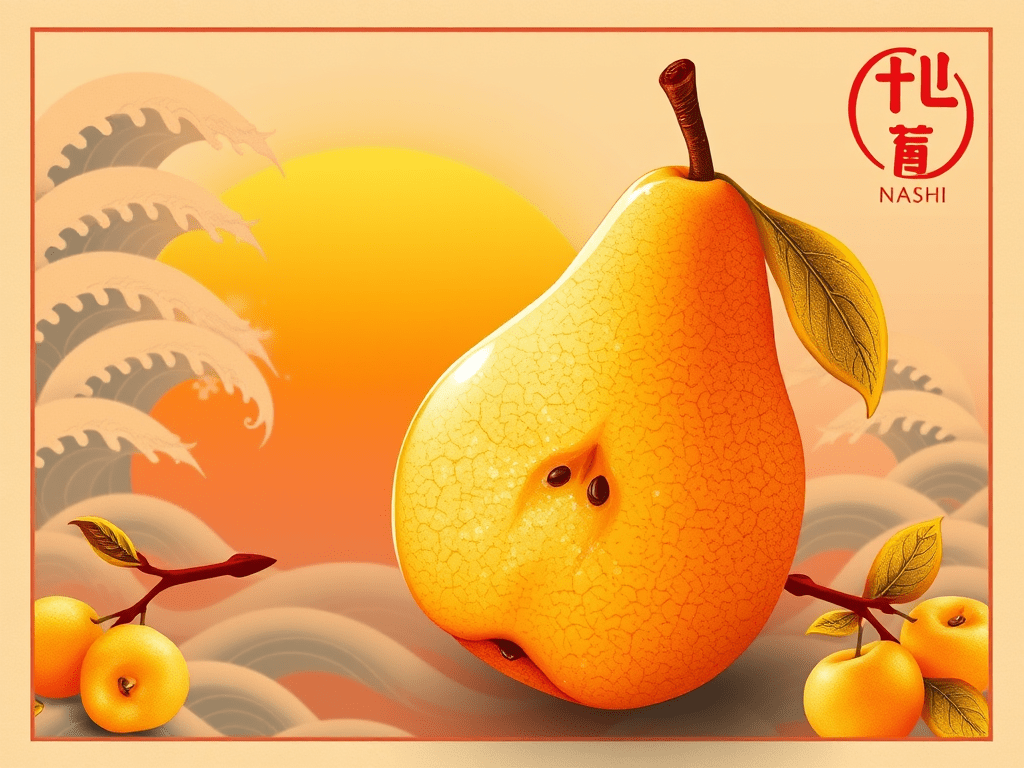
🥂 Meet the Nashi Pear:
Nature’s Juicy Paradox Imagine biting into a fruit that looks like an apple, crunches like an apple… but floods your senses with the delicate sweetness of a pear. That’s the Nashi pear—Japan’s golden orb of hydration and health, cultivated for over 3,000 years and still stealing the spotlight. With its crisp texture, honeyed aroma, and skin that glows like late summer sun, the Nashi pear isn’t just a snack—it’s a sensory experience wrapped in centuries of tradition.
The Nashi pear, also known as the “Asian pear-apple,” was first cultivated over 3,000 years ago in central China, flourishing along the Yellow and Huai Rivers during the Han dynasty. These crisp, hydrating fruits were not just agricultural staples—they were ritual offerings, seasonal markers, and symbols of abundance.
Origins & Cultivation
Where it began: Nashi pears originated over 3,000 years ago in central China, thriving along the Yellow and Huai rivers under the Han dynasty.
Spread across Asia: From China, they migrated to Japan and Korea, becoming deeply embedded in agricultural and culinary traditions.
Japanese cultivation: In Japan, Nashi pears were grown as early as the Heian period (794–1185), often featured in seasonal rituals and poetry.
Global journey: Chinese miners introduced Nashi to North America in the 19th century, planting them along the Sierra Nevada, while Europe only embraced them in the late 20th century.
🧺 Earliest Uses & Cultural Significance
Hydration & summer relief: In Japan, Nashi pears were prized during sweltering summers—served chilled to replenish fluids and cool the body.
Ceremonial offerings: Their round, golden form made them ideal for Buddhist and Shinto offerings, symbolizing purity and abundance.
Medicinal tonics: In traditional Chinese medicine, Nashi was boiled with herbs to soothe lungs, reduce internal heat, and treat dry coughs—a practice still honored today.
Poetic muse: The Nashi tree’s blossoms inspired Heian-era poets and artists, often symbolizing fleeting beauty and seasonal
🌸 Ceremonial Spotlights
- Used in cleansing rituals, seasonal resets, and ancestral offerings for its purity and hydrating properties
- Ideal for moon teas, fast-breaking fruit bowls, and ritual slaws that honor balance and renewal

Mid-Autumn Festival Celebrations
China: Offered during Mid-Autumn Festival as a symbol of reunion and purity
Japan: Featured in Shinto harvest rites, often paired with rice and sake
Korea: Used in Chuseok ancestral ceremonies, sliced and arranged with reverence
Modern Rituals: Incorporated into cleansing fasts and new moon fruit bowls for hydration and clarity
🍽️ Flavor Matrix Tags
| Texture | Sweetness | Acidity | Aroma | Culinary Use |
|---|---|---|---|---|
| Crisp | Mild | Low | Floral-honey | Raw, pickled, juiced |
Pairings: Ginger, sesame, miso, purple yam, and fermented plum
Best Served: Chilled, thinly sliced, or grated into slaws and broths
Flavor Note: Subtle sweetness with a whisper of floral spice—ideal for balancing bold umami
🧘 Ceremonial Integration
- Used in cleansing rituals, seasonal resets, and ancestral offerings for its purity and hydrating properties
- Ideal for moon teas, fast-breaking fruit bowls, and ritual slaws that honor balance and renewal
🥗 Nashi Pear, Smoked Trout & Avocado Salad
A modern twist on Japanese flavor harmony
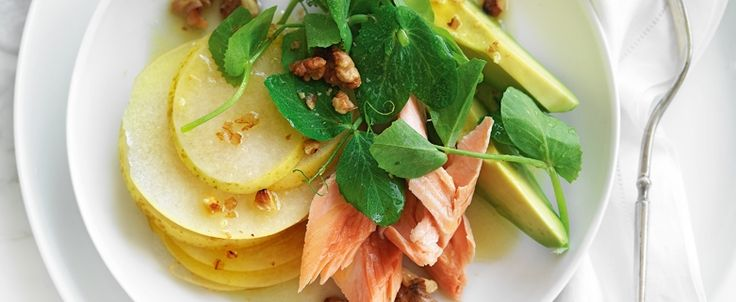
Recipe: Sweet, flavoursome and juicy nashi pears with smoked trout and ripe avocados make a vibrant fresh salad for lunch or dinner.
Flavor Matrix Tags: Crisp, umami-rich, creamy, earthy Ceremonial Use: Ideal for seasonal transitions or post-fast rebalancing
🍮 Poached Nashi Pears in Mulled Amaretto Syrup
A dessert that channels warmth and ancestral comfort
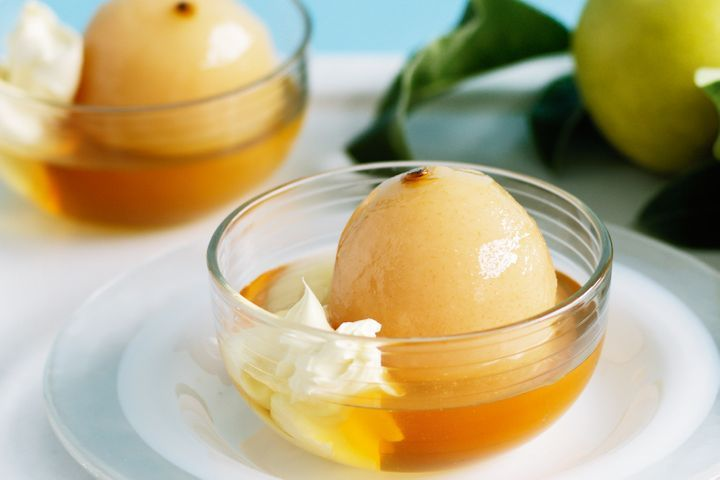
Poached nashi in amaretto syrup
Flavor Matrix Tags: Floral, spiced, silky, nutty Ceremonial Use: Perfect for honoring elders or seasonal gratitude rituals
🌿 Nashi Pear Health Benefits
A bridge between hydration, immunity, and ancestral vitality
🧬 Nutritional Highlights@ WebMD
Rich in Dietary Fiber: Supports digestion, eases constipation, and promotes gut health
High in Vitamin C: Boosts immunity, enhances collagen production, and protects skin from oxidative stress2
Contains Vitamin K: Aids in blood clotting and bone strength
Low in Calories: Ideal for weight management and light fasting rituals
Hydrating: High water content makes it a natural thirst-quencher—perfect for ceremonial teas and post-fast rebalancing
❤️ Functional Benefits
Heart Health:
Fiber helps reduce LDL cholesterol; potassium supports blood pressure regulation.
Skin & Eye Support:
Antioxidants and vitamin C nourish skin and protect retinal health
Blood Sugar Control:
Fiber slows glucose absorption, aiding insulin balance—especially helpful in Type 2 diabetes contexts
Prenatal Support:
Folate content supports DNA synthesis and cell growth during pregnancy
(@ WebMD)
🌟 Little-Known & Miraculous Uses of Nashi Pear
1. Lung-Clearing Elixir in Traditional Medicine
In East Asian herbalism, Nashi pear is simmered with white fungus, honey, and goji berries to create a lung-soothing tonic.
Traditional Use: Simmered with white fungus, honey, and goji berries Benefits: Clears phlegm, soothes dry coughs, cools internal heat Ceremonial Angle: Ideal for seasonal transitions or post-illness rituals
🔥 2. Natural Enzyme Tenderizer
The pear’s proteolytic enzymes (like bromelain analogs) make it a secret weapon in Korean marinades.
- Used to tenderize meats in bulgogi and galbi without overpowering flavor
- Used in Korean marinades like bulgogi and galbi
- Function: Breaks down proteins gently, enhances texture
- Cultural Note: Honors ancestral cooking wisdom
🌸 3. Skin-Renewal Compress
Grated Nashi pear mixed with rice flour and rose water is applied as a cooling poultice in some Japanese beauty rituals.
- Brightens, hydrates, reduces inflammation
- Application: Apply as a poultice; patch test recommended
- Always perform a patch test before applying Nashi pear compresses or masks
- Avoid use on broken, irritated, or highly sensitive skin
- Discontinue immediately if redness, itching, or discomfort occurs
- Consult a dermatologist if unsure about fruit-based skincare
🧂 4. Salt-Balancing Snack for Fasting Recovery
Due to its high water content and gentle sweetness, Nashi is used in some Buddhist traditions to reintroduce hydration and electrolytes after fasting.
- Often paired with miso broth or pickled plum for balance
🧠 5. Memory-Boosting Folk Remedy
In certain Korean folk practices, Nashi pear is combined with walnuts and black sesame to support cognitive clarity.
- Believed to nourish the brain and blood
🧂 Post-Fast Fruit Pairings Matrix
Restorative combinations for hydration, balance, and ritual nourishment
| 🍐 Fruit | 🌿 Pairing | 🔮 Ceremonial Use | ⚠️ Safety Notes |
|---|---|---|---|
| Nashi Pear | Miso broth, pickled plum | Rehydrates, balances salt, cools internal heat | May trigger oral allergy syndrome (birch) |
| Papaya | Coconut water, lime | Eases digestion, supports gentle detox | Avoid if latex-sensitive |
| Pomegranate | Black sesame, honey | Revitalizes blood, supports clarity | May interact with blood pressure meds |
| Watermelon | Mint, chia seeds | Hydrates deeply, calms heat | Diuretic effect—monitor fluid intake |
| Dates | Almond milk, cardamom | Replenishes energy, warms the body | High sugar—consume moderately |
⚠️ Allergen & Safety Disclaimer
Digestive Caution: Excessive consumption may cause bloating or diarrhea due to fiber content
Diabetes Note: Naturally sweet—consume in moderation if blood sugar is a concern
Allergen Alert: Nashi pears may trigger reactions in individuals with birch pollen allergies due to cross-reactivity (oral allergy syndrome).
Storage Tip: Store in a cool, dry place—refrigeration may dull flavor over time.
Ethical Note: Always source from sustainable orchards when possible; avoid waxed imports if skin is consumed.
Whether sliced into salads, poached into desserts, or used in ceremonial teas, this fruit bridges ancient wisdom and modern wellness with every bite. And here’s the kicker: it’s low in calories, high in fiber, and packed with antioxidants like lutein and beta carotene—making it a powerhouse for skin, immunity, and even eye health.
Nashi pears are absolutely available in the U.S., and they’re gaining traction both in specialty produce markets and backyard orchards.
🛒 Where to Find Nashi Pears in the U.S.
Retail & Grocery:
You can order varieties like the Niitaka Nashi Pear through platforms like Instacart, often sourced from Asian markets or premium grocers.
Availability peaks in late summer to early fall, especially in regions with strong Asian produce demand.
Nurseries & Growers:
U.S. nurseries like One Green World offer trees such as Ichiban Nashi, which is hardy to USDA Zone 4 and ripens early.
Ideal for home growers in Michigan, Pacific Northwest, and Northeast, thanks to its cold tolerance and disease resistance.
Artisan Producers:
Nashi Orchards in Washington state crafts perry and cider from Asian pears, including Korean Giant and D’Anjou blends—available online and in select shops across the Pacific Northwest.
🌱 Growing Your Own
Nashi trees thrive in well-drained, humus-rich soil and prefer full to half-day sun.
Most varieties are grafted for reliable fruiting and disease resistance.
Cross-pollination with another Asian pear or early-blooming European variety is recommended for best yield.
✨ Why the Nashi Pear Deserves a Spotlight
From ancient riverbanks to modern wellness rituals, the Nashi pear isn’t just a fruit—it’s a cultural bridge, a healing tool, and a culinary shapeshifter. Whether poached, sliced, brewed, or blessed, it carries centuries of wisdom in every crisp bite.
🍐 Nashi Pear = Hydration + Heritage + Healing A golden orb of tradition, rebalance, and ritual renewal.
Always patch test before topical use”
“Sourced sustainably. Served with reverence.”
“This fruit may be humble—but its story is mighty.”
 EJADA
EJADA 
Leave a comment