
🌿 Myrica cerifera: A Botanical Treasure Rooted in Ritual and Remedy
Myrica cerifera, known widely as bayberry or wax myrtle, is far more than a hardy coastal shrub—it’s a living emblem of ancestral wisdom, ecological resilience, and ceremonial grace. Across centuries and cultures, this plant has been revered not only for its medicinal potency but for its symbolic power in rituals of protection, prosperity, and purification.
From the waxy berries that fueled colonial candle-making traditions to the fragrant leaves burned in sacred smoke ceremonies, Myrica has held space in both hearth and healing. Its bark, rich in tannins and flavonoids, was once a staple in folk medicine—used to treat everything from sore throats and fevers to digestive ailments and skin infections. Herbalists still turn to it for its astringent, antimicrobial, and lymphatic-stimulating properties. Health benefits
🧪 Healing & Magical Attributes
- Medicinal: Traditionally used for sore throats, antiseptic properties, and digestive issues.
- Magical: Associated with luck, protection, purification, and abundance.
- Cleansing: Incorporated into house blessings and year-end rituals to clear negative energy.
🌿 Botanical Identity & Cultivation
| Ritual Use | Cultural Context | Symbolism |
|---|---|---|
| Bayberry Candles | Colonial America | Burned on Christmas Eve for prosperity: “A bayberry candle burned to the socket brings luck to the home and gold to the pocket” |
| Purification Smoke | Native American & settler traditions | Leaves burned to cleanse spaces and ward off negativity |
| Protective Charms | Folk magic & witchcraft | Used in sachets and spells for abundance, protection, and good fortune |
| First Fruits Blessing | Candle makers’ tradition | First batch of wax candles gifted to ensure future abundance |
| Spiritual Cleansing | Herbal rituals | Incorporated into house blessings and seasonal transitions |
🌍 Cross-Cultural Footprints
- China: Economically important crop—sold fresh, canned, dried, and as juice or alcohol
- Denmark: Used to spice beer, echoing ancient brewing traditions
- India (Kafal): Revered in Himalayan regions; associated with seasonal rituals and folk songs
🕯️ Household & Ceremonial Products
- Bayberry Soap: Gentler than lye soap; used for shaving and ritual cleansing
- Wax Candles: Traditionally hand-dipped; symbolic of warmth, wealth, and spiritual light
- Bayberry Punch: Once a popular American beverage, now a nostalgic nod to herbal heritage
🌿 Myrica cerifera: A Botanical Treasure Rooted in Ritual and Remedy
Whether gifted as a “first fruits” blessing or brewed into healing decoctions, Myrica invites us to honor the cycles of nature, the wisdom of our ancestors, and the power of ritual in daily life.
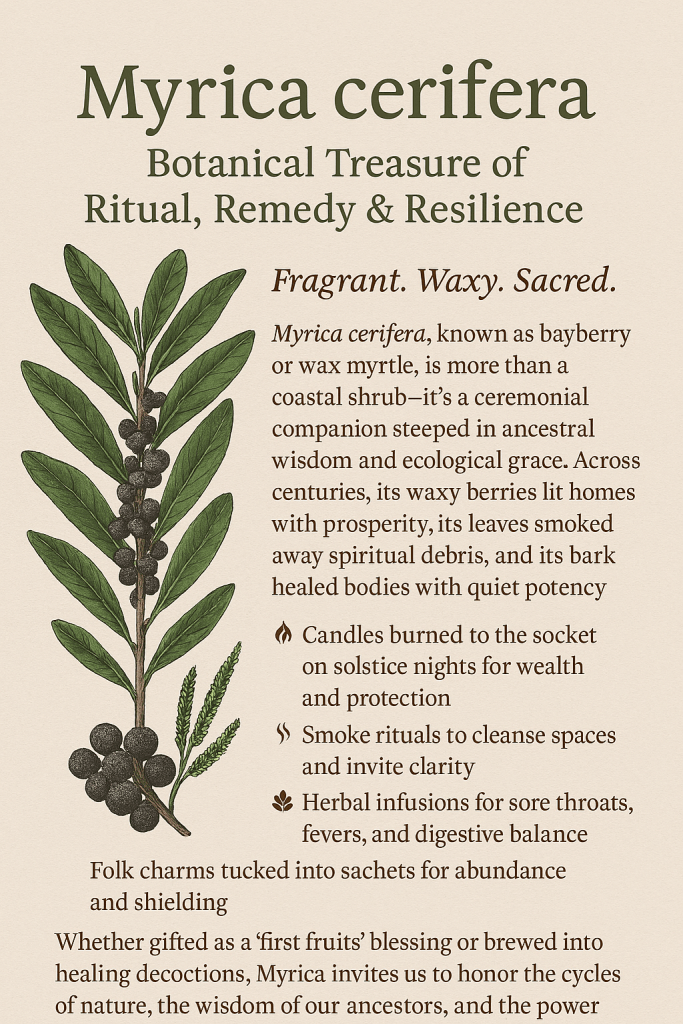
🔥 Candles burned to the socket on solstice nights for wealth and protection
Safety Disclaimer: Use fire-safe holders. Never leave burning candles unattended. Not intended to replace medical or financial advice.
On the longest night of the year—the Winter Solstice—when the sun hovers at its lowest arc and darkness reigns supreme, ancient traditions call for light not just as illumination, but as invocation. Among these, the burning of bayberry candles stands out as a fragrant, waxy ritual of prosperity and protection.
🔥 Origins & Symbolism
- Colonial America: Early settlers discovered that boiling the berries of Myrica cerifera yielded a clean-burning wax with a balsam-like fragrance. Because it took nearly 9 pounds of berries to make 1 pound of wax, bayberry candles became rare and precious.
- Yule & Solstice Lore: Bayberry candles were reserved for sacred nights—Solstice Eve, Christmas Eve, and New Year’s Eve—and were lit after the first star appeared. The candle was meant to burn completely to the socket, without interruption, to fulfill its blessing.
Today, Myrica stands as a botanical bridge between tradition and trend. It invites us to honor the cycles of nature, the wisdom of our ancestors, and the healing power of plants. Whether infused into soaps, tinctures, or seasonal ceremonies, it continues to offer a warm, fragrant reminder: that wellness is not just physical—it’s cultural, spiritual, and deeply rooted.
🌿 Myrica cerifera: Bridging Ancestral Rituals & Modern Wellness
Today, Myrica cerifera—once a humble shrub lining coastal dunes and colonial gardens—has reemerged as a botanical icon that gracefully bridges ancestral ritual and contemporary wellness culture.
🔗 From Tradition…
- Colonial Candle Lore: Bayberry wax, painstakingly rendered from berries, was reserved for sacred nights—burned to the socket for wealth and protection.
- Native American Healing: Leaves and bark were used in decoctions, poultices, and smoke rituals to treat fevers, infections, and spiritual imbalance.
- Folk Magic & Seasonal Blessings: Incorporated into charms, sachets, and solstice ceremonies to invoke abundance and ward off misfortune.
To Trend
- Eco-Luxury Candles: Artisanal bayberry candles are now sold as premium seasonal gifts, often paired with ritual guides and solstice kits.
- Herbal Wellness: Myrica bark and leaf extracts appear in small-batch tinctures, teas, and skincare products marketed for detox and lymphatic support.
- Cultural Revival: Herbalists and storytellers are reclaiming Myrica’s ceremonial role—reintroducing candle-burning rituals, smoke cleansing, and “first fruits” blessings into modern spiritual practice.
🌍 Global Footprint
- In China, Myrica rubra (a cousin species) is a major crop—sold fresh, dried, juiced, and fermented into wine.
- In Denmark, Myrica is used to spice beer and snaps, echoing ancient brewing traditions.
- In North America, it’s cultivated ornamentally and ecologically—valued for nitrogen-fixing roots and wildlife support.
Myrica today is more than a plant—it’s a symbol. A fragrant reminder that healing and abundance are cyclical, seasonal, and deeply rooted in story. It invites us to light candles not just for warmth, but for intention. To brew infusions not just for health, but for heritage.
🍇 Nutritional Profile of Myrica Species
| Nutrient | Function | Found In |
|---|---|---|
| Vitamin C | Antioxidant, immune support, collagen synthesis | Especially rich in M. esculenta |
| Dietary Fiber | Aids digestion, promotes satiety | All fruiting species |
| Natural Sugars | Quick energy source (glucose, fructose, sucrose) | M. rubra, M. esculenta |
| Minerals | Potassium, calcium, iron, copper, zinc | M. esculenta pulp |
| Flavonoids | Anti-inflammatory, antioxidant | Myricetin, quercetin3 |
| Tannins | Astringent, supports gut health | Bark and berries3 |
| Phenolic Acids | Antioxidant, antimicrobial | Found across species |
🌿 Health Benefits
🛡️ Antioxidant Protection: Myrica’s Botanical Shield Against Cellular Chaos
Myrica species—especially Myrica cerifera, Myrica rubra, and Myrica esculenta—are brimming with polyphenolic compounds, flavonoids, and tannins that act as nature’s molecular guardians. These antioxidants don’t just neutralize free radicals—they orchestrate a symphony of cellular defense, longevity, and ritual renewal.
🌟 Key Antioxidants in Myrica
- Myricetin: A potent flavonoid shown to scavenge reactive oxygen species (ROS), protect lipids from peroxidation, and support DNA integrity.
- Quercetin: Known for its anti-inflammatory and neuroprotective effects, it also enhances mitochondrial resilience.
- Myricitrin: A glycoside of myricetin with added bioavailability and bile-stimulating properties.
- Tannins: Offer astringent and antimicrobial benefits while curbing oxidative damage in the gut and skin.
🔬 How It Works
- Free Radical Neutralization: Myrica’s antioxidants donate electrons to unstable molecules, preventing cellular damage and aging.
- Lipid Protection: Especially vital for brain, liver, and cardiovascular health—myricetin shields fatty acids from oxidative breakdown.
- Enzyme Modulation: These compounds regulate antioxidant enzymes like superoxide dismutase (SOD) and catalase, enhancing the body’s natural defenses.
🍷 Culinary & Cosmetic Crossovers: Bayberry’s Dual Legacy
From Bitter Bark to Beauty Balm
🍴 Culinary Alchemy
Flavor Meets Function
- Bayberry Bitters: Infuse bark into cider vinegar or spirits for digestive tonics.
- Bayberry Syrup: Simmer bark with molasses and lemon peel for herbal mocktails.
- Bayberry Jam : Tart, iron-rich fruit preserves from Himalayan traditions.
- Bayberry Hair Cake: A Chinese sweet made with bayberry juice—herbal patisserie meets tradition.
💄 Cosmetic Rituals
Skin & Scalp Ceremonies
- Bayberry Bark Toner: Astringent and antimicrobial—ideal for oily skin.
- Bayberry Wax Balm: Healing salve from boiled berry wax.
- Bayberry Hair Rinse: Scalp health booster with rosemary or nettle.
- Bayberry Lip Tint: Anthocyanin-rich pigment with antioxidant benefits.
🧪 Shared Bioactives
| Compound | Culinary Benefit | Cosmetic Benefit |
|---|---|---|
| Myricitrin | Stimulates bile, aids digestion | Antioxidant, anti-inflammatory for skin |
| Tannins | Astringent flavor, gut support | Tightens pores, reduces inflammation |
| Essential Oils | Aromatic depth in teas & syrups | Antimicrobial, soothing for skin |
| Anthocyanins | Natural coloring, antioxidant boost | Anti-aging, UV protection |
- Yangmei wine (from Myrica rubra) is prized in China for its vibrant color and antioxidant punch.
- Bayberry-infused oils are emerging in skincare for their anti-aging and anti-inflammatory properties.
🔥 Bayberry’s Anti-Inflammatory Action: Botanical Firekeeper of Balance
Bayberry’s bark and berries contain a potent blend of bioactive compounds—most notably myricetin, myricitrin, quercetin, and tannins—that work synergistically to modulate inflammation at the cellular level. These compounds don’t just suppress symptoms; they recalibrate the body’s inflammatory response, offering both acute relief and long-term resilience.
🌿 Key Compounds & Their Roles
| Compound | Function in Inflammation Modulation |
|---|---|
| Myricetin | Inhibits pro-inflammatory enzymes (COX-2, iNOS); antioxidant synergy |
| Myricitrin | Enhances bile flow, reduces swelling, supports liver detox |
| Quercetin | Stabilizes mast cells, reduces histamine release |
| Tannins | Astringent action on mucous membranes; curbs gut inflammation |
🧬 Mechanisms of Action
- Enzyme Inhibition: Bayberry compounds block key enzymes like cyclooxygenase (COX) and nitric oxide synthase (iNOS), which drive inflammation.
- Cytokine Regulation: Flavonoids in bayberry help downregulate inflammatory cytokines such as TNF-α and IL-6.
- Gut-Lining Repair: Tannins tighten and tone intestinal walls, reducing permeability and inflammation.
- Microbial Defense: Myricitrin exhibits antimicrobial activity, reducing infection-driven inflammation.
🧘♀️ Traditional Applications
- Colonial & Indigenous Use: Bayberry bark was brewed into decoctions for fevers, colds, and “inflammations of the blood.”
- Topical Rituals: Poultices and washes were applied to hemorrhoids, varicose veins, and slow-healing wounds.
- Ceremonial Cleansing: Bayberry smoke was used to “cool the spirit” and cleanse spaces of energetic congestion.
⚠️ Safety & Ethical Notes
- Use with care: High tannin content can irritate sensitive stomachs; avoid during pregnancy.
- Sustainable sourcing: Overharvesting threatens wild populations—opt for cultivated or ethically wildcrafted bark.
Compounds such as quercetin and myricitrin modulate inflammatory pathways, potentially easing chronic conditions.
🧠 Pain & Swelling Relief: Myrica’s Botanical Intelligence
Bayberry’s bark and berries are more than fragrant—they’re pharmacologically active, offering analgesic and anti-inflammatory effects that have been revered for centuries. From colonial poultices to modern herbal capsules, Myrica cerifera stands as a botanical ally in calming the body’s fire and restoring equilibrium.
🌿 Key Compounds Behind the Relief
| Compound | Action on Pain & Swelling |
|---|---|
| Myricitrin | Reduces prostaglandin synthesis, easing pain and inflammation |
| Triterpenes | Taraxerol and taraxeron modulate immune response and swelling |
| Tannins | Astringent effect tightens tissues, reduces inflammation |
| Flavonoids | Quercetin and myricetin inhibit inflammatory enzymes |
🔬 Mechanisms of Action
- Prostaglandin Suppression: Myricitrin interferes with the biochemical cascade that produces pain-inducing prostaglandins—offering relief without the harshness of synthetic NSAIDs.
- Vascular Tone Modulation: Triterpenes help reduce capillary permeability, minimizing swelling and fluid retention.
- Nerve-Calming Potential: Traditional use includes treatment for neuralgia, headaches, and even epileptic symptoms, suggesting a calming effect on the nervous system.
🧘♀️ Traditional Applications
- Colonial Herbalism: Bayberry bark was steeped and applied to swollen joints, hemorrhoids, and varicose veins.
- Native American Medicine: Used for colic, convulsions, and “cold pain”—a term for inflammation caused by damp or stagnant energy.
- Ayurvedic Echoes: Myrica esculenta (Katphala) bark was used for abdominal swelling, piles, and migraine-related pain.
🌬️ Ceremonial Integration
- Ritual Use: Burn bayberry candles during solstice or lunar rites to symbolically “draw out pain and restore flow.”
- Infusion Ritual: Brew bark tea with ginger and rosemary. Sip slowly while meditating on the phrase: “Let the swelling recede, and clarity return.”
⚠️ Safety Notes
- Avoid during pregnancy due to uterine-stimulating effects.
- High tannin content may irritate sensitive stomachs—use sparingly and consult a herbalist.
- Myricitrin has shown promise in reducing prostaglandins—chemicals linked to pain and inflammation.
💪 Immune Support: Myrica’s Ritual of Resistance
Bayberry (Myrica cerifera) isn’t just a fragrant shrub—it’s a phytochemical fortress. Its bark, berries, and wax contain compounds that modulate immune response, combat pathogens, and fortify the body’s natural defenses. In traditional medicine, it was revered as a “winter protector,” and today, science confirms its immunomodulatory power.
🌿 Key Immunoactive Compounds
| Compound | Immune Function |
|---|---|
| Myricitrin | Stimulates bile flow, supports liver detox (crucial for immune balance) |
| Flavonoids | Regulate immune cell activity, reduce oxidative stress |
| Triterpenoids | Modulate inflammation, enhance pathogen resistance |
| Polyphenols | Strengthen mucosal immunity, protect against viral load |
🔬 Mechanisms of Immune Support
- Immunomodulation: Bayberry compounds help balance immune responses—neither overstimulating nor suppressing, but harmonizing.
- Antimicrobial Action: Myricitrin and tannins exhibit antibacterial and antifungal properties, aiding in infection prevention.
- Antioxidant Synergy: By reducing oxidative stress, bayberry preserves immune cell integrity and function.
- Liver Detox Link: Enhanced bile flow supports toxin elimination, indirectly boosting immune clarity.
🧘♀️ Traditional Wisdom
- Winter Tonic: Bayberry bark was brewed into teas to “warm the blood” and ward off seasonal illness.
- Smoke Cleansing: Burning bayberry candles during solstice was believed to purify the air and protect the home.
- Protective Amulets: Sachets of dried bark were carried to shield against “bad winds” and spiritual contagion.
⚠️ Safety Notes
- Avoid during pregnancy due to uterine-stimulating effects.
- Use in small doses—high tannin content may irritate sensitive stomachs.
- Always source ethically to protect wild populations.
🧬 Gastrointestinal Health: Myrica’s Astringent Wisdom
Bayberry’s bark and berries have long been revered as gut guardians—used to soothe, tighten, and cleanse the digestive tract. From colonial decoctions to Ayurvedic tonics, Myrica cerifera offers a multi-layered approach to gastrointestinal wellness, blending astringency, antimicrobial action, and detox support.
🌿 Key Compounds & Digestive Roles
| Compound | Digestive Function |
|---|---|
| Tannins | Astringent action; tightens gut lining, curbs diarrhea |
| Myricitrin | Stimulates bile flow; supports liver and gallbladder |
| Flavonoids | Reduce gut inflammation; protect mucosal integrity |
| Phenolic acids | Antimicrobial; regulate gut flora balance |
🔬 Mechanisms of Action
- Astringency & Tone: Tannins bind to proteins in the gut lining, reducing permeability and inflammation—ideal for diarrhea, ulcers, and leaky gut.
- Bile Flow & Detox: Myricitrin enhances bile secretion, aiding fat digestion and liver detoxification—crucial for clearing metabolic waste.
- Microbial Balance: Bayberry’s antimicrobial properties help regulate gut flora, reducing pathogenic overgrowth and supporting symbiosis.
- Inflammation Modulation: Flavonoids like myricetin calm inflammatory pathways in the GI tract, easing discomfort and promoting repair.
🧘♀️ Traditional Applications
- Colonial Herbalism: Bayberry bark was steeped for diarrhea, dysentery, and “cold belly” ailments.
- Ayurvedic Use (Myrica esculenta / Katphala): Used for abdominal swelling, piles, and irregular stool production.
- Tribal Medicine: Decoctions were given for colic, nausea, and digestive stagnation—often paired with warming herbs like ginger or mustard seed.
⚠️ Safety Notes
- Use sparingly—high tannin content may irritate sensitive stomachs.
- Avoid during pregnancy due to uterine-stimulating effects.
- Consult a herbalist before internal use, especially for chronic conditions.
Tannins provide astringent properties that soothe diarrhea and support gut lining integrity.
🩺 Liver & Gallbladder Support: Myrica’s Bitter Blessing of Detox
Bayberry’s bark and berries contain a potent blend of flavonoids, triterpenes, and tannins that support the liver’s detoxification pathways and stimulate gallbladder function. Traditionally used as a bitter tonic, Myrica cerifera helps the body “release what no longer serves”—physically and energetically.
🌿 Key Compounds & Their Hepatobiliary Roles
| Compound | Function |
|---|---|
| Myricitrin | Stimulates bile flow; aids fat digestion and liver detox |
| Taraxerol & Taraxeron | Triterpenes that modulate inflammation and liver enzymes |
| Tannins | Astringent action; tones digestive tract and supports gut-liver axis |
| Flavonoids | Antioxidant protection for liver cells |
🔬 Mechanisms of Action
- Bile Flow Activation: Myricitrin promotes bile secretion, which helps emulsify fats, eliminate toxins, and support gallbladder health.
- Liver Enzyme Modulation: Triterpenes like taraxerol may regulate liver enzymes involved in detoxification and inflammation.
- Antioxidant Shielding: Flavonoids protect hepatocytes (liver cells) from oxidative damage caused by toxins and metabolic stress.
- Gut-Liver Axis Support: Bayberry’s astringent and antimicrobial properties help maintain gut integrity, reducing toxic burden on the liver.
🧘♀️ Traditional Applications
- Colonial Herbalism: Bayberry bark was used as a “blood purifier” and liver stimulant during seasonal transitions.
- Ayurvedic Echoes (Myrica esculenta / Katphala): Used for abdominal swelling, piles, and bile-related disorders in ancient Indian medicine.
- Native American Practice: Decoctions were given for colic and digestive stagnation—often linked to liver imbalance.
Myricitrin may stimulate bile flow, aiding digestion and detoxification.
⚠️ Safety & Allergen Notes
- Not recommended during pregnancy due to uterine-stimulating effects of bayberry bark.
- High tannin content may irritate sensitive stomachs if consumed in excess.
- Always source ethically—wild populations of Myrica esculenta are under threat from overharvesting.
Myrica cerifera in “Fruit & Fable”
| Section | Purpose |
|---|---|
| Origin Myth | A folkloric or cultural tale tied to the fruit’s discovery or sacred use |
| Botanical Identity | Scientific name, native habitat, seasonal cycle |
| Ceremonial Use | Rituals, blessings, solstice ties, ancestral healing practices |
| Modern Revival | How the fruit is trending in wellness, cuisine, or eco-luxury |
| Flavor & Function | Taste profile, nutritional benefits, safety notes |
| Fable Footer | A poetic closing—quote, proverb, or ritual prompt to inspire reflection |
Bayberry’s bark and berries have long been revered as gut guardians—used to soothe, tighten, and cleanse the digestive tract. From colonial decoctions to Ayurvedic tonics, Myrica cerifera offers a multi-layered approach to gastrointestinal wellness, blending astringency, antimicrobial action, and detox support.
🌿 Key Compounds & Digestive Roles
| Compound | Digestive Function |
|---|---|
| Tannins | Astringent action; tightens gut lining, curbs diarrhea |
| Myricitrin | Stimulates bile flow; supports liver and gallbladder |
| Flavonoids | Reduce gut inflammation; protect mucosal integrity |
| Phenolic acids | Antimicrobial; regulate gut flora balance |
🔬 Mechanisms of Action
- Astringency & Tone: Tannins bind to proteins in the gut lining, reducing permeability and inflammation—ideal for diarrhea, ulcers, and leaky gut.
- Bile Flow & Detox: Myricitrin enhances bile secretion, aiding fat digestion and liver detoxification—crucial for clearing metabolic waste.
- Microbial Balance: Bayberry’s antimicrobial properties help regulate gut flora, reducing pathogenic overgrowth and supporting symbiosis.
- Inflammation Modulation: Flavonoids like myricetin calm inflammatory pathways in the GI tract, easing discomfort and promoting repair.
🧘♀️ Traditional Applications
- Colonial Herbalism: Bayberry bark was steeped for diarrhea, dysentery, and “cold belly” ailments.
- Ayurvedic Use (Myrica esculenta / Katphala): Used for abdominal swelling, piles, and irregular stool production.
- Tribal Medicine: Decoctions were given for colic, nausea, and digestive stagnation—often paired with warming herbs like ginger or mustard seed.
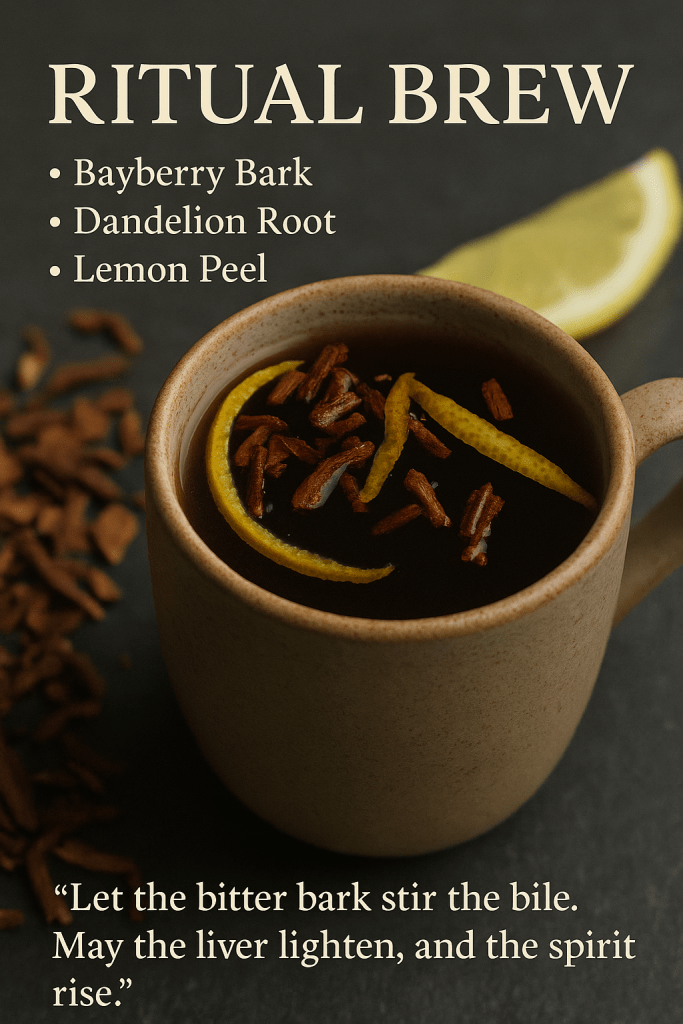
Bayberry Bark & Fennel Infusion
Add fennel seeds and optional ginger/orange peel.
Cover and steep for another 10–15 minutes.
Sip slowly while reciting: “Let the bitter root cleanse, and the fire restore.”
⚠️ Safety Notes
- Use sparingly—high tannin content may irritate sensitive stomachs.
- Avoid during pregnancy due to uterine-stimulating effects.
- Consult a herbalist before internal use, especially for chronic conditions.
🧪 Myrica Recipes: From Forest to Feast
🍹 1. Bayberry Juice (Myrica rubra)
A tart, vitamin-rich juice made from Chinese bayberries.
- Ingredients: Bayberry (300g), sugar (3 scoops), water
- Benefits: Rich in glucose, citric acid, and vitamin C; used for thirst, digestive imbalance, and mild dysentery
- Full recipe on Miss Chinese Food
🍢 2. Masala Paneer Tikka with Myrica Tandoori Masala

Tandoori Paneer Tikka Masala Recipe
“Let the coal smoke cleanse. Let the saffron stir the soul.”
“As the paneer chars, may the bitterness burn away. Let the smoke rise, and the spirit settle.”
Core Profile: Smoky • Creamy • Spiced Heat Elemental
🌀 Ritual Pairing Suggestions
- Serve with Muscadine chutney to amplify boldness.
- Add a swirl of Mountain Apple yogurt for cooling contrast.
- Pair with Mulberry leaf tea during full moon rituals for clarity.
🍲3. Northern Bayberry Soup Enhancer
Use dried bayberry leaves as a local alternative to bay leaves in broths and bisques.
- Flavor: Tea-like, menthol, slightly resinous
- Read more on Edible Cape Cod
🍺 4. Gotlandsdricka Ale with Myrica Gale
A Scandinavian-style sour beer brewed with smoked malt, juniper, and Myrica gale.
- Notes: Earthy, herbal, slightly bitter
- Recipe on Brewer’s Friend
🍷 5. Sorgenfri Gruit
A botanical beer featuring dried bog myrtle (Myrica gale), juniper, yarrow, and star anise.
- Use: Add herbs in final 5 minutes of boil
- View full recipe
🌀 Closing Scroll: Letter M, Rituals Remembered
We’ve covered a well of knowledge in this final chapter of fruits beginning with the letter M—from the velvet-skinned Mabolo to the bitter-bark brilliance of Myrica. Each fruit offered not just flavor, but ceremony, healing, and heritage.
With this post, we close the book on M—but the journey continues. What’s next? We turn the page and begin to discover what fruits the letter N can offer: native nectars, nourishing nuts, and nocturnal botanicals waiting to be unearthed and honored.
This marks the end of our letter M fruits, but the journey continues. A new search star rises with the letter N—where native nectars, nourishing nuts, and nocturnal botanicals await their turn in the archive.
⚠️ Use Caution If You Fall Into Any of These Groups
- Those with known allergies to latex, berries, tropical fruits, or tree nuts
- Individuals who are pregnant, nursing, or immunocompromised
- Children under 12—avoid potent botanicals unless guided by a qualified practitioner
- Anyone taking prescription medications—consult a healthcare provider before ingesting unfamiliar herbs or fruits
📜 Disclaimer
This content is intended for educational and ceremonial purposes only. It does not constitute medical advice, diagnosis, or treatment. Always consult a licensed healthcare provider before consuming unfamiliar fruits, herbs, or ritual preparations. EJADA assumes no liability for misuse, allergic reactions, or adverse effects.
🔹 Commonly Available Species
| Species | Regions Found | Notes |
|---|---|---|
| Myrica pensylvanica | Eastern U.S. (Maine to North Carolina, inland to Ohio) | Cold-hardy, widely cultivated for ornamental and herbal use2 |
| Myrica californica | Pacific Coast (California, Oregon) | Coastal native, prefers mild climates |
| Myrica cerifera | Southeastern U.S. (Florida, Texas, Gulf Coast) | Also known as Southern Wax Myrtle; fast-growing and aromatic |
🛒 Retail Channels
- Native plant nurseries: Widely stocked in regions where Myrica is indigenous.
- Online retailers: Nature Hills, Wilson Bros Gardens, American Beauties Native Plants offer shipping across the U.S.2
- Garden centers: Often carry Myrica pensylvanica or cerifera in zones 3–9 depending on climate.
🌱 Growing Conditions
- Thrives in sandy, well-drained soils
- Tolerates drought, salt spray, and poor soils
- Used for soil stabilization, wildlife cover, and aromatic berries (great for candles and rituals)
⚠️ Seasonal & Regional Notes
- Availability may vary by season and hardiness zone
- Some retailers restrict shipping based on invasive species regulations or climate compatibility
- Myrica pensylvanica is the most widely distributed and cold-tolerant
 EJADA
EJADA 
Leave a comment