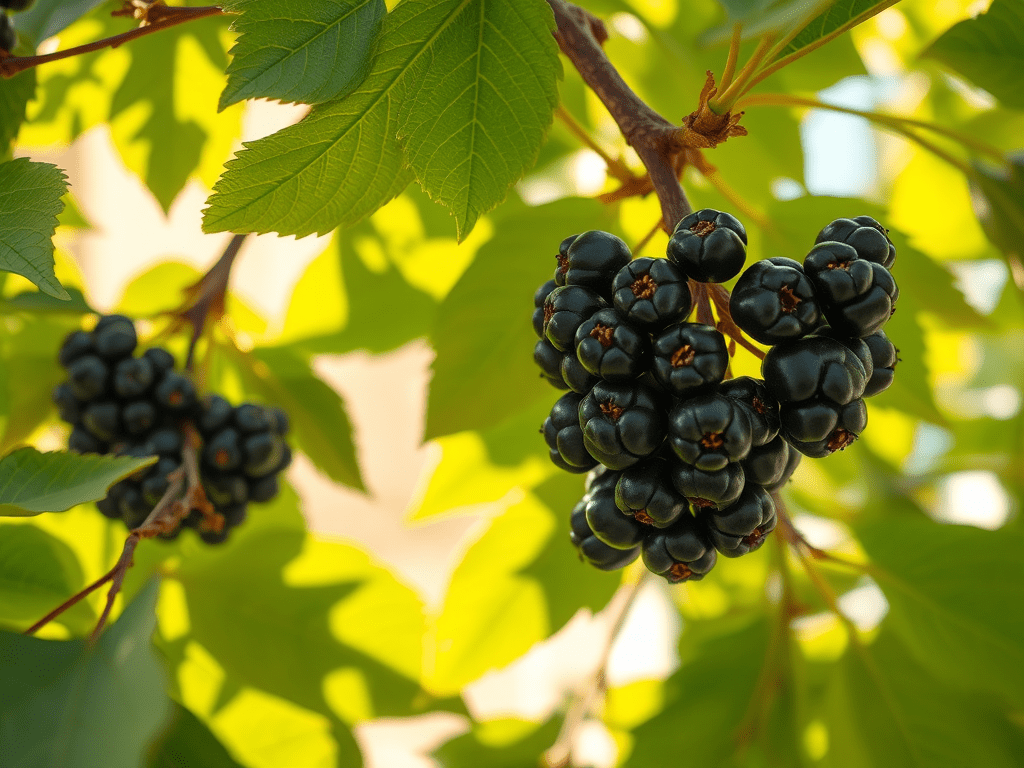
Many of you have heard the nursery rhyme, “Here we go round the mulberry bush,” but that’s not where the story ends. The mulberry tree, often mistaken for a mere backdrop to childhood songs, has roots that stretch deep into ancient history and healing traditions.
🌿 Origins & Discovery
First cultivated in China around 2700 BCE, mulberry trees were central to early agriculture and silk production.
Ancient Chinese texts like the Huang Di Ba Shi Yi Nan Jing documented its medicinal uses as early as 2500 BCE.
The tree spread westward to Persia and the Mediterranean, where Greeks and Romans embraced the black mulberry (Morus nigra) for both food and healing.
🌍 Cultural & Ceremonial Significance
- In Chinese tradition, mulberry leaves fed sacred silkworms—symbolizing transformation and prosperity.
- Persian healers used mulberry bark in purification rituals.
- In Ayurveda, mulberry fruit was considered a rejuvenating tonic, often used in seasonal cleansing ceremonies.
💊 Medicinal Uses Across Cultures
| Part Used | Traditional Use |
|---|---|
| 🍃 Leaves | Infusions to regulate blood sugar, reduce blood pressure, and soothe sore throats |
| 🍇 Fruits | Antioxidant-rich; supports heart health, digestion, and anti-aging |
| 🍯 Syrup | Astringent remedy for toothaches and inflamed gums |
| 🌱 Bark & Roots | Used as purgatives, vermifuges, and gentle laxatives across Asia and Europe |
⚠️ Safety Disclaimer: Always consult a qualified herbalist or healthcare provider before using mulberry medicinally. Some parts of the tree may interact with medications or cause allergic reactions.
🧬 Nutritional Snapshot
- Vitamin C: Boosts immunity and collagen production
- Iron: Supports blood health
- Resveratrol: Anti-inflammatory and neuroprotective
- Anthocyanins: Potent antioxidants that give the fruit its deep color
🛡️ Visual Footer Elements
🌿 “Tradition Meets Wellness” footer tagline
✅ “Ethically Sourced” badge
🧪 “Allergen Disclosure” overlay
🌍 Global Spread
From China, the mulberry journeyed westward—reaching Persia by 600 BCE and the Mediterranean by the 1st century CE.
The Greeks and Romans embraced the black mulberry (Morus nigra) for both culinary and medicinal purposes.
🍇 Culinary & Ritual Uses of Mulberry
A fruit that nourishes the body, honors the spirit, and bridges ancient wisdom with modern wellness. This is where mulberry truly shines as both a culinary treasure and a ritual-rich botanical.
🔪 Common Culinary Applications
- Jams & Jellies: A classic use—especially black mulberries—for their deep color and rich flavor.
- Smoothies & Juices: Blended fresh or frozen for antioxidant-packed drinks.
- Mulberry Syrup: Used in teas, cocktails, pancakes, and desserts.
- Baked Goods: Muffins, pies, cobblers, and pancakes—mulberries sub beautifully for blackberries.
- Salads & Yogurt Toppings: Fresh or dried, they add texture and sweetness.
- Fermented Beverages: Used in wines and meads across Mediterranean and Asian traditions.
🍽️ Flavor Note: Black mulberries are bold and earthy; white mulberries are milder with hints of vanilla. Red mulberries fall somewhere in between.
🔮 Ritual & Spiritual Uses: Sacred, Symbolic, and Healing
Mulberry has long been revered in spiritual and ceremonial contexts across cultures.
🕊️ Ancient & Cultural Rituals
- Chinese Folklore: Mulberry trees were planted near royal gates, symbolizing sunrise and renewal.
- Japanese Traditions: Mulberry fibers hung from sacred trees as prayers; leaves fed silkworms that produced ceremonial kimono silk.
- Christian Symbolism: In the Bible, the sound of mulberry trees signaled divine timing and protection.
- Meditation & Healing: Sitting beneath a mulberry tree is believed to enhance grounding and inner clarity.
🧘 Ritual Applications
| Element | Use in Rituals |
|---|---|
| 🍃 Leaves | Placed under pillows for prophetic dreams; brewed into protective teas |
| 🌳 Wood | Crafted into wands or talismans for strength and willpower |
| 🍇 Fruit | Offered in seasonal ceremonies to honor abundance and transformation |
| 🌿 Bark | Used in healing rituals to promote vitality and spiritual cleansing |
🛡️ Spiritual Symbolism: Mulberry represents resilience, protection, and transformation—a botanical ally for those seeking balance and growth.
🌀 Ceremonial Recipe Card: Mulberry Moon Elixir
Ingredients:
- 1 cup fresh black mulberries
- 1 tsp rose water
- 1 tbsp raw honey
- 1 cup spring water
- Optional: pinch of cardamom or edible flower petals
Instructions: Blend all ingredients until smooth. Serve chilled in a moonlit setting. Sip slowly while journaling intentions or meditating under a tree canopy.
🌕 Traditionally served during full moon gatherings to honor cycles of renewal and ancestral wisdom.
🌿 Tradition Meets Wellness
A living archive of ancient fruit wisdom, reimagined for today’s conscious lifestyle.
| Icon | Label | Description |
|---|---|---|
| ✅ | Ethically Sourced | All ingredients and rituals honor ecological balance and cultural heritage |
| ⚠️ | Allergen Disclosure | Mulberry may cause reactions in sensitive individuals—consult before use |
| 🌀 | Ceremonial Use Disclaimer | Ritual content is for spiritual enrichment, not medical treatment |
| 🍇 | Nutritional Insight | Mulberries are rich in antioxidants, iron, and vitamin C |
| 🧬 | Ancestral Ingredient | Used in healing traditions from China, Persia, and the Mediterranean |
🍇 Vitamin Profile of Mulberries
| Vitamin | Function |
|---|---|
| Vitamin C | Boosts immune function, collagen production, and skin health |
| Vitamin K1 | Supports blood clotting and bone strength |
| Vitamin B2 (Riboflavin) | Aids energy production and cellular function |
| Vitamin E | Acts as an antioxidant, protecting cells from oxidative stress |
| Choline | Supports brain development and liver function |
🧬 Bonus Minerals: Mulberries also contain iron, potassium, calcium, and copper, making them a well-rounded addition to any wellness ritual.
🧬 Proven Medical Benefits of Mulberries
Mulberries aren’t just poetic and ceremonial; they’re backed by science as a nutrient-dense fruit with real medical benefits. Where ancient healing meets modern science.
❤️ 1. Cardiovascular Health
- Mulberries may help lower LDL (“bad”) cholesterol and total cholesterol levels, reducing the risk of atherosclerosis and heart disease.
- Rich in resveratrol, a compound known to support healthy blood vessels and circulation.
🧠 2. Cognitive Protection
- High levels of flavonoids and phenolic acids in mulberries may reduce the risk of cognitive decline, supporting long-term brain health.
- Antioxidants help limit oxidative stress, which is linked to memory loss and neurodegenerative conditions.
👁️ 3. Eye Health
- Vitamin C and flavonoids in mulberries may help prevent age-related eye conditions, including cataracts.
🩸 4. Blood Sugar Regulation
- Mulberry leaf extracts have been shown to inhibit carbohydrate absorption, helping to stabilize blood sugar levels—especially beneficial for people managing type 2 diabetes.
🦴 5. Bone Strength
- Contains vitamin K, calcium, iron, and magnesium, all essential for maintaining bone density and preventing osteoporosis.
🛡️ 6. Immune System Support
- High in vitamin C, which boosts white blood cell activity and helps fight infections.
- Also supports collagen production for skin, joints, and tissue repair.
🌿 7. Liver & Digestive Health
- Traditionally used to strengthen liver function and treat constipation due to its mild laxative properties.
- Acts as a tonic and astringent, promoting digestive balance.
⚠️ Safety & Allergen Disclaimer
While mulberries offer impressive health benefits, they may cause allergic reactions in sensitive individuals or interact with medications. Always consult a qualified healthcare provider before using mulberry therapeutically.
⚠️ Who Should Avoid Mulberries (Especially with Medications)
While mulberries offer impressive health benefits, certain individuals should exercise caution or avoid them altogether, especially when taking prescription medications.
🩺 1. People Taking Diabetes Medications
- Why: Mulberry leaf and fruit can lower blood sugar levels, which may intensify the effects of antidiabetic drugs like metformin or insulin.
- Risk: May trigger hypoglycemia (low blood sugar), leading to dizziness, confusion, or fainting2.
💊 2. Those on Blood Thinners or Anticoagulants
- Why: Mulberry tea and extracts may interfere with blood clotting and enhance the effects of medications like warfarin.
- Risk: Increased chance of internal bleeding or bruising.
🧠 3. Patients Taking Sedatives (e.g., Midazolam)
- Why: Mulberry may slow the breakdown of certain sedatives, increasing their potency and side effects.
- Risk: May cause excessive drowsiness, confusion, or slowed reflexes.
🤰 4. Pregnant or Breastfeeding Individuals
- Why: There’s insufficient safety data on mulberry use during pregnancy or lactation.
- Risk: Potential unknown effects on fetal development or milk composition.
🌿 5. People with Known Allergies to Fig or Similar Fruits
- Why: Mulberries share allergenic compounds with figs and other Moraceae family members.
- Risk: May cause skin rashes, swelling, nausea, or even anaphylaxis.
🛌 6. Pre-Surgical Patients
- Why: Mulberry may affect blood sugar and clotting, complicating anesthesia and recovery.
- Guidance: Stop use at least 2 weeks before surgery.
🧪 Additional Side Effects to Watch For
- Headaches, blurred vision, excessive sweating, and digestive upset when taken in high doses
- Long-term overuse may lead to dehydration, internal bleeding, or low uric acid levels
🎶 From Song to Superfruit: The Mulberry Legacy
“Here we go round the mulberry bush” may have introduced this fruit to many in childhood, but its story stretches far beyond rhyme. From ancient silk roads to sacred rituals, from healing teas to antioxidant-rich elixirs, the mulberry tree has quietly nourished generations across continents.
🌳 Truth Bomb: There is no such thing as a true mulberry bush. Mulberries grow exclusively on trees, not bushes. The confusion likely stems from the song itself, which originally referenced a bramble bush (like blackberry or raspberry), but was later adapted to “mulberry” for lyrical ease.
Today, science confirms what tradition has long known: mulberries support heart health, balance blood sugar, protect cognition, and offer a rich source of vitamins and minerals. But they also carry something deeper—a legacy of transformation, resilience, and renewal.
Whether steeped in ceremony or stirred into a smoothie, mulberries invite us to honor the past while nourishing the present.
🌿 Tradition Meets Wellness A fruit that sings through time—rooted in ritual, blooming in health.
 EJADA
EJADA 
Leave a comment