
I decided to try and find alternatives to prescription medications by incorporating more herbs and fruit into my daily routine. I hope you’re learning right along with me, because this journey is as much about exploration as it is about healing. So let’s talk about Monstera Deliciosa and see where this one leads us.
Monstera Deliciosa was first formally described in 1849, based on a specimen collected in Mexico. While the exact individual who discovered it in the wild isn’t clearly documented, its botanical classification and naming were part of the wave of 19th-century plant exploration and taxonomy.
The name itself,Monstera deliciosa,is Latin for “delicious monster,” referencing both its dramatic leaf structure and its edible fruit. It belongs to the Araceae family, alongside peace lilies and philodendrons.
Before its formal description, indigenous communities in Central America, particularly in regions from southern Mexico to Panama, had long been familiar with the plant. They used it ornamentally and occasionally for its fruit, known locally as ceriman or Mexican breadfruit
Often admired for its dramatic leaves and tropical flair, Monstera Deliciosa isn’t just a houseplant darling,it’s also home to a fruit that’s as mysterious as it is delicious. Known as the “Swiss cheese plant,” its fruit is sometimes called the “Mexican breadfruit” and has a flavor profile that dances between pineapple, banana, and mango.
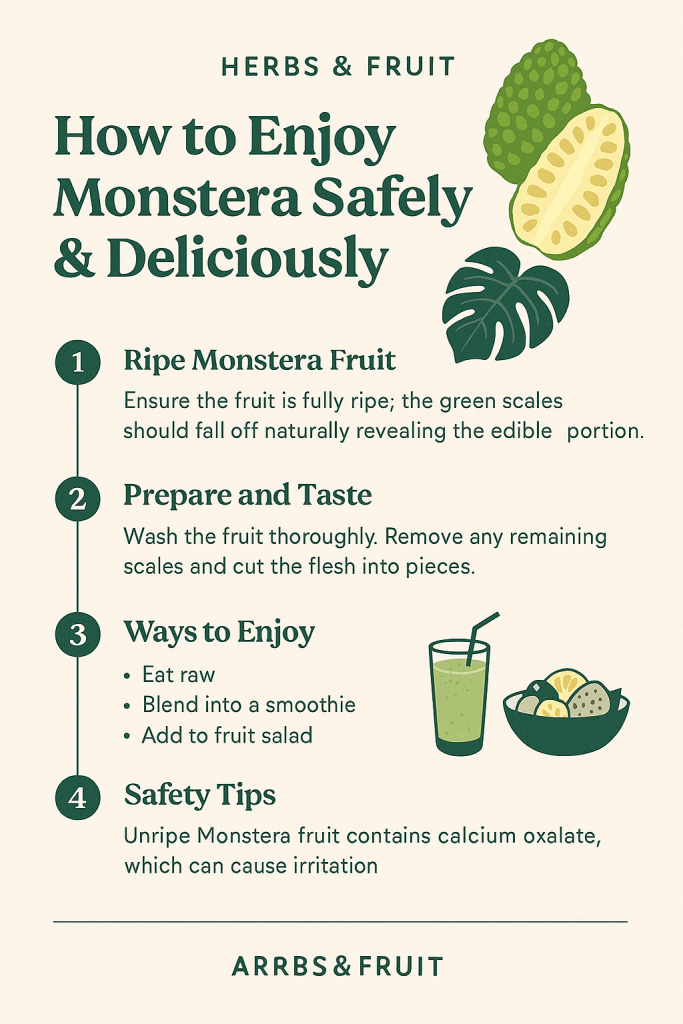
But before you go nibbling, there’s a twist: it must be fully ripe to be safe. Unripe Monstera fruit contains calcium oxalate crystals that can irritate the mouth and throat.
🍍 Flavor Matrix: How Monstera compares to other tropical fruits in taste, texture, and culinary use.
🍽️ Monstera Deliciosa Flavor Matrix
| Attribute | Monstera Deliciosa | Pineapple | Banana | Mango | Papaya |
|---|---|---|---|---|---|
| Primary Notes | Tropical, creamy, tangy | Bright, acidic, sweet | Mild, starchy, sweet | Lush, floral, citrusy | Musky, mellow, sweet |
| Texture | Soft, fibrous, juicy | Juicy, firm | Creamy, smooth | Silky, fibrous | Soft, buttery |
| Ripeness Window | Crucial—only edible when scales fall off naturally | Flexible | Wide | Flexible | Flexible |
| Culinary Use | Eaten raw, blended into smoothies or desserts (only when ripe) | Juices, salsas, grilled | Smoothies, baking | Chutneys, salads | Smoothies, salads |
| Flavor Intensity | Medium-high | High | Low-medium | High | Medium |
| Allergen/Safety | ⚠️ Unripe fruit contains calcium oxalate crystals | Generally safe | Generally safe | May cause reactions | May cause reactions |
🌿 Flavor Profile Summary:
Monstera Deliciosa is like nature’s tropical parfait—imagine pineapple’s zing layered with banana’s creaminess and mango’s floral sweetness. But it’s not just a blend—it’s a slow-revealing fruit that demands patience. The scales must fall off naturally to signal ripeness, and only then does its full flavor emerge safely.
🌿 Ceremonial or Cultural Uses: Any traditional rituals or symbolic meanings tied to the plant or its fruit.
🌿 Ceremonial & Cultural Uses of Monstera Deliciosa
Though not widely documented in formal rituals, Monstera Deliciosa carries symbolic weight and subtle ceremonial presence across various cultures, especially in tropical regions where it grows naturally.
🪷 Symbolism in Mesoamerican and Caribbean Contexts
- In parts of Mexico and Central America, Monstera is known as ceriman or Mexican breadfruit. While not central to indigenous ceremonies, its fruit is sometimes shared in communal gatherings, symbolizing abundance and tropical bounty.
- The plant’s dramatic fenestrated leaves are often used in decorative altars or spiritual spaces, representing vitality, growth, and the mystery of nature’s design.
🏝️ Island Aesthetics & Spiritual Ambience
- In Caribbean and Pacific Island cultures, Monstera leaves are used in visual storytelling—woven into ceremonial garlands, laid out in sacred spaces, or featured in healing rituals where plants are invoked for their energetic properties.
- The fruit itself, when ripe, may be offered as part of a cleansing or renewal ritual, especially in modern wellness circles that blend traditional plant wisdom with contemporary healing practices.
🧘🏽♀️ Modern Rituals & Wellness Integration
- In today’s holistic wellness communities, Monstera is often included in “plant altar” setups—spaces curated for meditation, intention-setting, or seasonal transitions. Its lush form evokes tropical serenity and is believed to invite grounding energy.
- Some herbalists and fruit enthusiasts use Monstera fruit in “first fruit” ceremonies—small personal rituals to mark new beginnings, especially when transitioning to plant-based or herbal healing paths.
⚠️ Safety & Allergen Disclaimer: Clear guidance on ripeness, preparation, and who should avoid it.
⚠️ Safety & Allergen Disclaimer: Monstera Deliciosa
Monstera Deliciosa may look like a tropical treat, but it comes with a very specific rule: never eat it until it’s fully ripe. Here’s what your audience needs to know:
❌ Unripe Fruit Warning
- The fruit contains calcium oxalate crystals when unripe—these needle-like compounds can cause:
- Burning or irritation in the mouth, throat, and digestive tract
- Swelling of the lips and tongue
- Nausea or vomiting in sensitive individuals
- Ripeness Rule: Only consume the fruit when the green scales naturally fall off and the aroma is sweet and pineapple-like. Never force ripening or eat prematurely.
✅ Safe Consumption Tips
- Wait until the fruit’s outer scales shed on their own—this signals that the oxalate levels have dropped.
- Wash the fruit gently and remove any remaining husk or fibrous bits.
- Start with a small amount to test for sensitivity, especially if you’re prone to food allergies.
🚫 Who Should Avoid It
- Children, pregnant individuals, and those with kidney issues or oxalate sensitivity should avoid Monstera fruit unless cleared by a healthcare provider.
- Anyone with a history of oral allergies or reactions to tropical fruits should proceed with caution.
🍹 Monstera Deliciosa Tropical Smoothie
🌿 Ingredients:
- ½ cup ripe Monstera Deliciosa fruit (flesh only, no scales or core)
- ½ frozen banana
- ½ cup pineapple chunks (fresh or frozen)
- ½ cup coconut water or almond milk
- 1 tablespoon lime juice
- Optional: 1 teaspoon honey or agave syrup
- Ice cubes (as desired)
🌀 Instructions:
- Prep the Monstera fruit: Ensure it’s ripe—scales should fall off naturally. Gently remove the edible flesh from the core and discard any black specks.
- Blend: Add all ingredients to a blender. Blend until smooth and creamy.
- Taste & Adjust: Add more lime juice for brightness or honey for sweetness.
- Serve: Pour into a chilled glass and garnish with a Monstera leaf or pineapple wedge for flair.
⚠️ Safety Reminder:
Only use Monstera fruit when fully ripe. Unripe portions contain calcium oxalate crystals that can irritate the mouth and throat.
🧬 Nutritional Benefits of Monstera Deliciosa Fruit
While detailed nutritional profiles are limited due to its rarity, ripe Monstera fruit is known to contain:
- Vitamin C – Supports immune function and skin health
- Potassium – Helps regulate blood pressure and fluid balance
- Dietary Fiber – Aids digestion and promotes gut health
- Natural Sugars – Provide quick energy with a tropical twist
- Antioxidants – May help combat oxidative stress and inflammation
Its flavor hints at pineapple and banana, and its nutrient profile reflects that same tropical vitality—making it a refreshing addition to smoothies and fruit bowls when consumed safely.
🌿 Medicinal & Therapeutic Uses
Beyond the fruit, various parts of the Monstera plant have been used traditionally and experimentally:
🧉 Traditional Remedies
- In Mexico, the roots of Monstera (known locally as Ceriman) are used in infused beverages believed to alleviate arthritis symptoms.
- The plant’s leaves and stems have been used in folk medicine for wound healing and anti-inflammatory purposes, though these uses are anecdotal and not widely studied.
🧘🏽♀️ Holistic Wellness
- Mood Enhancement: The lush appearance and vibrant energy of Monstera are said to reduce stress and promote calm—especially when used in plant altars or meditation spaces.
- Air Purification: While not fruit-related, the plant itself helps filter indoor air pollutants like formaldehyde and benzene, contributing to a cleaner, healthier home environment.
⚠️ Important Note
These benefits apply only to ripe fruit and properly prepared plant parts. Unripe Monstera contains calcium oxalate crystals, which can cause irritation and toxicity. Always consult a healthcare provider before using Monstera medicinally, especially if you have allergies or chronic conditions.
🧪 Allergen Advisory
- While not a common allergen, Monstera fruit shares flavor compounds with banana and pineapple—cross-reactivity is possible.
- If you experience tingling, itching, or discomfort after eating, discontinue use and consult a medical professional.
🌍 Where & When to Find Monstera Deliciosa Fruit
🛒 Online Retailers
- Miami Fruit: Offers Monstera Deliciosa grown on small sustainable farms in South Florida. Available by the piece or in bulk boxes (3–10 lbs). Shipping is seasonal and first-come, first-served.
- iHeartFruit and Fresh Produce Network**: Specialize in rare tropical fruits and may carry Monstera during peak harvest windows.
- Etsy: Occasionally features preorders for organic, non-GMO Monstera fruit grown in the U.S., often with free shipping.
🏪 Local Markets
- In tropical regions like southern Mexico, Panama, Costa Rica, and parts of Florida or Hawaii, Monstera fruit may appear at farmers’ markets or ethnic produce stands.
- Specialty grocers like Whole Foods or Latin American markets may carry it seasonally, especially in urban areas with diverse communities.
📅 Seasonal Availability
- Summer (June–August) and Late Fall to Early Winter (November–January) are peak harvest times.
- Outside these windows, fresh fruit may be limited or unavailable—so plan ahead if you’re building content or sourcing for recipes.
⚠️ Precautions When Consuming Monstera Deliciosa Fruit
❌ Unripe Fruit = Unsafe
- Contains calcium oxalate crystals, which can cause:
- Burning or irritation in the mouth, throat, and stomach
- Swelling of lips and tongue
- Nausea or vomiting
- Ripeness Rule: Only eat when the scales naturally fall off and the fruit emits a sweet, pineapple-like aroma.
🧼 Preparation Tips
- Remove all scales and any black specks (which may contain concentrated oxalic acid).
- Wash thoroughly and discard fibrous core.
- Start with a small portion to test for sensitivity.
🚫 Who Should Avoid Monstera Fruit
| Group | Reason for Avoidance |
|---|---|
| Children | Higher risk of mouth/throat irritation from unripe fruit |
| Pregnant or Nursing Individuals | Limited safety data; best to avoid unless cleared by a healthcare provider |
| People with Kidney Issues | Calcium oxalate may exacerbate kidney stone formation |
| Individuals with Oral Allergies | Cross-reactivity possible with banana, pineapple, or mango |
| Those with Sensitive Digestion | Even ripe fruit may cause discomfort in sensitive individuals |
| Pets (Dogs, Cats, etc.) | All parts of the Monstera plant are toxic to pets |
Monstera Deliciosa may be a delicious mystery, but it’s one that demands respect. Enjoy it safely, savor it slowly, and always honor the wisdom of ripeness. This journey into fruit, ritual, and wellness is just getting started—so let’s keep exploring, learning, and celebrating together. Onward to the next discovery! 🍃✨
Disclaimer:
Monstera Deliciosa fruit must be fully ripe before consumption. Unripe portions contain calcium oxalate crystals, which may cause irritation or discomfort. Always source from reputable growers, and consult a healthcare professional if you have allergies or sensitivities. This content is for educational and cultural storytelling purposes only and does not substitute for medical advice.
 EJADA
EJADA 
Leave a comment