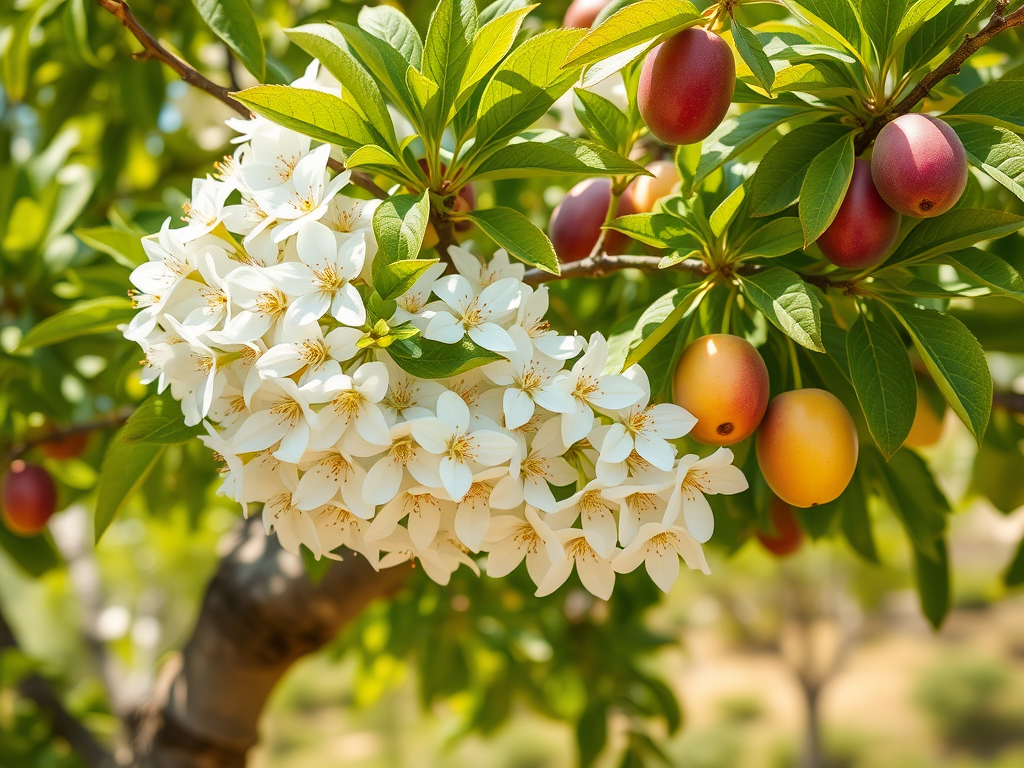
The Mexican Plum—Prunus mexicana—is a gem of North American flora with a story rooted in both botanical curiosity and cultural heritage 🌸.
🌿 Discovery & Classification
Discovered by: The species was formally described by botanist Sereno Watson in 1882, a prominent figure in American botany who worked extensively on the flora of North America.
How it was identified: Watson classified it based on its distinct morphology—single trunk, fragrant white flowers, and tart purple fruit—differentiating it from other native plums like Prunus americana.
Where it grows: Despite its name, Mexican Plum is more common in Texas than in Mexico. Its native range stretches from South Dakota to Georgia, and south into Coahuila and San Luis Potosí in Mexico.
🍇 Why It’s Special
Ecological role: It’s a larval host for Tiger Swallowtail and Cecropia moths, and its fruit is loved by birds and mammals.
Cultural use: Indigenous and settler communities have used the fruit for preserves, wine, and brandy, and it’s also valued as a drought-resistant rootstock for grafting cultivated plums.
Visual appeal: Its early-spring blossoms rival cherry trees, making it a favorite ornamental in landscapes across the South.
Mexican Plum (Prunus mexicana) is a treasure trove of utility, both culturally and ecologically. Here’s a deeper dive into its uses across food, landscaping, wildlife, and even fermentation 🍷🌳🦋
🍽️ Culinary Uses
- Fresh Eating: The fruit ripens from yellow to purple and is sweet-tart when fully ripe. It can be eaten raw, though it’s often better after softening.
- Preserves & Jams: A classic use—Mexican Plum makes rich, tangy jams and jellies that pair beautifully with cheeses or toast.
- Wine & Brandy: Foraging communities and homesteaders have long used the fruit to make homemade wine and brandy.
- Sourdough Starter: The fruit’s natural white coating contains wild yeast, which can be harvested to start sourdough bread.
🌿 Landscaping & Ornamental Value
- Accent Tree: Its fragrant white blossoms in early spring make it a stunning ornamental, especially in native gardens.
- Drought & Cold Tolerance: Ideal for xeriscaping and resilient landscapes. It thrives in USDA zones 5–9.
- Tight Spaces: Its upright, single-trunk growth makes it suitable for small yards or urban gardens.
🐦 Wildlife & Ecological Benefits
- Pollinator Magnet: Early blooms feed native bees, butterflies, and moths—including the Tiger Swallowtail and Cecropia moth.
- Bird & Mammal Food: Ripe fruit is a favorite among birds, raccoons, and other small mammals.
- Rootstock for Grafting: Its hardy nature makes it a preferred rootstock for cultivated plum varieties.
🌱 Foraging & Propagation
- Wild Harvesting: Found along woodland edges and prairies, it’s a favorite among ethical foragers.
- Propagation: Can be grown from seed (with stratification) or softwood cuttings taken in summer.
Mexican Plum (Prunus mexicana) is a forager’s delight—fragrant blooms, juicy fruit, and even wild yeast on the skin. Here’s a curated set of tips to help you ethically and effectively forage this native gem, with a nod to your ceremonial and visual storytelling goals
🌸 Seasonal Timing & Identification
- Bloom Watch: Flowers appear February–April before leaves emerge—look for fragrant white blossoms in loose clusters.
- Fruit Ripening: Plums shift from yellow to mauve to deep purple between July and September.
- Tree Traits: Single-trunked, non-suckering, with satiny blue-gray bark and horizontal striations. Grows 15–35 ft tall.
🫐 Foraging Best Practices
- Ripeness Test: Ripe fruit should be slightly soft, richly colored, and easily detached. Avoid green or overly firm plums.
- Wild Yeast Bonus: That white coating on the skin? It’s wild yeast—perfect for sourdough starters or fermentation rituals.
- Harvest Ethically: Take only what you’ll use. Leave plenty for wildlife—birds and mammals rely on these fruits.
- Avoid Thickets: Unlike other native plums, Mexican Plum doesn’t form dense thickets, so scout woodland edges or river bottoms.
🧪 Safety & Preparation
- Wash Gently: Rinse fruit lightly to preserve yeast if fermenting; otherwise, wash thoroughly before eating.
- Preserve Creatively: Ideal for jams, jellies, wine, brandy, or dried snacks. Consider ceremonial pairings with native herbs or honey.
- Allergen Note: As with all wild fruits, test in small amounts first—especially if using in public-facing recipes or products.
🍷 Mexican Plum Flavor Matrix
| Attribute | Profile |
|---|---|
| Primary Flavor | Tart-to-sweet gradient; starts sharp, mellows with ripeness |
| Undertones | Floral (honeysuckle), almond-like (from pit proximity), earthy |
| Texture | Juicy flesh with fibrous skin; clingstone pit |
| Aroma | Fragrant, slightly fermented when overripe; hints of wild yeast |
| Ripeness Spectrum | 💛 Yellow (tart) → 💜 Mauve (balanced) → 🖤 Deep Purple (sweet, winey) |
| Culinary Pairings | Native honey, mesquite smoke, hibiscus, cinnamon, wild mint |
| Ceremonial Use | Late summer harvest rituals, fermentation rites, ancestral jam-making |
| Fermentation Notes | Wild yeast on skin ideal for sourdough starters, plum wine, or vinegar base |
🌕 Ritual of the Wild Bloom & Ferment
Timing: Late February (blossom) and Late August (fruit harvest) Purpose: To honor renewal, pollinator cycles, and ancestral fermentation
🌸 Phase 1: Blossom Invocation
Timing: Late February to early April (flowering season) Setting: Woodland edge or prairie grove with blooming Mexican Plum trees
Ritual Elements:
- Offering: Scatter native wildflower seeds and pour spring water at the tree’s base
- Gesture: Tie biodegradable ribbons to branches with handwritten intentions for renewal
- Chant: “From blossom to fruit, may sweetness awaken in all things”
- Symbolism: White petals represent purity, pollination, and ancestral whispers
🍷 Phase 2: Ferment & Feast
Timing: Late July to September (fruiting season) Setting: Communal gathering space or kitchen garden
Ritual Elements:
- Harvest: Collect ripe plums with gratitude, leaving some for wildlife
- Fermentation: Begin a wild yeast starter using plum skins and spring water
- Ceremonial Dish: Prepare plum jam, wine, or vinegar infused with native honey and herbs
- Sharing: Serve with mesquite cakes or cornbread in a circle, honoring transformation
🔮 Symbolism
| Element | Meaning |
|---|---|
| Plum Pit | Hidden wisdom, ancestral memory |
| Wild Yeast | Transformation, microbial intelligence |
| Color Shift | Personal evolution (yellow → purple) |
| Single Trunk | Unity, rootedness, non-suckering lineage |
| Pollinator Host | Reciprocity, ecological stewardship |
🌿 Visual Storytelling
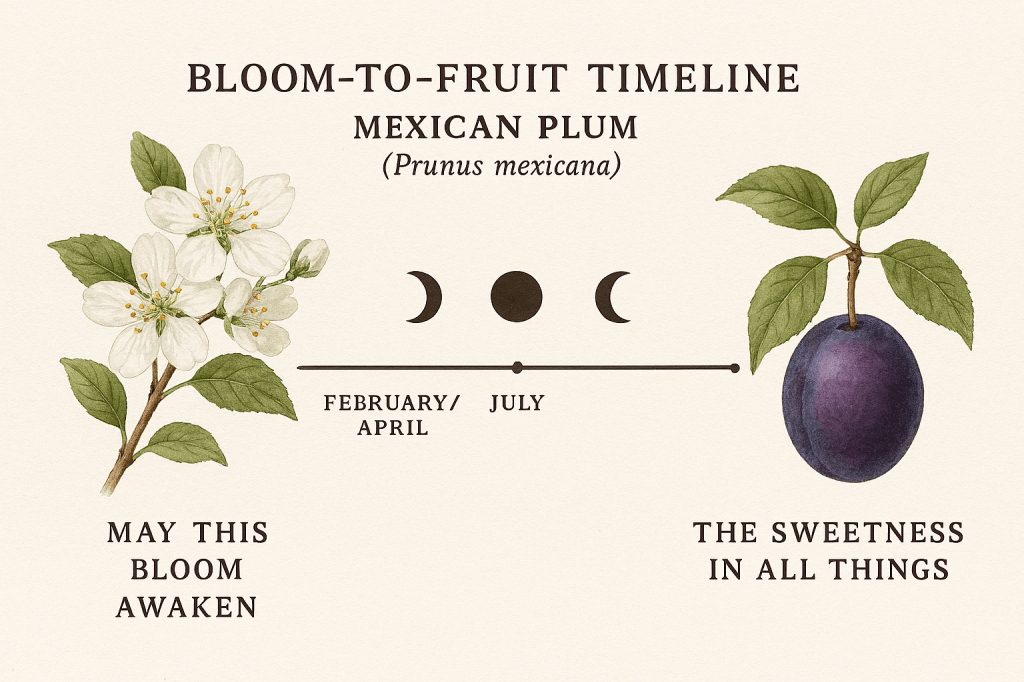
Flavor Matrix: Tart → Sweet gradient with notes of almond, floral, and earthy undertones.
Ceremonial Use: Pair with moon rituals or harvest festivals—especially in late summer when fruit is at peak.
🌕 Ceremonial Use of Mexican Plum
Theme: Transformation, ancestral sweetness, ecological reciprocity
🌸 Moon Ritual Pairings
Blossom Phase (Feb–Apr)
- Moon Phase: Waxing crescent or full moon
- Ritual:
- Tie intentions to blooming branches using biodegradable ribbons
- Offer spring water and native seeds at the tree’s base
- Whisper affirmations: “May this bloom awaken the sweetness of the season”
- Symbolism: Renewal, pollination, ancestral whispers
Fruit Phase (Jul–Sep)
- Moon Phase: Waning gibbous or new moon
- Ritual:
- Harvest ripe plums with gratitude, leaving some for wildlife
- Begin wild yeast fermentation (starter, wine, vinegar)
- Share plum-based dishes in a circle gathering
- Affirmation: “The sweetness in all things is revealed in time”
- Symbolism: Transformation, microbial wisdom, seasonal abundance
🍂 Harvest Festival Integration
- Dish Ideas:
- Plum jam with native honey and cinnamon
- Fermented plum vinegar paired with mesquite-roasted vegetables
- Plum wine served in ceremonial toast
- Decor:
- Use bloom-to-fruit timeline visuals with moon phase overlays
- Display plum pits as altar tokens of hidden wisdom
🍇 Mexican Plum: Vitamins & Nutrients Overview
| Nutrient | Amount (per medium plum) | Benefits |
|---|---|---|
| Vitamin C | ~6.3 mg | Antioxidant, collagen production, immune support |
| Vitamin A | ~11–227 IU | Eye health, skin renewal, immune function |
| Vitamin K | ~4.2 mcg | Blood clotting, bone metabolism |
| Potassium | ~103 mg | Heart health, fluid balance, muscle function |
| Fiber | ~0.9 g | Digestive health, satiety, gut microbiome support |
| Copper & Manganese | Trace amounts | Enzyme function, antioxidant defense |
| Antioxidants | High in anthocyanins | DNA protection, anti-inflammatory, anti-aging3 |
| Sorbitol | Naturally occurring sugar alcohol | Gentle laxative effect, digestive aid |
🍇 Nutritional & Health Benefits
Mexican Plums share many properties with their cultivated cousins, offering:
- Antioxidants: Rich in polyphenols and anthocyanins, which help fight oxidative stress and may reduce the risk of chronic diseases like heart disease and certain cancers.
- Vitamin C & A: Supports immune function, collagen production, and eye health.
- Dietary Fiber: Promotes healthy digestion and may ease constipation—especially when consumed with the skin.
- Bone Health: Studies on dried plums (prunes) show improved bone density and reduced bone loss, particularly in postmenopausal women.
- Heart Protection: Potassium and soluble fiber help regulate blood pressure and cholesterol levels.
- Low Glycemic Index: Makes them a smart choice for blood sugar management.
🌿 Ecological & Cultural Benefits
- Pollinator Magnet: Early spring blooms feed native bees and butterflies, supporting local ecosystems.
- Wild Yeast Coating: The fruit’s natural bloom can be used to start sourdough—an ancient fermentation ritual.
- Ceremonial Use: In some regions, wild plums are used in seasonal jams and ancestral offerings, linking food to memory and meaning.
⚠️ Quick Reminder Always remove the pit, wash thoroughly, and introduce slowly—especially in community or ceremonial settings. And for those with stone fruit allergies or sensitivities, consult a healthcare provider before indulging.
🌿 Bonus Benefits
- Low Glycemic Load: Gentle on blood sugar—ideal for balanced energy
- Wild Yeast on Skin: Supports fermentation and gut health rituals
- Anti-Inflammatory Potential: Linked to compounds like resveratrol and catechins in some plum species @ www.verywellfit.com
🍯 Plum Jam with Native Honey & Cinnamon
Yield: ~3 cups | Prep Time: 15 min | Cook Time: 30–40 min Ceremonial Pairing: Late summer moon rituals, ancestral feasts, fermentation rites
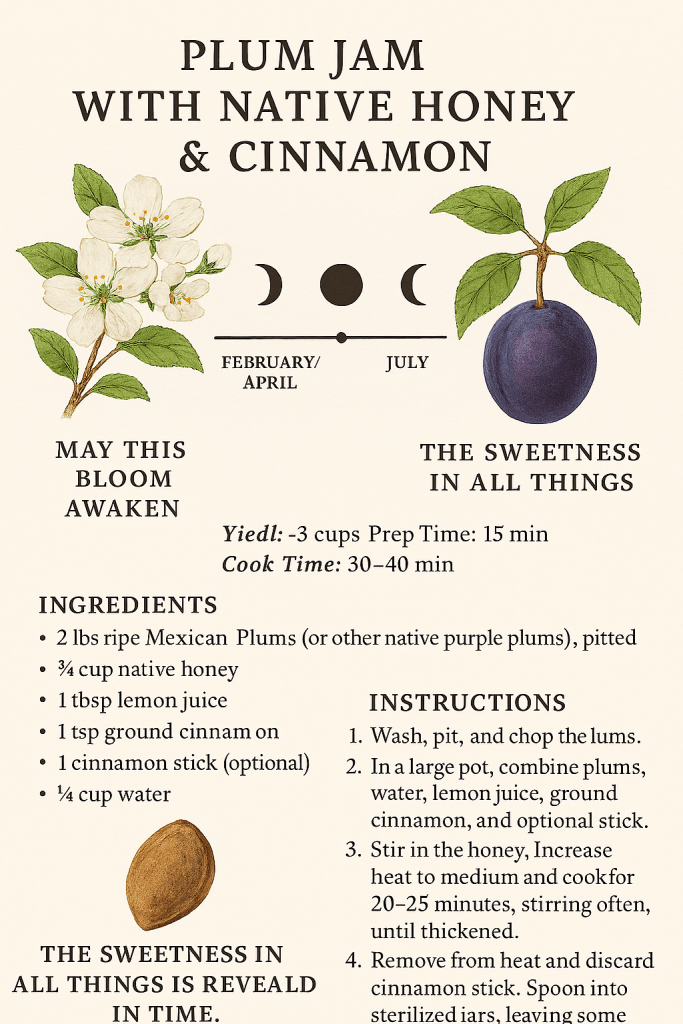
Ritual Notes:Affirmation While Stirring: “The sweetness in all things is revealed in time.”
Serving Suggestion: Pair with mesquite cakes, cornbread, or fermented nut cheese
⚠️ Who Should Avoid Mexican Plum?
While the fruit is edible and often made into jams, jellies, and even wild yeast sourdough starters, a few groups should exercise caution:
- Individuals with Rosaceae Allergies: Mexican Plum belongs to the rose family. Those allergic to apples, cherries, peaches, or almonds may experience cross-reactivity.
- People Sensitive to Stone Fruit Pits: Like other plums, the pit contains amygdalin, which can release cyanide in large quantities. Never consume the pit.
- Children Under 2: Due to potential choking hazards and immature digestive systems, whole fruit or skins may be unsuitable.
- Wild Foragers: Always positively identify the tree before consuming. Some wild plums or lookalikes may be bitter or mildly toxic.
- Fermentation Enthusiasts: If using the wild yeast coating for sourdough, ensure proper fermentation protocols to avoid contamination.
 EJADA
EJADA 
Leave a comment