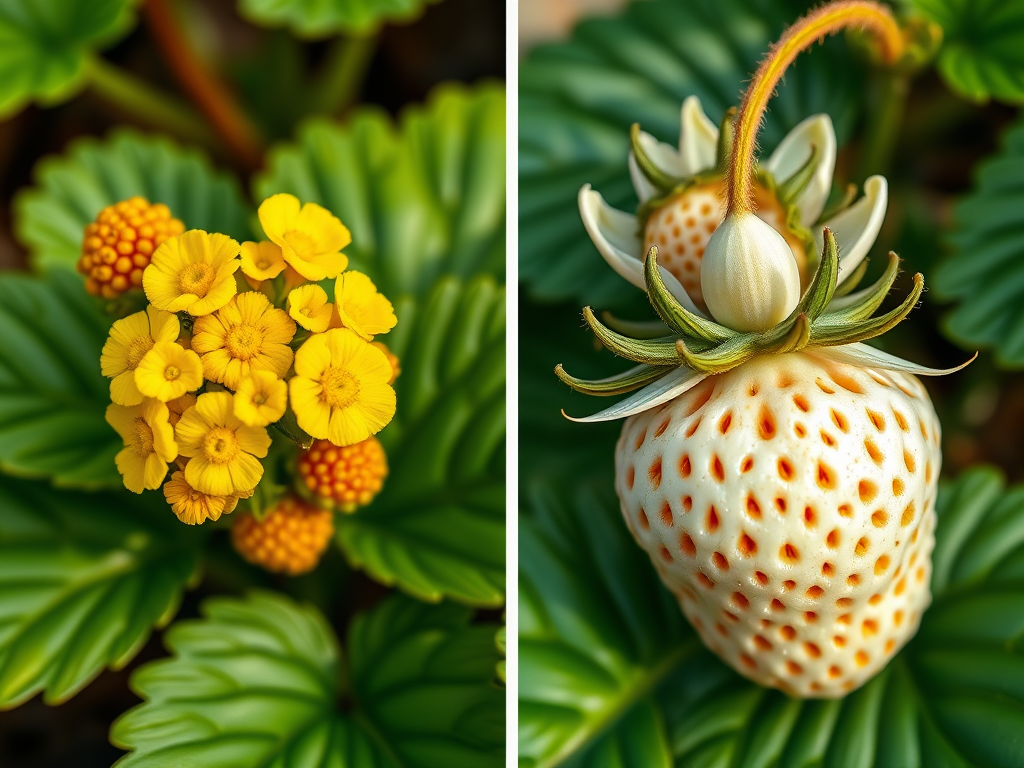
Mock strawberry (Potentilla indica, formerly Duchesnea indica) has its roots in the Indian subcontinent, where it grew natively and was later cultivated as an ornamental ground cover due to its bright yellow flowers and dense creeping habit.
It wasn’t cultivated for food—its berries are bland—but it was valued for aesthetics and soil coverage. The plant was introduced to the United States and other regions in the late 19th to early 20th century, primarily through botanical gardens and landscaping efforts.
The exact individual or institution responsible for its first formal cultivation isn’t clearly documented, but its spread aligns with colonial-era botanical exchanges and the rise of ornamental horticulture.
true strawberries and mock strawberries differ, both botanically and experientially:
🍓 True Strawberry (Fragaria spp.)
- Flower Color: White or pale pink petals
- Growth Habit: Fruits droop downward, often hidden beneath leaves
- Texture: Smooth surface with embedded seeds
- Flavor: Sweet, juicy, aromatic—classic strawberry taste
- Edibility: Highly edible and beloved worldwide
- Cultural Use: Widely cultivated, used in rituals, desserts, and herbal remedies
🍓 Mock Strawberry (Duchesnea indica or Potentilla indica)
- Flower Color: Bright yellow petals
- Growth Habit: Fruits grow upright, more visible above leaves
- Texture: Bumpy surface with protruding seeds
- Flavor: Bland, watery, sometimes slightly bitter—lacks sweetness
- Edibility: Technically edible but not flavorful; considered a harmless weed
- Cultural Use: Rarely used in cuisine or ceremony; more of a curiosity in foraging
Crush Test: True strawberries release a strong fruity aroma; mock strawberries smell faint or watery
Shape & Shine: True strawberries are conical and glossy; mock strawberries are rounder and duller
🍓 The mock strawberry (Potentilla indica)** contains a modest array of nutrients, making it edible but not exactly a superfruit.
🧬 Nutritional Snapshot (per 100g of fruit)
| Nutrient | Amount |
|---|---|
| Calories | ~57 kcal |
| Water | ~162.7 g |
| Protein | ~1.2 g |
| Sugar | ~8.7 g |
| Dietary Fiber | ~3.6 g |
| Vitamin C | ~105 mg |
| Vitamin A | ~21 IU |
| Calcium | ~29 mg |
| Iron | ~732 mcg |
| Potassium | ~273 mg |
| Omega-3 Fatty Acids | ~116 mg |
| Omega-6 Fatty Acids | ~161 mg |
🌿 Medicinal & Culinary Notes
- Leaves: Traditionally used in poultices for skin conditions like eczema, burns, and insect bites.
- Fruit: Edible but bland; sometimes used in teas, smoothies, or mixed into jams with stronger flavors.
- Antioxidants: Contains flavonoids and phytosterols, offering mild anti-inflammatory benefits.
⚠️ Taste & Allergen Disclaimer
- Flavor: Often described as watery, bitter, or cucumber-like—not sweet or juicy.
- Allergy Risk: Rare, but as with any wild edible, reactions are possible. Always test cautiously and avoid overharvesting.
Mock strawberry (Potentilla indica, formerly Duchesnea indica) may be bland in flavor, but it’s surprisingly rich in folk medicinal uses—especially in traditional Asian herbal practices 🌿. Here’s a curated overview of its healing potential:
🩺 Medicinal Uses of Mock Strawberry
| Use | Application |
|---|---|
| Antiseptic & Antimicrobial | Crushed leaves used topically to clean wounds and prevent infection2 |
| Astringent | Helps tighten skin and reduce inflammation; used for acne and eczema |
| Febrifuge | Traditionally used to reduce fever when brewed as a mild tea |
| Wound Healing | Contains tannins and vitamin C that support collagen production |
| Digestive Aid | Mild decoctions used to soothe gastrointestinal discomfort |
| Depurative (Blood Cleanser) | Used in traditional medicine to purify the blood and detoxify the body |
🍃 Common Preparations
- Infusion/Tea: Dried leaves steeped in hot water for internal cleansing or fever relief
- Topical Wash: Leaf decoction used as a skin rinse for acne or irritation
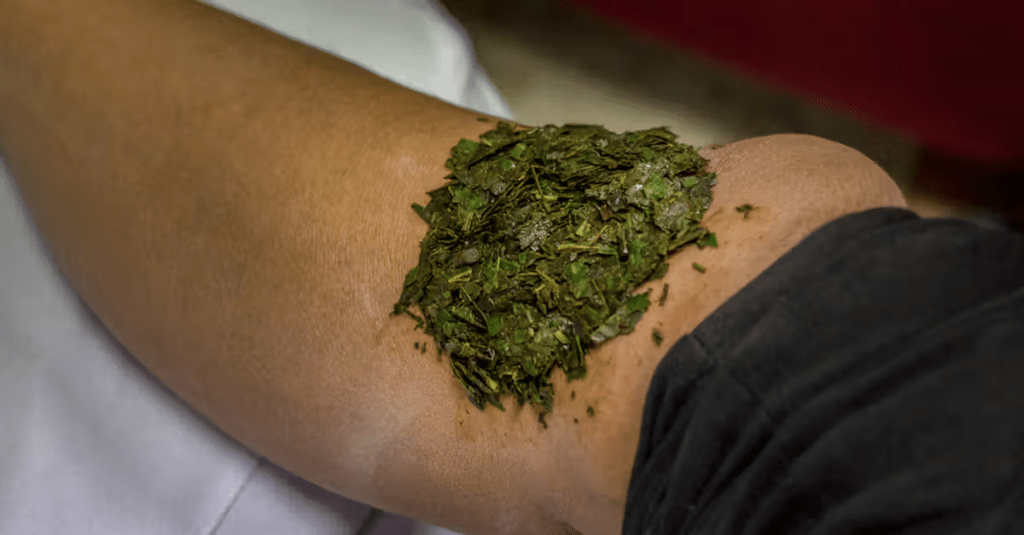
Poultice: Fresh leaves crushed and applied to insect bites, burns, or rashes. Poultice Benefits@ Healthline
🍃 Mock Strawberry Poultice Ritual Card
“The Humble Healer: Mock Strawberry Leaf Poultice”
🌿 Ingredients:
- 5–7 fresh mock strawberry leaves (washed)
- 1 tsp coconut oil or aloe vera gel
- Optional: pinch of turmeric or grated ginger for added anti-inflammatory effect
🛠️ Instructions:
- Crush the leaves into a paste using a mortar and pestle or spoon.
- Blend with coconut oil or aloe vera until smooth.
- Warm slightly (not hot!) for better absorption.
- Apply to clean cloth or cheesecloth and place on affected area.
- Leave for 15–20 minutes. Repeat 2–3 times daily.
🧘♀️ Ritual Notes:
- Best used during waning moon for detox rituals.
- Pair with calming teas like chamomile or tulsi for full-body healing.
⚠️ Disclaimer:
For external use only. Patch test before applying. Avoid open wounds. Consult a healthcare provider if symptoms persist.
⚠️ Safety & Allergen Disclaimer
- Moderation is key: Contains tannins, which can be toxic in excess
- Allergic reactions: Rare, but possible—always patch test before topical use
- Consultation: Always check with a healthcare provider before internal use, especially if pregnant or on medication
 EJADA
EJADA 
Leave a comment