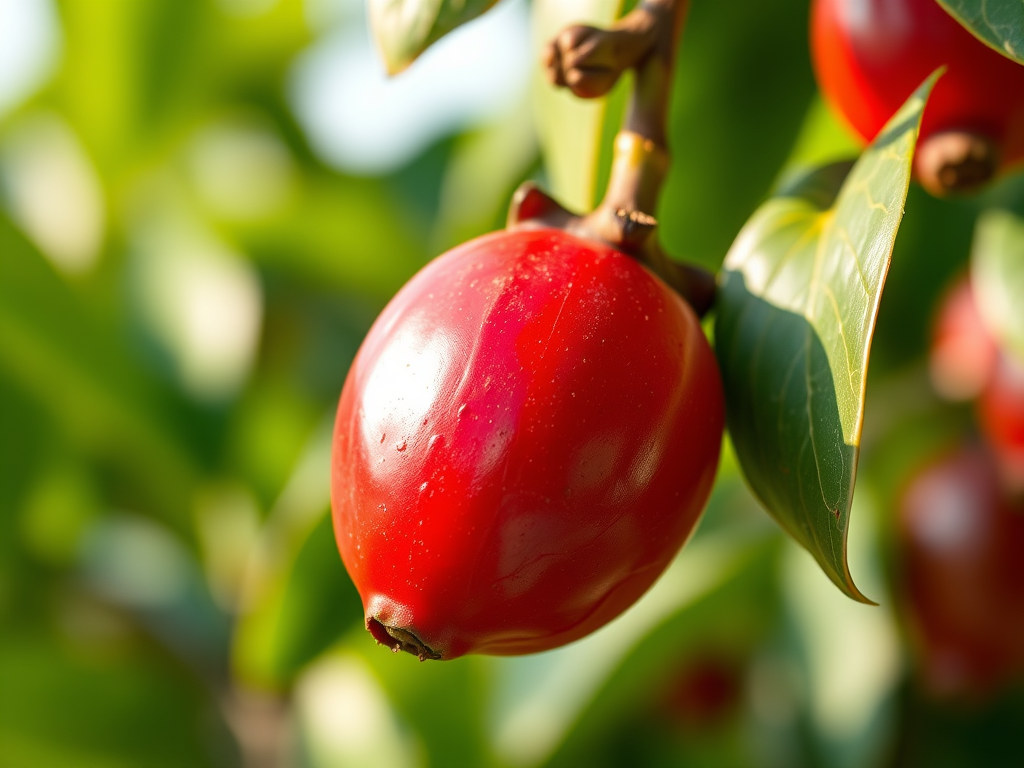
What is a Miracle to You? Is it a moment of divine timing? A healing that defies logic? Or perhaps… a fruit so potent it flips your taste buds upside down?
Meet the Miracle Fruit—a small, ruby-red berry with a superpower: it makes sour taste sweet. Lemons become candy. Vinegar turns velvety. And your palate? Transformed.
But this isn’t just a party trick. In West African traditions, the Miracle Fruit (Synsepalum dulcificum) has long been revered, not just for its taste-altering magic, but for its role in rituals of renewal, healing, and communal celebration. It’s a fruit that invites us to reimagine bitterness, to find sweetness in unexpected places.
So maybe the real miracle isn’t just the fruit itself… It’s the reminder that transformation is possible. That perception can shift. That nature holds secrets we’re only beginning to understand
The Miracle Fruit (Synsepalum dulcificum) has deep roots in West African tradition, where it’s been consumed for centuries, especially by the Yoruba people and other indigenous communities in regions like Ghana, Nigeria, and Cameroon.
While exact cultivation dates are hard to pin down, the earliest recorded Western encounter was in 1725, when French cartographer Chevalier des Marchais observed locals chewing the berries before meals to sweeten sour flavors.
So, while formal cultivation may have expanded globally in recent decades, its traditional use and harvesting go back much further woven into rituals, meals, and cultural practices long before it caught the attention of scientists and chefs.
🍒 The Journey of Miracle Fruit: From Ritual to Global Curiosity
| Era | Milestone | Cultural Significance |
|---|---|---|
| Pre-18th Century | Indigenous use in West Africa | Consumed before sour foods; used in rituals of healing, renewal, and communal bonding |
| 1725 | Documented by Chevalier des Marchais | French explorer notes its taste-altering effects in coastal West African communities |
| Mid-20th Century | Scientific isolation of miraculin | Researchers identify the glycoprotein responsible for taste modification |
| 1970s | FDA blocks commercial sweetener use | U.S. interest peaks, but regulatory hurdles stall miraculin’s entry into mainstream markets |
| 2000s–Present | Culinary and wellness resurgence | Used in “flavor-tripping” parties, diabetes research, and natural sweetener experiments |
| Today | Reclaimed in cultural storytelling | Celebrated for its ritual roots, ecological resilience, and sensory wonder in healthy living narratives |
🧬 Nutritional Snapshot: Miracle Fruit (per berry)
| Nutrient | Amount | % Daily Value |
|---|---|---|
| Calories | ~1–4 | Negligible |
| Total Fat | 0g | 0% |
| Carbohydrates | ~0.9g | 0% |
| Sugars | ~0.6g | — |
| Dietary Fiber | ~0.2g | 1% |
| Protein | ~0.1g | — |
| Potassium | ~18mg | 0% |
| Sodium | ~0.1mg | 0% |
| Vitamins | C, A, E | Trace amounts |
| Amino Acids | Leucine (notable) | Supports muscle synthesis |
🌿 Bonus Benefits
- Miraculin: A glycoprotein that binds to taste receptors and temporarily alters sour flavors to sweet—without adding sugar.
- Antioxidants: Contains phenolic compounds that help neutralize free radicals. @ Healthline
- Weight-Friendly: With virtually no calories or fat, it’s a natural ally for sugar-free diets. @ Healthline
🎭 Flavor Flip: The Miracle Fruit’s Sweet Trickery
One berry. One bite. And suddenly, sour becomes sensational.
| 🍽️ Food | 😖 Before | 😲 After Miracle Fruit | 🌈 Flavor Notes |
|---|---|---|---|
| Lemon slice | Sharp, acidic | Sweet like lemonade | Bright citrus candy |
| Apple cider vinegar | Harsh, puckering | Smooth and mellow | Like honeyed kombucha |
| Grapefruit | Bitter, tangy | Juicy and sugary | Tropical punch vibes |
| Goat cheese | Tart, earthy | Creamy and dessert-like | Cheesecake illusion |
| Pickles | Salty, sour | Sweet gherkin | Sweet-and-sour fusion |
| Sour cream | Tangy, rich | Sweet whipped cream | Dessert-ready swirl |
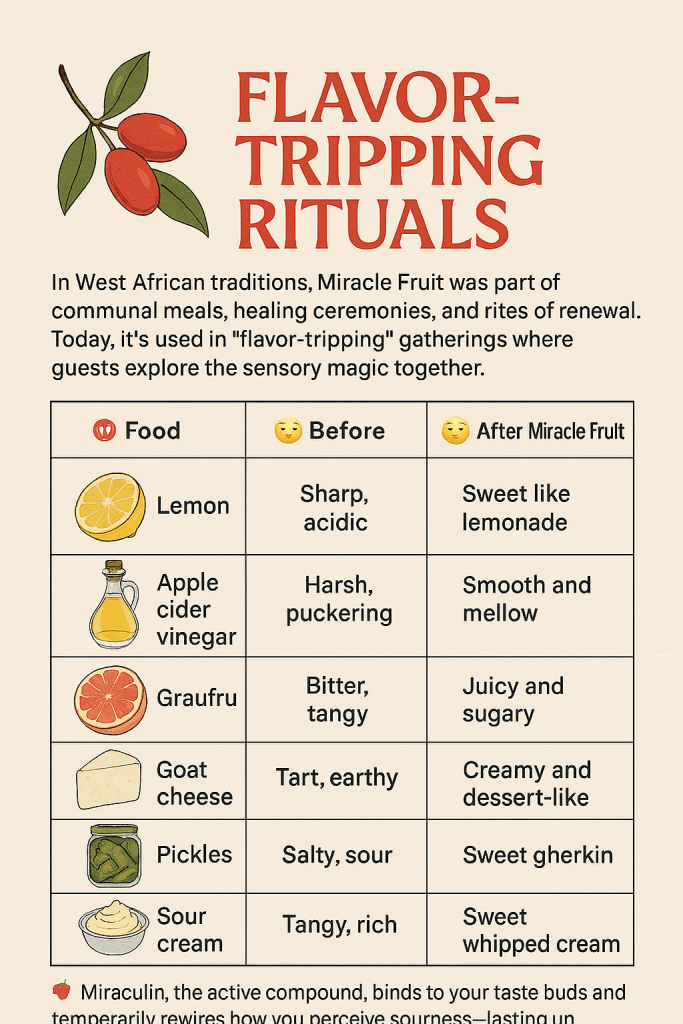
🍓 Miraculin, the active compound, binds to your taste buds and temporarily rewires how you perceive sourness—lasting up to 30–60 minutes.
🍷 Sweet Awakening Elixir: A Miracle Fruit Ritual Recipe
🌿 Purpose:
To transform perception, honor ancestral wisdom, and invite sweetness into sour moments—both literal and symbolic.
🧺 Ingredients
- 1 Miracle Fruit berry (fresh or freeze-dried)
- 1 slice of lemon
- 1 tablespoon apple cider vinegar
- 1 sprig of mint
- 1 cup warm herbal tea (hibiscus or lemongrass preferred)
- Optional: edible flower garnish (e.g., nasturtium or marigold)
🔮 Ritual Steps
- Prepare Your Space Light a candle or burn a sprig of rosemary. Set an intention—transformation, clarity, sweetness in adversity.
- Taste the Sour Take a small sip of the vinegar and a nibble of lemon. Reflect on bitterness, challenge, or discomfort.
- Consume the Miracle Fruit Slowly chew the berry, letting it coat your tongue. Close your eyes and breathe deeply.
- Revisit the Sour Taste the lemon and vinegar again. Notice the sweetness. Let it symbolize your shift in perception.
- Sip the Elixir Stir mint into your warm herbal tea. Sip slowly. Reflect on the miracle of change.
- Close the Ritual Speak a word of gratitude. Journal your reflections or share with others in a communal setting.
⚠️ Disclaimers
- Not recommended for those with berry allergies or histamine sensitivities.
- Always source Miracle Fruit ethically and sustainably.
- This ritual is symbolic and not a substitute for medical or spiritual guidance.
🌿 Beyond the Sweetness: Health Benefits of Miracle Fruit
🧬 1. Blood Sugar Regulation
- Miraculin may help increase insulin sensitivity and production.
- Animal studies suggest it could outperform metformin in managing diabetes symptoms.
- Used traditionally in Nigeria and Benin to help treat diabetes and weight issues.
🛡️ 2. Antioxidant Power
- Rich in flavonoids, terpenoids, and episyringaresinol—compounds that fight free radicals and may slow aging.
- Potential to reduce the spread of malignant cells, especially in colorectal cancer (based on lab studies).
💪 3. Immune and Metabolic Support
- May reduce metabolic stress linked to obesity, cancer, and metabolic syndrome.
- Used in traditional medicine to treat asthma, hyperthermia, and male infertility.
💥 4. Gout and Uric Acid Management
- Extracts may lower uric acid levels more effectively than allopurinol, without toxic side effects (in animal studies).
🧠 5. Neurological Benefits
- Seed extracts show anticonvulsant potential—reducing recovery time after seizures in controlled studies.
👶 6. Postnatal and Reproductive Care
- Leaves used in postnatal care in Tanzania and Malaysia.
- Bark and roots used to support sexual health and treat prostate conditions.
⚠️ Safety Notes
- May lower blood sugar—caution for those on diabetes medications.
- Rare allergic reactions reported; avoid if sensitive to berries, latex, or peanuts.
- Not yet FDA-approved as a food additive in the U.S.
🛒 Where to Buy Miracle Fruit
🌱 Boutique Growers
- Ethan’s Garden offers fresh berries, seeds, and plants grown in the U.S. for both retail and wholesale customers.
🧊 Online Retailers
- Amazon stocks mberry Miracle Fruit Tablets, freeze-dried berries, and travel packs—great for flavor-tripping parties or on-the-go use.
- Walmart carries freeze-dried Miracle Berry halves and tablets from brands like Richberry and Nature’s Wild Berry.
🛍️ Specialty Stores & Farmers Markets
- Some local health food stores and international markets may carry miracle fruit products, especially in areas with tropical or wellness-focused communities.
📦 Availabilty
| Format | Best For | Shelf Life |
|---|---|---|
| Fresh berries | Ritual recipes, full experience | Short (days) |
| Freeze-dried halves | Long-term storage, travel | Months |
| Tablets | Affordable, easy dosing | Months |

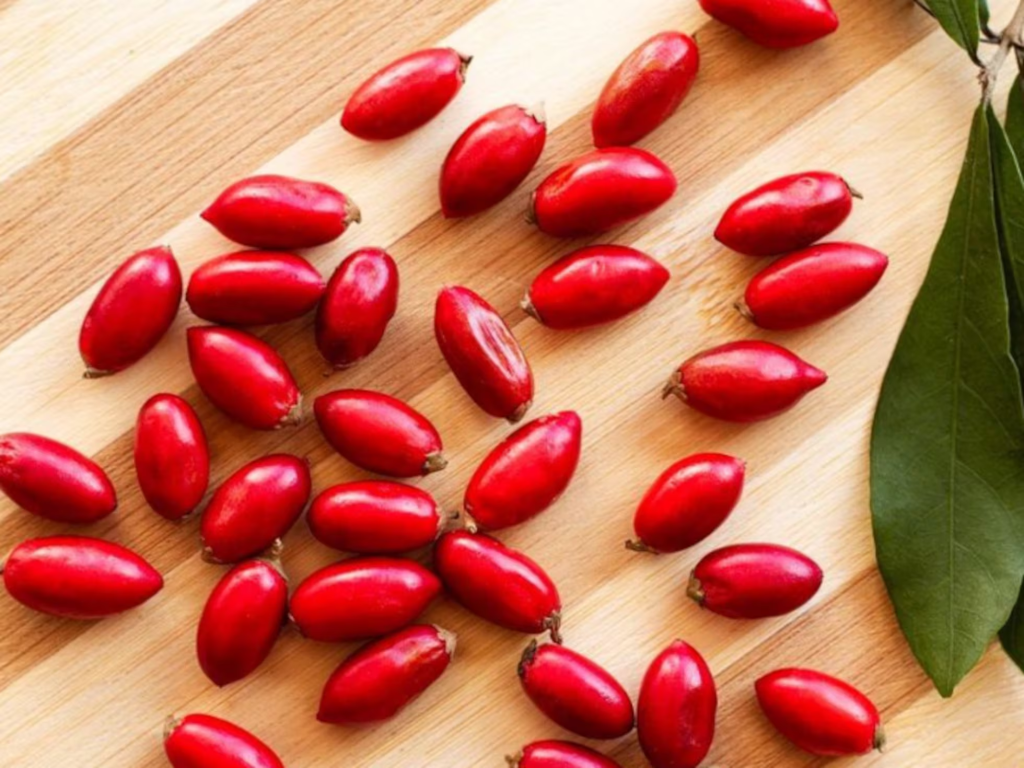
Zafru, the ‘miracle fruit’ that turns sour into sweet
🌟 Now That You Know… Go Out and Get Your Miracle Today
Whether you’re seeking sweetness in sour moments, exploring ancestral rituals, or simply curious about nature’s most mind-bending berry—Miracle Fruit invites you to taste transformation.
From West African ceremonies to modern flavor-tripping parties, this tiny fruit carries centuries of wisdom and a future full of possibility. It’s not just a novelty—it’s a reminder that perception can shift, healing can be delicious, and miracles might just grow on trees.
So go ahead. Chew the berry. Flip the flavor. And let sweetness surprise you.
 EJADA
EJADA 
Leave a comment