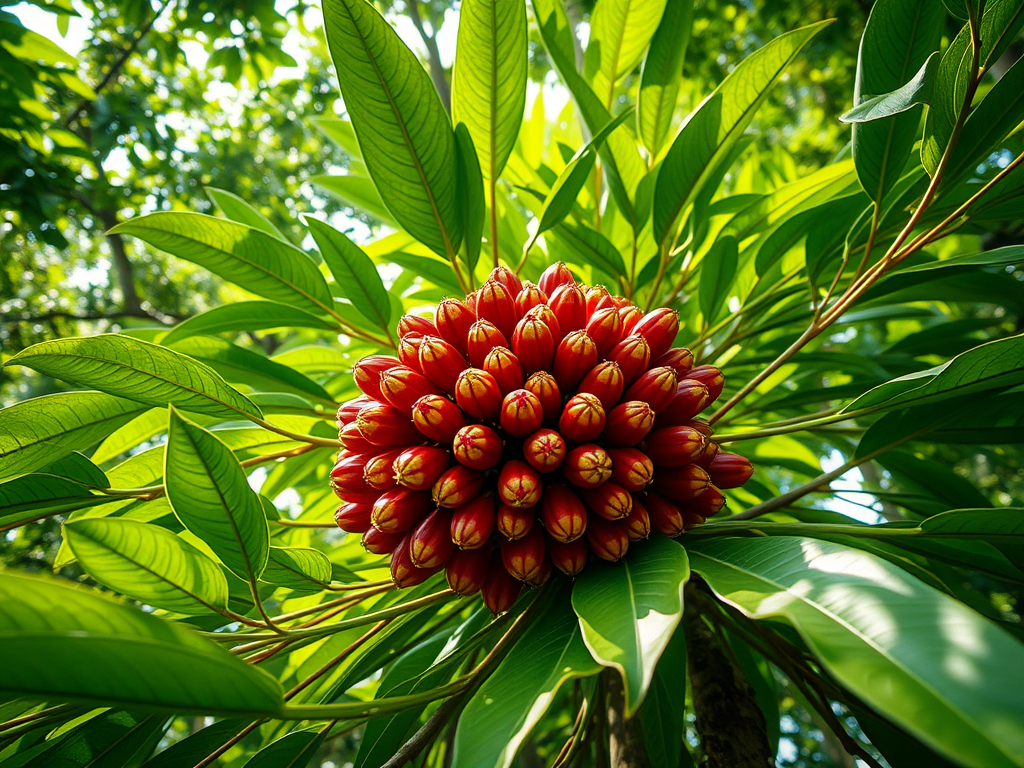
🌿 What Is Melinjo?
Melinjo (Gnetum gnemon) produces false fruits, which are technically gymnosperm strobili, not true botanical fruits.
Melinjo, scientifically known as Gnetum gnemon, is a tropical evergreen tree belonging to the Gnetaceae family.
Despite its gymnosperm classification, it often resembles flowering plants due to its fruit-like strobili and broad leaves.
🧬 Who Named It
- The binomial name Gnetum gnemon was assigned by Carl Linnaeus, the father of modern taxonomy.
- The name “Melinjo” is the Indonesian common name, also known as:
- Belinjo (Indonesia)
- Bago (Philippines)
- Meninjau (Malaysia)
- Voë khlaèt (Cambodia)
- Peesae (Thailand)
📍 Where It Grows
- Native to Southeast Asia, especially:
- Assam and Mizoram (India)
- Peninsular Malaysia
- Indonesia (especially Java and Sumatra)
- Philippines
- Vietnam, Cambodia, Thailand
- Pacific Islands like Fiji, Papua New Guinea, and Vanuatu
- Grown in:
- Home gardens
- Mixed orchards
- Field borders
- As a pure crop in regions like Batang, Central Java
🌱 First Cultivation & Cultural Roots
- Cultivated for centuries in Indonesia, particularly in the Yogyakarta Kingdom, where it was grown in high concentrations.
- The tree is deeply embedded in Indonesian agroforestry and culinary traditions.
- Used in dishes like sayur asem and emping (crispy chips made from its seeds).
🔍 Botanical Classification
- Type: Gymnosperm reproductive structure (not a true fruit like apples or mangoes)
- Structure: The red or yellow “fruit” is actually a fleshy seed-bearing strobilus
- Seeds: Large, nut-like seeds inside the fleshy outer layer are the main edible part
🥣 Culinary Identity
- Treated as a fruit in Southeast Asian cuisine
- Used in:
- Emping (crispy chips from seeds)
- Soups and stews (young leaves and fruit)
- Fermented dishes
🌍 Melinjo Beyond Southeast Asia: Global Uses & Adaptations
While Melinjo (Gnetum gnemon) is deeply rooted in Southeast Asian culinary and cultural traditions, its reach and applications have quietly expanded into other regions—especially through diaspora communities, health research, and specialty markets.
🍽️ Culinary Uses Outside Southeast Asia
- Asian Supermarkets Worldwide: Emping (crispy chips made from Melinjo seeds) are stocked in well-supplied Asian grocery stores across Europe, North America, and Australia.
- Diaspora Cuisine: Indonesian and Filipino communities abroad continue to use Melinjo leaves and seeds in traditional dishes like sayur asem, kuah pliek, and lodeh curries.
- Fusion Cooking: Chefs experimenting with bitter, nutty flavors have begun incorporating Melinjo seeds into:
- Nutty crusts for meats
- Bitter accents in vegan broths
- Fermented condiments
🧪 Medicinal & Nutraceutical Research
- Japan & U.S.: Melinjo seed extract (MSE) is studied for its ability to boost adiponectin—a hormone linked to improved metabolism and reduced inflammation.
- Traditional Remedies: In rural India and Papua New Guinea, Melinjo sap and leaves are used to treat eye ailments, anemia, and even dog bites.
📄 Industrial & Environmental Uses
- Paper Production: In some regions, the fibrous parts of the Melinjo tree are explored for sustainable paper alternatives.
- Agroforestry: Outside Southeast Asia, Melinjo is planted for shade and soil stabilization in tropical agroforestry systems.
🌿 Cultural & Ceremonial Significance
- Northeast India (Karbi Tribe): Melinjo is part of origin myths and used in celebratory dishes during life events.
- Pacific Islands: Though less documented, Melinjo appears in traditional food systems in Fiji, Vanuatu, and Papua New Guinea.
- Aceh, Indonesia: Young Melinjo leaves are central to kuah pliek, a traditional curry served during keureudja and khanduri—rituals marking life transitions and communal blessings.
- Karbi Tribe, Northeastern India: The Karbis refer to themselves as “children of Hanthu and Mehek,” with Hanthu meaning Melinjo. This positions the plant as a mythic ancestor and spiritual symbol.
- Yogyakarta Kingdom: Historically cultivated in high concentrations, Melinjo was associated with longevity and vitality. Locals in Yogyakarta reportedly have a longer life expectancy, partly attributed to Melinjo’s regular consumption.
🍽️ Culinary Identity
- Emping Crackers: Melinjo seeds are smashed and sun-dried to make emping, a bitter, nutty cracker often served during ceremonies and festive meals. It’s not just a snack—it’s a cultural artifact.
- Traditional Dishes: The leaves and male strobili (often mistaken for flowers) are used in soups, stews, and stir-fries across Indonesia, Malaysia, and the Philippines.
🌱 Ecological & Symbolic Role
- Dioecious Tree: With separate male and female reproductive organs, Melinjo reflects balance and duality—an ideal metaphor for ritual and renewal.
- Agroforestry Staple: In rural villages, Melinjo trees provide shade and resilience during tropical heat, symbolizing protection and endurance.
🧬 Health & Ancestral Wisdom
- Rich in antioxidants, resveratrol, and minerals like manganese and iron, Melinjo is seen as a “vital plant” in Indonesian agroforestry and traditional medicine.
- Its bitter taste is culturally embraced as a cleansing agent—both physically and spiritually.
🌿 Melinjo in Ceremonial Roles: A Bitter Seed with Sacred Roots
Melinjo (Gnetum gnemon) isn’t just a culinary staple—it carries ceremonial weight in several cultures, especially in Indonesia and parts of Northeastern India. Its bitter flavor and resilient nature often symbolize endurance, humility, and ancestral connection.
🎎 Aceh, Indonesia: Ritual Curries & Communal Feasts
- Kuah Pliek: A deeply symbolic vegetable curry made with young Melinjo leaves, coconut, and fermented ingredients. It’s served during:
- Keureudja: A rite of passage for young men
- Khanduri: Communal feasts honoring ancestors or marking religious milestones
- Melinjo’s inclusion reflects both its nutritional value and its role in sustaining tradition through food.
🪶 Karbi Tribe, Northeastern India
- Known locally as hanthu, Melinjo is used in celebratory dishes during life events such as births, weddings, and harvest festivals.
- The bitter seed is often paired with sweet or fermented elements to represent balance—joy and hardship, youth and age.
🔥 Symbolism in Rituals
- Bitterness as Purification: In several cultures, bitter foods like Melinjo are believed to cleanse the body and spirit, making them ideal for pre-ceremony meals.
- Resilience & Ancestry: The tree’s hardiness and deep roots make it a metaphor for ancestral strength and continuity.

Forest Altar Scene—Melinjo leaves encircling offerings, beeswax candles flickering in filtered forest light. T
🕊️ Ceremonial Recipe Card: Kuah Pliek (Acehnese Ritual Curry)
🌿 Cultural Context
Served during communal feasts like Khanduri and Keureudja, Kuah Pliek is a sacred dish symbolizing humility, ancestral connection, and ecological abundance.
🍲 Ingredients (Ritual-Grade)
- 1 cup young Melinjo leaves (symbol of endurance)
- ½ cup grated old coconut (pliek u – fermented, sacred element)
- 1 cup mixed native vegetables (banana blossom, cassava leaves, long beans)
- 2 tbsp ground turmeric (purification)
- 1 tbsp chili paste (spiritual fire)
- 3 cloves garlic, crushed
- 1 shallot, sliced
- Salt to taste
- 4 cups water
🔥 Ceremonial Preparation
- Invocation: Begin with a moment of silence or ancestral acknowledgment.
- Base Broth: Boil water with turmeric, garlic, and shallots until aromatic.
- Pliek U Infusion: Stir in fermented coconut and simmer—this represents the “soul” of the dish.
- Vegetable Offering: Add Melinjo leaves and native vegetables. Simmer until tender.
- Final Blessing: Season with salt and chili paste. Serve warm in communal bowls.
🧘 Ritual Notes
Traditionally eaten with hands, seated in a circle.
Often paired with rice cones (tumpeng) and bitter crackers (emping) to complete the ceremonial flavor arc.
Bitter elements like Melinjo are believed to cleanse and ground the spirit.
⚠️ Disclaimers
🌿 Allergen Alert: Melinjo may trigger gout in sensitive individuals due to purine content.
🧭 Cultural Respect: This recipe honors Acehnese traditions—please adapt mindfully.
🌱 Unique Traits
| Feature | Description |
|---|---|
| Botanical Type | Gymnosperm strobilus |
| Edible Parts | Seeds, young leaves, and fleshy outer layer |
| Flavor Profile | Slightly bitter, nutty, earthy |
| Common Uses | Chips, soups, pickles, ceremonial dishes |
Melinjo fruit is a powerhouse of nutrition and traditional medicinal value, especially when you look beyond the seed and explore the whole plant.
🧬 Nutritional Profile (per 100g of Melinjo fruit)
| Nutrient | Amount |
|---|---|
| Protein | 11.8 g |
| Carbohydrates | 70.6 g |
| Lipids (Fat) | 2.4 g |
| Moisture | 9.1 g |
| Ash | 2.2 g |
| Energy | 351 kcal |
| Polyphenols | 0.1–1.0 g (Resveratrol) |
🌿 Medicinal & Functional Benefits
Antioxidant-Rich: Contains resveratrol-like polyphenols, offering antioxidant activity comparable to vitamin C.
Anti-Aging & Cardiovascular Support: Protein and polyphenols help neutralize free radicals linked to hypertension, high cholesterol, and vascular inflammation.
Anti-Inflammatory & Antibacterial: Traditionally used to treat dog bites, stomachaches, and fevers; believed to have antimicrobial properties.
Stamina Booster: Commonly consumed in Indonesian cuisine to enhance energy and endurance.
Anemia Support: Historically used in herbal blends to combat iron deficiency and fatigue.
Environmental Bonus: The fruit’s fibers are used in natural fertilizers and paper-making, promoting ecological sustainability.
🌿 Melinjo Plant Benefits Comparison
Source indices: FruitsInfo
| Part | Nutritional Highlights | Medicinal Benefits | Culinary Uses |
|---|---|---|---|
| Seed | High in protein, antioxidants, and energy | Anti-aging, stamina boost, supports cardiovascular health | Chips (emping), tempeh, sauces |
| Fruit | Rich in polyphenols (resveratrol), carbs | Anti-inflammatory, antibacterial, supports anemia and detoxification | Sambal, sweet-sour soups, dipping sauces |
| Leaf | Mild taste, fiber, trace minerals | Used in teas for coughs, colds; believed to aid digestion and immunity | Cooked as vegetable, added to salads |
🌀 Symbolic & Ritual Notes
- Seed: Often represents endurance and strength in ancestral offerings.
- Fruit: Associated with vitality and seasonal cleansing.
- Leaf: Used in healing rituals and herbal infusions.

Natural mystics: during the ayahuasca ceremony, women from the Huni Kuin tribe sing icaros, ancient incantations to beckon the spirits of the jungle
🌱 Children of the Forest:
Melinjo’s Mythic Lineage and Ecological Reverence Among the Karbi people of Northeastern India, Melinjo is more than a plant—it’s an origin story. They call themselves “children of Hanthu and Mehek,” with Hanthu referring to Melinjo, positioning it as a sacred ancestor.
This mythic lineage binds the community to the forest, where Melinjo thrives as a dioecious tree—male and female in balance—symbolizing harmony, renewal, and the dual forces of life.
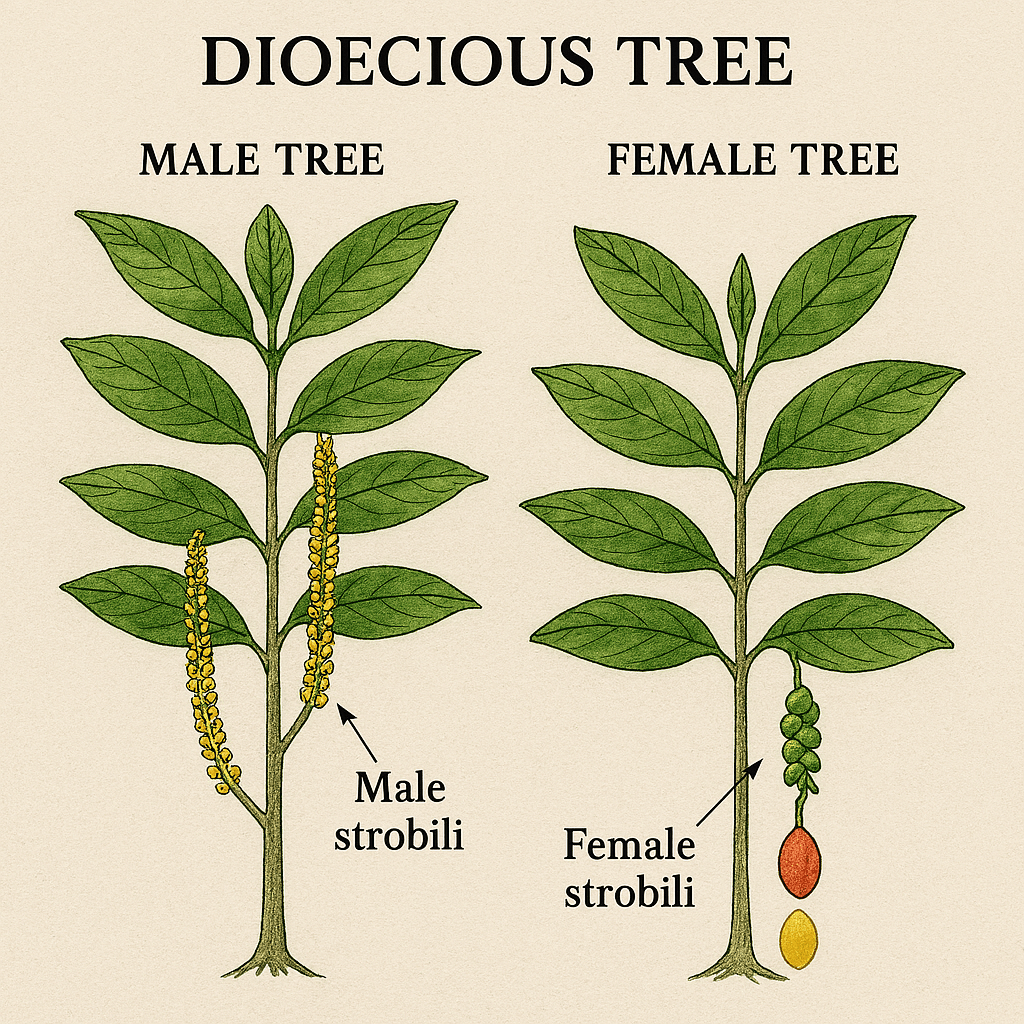
Its bitter seeds, resilient leaves, and shade-bearing canopy are not just ecological assets but spiritual reminders of endurance, protection, and ancestral wisdom. In this way, Melinjo becomes both a botanical guardian and a cultural compass.
⚠️ Precautions & Considerations
While Melinjo (Gnetum gnemon) carries ancestral significance and nutritional benefits, it’s important to consume it mindfully:
- Purine Content: Melinjo seeds are high in purines, which may exacerbate gout or kidney issues in sensitive individuals. If you’re managing uric acid levels, consult a healthcare provider before regular consumption.
- Bitterness & Digestive Sensitivity: The seeds and leaves have a naturally bitter profile. Start with small portions to assess tolerance, especially if you’re new to traditional Southeast Asian ingredients.
- Allergen Awareness: Though rare, some individuals may experience allergic reactions. Discontinue use if symptoms occur.
- Sourcing Ethically: Choose Melinjo products from trusted, sustainable sources that honor indigenous cultivation practices and avoid overharvesting.
This plant is powerful—but like all ancestral foods, it asks to be approached with respect, curiosity, and care.
🌿 Final Thought
I’m not sure if Melinjo is the fruit for you. Its seeds are bold, bitter, and unapologetically ancestral—an acquired taste rooted in ritual. But the leaves? They’re tender, versatile, and quietly powerful. Whether simmered in ceremonial stews or folded into healing broths, they carry the wisdom of the forest in every vein. Sometimes, it’s not the fruit that finds you—it’s the foliage that nourishes your story.
 EJADA
EJADA 
Leave a comment