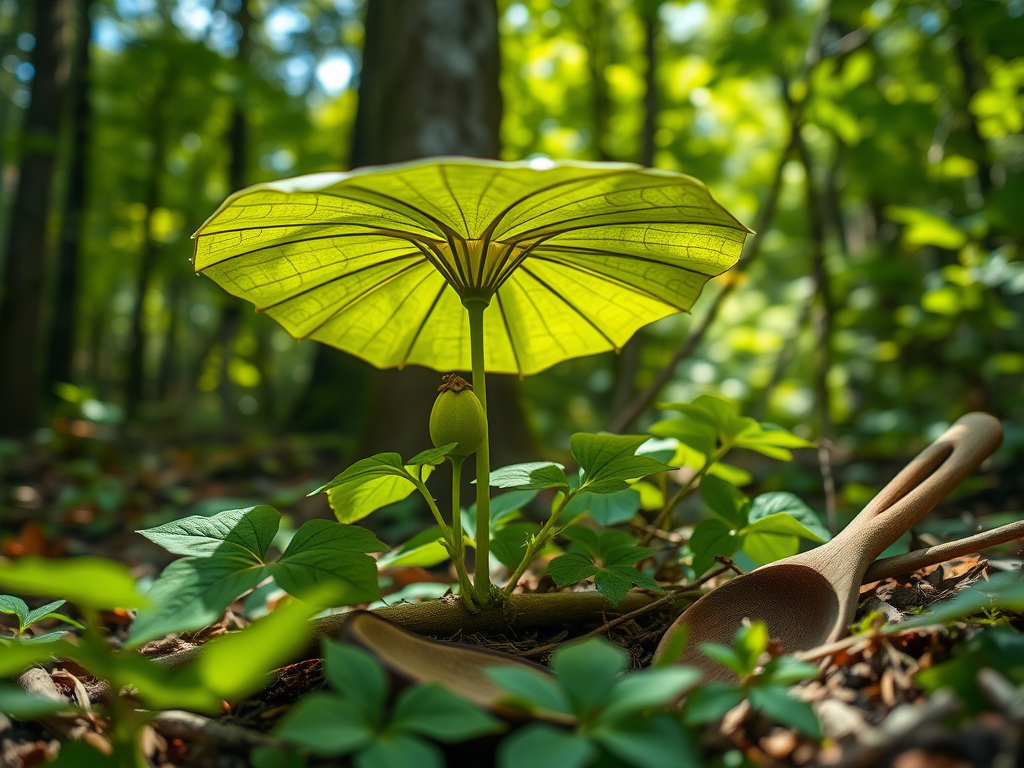
🌱 Meet the Mayapple: Cultivated by the Huron, Not Just Found by the French
With its umbrella-like leaves and mysterious fruit that plays hard to get, this native North American plant is the kind of wild character that shows up uninvited to your herbal tea party and steals the spotlight.
Before it was a quirky forest fruit or a cancer-fighting compound, the Mayapple (Podophyllum peltatum) was a sacred plant cultivated by the Huron Indians of Canada. The first European to document this? Samuel de Champlain, way back in 1615, who observed the Huron growing it for its purgative and protective properties.
🧭 Indigenous Origins
- Huron cultivation: Likely began post–Ice Age, with Mayapple spreading through intentional planting and ritual use.
- Cherokee medicine: Used boiled rhizomes as purgatives, powdered root for ulcers, and even fresh juice to treat deafness.
- Osage & Cherokee names: “It wears a hat” and “It pains the bowels”—a nod to its dramatic leaf and potent effects.
🌍 Botanical Legacy
- European confusion: Called “American mandrake” due to its purgative powers, though it’s unrelated to the European mandrake.
- Scientific shuffle: Bounced between plant families for centuries before DNA analysis placed it firmly in the Berberidaceae family.
🌿 Looks Like a Jungle Parasail, Tastes Like a Tropical Dare
- Leaf drama: One stalk, two giant leaves—like nature’s version of shoulder pads.
- Fruit tease: Green, waxy, and totally toxic until it’s ripe. Then? A burst of pineapple-meets-passionfruit with a hint of rebellion.
- Nickname game: Indian Apple, Hog Apple, Wild Lemon—this plant’s got more aliases than a spy.
⚠️ Handle With Sass (and Safety)
- Unripe fruit = digestive chaos.
- Seeds, roots, and leaves = medicinal in the right hands, poisonous in the wrong ones.
- Indigenous wisdom = the original guidebook. Respect it.
🍹 Rituals & Recipes (For the Brave)
- Mayapple jam: Only from fully ripe fruit. Tart, tropical, and totally niche.
- Ceremonial use: Traditionally used in small doses for purging and protection. Not for casual snacking.
- Modern twist: Infuse into wildcrafted cocktails or rebellious tinctures—with disclaimers, of course.
🌿 Mayapple’s Medicinal Mojo: Potent, Perilous, and Proven
This woodland wildchild isn’t just a flirt—it’s a pharmacological powerhouse. Beneath its leafy parasol lies a history of healing that spans indigenous wisdom and cutting-edge cancer research.
🧪 Bioactive Brilliance
- Podophyllotoxin: The star compound. Used in FDA-approved treatments for genital warts and as the base for chemotherapy drugs like etoposide and teniposide, which fight lung cancer, leukemia, and lymphomas.
- Antiviral: Topical extracts help treat HPV-related conditions. Think of it as nature’s microscopic sword against viral invaders.
- Anti-inflammatory: Mayapple’s compounds may soothe arthritis and other inflammatory conditions.
- Digestive aid: Traditionally used as a purgative and laxative by Native American tribes. But caution: this isn’t your average herbal tea—improper use can be toxic.

Ayahuasca Purging Ceremonies A raw portrayal of traditional healing through purging, used to cleanse body and spirit.
⚠️ Handle With Herbal Respect
- Toxicity alert: Roots, seeds, and unripe fruit are poisonous. Even ripe fruit should be consumed sparingly.
- Ceremonial use: Indigenous applications often involved purging, protection, and spiritual cleansing. Not for DIY experimentation.
🍽️ Mayapple Nutrition & Recipe: Wild Tartness with a Vitamin Kick
🌿 Nutritional Highlights (Per 1 cup ripe fruit)
| Nutrient | Benefit |
|---|---|
| Vitamin C | Immune booster, antioxidant, collagen support |
| Vitamin A | Skin health, vision, cellular repair |
| Fiber | Digestive health, blood sugar regulation |
| Calcium & Iron | Bone strength, oxygen transport |
| Phosphorus | Energy metabolism, bone structure |
⚠️ Only the fully ripe fruit is edible. Seeds, skin, and unripe fruit are toxic.
🍋 Mayapple Ginger Jelly (Foraged & Fierce)
A tart, aromatic jelly with a rebellious twist—perfect for pairing with aged cheese, wild bread, or ceremonial spreads.
🧾 Ingredients
- 4 cups ripe Mayapple juice (from peeled, seeded fruit)
- ¼ cup fresh lemon juice
- 1 tbsp grated ginger
- 5 cups organic cane sugar
- 1 packet pectin (low-sugar or standard)
🔥 Instructions
- Juice Extraction: Wash ripe Mayapples, peel and deseed. Juice using a press or blender + strainer.
- Combine: In a large pot, mix Mayapple juice, lemon juice, and ginger.
- Boil & Pectin: Bring to a boil, stir in pectin.
- Sweeten: Add sugar all at once. Stir until dissolved.
- Cook & Test: Boil hard for 1–2 minutes. Use cold plate method to test set.
- Jar & Seal: Pour into sterilized jars. Process in boiling water bath for 10 minutes.
🍽️ Serving Ideas
- Spoon over pancakes or ceremonial flatbreads
- Pair with goat cheese and wild greens
- Swirl into yogurt with toasted seeds
⚠️ Mayapple Precautions: Handle with Wisdom, Not Whimsy
🚫 Toxicity Warning
- Only the ripe fruit is edible—every other part (leaves, stems, roots, unripe fruit) is poisonous.
- Podophyllotoxin, the active compound, is potent and can cause severe reactions if misused.
❌ Do Not:
- Eat unripe fruit—can cause vomiting, diarrhea, and organ failure.
- Consume seeds—they’re toxic even when the fruit is ripe.
- Use raw plant parts—especially roots or leaves, which contain high levels of toxins.
- Take during pregnancy or breastfeeding—linked to birth defects and fetal death.
- Apply topically without guidance—can cause chemical burns, especially in mucosal areas.
✅ Safe Use Guidelines
- Use only pharmaceutical-grade extracts (e.g., podofilox, etoposide) under medical supervision.
- Avoid DIY tinctures or teas unless guided by a qualified herbalist.
- If foraging, wait until fruit is soft, yellow, and slightly wrinkled—that’s your cue it’s ripe.
🧪 Side Effects of Improper Use
- Nausea, hallucinations, paralysis, renal failure, seizures, and even death have been reported from misuse.
- Chronic use as a laxative may cause hypokalemia and metabolic acidosis.
🛡️ Disclaimer
This post is for educational and cultural storytelling purposes only. Mayapple is a potent plant with serious risks.
Do not consume, forage, or apply any part of the plant without expert guidance.
Always consult a qualified herbalist or healthcare provider before using wild botanicals medicinally.
EJADA does not endorse unsupervised use of toxic plants.
🌞 On a Happy Note…
The Mayapple may flirt with danger, but it also flirts with delight—offering ripe fruit that tastes like a tropical jellybean and a legacy rooted in Indigenous wisdom.
Whether you meet it in the forest or in folklore, let it remind you that nature’s wildest gifts often come with a wink… and a warning.
Stay curious, stay safe, and keep honoring the plants that walk the line between medicine and myth 🌿✨
 EJADA
EJADA 
Leave a comment