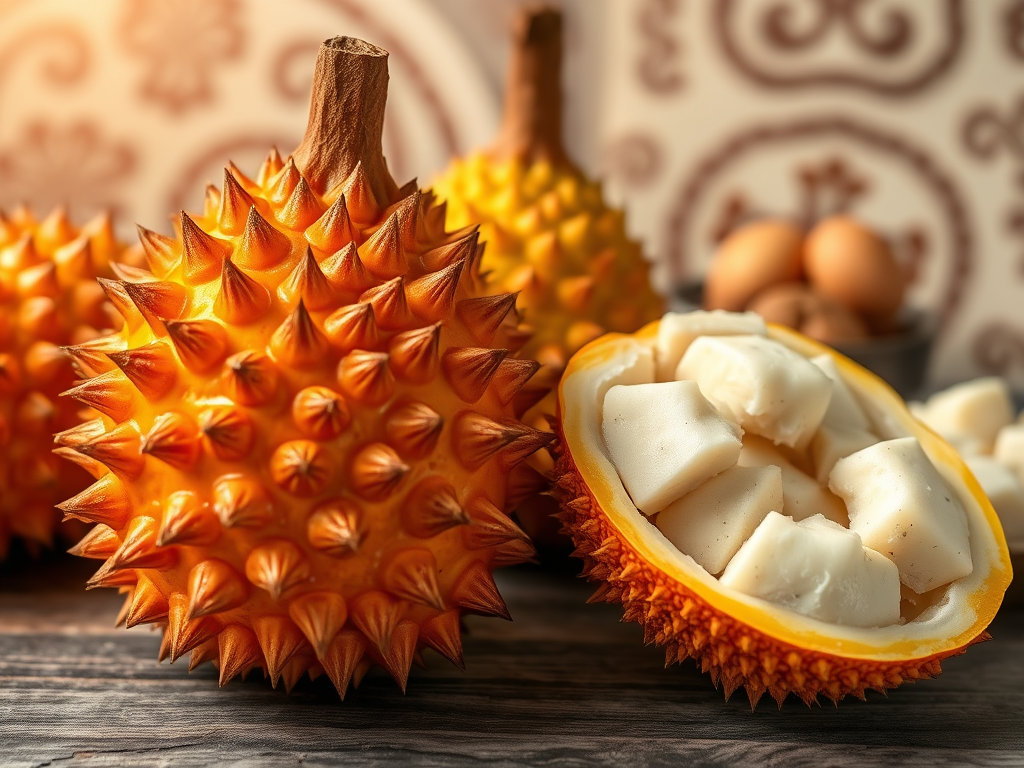
Marang
The marang fruit (Artocarpus odoratissimus) was first cultivated by indigenous communities on the island of Borneo, particularly in regions like Brunei, Kalimantan (Indonesia), Sabah, and Sarawak (Malaysia)
The name “marang” comes from the Philippines, where the fruit is widely known and consumed, especially in Mindanao and Palawan. Although the fruit is native to Borneo, the term “marang” is derived from local Filipino usage, which became the most commonly adopted name in English and international contexts.
Linguistic Drift & Naming
Scientific Name: Artocarpus odoratissimus — Latin for “most fragrant,” referencing its intense aroma.
Local Names: In Borneo, it may be called tarap or johey oak, depending on the region and dialect.
Why “Marang” Stuck: The Philippines popularized the fruit under this name, and it became the standard in culinary and botanical circles due to the country’s export and cultural influence.
These cultures valued marang for its creamy texture, pungent aroma, and ceremonial significance long before it spread to other parts of Southeast Asia.
🌀 This linguistic drift reflects how cultural storytelling shapes even the names of fruits. What we call it today carries echoes of migration, trade, and tradition.
Early Cultivation & Cultural Use
- Origin: Native to Borneo, where it grew wild in tropical forests and was later semi-cultivated.
- Traditional Use: Consumed fresh, used in desserts, and sometimes incorporated into rituals or healing practices.
- Spread: Eventually introduced to Palawan and Mindanao in the Philippines, where it gained popularity but was likely not native.
Once reserved for sacred gatherings in Mindanao and Palawan, the marang fruit—soft, custardy, and wildly aromatic—is now making its way onto modern wellness tables. This post explores how indigenous reverence meets contemporary creativity, turning marang into a symbol of cultural resilience and culinary innovation.
👃👅🖐️ Sensory Rituals with Marang: Taste, Texture, and Aroma
Marang isn’t just eaten—it’s experienced. From the moment you crack open its spiny shell, the fruit engages every sense:
👃 Aroma
- Intensely fragrant, with notes of banana, pineapple, and jackfruit.
- Often compared to durian, but gentler and more floral.
- Used in high-end cuisine to perfume sauces, foams, and glazes.
👅 Flavor
- Sweet, custard-like, with hints of marshmallow and tropical citrus.
- Ideal for smoothies, coulis, and even pancake or crepe fillings.
- Pairs beautifully with coconut, sticky rice, or dark chocolate.
🖐️ Texture
- Silky and creamy, almost melting on the tongue.
- Can be whipped into emulsions or folded into airy foams for savory dishes.
- Seeds, when roasted, offer a nutty crunch—great for contrast.
🌺 Sensory Pairing Ideas
- Ceremonial tasting: Serve fresh marang with jasmine tea and coconut sticky rice.
- Fusion dessert: Marang mousse with lime zest and toasted coconut flakes.
- Aromatic garnish: Marang foam atop grilled fish or roasted root vegetables.
🌞 Sensory Daily Ritual: Marang as Morning Medicine
Start your day not just with nourishment, but with presence. Marang’s lush aroma, creamy texture, and tropical sweetness make it a perfect anchor for a slow, sensory ritual that awakens body, mind, and spirit.
🌺 Ritual Flow
Step 1: Aroma Awakening Before peeling the fruit, pause. Inhale deeply. Let marang’s floral, banana-pineapple scent soften your nervous system and signal the start of a sacred moment.
Step 2: Ceremonial Bite Scoop out the flesh slowly. Let it melt on your tongue. Taste the marshmallow-custard notes with full attention. This is not just breakfast—it’s a blessing.
Step 3: Texture Meditation Feel the silkiness between your fingers. Notice the contrast of roasted seeds if included. Let touch ground you in the present.
Step 4: Pair with Intention Sip jasmine tea or coconut water. Light a candle. Play soft music or sit in silence. Let marang be the centerpiece of your morning altar.
🧘♀️ Why It Matters
Sensory rituals like this one—rooted in indigenous reverence and modern mindfulness—can help regulate mood, reduce stress, and reconnect us with the sacredness of daily life.
Slow, Sensory Morning Rituals
Sensory Rituals for Body, Mind, and Spirit:
🥣 Ceremonial Recipe: Marang & Coconut Ritual Bowl
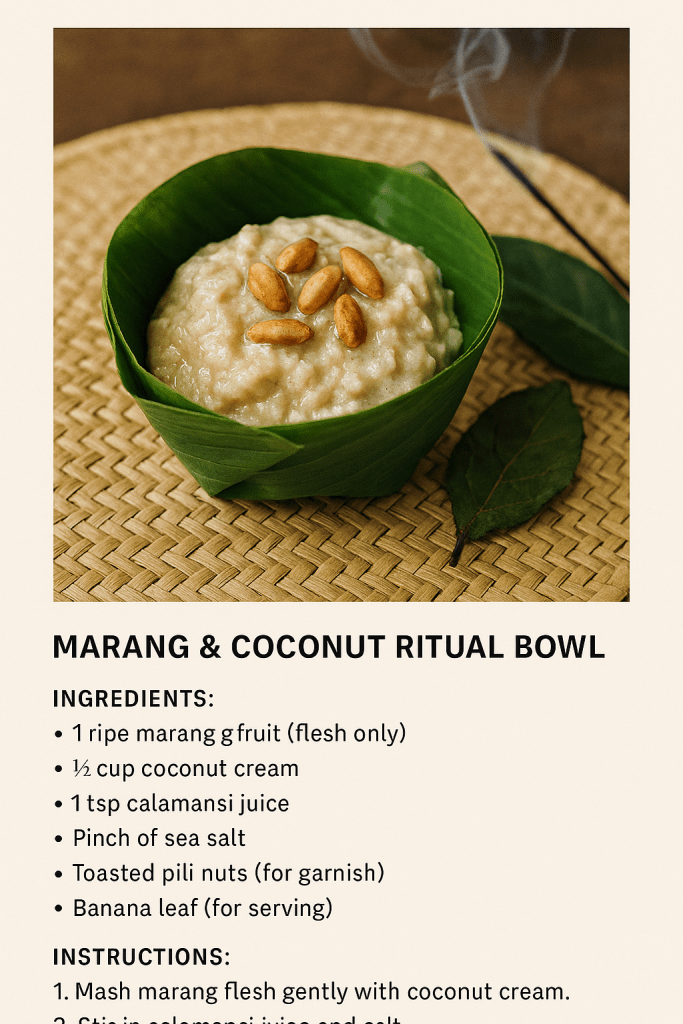
Instructions:
Mash the Marang flesh gently with coconut cream.
Stir in calamansi juice and salt.
Serve in a banana leaf bowl, topped with toasted pili nuts.
Optional: Burn a bay leaf nearby to honor ancestral spirits.
⚠️ Allergen Note: Marang belongs to the Moraceae family (like jackfruit and breadfruit). Individuals with latex allergies should consult a health professional before consumption.
Marang fruit is gaining modern traction not just for its creamy flavor, but for its impressive health benefits
- Rich in Vitamin C, which boosts immune defenses and helps fight infections.
- Contains antioxidants that protect immune cells from free radical damage.
- High in dietary fiber, which promotes gut health, regulates bowel movements, and supports beneficial gut bacteria.
- Vitamin C aids collagen production for youthful skin.
- Vitamin A & E protect against sun damage and environmental stressors.
- Protein and B vitamins (like riboflavin and niacin) support wound healing and skin regeneration.
- Natural carbohydrates provide quick energy.
- B vitamins help convert food into fuel, supporting metabolic function.
- Contains thiamine, riboflavin, and niacin, which nourish brain and nerve cells.
6. Anti-inflammatory & Antiviral Properties
- Marang has compounds that may reduce inflammation and fight bacteria and viruses.
Marang’s creamy texture and tropical sweetness make it a perfect star for summer recipes.
From Forest Ritual to Fusion Plate:
Here are a few refreshing ways it’s being used today to beat the heat while boosting wellness:
🍈 Summer Recipes Featuring Marang
🥭 1. Marang Tropical Smoothie Bowl
Ingredients:
- Marang flesh
- Frozen banana
- Coconut milk
- Lime juice
- Chia seeds
- Toppings: toasted coconut, mango cubes, edible flowers
Why it works: Cooling, energizing, and packed with fiber and antioxidants.
🍧 2. Frozen Marang Popsicles
Ingredients:
- Blended marang
- Coconut water
- Calamansi or lime juice
- Honey (optional)
Method: Pour into molds and freeze. Add pandan leaf for aroma if desired.
Health boost: Hydrating, vitamin-rich, and great for digestion.
🍮 3. Marang & Yogurt Parfait
Layers:
- Greek yogurt or coconut yogurt
- Marang puree
- Granola or toasted pili nuts
- Drizzle of calamansi syrup
Perfect for: A light breakfast or post-workout snack.
🍹 4. Marang Mocktail
Shake together:
- Marang puree
- Sparkling water
- Mint
- Crushed ice
- Optional: lemongrass syrup or ginger
Serve in: A chilled coconut shell or glass with a pandan straw.
You can substitute marang in summer recipes with a few tropical fruits that share similar textures or flavor profiles.
Here’s a breakdown of the best swaps depending on the recipe type and desired sensory experience:
🍈 Marang Substitutes by Texture & Flavor
| Substitute Fruit | Flavor Profile | Texture Match | Best Used In |
|---|---|---|---|
| Cempedak | Sweet, musky, banana-like | Creamy & fibrous | Smoothies, parfaits, frozen treats |
| Jackfruit (ripe) | Mildly sweet, tropical, banana-pineapple | Fibrous & firm | Popsicles, mocktails, parfaits |
| Durian | Rich, custardy, almond-like | Silky & creamy | Smoothie bowls, ice cream, mousse |
| Soursop (Guanábana) | Tart-sweet, citrusy-mango | Soft & pulpy | Frozen drinks, mocktails, sorbets |
| Cherimoya | Vanilla-banana blend | Custardy & smooth | Parfaits, chilled desserts |
🔄 Substitution Tips:
- For creamy texture: Use durian or cherimoya in smoothie bowls or parfaits.
- For fibrous chew: Jackfruit or cempedak works well in popsicles or layered desserts.
- For tart contrast: Soursop adds a refreshing zing to mocktails or frozen treats.
There are a few groups who may need to limit or avoid marang fruit despite its many health benefits.
⚠️ Groups That Should Limit or Avoid Marang
1. Individuals with Diabetes or Blood Sugar Sensitivities
- Why: Marang is naturally high in sugars and carbohydrates.
- Risk: Can cause spikes in blood glucose if consumed in large quantities.
- Recommendation: Enjoy in moderation and pair with fiber-rich or protein-based foods to slow sugar absorption.
2. People with Known Fruit Allergies
- Why: While marang-specific allergies are rare, it may trigger oral allergy syndrome (OAS) in sensitive individuals.
- Symptoms: Itching, tingling, or swelling in the mouth or throat.
- Recommendation: Start with a small amount and monitor for reactions. Discontinue use if symptoms occur.
3. Those with Gastrointestinal Sensitivities
- Why: Marang is rich in dietary fiber, which can be beneficial but also irritating for some.
- Risk: May cause bloating or discomfort in individuals with IBS or sensitive digestion.
- Recommendation: Introduce gradually and avoid overconsumption.
4. People on Low-FODMAP or Ketogenic Diets
- Why: Marang’s sugar and fiber content may not align with strict dietary protocols.
- Recommendation: Consult a nutritionist before incorporating it regularly.
🛡️ General Safety Tips
- Eat fresh: Marang oxidizes quickly after opening, which can affect taste and safety.
- Store properly: Refrigerate or consume immediately to preserve nutrients and prevent spoilage.
- Boil seeds before eating: Raw seeds may be hard to digest; boiling or roasting makes them safer and tastier.
🛒 Where to Find Marang in the U.S.
Fresh marang is rare due to its delicate shelf life, but you can still experience its creamy magic through frozen options and specialty growers:
❄️ Frozen Marang
- Available from: Miami Fruit
- Ships in: Biodegradable coolers with reusable cold packs or dry ice
- Best for: Smoothies, ceremonial tastings, dessert infusions
🌱 Grow Your Own
- Saplings offered by: Orchard Dreams and select tropical nurseries
- Requires: Warm, humid climate and attentive care
- Note: Not suitable for most U.S. zones without greenhouse support
🧭 Tip for Readers
Look for marang under its scientific name Artocarpus odoratissimus when browsing tropical fruit catalogs or seed banks.
🌿Final Thought: A Fruitful Invitation
Marang is more than a fruit—it’s a fragrant bridge between ancestral wisdom and modern indulgence. Whether you’re drawn to its custard-like texture, its ceremonial roots, or its potential as a wellness ally, marang offers a delicious way to explore heritage through flavor.
Marang invites us to slow down, savor, and reconnect—with flavor, with ritual, and with the stories that shape our plates. Whether folded into a morning ceremony or shared as a dessert centerpiece, this tropical treasure offers a delicious way to honor tradition while embracing the present.
But as with any unfamiliar fruit, moderation is the key. Start slow, listen to your body, and savor the experience. Every bite is a chance to honor tradition, nourish your senses, and expand your culinary horizons—one creamy pod at a time.
Here’s to flavor with purpose, ritual with joy, and fruit that feeds more than just hunger.
 EJADA
EJADA 
Leave a comment