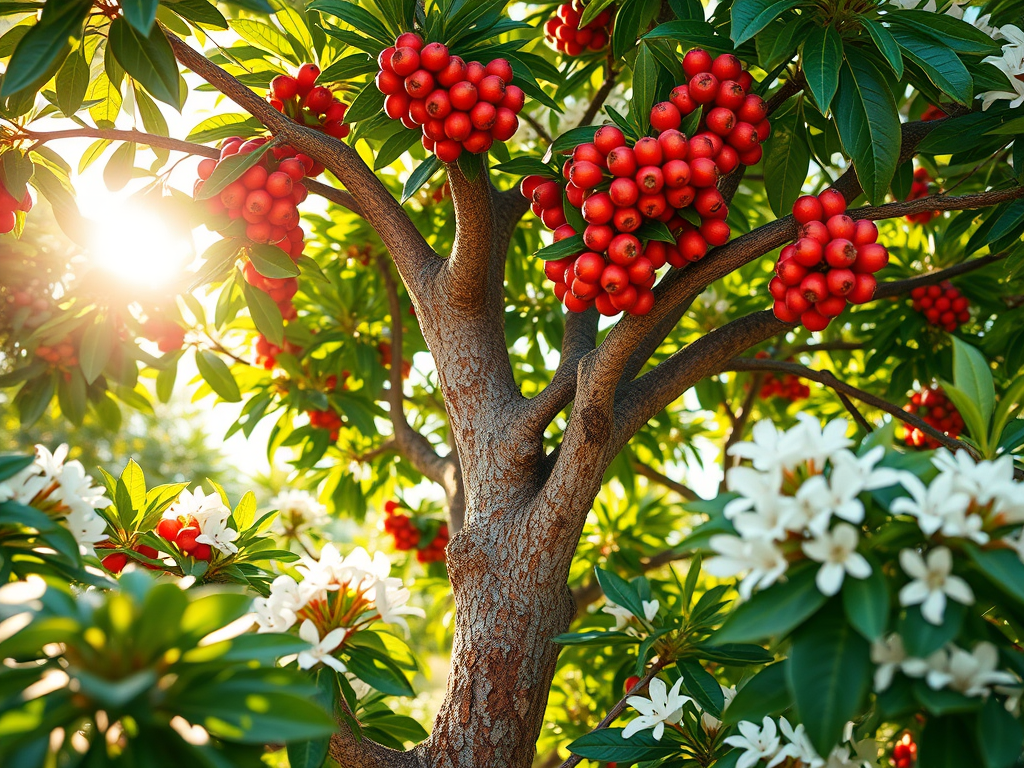
The Mandroño (Arbutus unedo), or Spanish Strawberry Tree, was first cultivated and revered by ancient Mediterranean cultures, particularly the Greeks and Romans. Its botanical name is Arbutus unedo, and it’s closely related to other members of the Arbutus genus like Arbutus andrachne and Arbutus menziesii (Pacific Madrone).
🌿 Botanical & Cultural Identity
- Scientific Name: Arbutus unedo
- Common Names: Mandroño (Spanish), Strawberry Tree, Madroño, Killarney Strawberry Tree
- Native Range: Mediterranean Basin, Western Europe, and parts of Ireland
- Symbolism: In Spain and Italy, the Mandroño is culturally revered. It’s the national tree of Italy, symbolizing the colors of the flag—green leaves, white flowers, and red berries. In Madrid, the bear and the strawberry tree (“El Oso y el Madroño”) form the city’s iconic emblem.
Below is visual timeline and cultural comparison of the Mandroño (Arbutus unedo) and its North American cousin Arbutus menziesii, spotlighting their journey through time, tradition, and indigenous reverence:
📜 Mandroño Timeline: From Ancient Greece to Modern Spain
| Era | Region | Cultural Role |
|---|---|---|
| Classical Antiquity | Greece & Rome | Used in flutes, tools, and folk medicine. Pliny the Elder coined unedo (“I eat one”). |
| Medieval Spain (13th century) | Madrid | Symbol in royal decree resolving land disputes—bear and tree became civic emblems. |
| 16th Century | Iberia & Ireland | Recognized as madroño in Spanish lore; naturalized in Ireland as “Killarney Strawberry Tree”. |
| Modern Spain | Madrid | Featured in the Puerta del Sol statue; used ornamentally and in liqueurs. |
| Today | Mediterranean & Western Europe | Celebrated for ecological resilience, culinary novelty, and cultural symbolism. |
🌍 Cultural Comparison: Arbutus unedo vs. Arbutus menziesii
| Feature | Arbutus unedo (Mandroño) | Arbutus menziesii (Pacific Madrone) |
|---|---|---|
| Region | Mediterranean Basin, Western Europe | Pacific Northwest (BC to California) |
| Height | 5–10 meters | Up to 30 meters |
| Fruit | Sweet, red-orange berries | Tart, orange-red berries |
| Bark | Reddish, flaky | Peeling cinnamon-red revealing green |
| Cultural Use | Roman medicine, Spanish liqueurs, Madrid emblem | Indigenous council trees, ceremonial shade, musical instruments |
| Symbolism | Civic harmony, seasonal abundance | Spiritual gatherings, ecological resilience |
| Indigenous Connection | Celtic herbal lore (Ireland) | Native American council sites (California) |
🍓 Fruit & Culinary Use
- Appearance: Round, granular red-orange berries that resemble strawberries
- Taste: Mildly sweet but bland; the Latin name unedo means “eat only one,” hinting at its underwhelming flavor
🍷 Mandroño Fire Elixir
Ceremonial Liqueur Inspired by Iberian Forest Rituals
🌿 Ingredients
| Item | Quantity | Symbolism |
|---|---|---|
| Mandroño berries (Arbutus unedo) | 2 cups | Autumn abundance, ancestral sweetness |
| Raw wildflower honey | 1 cup | Earth’s nectar, healing |
| Orange zest | From 1 fruit | Solar energy, clarity |
| Cinnamon stick | 1 | Fire, protection |
| Cloves | 3 | Warming, purification |
| Star anise | 1 | Mystery, depth |
| Aguardiente or brandy | 2 cups | Iberian tradition, transformation |
| Optional: rosewater or elderflower cordial | Splash | Floral grace, heart-opening |
🔥 Ritual Preparation
- Harvest Intention: Rinse berries while reflecting on seasonal transitions.
- Infuse: Layer berries, honey, zest, and spices in a sterilized jar. Pour in brandy.
- Steep: Store in a cool, dark place for 2–4 weeks. Shake weekly.
- Strain & Bottle: Filter through cheesecloth. Bottle in amber glass with a handwritten label or sigil.
- Serve: Sip in ceramic cups during twilight rituals or storytelling circles.
🌸 Flavor Notes & Pairings
| Profile | Description | Pair With |
|---|---|---|
| Sweet & resinous | Honeyed berry warmth | Roasted chestnuts 🌰 |
| Citrus-spiced | Bright, aromatic | Fig bread 🍞 |
| Floral undertone | Optional rosewater | Smoked paprika almonds 🌶️ |
🌍 Ecological & Ornamental Value
- Pollinator Magnet: Attracts bees, butterflies, and birds
- Fire-Resistant & Salt-Tolerant: Ideal for coastal and dry landscapes
- Year-Round Interest: Flowers, fruit, bark, and foliage all contribute to seasonal beauty
- Hardiness Zones: USDA 7–10
🌱 Cultivation Tips
- Sunlight: Full sun to partial shade
- Soil: Well-drained; tolerates poor soils
- Watering: Moderate; drought-tolerant once established
- Pruning: Light pruning enhances bark and shape
🧬 Related Species & Hybrids
| Species | Region | Notable Traits |
|---|---|---|
| Arbutus unedo | Mediterranean | Edible fruit, ornamental bark |
| Arbutus andrachne | Eastern Mediterranean | Smooth red bark, hybridizes with unedo |
| Arbutus menziesii | Pacific Northwest | Larger tree, striking bark, native to North America |
| Arbutus × andrachnoides | Hybrid | Mix of unedo and andrachne, ornamental use |
🍓 Mandroño Nutritional & Medicinal Profile
Source: FruitsInfo
🧬 Nutritional Highlights (per 100g of fresh fruit)
| Nutrient | Approximate Value | Benefits |
|---|---|---|
| Calories | ~70 kcal | Low-energy, suitable for light infusions |
| Carbohydrates | ~15–18g | Natural sugars, mild sweetness |
| Fiber | ~3–5g | Supports digestion, gut health |
| Vitamin C | ~20–30mg | Immune support, antioxidant |
| Polyphenols | High | Anti-inflammatory, anti-aging |
| Pectin | Rich | Ideal for jams, digestive aid |
| Tannins (in leaves) | Present | Astringent, used in folk remedies |
🌿 Medicinal & Folk Uses
- Digestive Aid: Tisanes made from fruit or leaves used to treat diarrhea and bloating
- Blood Pressure Regulation: Traditional Moroccan infusions used for cardiovascular support
- Antimicrobial: Contains ethyl gallate, effective against Mycobacterium bacteria
- Antioxidant Power: Polyphenols help reduce risk of cancer, coronary disease, and degenerative conditions
- Seasonal Immunity: Often consumed during autumn to bolster immunity and respiratory health
🍓 Modern Nutritional Uses of Mandroño
Rooted in tradition, validated by science
🧬 Functional Nutrition Today
| Use | Description | Source |
|---|---|---|
| Diabetes-Friendly Fruit | Low fructose/glucose ratio makes it suitable for blood sugar management | MDPI Study |
| Antioxidant-Rich | High polyphenol content helps reduce risk of cancer, coronary disease, and neurodegeneration | FruitsInfo |
| Digestive Support | Pectin and tannins aid in treating diarrhea and gut inflammation via herbal tisanes | FruitsInfo |
| Cardiovascular Health | Moroccan infusions used to regulate blood pressure and support heart function | FruitsInfo |
| Antimicrobial Properties | Ethyl gallate found in fruit and leaves combats Mycobacterium bacteria | FruitsInfo |
🍃 Why Mandroño Matters
Ancient fruit, modern function
Mandroño (Arbutus unedo) isn’t just a symbol of Iberian heritage—it’s a powerhouse of gentle nutrition and ritual healing. Here’s why it deserves a place in your wellness archive:
- 🫀 Heart Health: Traditional Moroccan infusions help regulate blood pressure
- 🧠 Neuroprotective: Polyphenols combat oxidative stress and cognitive decline
- 🌿 Digestive Aid: Pectin and tannins soothe inflammation and support gut flora
- 🛡️ Immunity Boost: Vitamin C and antimicrobial compounds fortify seasonal defenses
- 🍯 Sustainable Sweetness: Bitter honey from Mandroño flowers offers medicinal value
🌿 Popular Forms of Use Today
Hydrating, antioxidant-rich, and low in sugar
- Fermented Liqueurs & Brandies: Especially in Portugal and Spain, used in seasonal rituals and digestive aperitifs
- Jams & Jellies: Leveraging natural pectin for gut-friendly spreads
- Herbal Tisanes: Leaves and fruit steeped for immunity and digestive balance
- Functional Snacks: Occasionally dried or blended into fruit bars for antioxidant boost
- Beekeeping: Flowers produce bitter honey with medicinal properties
🍹 4. Mandroño Forest Spritz
Botanical mocktail or cocktail
Ingredients:
- 2 tbsp Mandroño syrup or jam
- Sparkling water or cava
- Splash of elderflower cordial
- Mint leaves & orange twist
Instructions:
Garnish and serve chilled.
Muddle syrup with mint.
Add ice, pour sparkling base, and stir.
Why it’s healthiest:
- Uses fresh Mandroño syrup or jam in small amounts
- Sparkling water or cava adds hydration without calories
- Elderflower cordial offers gentle diuretic and anti-inflammatory properties
- Mint and citrus boost digestion and refreshment
- No refined sugar, flour, or heavy fats
Best for: Daily ritual, digestive support, summer hydration, mocktail menus
🥈 Mandroño Jam (with ginger & cinnamon)
Simple, antioxidant-rich preserve
Why it’s healthy:
- Mandroño berries are high in vitamin C, polyphenols, and fiber
- Ginger and cinnamon support blood sugar regulation and immunity
- Can be made with minimal sugar or sweetened with honey
- Preserves fruit’s medicinal properties
Best for: Pairing with whole grains, yogurt, or ceremonial breads
🥉 Mandroño & Almond Tart
Nutrient-dense but richer
Why it’s semi-healthy:
- Almond flour offers healthy fats, protein, and vitamin E
- Uses honey instead of refined sugar
- Orange zest adds antioxidants
- Still a dessert—higher in calories and natural sugars
Best for: Festive occasions, heritage storytelling, indulgent wellness treats
🍯 Mandroño Jam (with ginger & cinnamon)
While Mandroño-specific jam recipes are rare online, you can adapt ginger-cinnamon jam recipes using Mandroño berries:
- Simple Ginger Marmalade – Alphafoodie
- Apple Ginger Cinnamon Jam – Thermomix Recipes
- Rhubarb Chia Jam with Cinnamon and Ginger – Most Days Vegan
Just substitute Mandroño for the fruit base and adjust sugar to taste.
🥧 Mandroño & Almond Tart (inspired)
You can adapt almond tart recipes by replacing cherry or raspberry jam with Mandroño jam:
- Crostata di Mandorle – Recipes from Italy
- Italian Almond Tart – Williams Sonoma
- Almond Tart – Cooking with Manuela
🍹 Mandroño Forest Spritz
This is a custom recipe, but you can draw inspiration from botanical mocktails:
- Elderflower Spritz – BBC Good Food
- Mint Citrus Sparkler – Minimalist Bake
 EJADA
EJADA 
Leave a comment