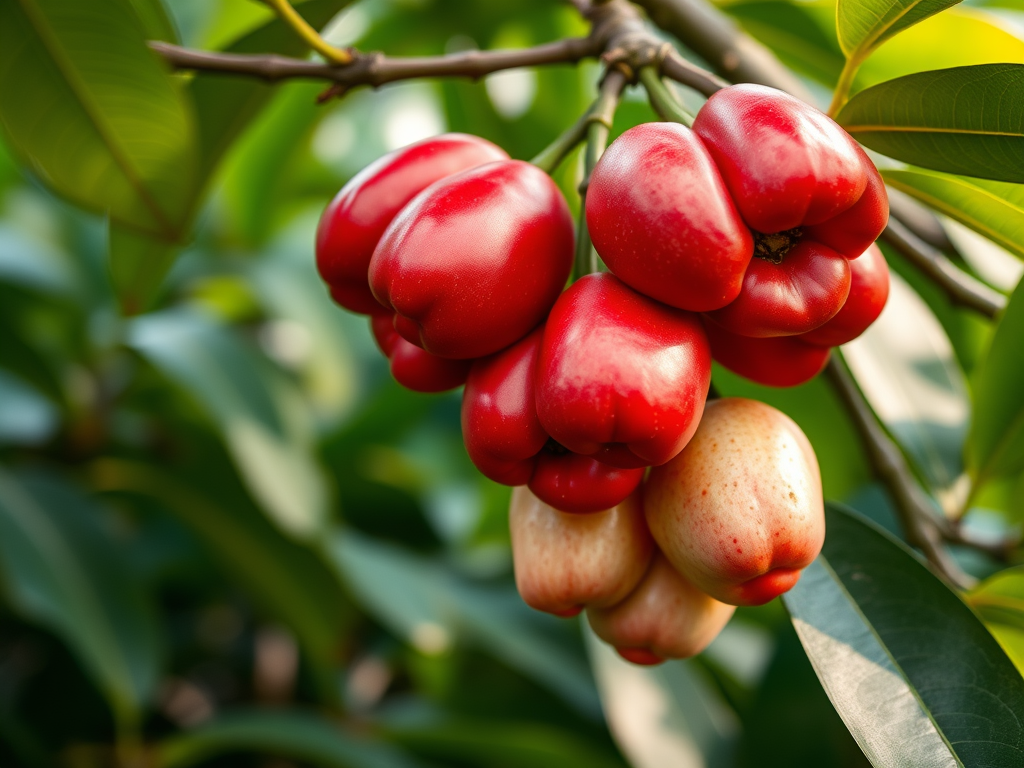
Malay Apple (Syzygium malaccense)
Syzygium malaccense, commonly known as Malay apple or mountain apple, is a tropical fruit tree in the Myrtaceae family native to Southeast Asia and northern Australia. The tree bears oblong to bell-shaped fruits that range in color from deep red to pink or white streaked with red. Inside is crisp, fragrant flesh surrounding a single large seed.
Cultivation History
Malay apple has been cultivated since prehistoric times by Austronesian peoples in the lowland rainforests of the Indo-Malayan region and was deliberately carried as a canoe plant across remote Oceania. In 1793, Captain William Bligh procured specimens from Tahiti for introduction to Jamaica, and since then it has been spread and naturalized throughout the tropics, thriving in humid climates with annual rainfall above 150 cm and elevations from sea level up to 2,700 m.
Health Benefits
- Anti-inflammatory properties that help reduce swelling and pain
- Rich in vitamin C and antioxidants, supporting skin health and immune function
- Minerals like potassium and calcium promote healthy circulation and bone strength
- Compounds that improve vision health and help prevent cataract formation
- Phytochemicals shown to strengthen hair and improve follicle quality
Cultural Significance
- Integral to Austronesian voyaging as a canoe plant, symbolizing resilience and cultural continuity across the Pacific islands
- Featured in traditional ceremonies to represent fertility and the hope for a prosperous future
- Planted near temples in parts of India, where it is revered as a sacred tree
- Hawaiian elders used its wood for house beams and bowls, and processed bark dye for tapa-cloth patterns
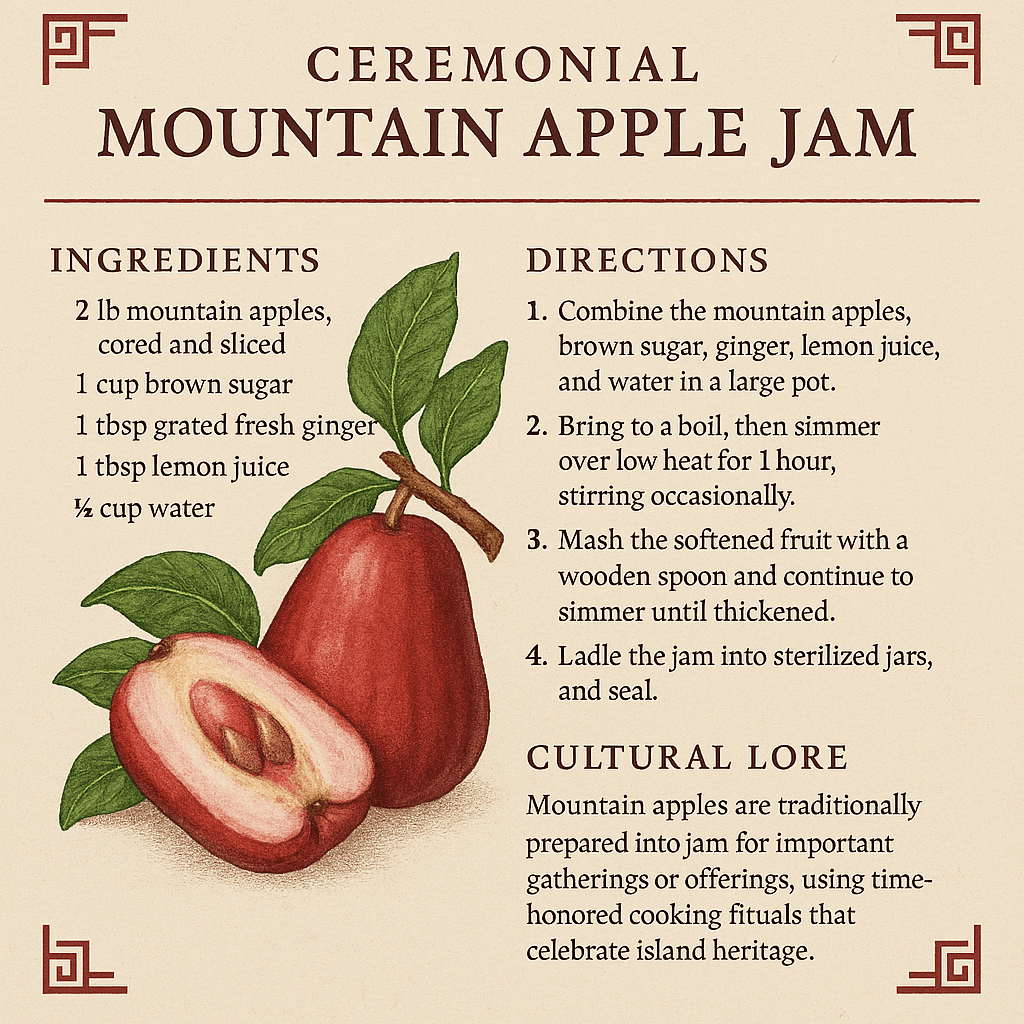
Malay apple (Syzygium malaccense) is safe for making jam. It’s an edible fruit with no known toxic compounds, and traditional communities have long used it in preserves and desserts.
Allergen and Toxicity Profile
- Malay apple is unrelated to true cashews and has not been shown to trigger nut-type allergic reactions.
- No specific toxins or harmful compounds are associated with the fruit, making it a low-risk candidate for home canning and jam preparation.
Jam-Making Considerations
- High water content: Malay apples are very juicy, so the fruit’s natural pectin level is relatively low. To achieve proper gel:
- Add commercial fruit pectin or use lemon juice and apple peels (rich in natural pectin).
- Balance sugar-to-fruit ratio (roughly 1:1 by weight) to ensure setting and shelf stability.
- Acidity: Boost with lemon juice (about 1–2 tablespoons per kilogram of fruit) to lower pH below 4.6 for safe preservation.
- Heat treatment and sterilization:
- Wash and core fruits, discard seeds.
- Sterilize jars in boiling water for at least 10 minutes.
- Cook fruit, pectin, sugar, and acid to a rolling boil, then ladle into hot jars.
- Process filled jars in a water bath for 10–15 minutes to inactivate spoilage organisms.
Tips for Best Results
- Choose fully ripe, blemish-free Malay apples for maximum flavor and color.
- Infuse with warm spices (cinnamon, cardamom) or indigenous aromatics (pandan leaf, wild ginger) to elevate ceremonial character.
- For a smoother jam, purée cooked fruit and strain seeds/fibers before the final boil.
Beyond Safety
- Consider layering your jam with edible flowers (hibiscus petals or rosebuds) during the last minute of cooking for a festive hue and floral note.
- Craft a minimalist label that nods to the fruit’s voyaging history—perhaps a canoe icon or Pacific-style motif—to tie your jam back to its cultural roots @ Healthbenefits
Known and Little-Known Health Benefits of Malay Apple
Known Health Benefits
- Immune support: Malay apple packs about 22 mg of vitamin C per 100 g, bolstering defenses against infections and aiding collagen formation for skin health.
- Anti-inflammatory action: Rich in flavonoids and polyphenols that help reduce swelling and pain associated with chronic inflammation.
- Antioxidant protection: High levels of antioxidants neutralize free radicals, slowing cellular aging and supporting overall wellness.
- Circulation and bone health: Supplies potassium and calcium to maintain healthy blood pressure, muscle function, and bone density.
- Vision support: Contains carotenoids and vitamin C compounds linked to a lower risk of cataract formation and improved eye health.
Little-Known Health Benefits
- Fever relief: Traditional preparations use steeped Malay apple fruit in warm water as a mild antipyretic to help reduce fevers.
- Digestive remedy:
- Roots employed in folk medicine to treat dysentery and soothe intestinal irritation.
- Dietary fiber in the pulp promotes regular bowel movements and helps prevent constipation.
- Menstrual stimulant: A poultice of roots has been used to provoke menstruation and relieve abdominal cramps.
- Anti-acne and skin therapy: Leaf extracts exhibit antibacterial, antioxidant, and anti-inflammatory properties that can aid in managing acne and nourishing the skin.
- Liver protection: Experimental studies on rose apple leaf extracts demonstrate hepatoprotective effects comparable to standard medications, offering potential support for liver health.
- Diuretic and carminative effects: Traditional use of bark and leaves as a mild diuretic to flush toxins and as a carminative to reduce gas and bloating.
Availability of Malay Apple
Fresh Fruit Availability
Malay apple fruit is harvested across its native and naturalized tropical ranges, appearing in local markets and roadside stands from Southeast Asia to the Pacific Islands. It’s now common growing wild on the Hawaiian islands and valued as a thirst-quenching seasonal treat.
- Native and naturalized regions: Malaysia, Indonesia, Thailand, Philippines, Pacific Islands, Hawaii
- Specialty markets: tropical fruit stalls in Hawaii and select Asian grocery stores in coastal U.S. cities
- Online fruit distributors may ship small, chilled batches to mainland U.S. customers during peak season
Seed and Plant Availability
For growers and enthusiasts wishing to cultivate Malay apple trees, seeds and live plants are offered by several tropical-fruit nurseries online.
- Tradewinds Fruit: seeds available now via their seed store
- Sow Exotic: live plants in large coconut-coir pots (medium pots currently sold out)
- Mayani Farms: one-foot seedlings on backorder (requires 50% deposit; allow ~3 months for delivery)
Seasonal Availability
Malay apple trees flower in early summer, with fruits maturing approximately three months later. Expect fresh Malay apples to be at their peak from mid-summer through early fall in tropical climates.
Who Should Avoid Malay Apple
- Individuals sensitive to Myrtaceae sap: skin contact with the fruit’s sap or leaves may cause mild irritation.
- People prone to digestive issues: consuming large quantities can lead to stomach discomfort or diarrhea.
- Those with severe fruit allergies: while rose apple fruit is not a common allergen, cross-reactivity can occur; consult an allergist if you have a history of fruit or pollen allergies.
Disclaimer
This post is for educational and cultural storytelling purposes only and does not constitute medical, legal, or dietary advice. Always consult a qualified healthcare provider or nutritionist before making significant changes to your diet or using traditional remedies, especially if you are pregnant, nursing, managing chronic health conditions, or taking prescription medications.
 EJADA
EJADA 
Leave a comment