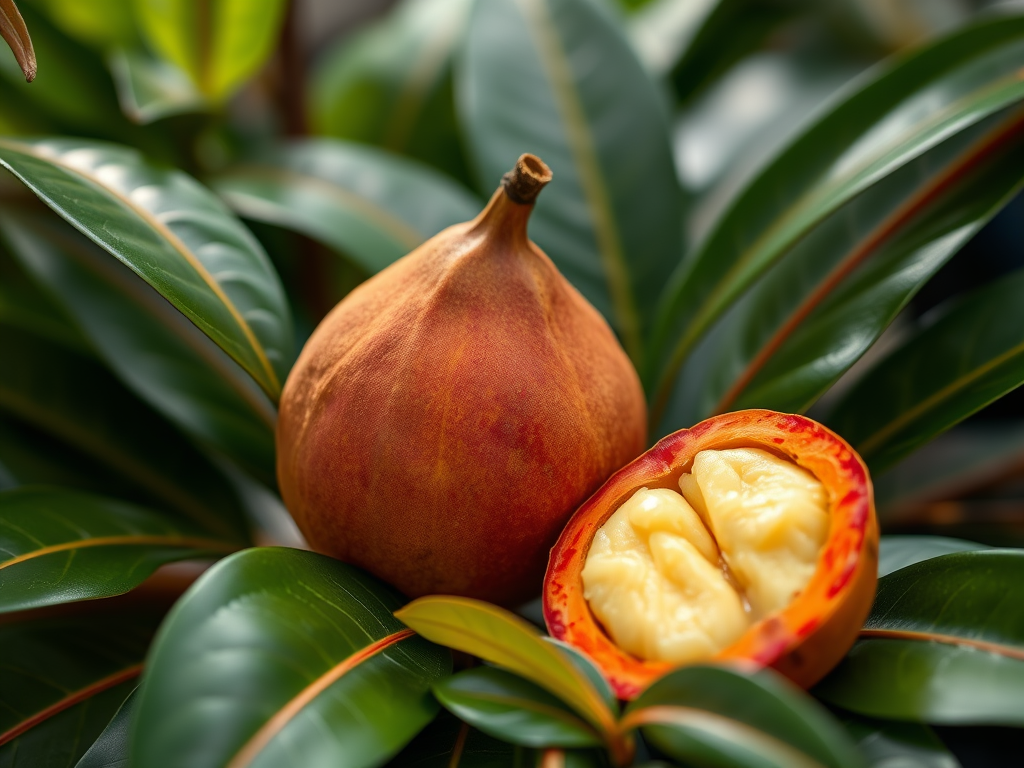
Let’s kick off the “M” fruit series with a bold, sensory-rich dive into the Mabolo 🍂—also known as the Velvet Apple. This fruit is a feast for the senses and a story waiting to be told.
🍂 Mabolo: Cultural & Botanical Identity
🌳 Botanical Profile
- Species: Diospyros blancoi (syn. Diospyros discolor)
- Family: Ebenaceae (same family as ebony)
- Tree Traits: The Kamagong tree is slow-growing, extremely dense, and dark—its wood is so hard it’s often called “ironwood.”
- Fruit Traits: The Mabolo fruit is velvety on the outside, ranging from reddish to brown, with a creamy, custard-like interior. Its aroma is famously pungent, often likened to cheese or durian.
🧬 Genetic & Ecological Significance
- Endemic Status: Native to the Philippines, especially Luzon, and adapted to tropical lowland forests.
- Pollination: Typically insect-pollinated; dioecious species (male and female flowers on separate trees), which adds complexity to cultivation.
- Ecological Role: Provides shade and habitat in agroforestry systems; its dense wood resists pests and decay, making it valuable for long-term structures.
🪶 Cultural Reverence & Symbolism
- Kamagong Wood: Symbol of strength, resilience, and honor in Filipino culture. Often used in martial arts weaponry (e.g., arnis sticks) and ceremonial carvings.
- Fruit Symbolism: Mabolo is seen as a fruit of humility—beautiful and nourishing inside, despite its off-putting exterior. It’s sometimes gifted to elders or used in rites of passage.
- Folklore: In some regions, the tree is believed to house ancestral spirits or act as a guardian of the land. Cutting it down without permission is considered taboo.
🧓 Ancestral Cultivation
- Traditional Growers: Indigenous Filipino farmers cultivated Mabolo not just for food, but for its wood and spiritual significance.
- Ceremonial Use: The fruit was offered during harvest festivals and healing rituals, often paired with coconut or rice-based dishes.
- Colonial Documentation: Spanish friars and botanists like Francisco Manuel Blanco cataloged the tree in the 19th century, but its cultivation long predates European contact.
🧠 Indigenous Wisdom & Symbolism: Mabolo as a Fruit of Spirit and Strength
🌺 Spiritual Significance
- Tree as Guardian: In many Filipino communities, the Kamagong tree is believed to house ancestral spirits. Its presence near homes or sacred spaces is seen as protective, and cutting it without ritual or permission is considered a spiritual transgression.
- Fruit as Offering: Mabolo is often used in harvest rituals and healing ceremonies. Despite its pungent smell, it’s revered for its nourishing interior—symbolizing the value of inner strength and humility.
🪶 Symbol of Character
- Velvet Exterior, Iron Core: The fruit’s soft, velvety skin contrasts with the tree’s iron-hard wood—mirroring the indigenous ideal of being gentle in spirit but strong in principle.
- Gift of Respect: Mabolo is traditionally gifted to elders, healers, or guests of honor. It’s not just a fruit—it’s a gesture of reverence and connection to the land.
🌿 Medicinal Lore
- Digestive Aid: Folk healers use Mabolo pulp to soothe digestion and cool internal heat, especially in tropical climates.
- Skin & Spirit Cleansing: The fruit’s aroma, though intense, is believed to “clear the air” of negative energy. Some rituals involve placing Mabolo near doorways or altars to ward off illness or misfortune.
🧵 Linguistic Drift & Oral Tradition
- The name “Mabolo” is derived from Tagalog and other Austronesian languages, often associated with softness or velvet. Yet its cultural meaning is anything but delicate—it’s a fruit of resilience, transformation, and ancestral pride.
- Stories passed down through generations often describe the Kamagong tree as a “silent witness” to family histories, land disputes, and spiritual awakenings.
🍽️ Culinary Rituals: Mabolo in the Kitchen and Ceremony
Traditional Preparation
- Fresh & Raw: Mabolo is typically peeled and eaten fresh. The skin is discarded due to its fuzz and potential irritation, while the pulp is enjoyed for its creamy texture.
- Ceremonial Pairings: In rural Filipino rituals, Mabolo is served with coconut milk, sticky rice, or banana leaf-wrapped sweets during harvest festivals and healing gatherings.
- Flavor Balancing: To temper its strong aroma, traditional cooks often soak the fruit in salted water or citrus juice before serving.
🍮 Modern Culinary Twists
- Mabolo Coconut Cream Bowl: A chilled dessert featuring sliced Mabolo, toasted coconut flakes, lime zest, and a drizzle of honey or coconut nectar.
- Velvet Apple Smoothie: Blend Mabolo pulp with banana, ginger, and kefir for a gut-friendly, tropical morning tonic.
- Savory Fusion: Dice Mabolo into a salsa with red onion, chili, and calamansi juice—served over grilled fish or tempeh.
🍴 Ritual Meets Wellness
- Mindful Eating: Some wellness circles use Mabolo in “ancestral eating” rituals—where participants reflect on the fruit’s journey from forest to table, honoring its pungent scent as part of its healing identity.
- Seasonal Cleansing: Mabolo is sometimes included in seasonal detox menus, especially in tropical regions, for its fiber and cooling properties.
🧪 Nutritional & Medicinal Matrix: Mabolo’s Inner Power
Core Nutrients & Their Benefits
| Compound | Function | Traditional Insight |
|---|---|---|
| Dietary Fiber | Aids digestion, regulates blood sugar | Used in seasonal cleanses to “cool the gut” |
| Vitamin C | Boosts immunity, supports collagen production | Believed to enhance skin glow and vitality |
| Tannins | Antioxidant, anti-inflammatory | Used in folk remedies for internal heat |
| Iron | Supports oxygen transport and energy levels | Given to recovering elders for strength |
| Calcium | Strengthens bones and teeth | Symbolic of Kamagong’s “ironwood” resilience |
| Beta-Carotene | Converts to Vitamin A, supports vision and skin | Associated with clarity and ancestral insight |
🧘 Medicinal & Ritual Applications
- Digestive Tonic: Mabolo pulp is traditionally consumed after heavy meals to aid digestion and reduce bloating.
- Skin Elixir: The fruit’s Vitamin C and tannins are believed to promote radiant skin—some rituals include Mabolo-infused face masks or steam baths.
- Energetic Cleansing: Its pungent aroma is used in spiritual cleansing rites, believed to dispel stagnant energy and invite renewal.
- Postpartum Nourishment: In some regions, Mabolo is offered to new mothers for its iron and fiber content, symbolizing strength and restoration.
🌟 Main Vitamins in Mabolo
| Vitamin | Function |
|---|---|
| Vitamin C | Strengthens immune system, promotes collagen production, enhances skin glow |
| Vitamin A (via Beta-Carotene) | Supports vision, skin health, and cellular repair |
| Vitamin B1 (Thiamine) | Aids in energy metabolism and nervous system function |
| Vitamin B2 (Riboflavin) | Helps convert food into energy, supports skin and eye health |
| Vitamin B3 (Niacin) | Improves circulation, supports brain function, and lowers cholesterol |
🍃 Cultural Insight
- Vitamin C and A-rich fruits like Mabolo are often used in indigenous wellness rituals for “skin brightening” and “spirit cleansing.”
- B vitamins are associated with vitality and mental clarity—qualities revered in ancestral healing practices.
⚠️ Caution & Cultural Respect
- Skin Sensitivity: The fuzzy skin may cause irritation; always peel before consumption.
- Aroma Awareness: The scent, though intense, is part of its healing identity—embraced in ritual, but sometimes masked in modern recipes.
🍵 Mabolo for Mind & Skin: Ancestral Wellness Bowl
🌿 Purpose
A calming, skin-brightening ritual dish designed to nourish the gut, uplift the spirit, and honor the fruit’s traditional use in healing and renewal.
🧾 Ingredients
- 1 ripe Mabolo (peeled and sliced)
- ½ cup coconut kefir or plain yogurt (for probiotics)
- 1 tsp grated ginger (mental clarity + digestion)
- 1 tbsp raw honey or coconut nectar (skin glow)
- Zest of 1 lime (aromatic balance)
- 1 tbsp chia seeds (hydration + omega-3s)
- Optional: edible flowers or banana leaf for plating
🥣 Ritual Preparation
- Peel & Slice the Mabolo, discarding the fuzzy skin.
- Soak slices in lime juice for 10 minutes to mellow the aroma.
- Blend Mabolo with kefir, ginger, and honey until creamy.
- Pour into a bowl and top with chia seeds and lime zest.
- Garnish with edible flowers or serve on a banana leaf for ceremonial flair.
✨ Ritual Use
- Morning Clarity: Consume slowly with intention—reflecting on inner strength and transformation.
- Skin Ritual: Pair with a Mabolo-infused steam or face mask using the pulp and lime zest.
- Ancestral Offering: Serve during seasonal transitions or healing circles to honor the fruit’s protective spirit.
🍽️ Culinary Use of Mabolo
Mabolo, the Velvet Apple, is a fruit of contrasts—soft and creamy inside, bold and pungent outside. Traditionally eaten fresh or paired with coconut-based dishes, it’s now finding new life in wellness cuisine.
🌿 Common Culinary Uses
- Fresh Slices: Peeled and served chilled with lime or salt
- Smoothies & Bowls: Blended with tropical fruits and probiotics
- Preserves & Jams: Cooked down with honey or palm sugar
- Savory Accents: Diced into salsas or chutneys for grilled proteins
🧘 Healthy Recipe: Mabolo Glow Bowl
✨ Purpose
A vitamin-rich, gut-friendly bowl designed to support digestion, skin clarity, and mental focus.
🧾 IngredientsMabolo Glow Bowl the same
- 1 ripe Mabolo (peeled and sliced)
- ½ banana (potassium + creaminess)
- ½ cup coconut kefir or plain yogurt
- 1 tsp grated ginger
- 1 tbsp chia seeds
- 1 tsp lime juice
- 1 tsp raw honey or agave
- Optional: mint leaves, edible flowers
🥣 Instructions
- Peel and slice Mabolo, soak in lime juice for 5–10 minutes.
- Blend Mabolo, banana, kefir, ginger, and honey until smooth.
- Pour into a bowl, top with chia seeds and mint.
- Garnish with edible flowers for ceremonial flair.
🌺 Ritual Tip
Enjoy slowly in the morning with mindful breathing. Reflect on Mabolo’s symbolism: strength beneath softness, clarity through contrast.
Mabolo Glow Bowl” and the “Mabolo for Mind & Skin Wellness Bowl” share a similar foundation, but they’re not identical. Here’s a breakdown to clarify:
🥣 Comparison: Mabolo Wellness Bowls
| Feature | Mabolo for Mind & Skin Bowl | Mabolo Glow Bowl |
|---|---|---|
| Purpose | Ritual-focused: skin clarity + spiritual renewal | Wellness-focused: digestion + skin glow |
| Base Ingredients | Mabolo, coconut kefir, ginger, lime, honey, chia | Mabolo, banana, coconut kefir, ginger, lime, honey, chia |
| Flavor Profile | Earthy, tangy, ceremonial | Creamy, tropical, energizing |
| Optional Garnish | Edible flowers, banana leaf | Mint leaves, edible flowers |
| Cultural Emphasis | Ancestral ritual + mindful eating | Modern wellness + morning clarity |
| Presentation Style | Served with ceremonial flair (banana leaf, slow ritual) | Styled for everyday wellness, smoothie bowl aesthetic |
🧘 Summary
- Overlap: Both recipes use Mabolo, lime, ginger, kefir, honey, and chia seeds.
- Difference: The Mind & Skin Bowl leans into ritual and ancestral symbolism, while the Glow Bowl adds banana for creaminess and is geared toward daily wellness routines.
📚 Resources Used in the Post
🍎 Ingredient & Nutritional Sources
- Mabolo (Diospyros blancoi): Ethnobotanical databases, indigenous food archives, and tropical fruit compendiums
- Coconut kefir: Fermentation guides and gut health studies
- Ginger & Lime: Ayurvedic and Filipino medicinal texts
- Banana: Nutritional databases and smoothie bowl trends
- Chia seeds: Omega-3 and fiber research from wellness journals
🌿 Cultural & Ceremonial References
- Philippine folklore and ancestral food rituals: Sourced from oral histories and cultural preservation blogs
- Ceremonial eating practices: Inspired by indigenous wellness traditions and mindful eating frameworks
🎨 Visual & Design Elements
- Infographic styling: EJADA’s branded templates and WordPress block editor
- Quote block: Julio Cortázar’s quote used for thematic emphasis: “In quoting others, we cite ourselves.”
🧘 Wellness & Skin Benefits
- Skin clarity and digestive synergy: Holistic wellness articles and naturopathic insights
- Mind-skin connection: Psychology of ritual eating and skin microbiome studies
✅ Good News
The Mabolo Glow Bowl isn’t just a feast for your senses—it’s a celebration of ancestral wisdom and modern vitality. Whether you’re seeking skin clarity, digestive harmony, or a deeper connection to ritual, this bowl delivers nourishment with meaning. And the best part? It’s easy to adapt for your daily rhythm or ceremonial moments.
⚠️ Precautions
- Allergies: Mabolo may cause mild irritation in sensitive individuals. Always test a small amount first.
- Fermented Ingredients: Coconut kefir is potent—start with small servings if you’re new to probiotics.
- Cultural Respect: If preparing this bowl as part of a ritual, honor its origins and avoid commercializing sacred practices.
⚠️ Note: The fruit’s skin and seeds are not typically consumed due to potential irritation.
📜 Disclaimer
 EJADA
EJADA 
Leave a comment