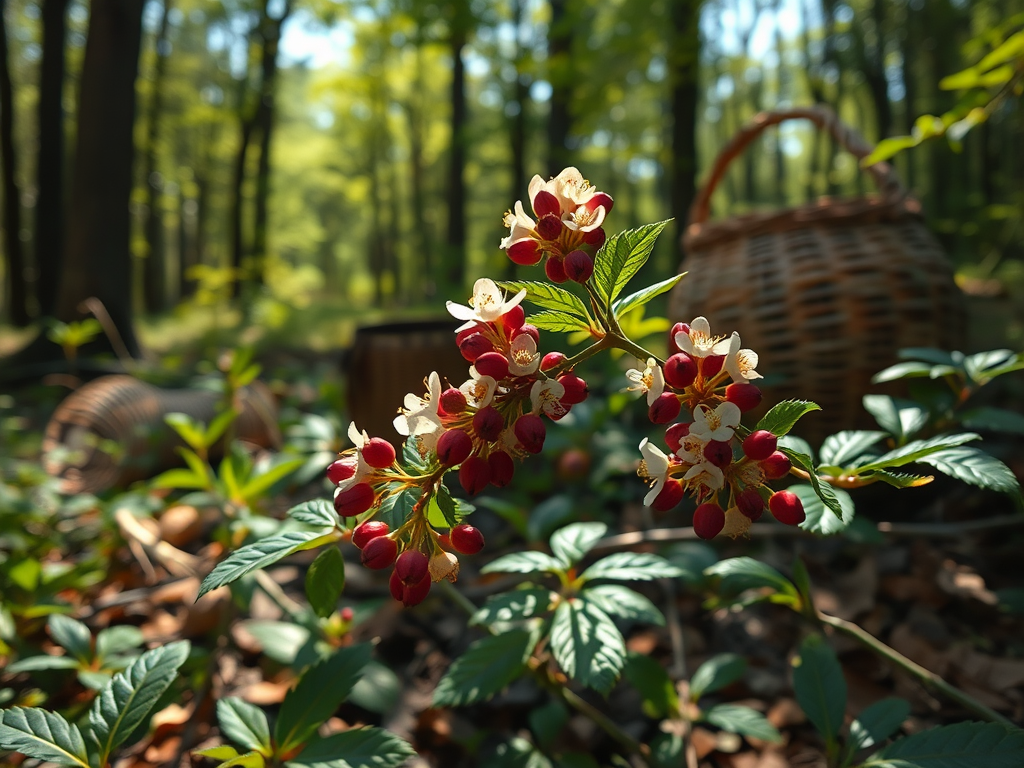
Low Juneberry: The Quiet Rebel of the Berry World
As we wrap up our journey through the lesser-known fruits that start with “L,” the Low Juneberry steps in like a soft-spoken elder with stories etched in its skin. Native to North America and often overlooked in favor of its flashier cousins, this berry carries a legacy of resilience, subtle sweetness, and medicinal depth. But don’t let its modest name fool you—Low Juneberry has roots in indigenous healing and a flavor profile that dances between blueberry and almond.
🌾 Cultivation Origins of Low Juneberry
🪶 Indigenous Use
- Native American communities across eastern North America were the first to cultivate and use Low Juneberry.
- It was a staple in traditional diets, often dried and mixed into pemmican—a high-energy food made with meat and fat.
- The berry was also used medicinally for its anti-inflammatory and immune-supporting properties.
🚶♂️ Early Settler Adoption
- European explorers, missionaries, and settlers adopted the berry into their diets after encountering it in the wild.
- Its early spring bloom was a seasonal marker—often signaling thawed ground and the return of Sunday services, hence the name “Serviceberry.”
🌱 Modern Cultivation
- While commercial cultivation is still limited, most plant material today is sourced from Canada and the Midwest U.S.
- The species Amelanchier alnifolia (Saskatoon berry) is more widely cultivated, but Amelanchier canadensis remains a prized native species for ecological landscaping and heritage food projects2.
Before we turn the page to the next letter in our fruit alphabet, the Low Juneberry demands a moment of reverence. Not just for its quiet beauty or almond-kissed flavor—but for its enduring role as a medicinal ally, from ancestral rituals to modern wellness.
Low Juneberry: A Berry Between Worlds
In the quiet understory of eastern woodlands, the Low Juneberry has long whispered its story—not in loud bursts of color, but in the soft resilience of its bloom. Before settlers named it “Serviceberry,” it was known by many names in indigenous tongues, each echoing its role as healer, nourisher, and seasonal guide.
For the Algonquin and Iroquois peoples, the Juneberry wasn’t just food—it was ceremony. Its early spring blossoms marked the return of life after winter’s hush, and its bark and berries were medicine for the body and spirit. Women brewed its bark to ease menstrual pain, while elders dried the fruit for pemmican, a sacred survival food that sustained journeys and rituals.
Centuries later, the Low Juneberry still carries that legacy. Herbalists steep it in teas to soothe inflammation. Nutritionists praise its rare blend of vitamin C, iron, and protein. And for those who listen closely, it offers something deeper: a reminder that healing is often found in the overlooked, the quiet, the native.
🌿 Medicinal Uses of Low Juneberry: Ancient Wisdom Meets Modern Wellness
The Low Juneberry (Amelanchier canadensis) has long been revered not just as a food source, but as a healing ally. From indigenous herbalists to contemporary nutritionists, its medicinal uses span centuries and cultures.
Traditional Indigenous Medicine
- Bark Tea: Brewed to relieve menstrual cramps, digestive discomfort, and fever.
- Dried Berries: Used in pemmican to boost endurance and immunity during long journeys and harsh winters.
- Seasonal Marker: Its bloom signaled the return of spring and was often incorporated into fertility and renewal ceremonies.
💊 Modern Medicinal Benefits
- Anti-Inflammatory Powerhouse: Rich in anthocyanins and quercetin, which help reduce joint pain, muscle soreness, and systemic inflammation.
- Immune Support: High vitamin C content strengthens the immune system and helps prevent infections like colds and flu.
- Skin & Collagen Health: Vitamin C also promotes collagen synthesis, aiding in skin elasticity, wound healing, and reducing signs of aging.
- Cognitive Protection: Flavonoids and polyphenols improve memory, brain circulation, and may reduce the risk of neurodegenerative diseases.
- Bone & Muscle Strength: Contains calcium, iron, and even trace protein—supporting bone density and muscle recovery.
🧬 Nutrient Highlights
| Compound | Medicinal Role |
|---|---|
| Vitamin C | Immunity, collagen production, antioxidant defense |
| Vitamin A | Eye health, bone growth, immune regulation |
| Vitamin E | Cellular protection, skin health |
| B Vitamins | Energy metabolism, brain function |
| Anthocyanins | Anti-inflammatory, neuroprotective, cardiovascular health |
| Quercetin | Allergy relief, inflammation reduction |
| Calcium & Iron | Bone strength, oxygen transport |
🍽️ Culinary Uses of Low Juneberry
Traditional & Indigenous Uses
- Pemmican: Dried Juneberries were mixed with meat and fat to create pemmican—a high-energy survival food used by many indigenous tribes.
- Berry Cakes & Mash: Combined with cornmeal or wild rice for ceremonial dishes.
- Fermented Fruit: Traditionally dried or fermented for long-term storage and medicinal use.
🧁 Modern Recipes & Adaptations
According to Healthy Green Savvy, Juneberries are incredibly versatile and can be used in over 25 delicious ways. Here are a few standout ideas:
| Dish | Description |
|---|---|
| Juneberry Jam or Jelly | Sweet, almond-tinged preserves perfect for toast, cheese boards, or glazes. |
| Muffins & Scones | Substitute for blueberries—adds depth and a hint of nuttiness. |
| Juneberry Syrup | Great for pancakes, cocktails, or herbal tonics. |
| Fruit Leather | Dehydrated puree for a chewy, nutrient-rich snack. |
| Juneberry Pie or Crisp | Baked with cinnamon and lemon for a rustic dessert. |
| Smoothies & Bowls | Blended with yogurt, oats, or greens for a superfood boost. |
| Fermented Chutney | Paired with ginger and vinegar for savory applications. |
🍷 Bonus: Juneberry Wine or Mead
- The berries’ natural sweetness and almond undertones make them ideal for small-batch fermentation.
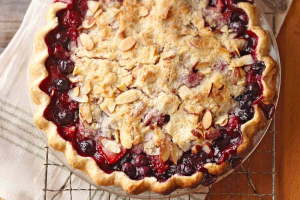
North Dakota Juneberry Pie: Full Recipe
As we close the “L” chapter of our fruit alphabet, the Low Juneberry stands not as a footnote—but as a first word. A berry that bridges tradition and trend, rooted in reverence and ripe with possibility.
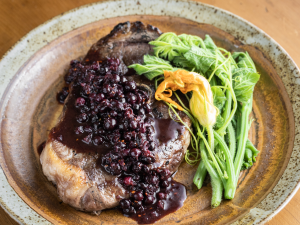
Lamb Leg Steaks with Juneberry Sauce : Full Recipe
Juneberry Availability in the U.S.
🌱 Where They Grow
- Native across most of North America, especially:
- Northeast & Midwest: New York, Michigan, Wisconsin, Minnesota
- Pacific Northwest: Oregon, Washington
- Mountain regions: Colorado, Montana
- Found in wild and cultivated forms—often under names like Serviceberry, Saskatoon, or Amelanchier2.
🛒 Forms Available
| Form | Description | Where to Find |
|---|---|---|
| Fresh (Seasonal) | Available late June to early July; short 2–3 week harvest window | U-pick farms like G & S Orchards in NY |
| Frozen | Often sold by specialty growers or online retailers | Regional farm stands, Canadian importers |
| Dried | Used in trail mixes or ceremonial mash | Limited availability; may require direct sourcing |
| Jams & Jellies | Rich almond-cherry flavor ideal for preserves | Small-batch producers, Indigenous food co-ops |
| Wine & Syrup | Emerging artisanal products | Canadian Saskatoon industry, niche U.S. markets |
| Plants/Saplings | For home growing or permaculture | Native plant nurseries, online horticulture shops |
🧭 Pro Tips for Sourcing
- Search using “Serviceberry” or “Saskatoon” for better results.
- Use directories like UpickFarmLocator.com or search “[your state] + Juneberry farm.”
- For off-season use, frozen or dried berries retain flavor and ceremonial value.
⚠️ Precaution & 🌟 Dare to Try
Precaution: While Juneberries are generally safe and celebrated in Indigenous culinary traditions, always forage responsibly. Look for Amelanchier species confirmed by local experts, and avoid lookalikes like buckthorn or nightshade, which can be toxic. If sourcing commercially, verify that you’re getting true Juneberries—not mislabeled blueberries or hybrids.
Dare to Try: Let this dish be more than nourishment—let it be a ceremony of curiosity. Whether you’re stirring wild rice into berry mash or layering ancestral flavors into cakes, you’re reclaiming a story that’s been waiting to be tasted. So go ahead: dare to honor, dare to experiment, dare to remember.
Stay tuned, fruit lovers. The “L” collection may be complete, but the alphabet of abundance is just getting started. Next up: the mysterious, mouthwatering fruits of the “M” series. 🍈
 EJADA
EJADA 
Leave a comment