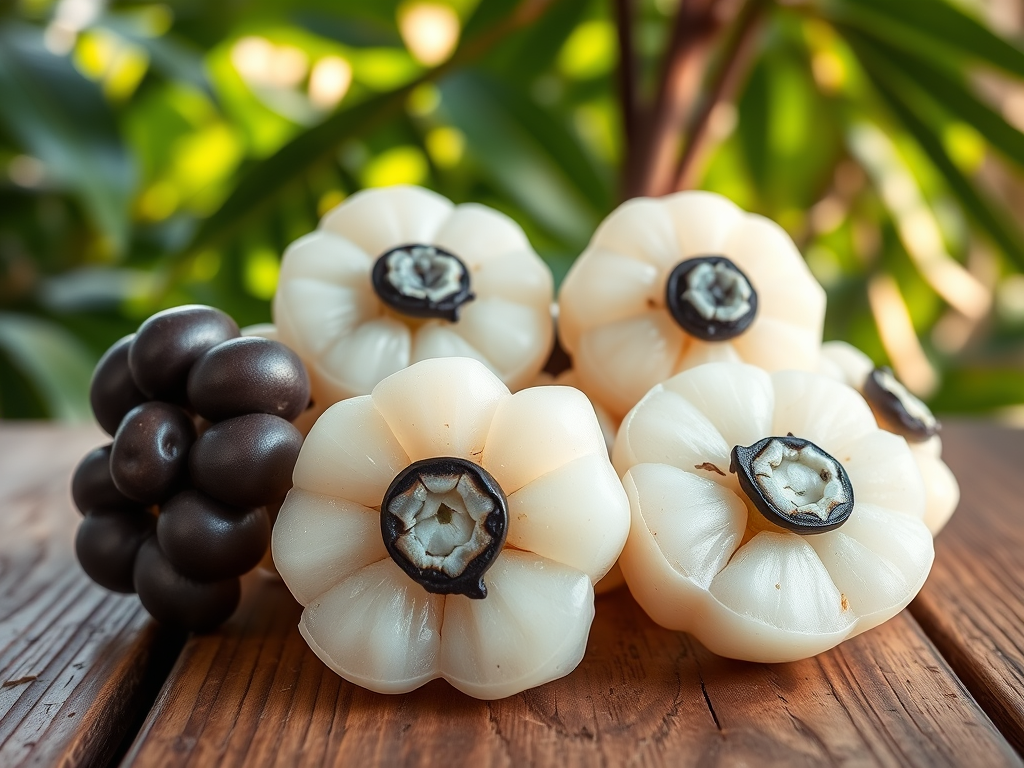
🐉 What Is Longan (Dragon Eye Fruit)?
Longan (Dimocarpus longan) is a tropical fruit native to Southern Asia and China, closely related to lychee and rambutan. Its name—“dragon eye”—comes from its appearance: translucent white flesh surrounding a glossy black seed, resembling an eyeball.
🌿 Botanical & Cultural Origins of Longan (Dimocarpus longan)
Botanical Identity
- Scientific name: Dimocarpus longan
- Family: Sapindaceae (soapberry family)
- Related fruits: Lychee, rambutan
- Native range: Tropical Asia—particularly southern China, Vietnam, Thailand, and Malaysia
- Tree profile:
- Grows 9–12 meters tall (up to 30–40 feet)
- Dense, glossy foliage with oblong leaflets
- Produces light-yellow panicle flowers (male, female, and bisexual)
- Fruits hang in clusters, with thin tan shells and translucent pulp
🌏 Cultural Significance
- Name origin: “Longan” comes from Cantonese lùhng ngáahn (龍眼), meaning “dragon eye”—a poetic reference to the fruit’s appearance: white flesh encasing a black seed, resembling an eyeball
- Historical reverence:
- Documented in ancient Chinese texts over 2,000 years ago
- Used in traditional Chinese medicine to nourish blood, calm the spirit, and enhance memory
- Symbol of clarity, vitality, and spiritual insight in Taoist and Confucian traditions
🌱 Indigenous & Ecological Wisdom
- Cultivation:
- Thrives in warm, humid climates with well-drained sandy loam soil
- Harvested in late summer to early fall
- Hardy tree with dense canopy—provides shade and ecological balance
- Traditional uses:
- Dried longan used in cooling tonics to treat fever and heat-related ailments
- Seeds sometimes used in herbal remedies
- Paired with jujube, astragalus, and ginger in Qi-enhancing decoctions
🍇 Flavor, Texture & Culinary Appeal
🌸 Flavor Profile: Subtle Sweetness with a Musky Whisper
Longan’s flavor is a delicate dance between gentle sweetness and floral muskiness, offering a more understated experience than lychee but with deeper earthy undertones.
- Primary notes: Mildly sweet, clean, and refreshing
- Secondary notes: Lightly musky, faintly floral—like rosewater kissed by tropical breeze
- Sugar-acid balance: Natural sugars are offset by a whisper of tartness, creating a smooth, balanced finish
“Longan’s taste is like a summer breeze through a spice garden—subtle, soothing, and slightly mysterious.”
🍇 Crisp, Juicy, and Gem-Like
The texture of Longan is one of its most captivating features:
- Flesh: Translucent, firm, and juicy—similar to a grape but slightly denser
- Mouthfeel: Smooth and succulent with a satisfying snap when bitten
- Seed: Glossy black and inedible, often removed before serving
- Visual appeal: When peeled, the fruit resembles a polished gemstone—snowy white flesh encasing a dark “dragon eye” seed
🍴 Culinary Versatility: From Raw Rituals to Herbal Tonics
Longan’s subtle complexity makes it a versatile ingredient across sweet and savory traditions:
🥗 Raw & Fresh
- Eaten out of hand as a refreshing snack
- Added to fruit platters, tropical salads, or yogurt bowls
🍵 Dried & Infused
- Used in herbal teas with jujube, astragalus, and ginger
- Simmered into soups and broths for depth and sweetness
- Blended into tonics for calming and blood-nourishing effects
🍨 Sweet Creations
- Longan syrup over sticky rice or coconut pudding
- Longan & chia parfait with cinnamon and nutmeg
- Longan ice cream with cardamom and rose essence
🍛 Savory Surprises
- Stir-fried with tofu and lemongrass
- Added to rice dishes for a sweet contrast
- Paired with duck or pork in Southeast Asian cuisine
🍛 Dragon Eye Lemongrass Tofu Stir-Fry
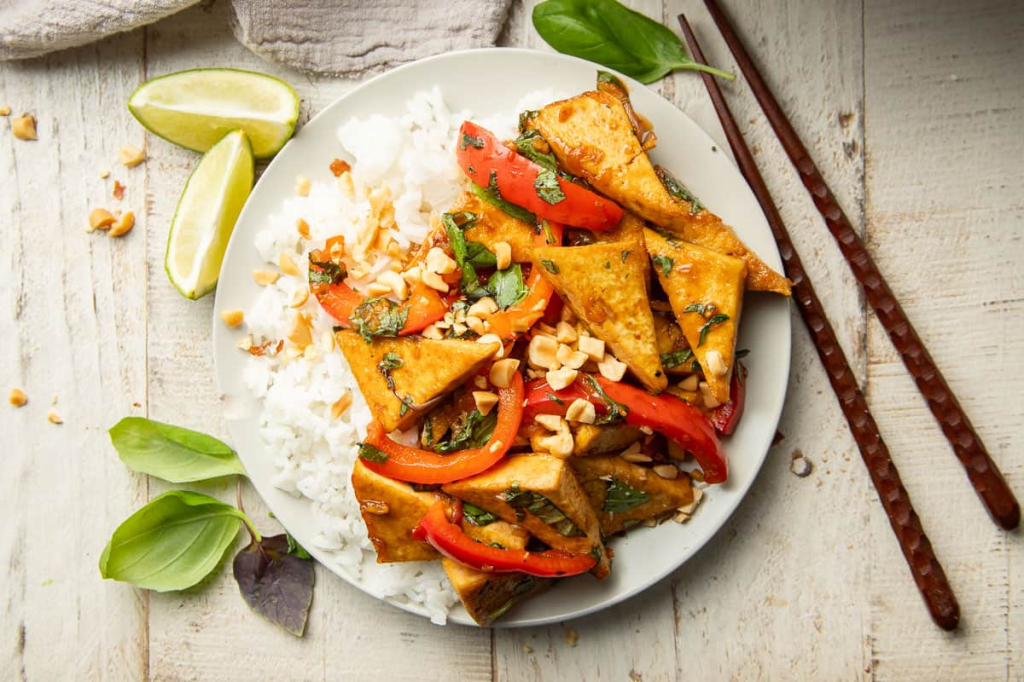
This lemongrass tofu is drenched in a zippy hoisin-lime sauce and served with sweet stir-fried peppers, fresh basil, and crunchy peanuts. It’s an intensely flavorful vegan dinner that’s easy enough for a busy weeknight! (FULL RECIPE)
✨ Flavor Notes
- Lemongrass brings citrusy brightness and warmth
- Longan adds a musky sweetness that balances the savory umami
- Tofu acts as a sponge for the aromatic sauce
- Basil & peanuts add texture and herbal lift
🌟 Nutritional & Medicinal Benefits
| Nutrient (per 100g) | Amount | Benefit |
|---|---|---|
| Vitamin C | 84 mg | Immune support, antioxidant |
| Riboflavin (B2) | 0.14 mg | Energy metabolism |
| Potassium | 266 mg | Heart health, fluid balance |
| Polyphenols & Flavonoids | — | Anti-inflammatory, anti-aging |
🧘♀️ 🧬 Medical Uses of Longan: Then vs Now
🕯️ Traditional Uses (Then)
Longan (Dimocarpus longan), known as “dragon’s eye,” has been revered in Asian medicine for centuries:
- Relaxation & Sleep Aid
- Used in Traditional Chinese Medicine (TCM) to calm the spirit and treat insomnia
- Often brewed into herbal teas or tonics for anxiety and restlessness
- Blood Nourishment
- Believed to tonify blood and improve circulation
- Prescribed for fatigue, paleness, and dizziness
- Heat-Related Ailments
- Used to cool internal heat and treat fevers
- Dried longan added to soups to balance “yin” and “yang”
- Women’s Health
- Given postpartum to restore vitality
- Used to regulate menstrual cycles and support fertility
🧪 Modern Uses (Now)
Contemporary research validates and expands on longan’s therapeutic potential:
- Antioxidant Powerhouse
- Rich in vitamin C, polyphenols, and flavonoids
- Helps reduce oxidative stress and inflammation2
- Immune Support
- Boosts white blood cell production
- Enhances resistance to infections and colds
- Cognitive & Mood Benefits
- Mild sedative effects may aid anxiety and sleep disorders
- Studied for neuroprotective properties
- Skin & Anti-Aging
- Promotes collagen synthesis and skin elasticity
- Protects against UV damage and premature aging
- Cardiovascular Health
- Contains potassium and iron for heart and blood health
- May improve circulation and reduce blood pressure
📊 Key Compounds & Effects
| Compound | Traditional Role | Modern Function |
|---|---|---|
| Polysaccharides | Tonify blood, boost energy | Immunomodulation, anti-fatigue |
| Flavonoids | Calm spirit, reduce heat | Antioxidant, anti-inflammatory |
| Vitamin C | Vitality, skin glow | Immune boost, collagen support |
| Iron | Treat dizziness, fatigue | Red blood cell production |
| Alkaloids & Carotenoids | Rarely classified traditionally | Anti-aging, anticancer potential |
🌿 Cultural Continuity
- Longan remains a staple in Chinese herbal shops, often sold dried for medicinal soups
- In Vietnam and Thailand, it’s still used in folk remedies for stress and heatstroke
- Modern supplements now include longan extract for sleep, immunity, and skin health
🛍️ Featured Longan Products
Here’s a curated selection of Longan offerings that blend wellness, convenience, and cultural authenticity:
| Product | Description | Best For |
|---|---|---|
| Longan Fruit (Dragon Eye) | Fresh longan with juicy, floral sweetness. High in vitamin C and gallic acid. | Snacking, fruit salads, traditional desserts |
| Wanhua Hall Dried Longan Pulp | Sulfur-free, no sugar added. 100% natural. | Cooking, chewing, herbal tonics |
| Organic Dried Longan | Certified organic, calming herb for overworked minds. | Teas, soups, daily wellness rituals |
| Byait Dried Longan Pulp | Sun-dried, no additives. Rich in vitamins. | Baking, snacking, infusions |
| Byait Dried Longan (Alumigogo) | Same product, alternate source. | On-the-go snacking, teas |
🧘♂️ Calm & Clarity Flavor Matrix: Longan + Warming Herbs
| Ingredient | Flavor Profile | Medicinal Synergy | Cultural Resonance | Suggested Format |
|---|---|---|---|---|
| Longan | Sweet, musky, floral | Nourishes blood, calms spirit, boosts Qi | Symbol of clarity in Chinese medicine | Fresh, dried, syrup |
| Ginger | Spicy, pungent, warming | Stimulates digestion, improves circulation | Ayurvedic & Asian culinary staple | Fresh slices, powder, tea |
| Cinnamon | Sweet, woody, spicy | Balances blood sugar, warms body | Ancient spice of trade and ritual | Stick, powder, infused honey |
| Astragalus | Earthy, slightly sweet | Strengthens immunity, tonifies Qi | Revered adaptogen in TCM | Sliced root, decoction, powder |
🔥 Blend Inspiration:
“Dragon’s Breath Elixir” A calming tonic that blends dried longan, ginger root, cinnamon bark, and astragalus slices simmered into a golden broth. Ideal for evening rituals, seasonal transitions, or post-meditation clarity.
🔥 Dragon’s Breath Elixir Recipe
A warming, immune-charging herbal tonic with longan, ginger, and cayenne
The elixir is a fiery wellness shot—ideal for morning rituals or seasonal immunity.
🌿 Ingredients
- 1/2 cup dried longan (or fresh, pitted)
- 1 thumb fresh ginger, sliced
- 1 clove garlic, crushed
- 1/2 tsp cayenne pepper
- 1 tbsp raw honey
- 1 tbsp apple cider vinegar
- 2 cups water
- Juice of 1/2 lemon
- Optional: pinch of turmeric or astragalus root
🔥 Instructions
- Simmer the base
- In a small pot, combine longan, ginger, garlic, and water.
- Simmer for 15–20 minutes until fragrant and slightly reduced.
- Strain & blend
- Strain the liquid into a mug or bottle.
- Stir in cayenne, honey, lemon juice, and apple cider vinegar.
- Serve hot or chilled
- Sip warm for a throat-soothing effect, or chill for a fiery cold tonic.
💥 Benefits Snapshot
| Ingredient | Traditional Use | Modern Benefit |
|---|---|---|
| Longan | Calm spirit, nourish blood | Antioxidant, immune support |
| Ginger | Warm digestion, clear cold | Anti-inflammatory, gut health |
| Cayenne | Stimulate circulation | Metabolism boost, pain relief |
| Garlic | Expel toxins | Antiviral, antibacterial |
| Lemon & ACV | Balance pH, detoxify | Liver support, digestion aid |
Longan is generally safe and beneficial for most people, there are specific groups who should limit or avoid its consumption due to health risks or sensitivities.
⚠️ Who Should Be Cautious with Longan
1. People with Diabetes
- Why: Longan contains natural sugars (glucose and fructose), which can spike blood sugar levels if consumed in excess.
- Advice: Enjoy in moderation; pair with protein or fiber-rich foods to slow absorption.
2. Individuals with Fatty Liver or High Blood Pressure
- Why: Excess sugar intake may worsen metabolic conditions and increase blood volume flow, potentially elevating blood pressure.
- Advice: Limit intake and monitor symptoms; consult a healthcare provider if unsure.
3. Pregnant Women with “Body Heat” Symptoms
- Why: In Traditional Chinese Medicine, longan is considered a “warming” fruit. It may exacerbate symptoms like constipation, dry mouth, or vaginal bleeding in heat-sensitive pregnancies.
- Advice: Avoid during early pregnancy or if experiencing heat-related symptoms.
4. People Prone to Acne or Skin Sensitivities
- Why: High sugar content may contribute to skin flare-ups or rashes, especially in those with internal heat or hormonal imbalance.
- Advice: Balance with cooling foods and hydration (e.g., cucumber, leafy greens).
5. Obese Individuals or Those on Weight-Loss Plans
- Why: Longan is calorie-dense and sweet—eating large quantities may sabotage weight goals.
- Advice: Use as a treat, not a staple; opt for low-sugar fruits like berries or cucumbers.
6. Children Under 5
- Why: Longan’s round shape and slippery texture pose a choking hazard.
- Advice: Always serve peeled and chopped; supervise closely.
7. People with Digestive Disorders
- Why: Longan may cause bloating or stomach upset in sensitive individuals.
- Advice: Start with small amounts and observe reactions.
🍒 Fruit Safety Matrix: Who Should Avoid Longan?
| Group | Risk Factor | Recommendation |
|---|---|---|
| Diabetics | High natural sugar | Consume in moderation |
| Pregnant (heat symptoms) | Warming nature in TCM | Avoid during early pregnancy |
| High BP / Fatty Liver | Sugar may worsen symptoms | Limit intake |
| Acne-prone / Skin sensitive | May trigger flare-ups | Balance with cooling foods |
| Weight-loss seekers | Calorie-dense, sweet | Use as occasional treat |
| Children under 5 | Choking hazard | Serve peeled & chopped |
| Digestive disorders | May cause bloating | Test with small amounts |
🧠 Tip
When in doubt, pair longan with fiber-rich or cooling foods to balance its “warming” nature and glycemic impact.
⚠️ Disclaimer
This post is for informational and cultural storytelling purposes only. It’s not medical advice—unless your doctor moonlights as a fruit shaman with a degree in tropical folklore.
🍍 Consult a qualified healthcare provider before making dietary changes, especially if you’re juggling chronic conditions, pregnancy, or a toddler with ninja reflexes.
Ninja reflexes” is a playful way to describe ultra-fast reaction times, sharp sensory awareness, and precise motor control—like the kind you’d expect from a stealthy martial artist dodging flying shurikens or catching flies with chopsticks.
In real-world terms, it refers to:
- ⚡ Quick reflexes: Reacting instantly to stimuli (like catching a falling object mid-air)
- 🧠 Strong CNS coordination: Your central nervous system rapidly processes sensory input and triggers accurate movement
- 🕵️ Heightened perception: Being hyper-aware of surroundings, motion, and timing
The phrase even inspired a video game called Ninja Reflex, which tested players’ reaction speed and hand-eye coordination in martial arts-themed mini-games.
🍃 At EJADA, we honor the wisdom of tradition and the rigor of science—but we also believe your gut instinct deserves a seat at the table.
 EJADA
EJADA 
Leave a comment