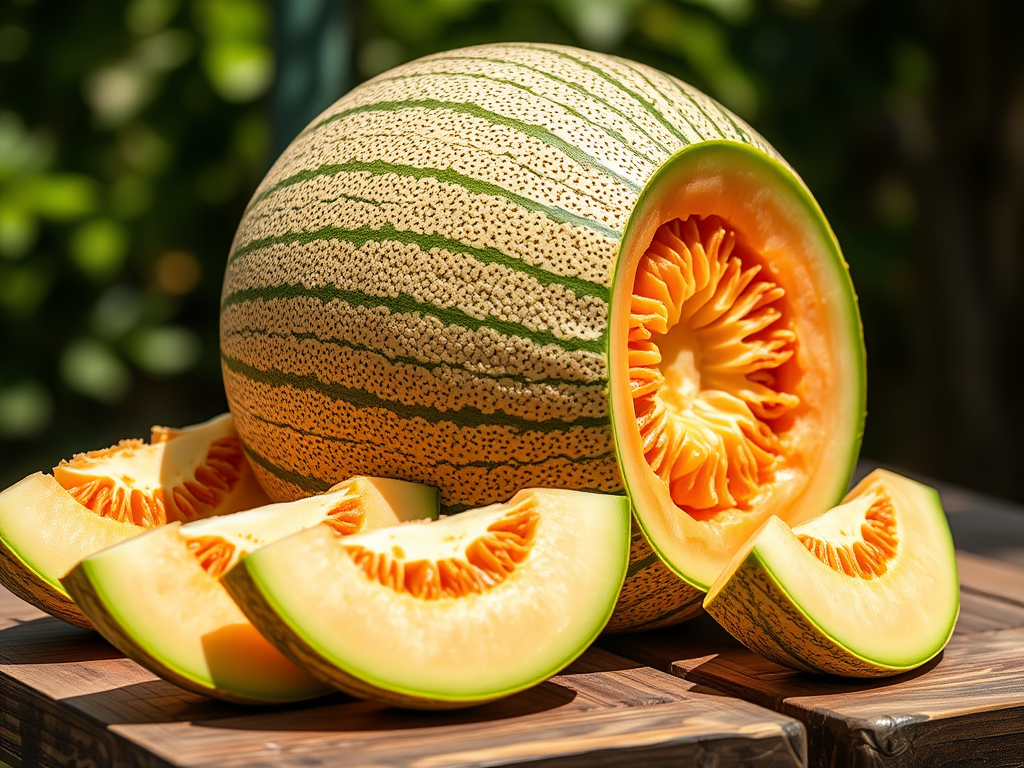
Have you ever heard of Lambkin?
It’s one of those almost mythical fruits that slips under the radar, quietly holding its own in a world dominated by lychee, loquat, and the usual botanical celebrities. Lambkin’s story, much like its flavor, is subtle yet surprising.
Lambkin melon, also known as sweet melon or a type of piel de sapo (“toad skin”) melon, is a relatively new cultivar in the melon world. It was developed in Taiwan by the Known-You Seed Company, which is renowned for its innovative melon hybrids. Lambkin was first introduced to the U.S. market in the late 2010s, making it a fresh face in the lineage of muskmelons.
Despite its recent debut, Lambkin draws from a rich heritage: the piel de sapo melon itself has been cultivated in Spain for decades, especially in regions like La Mancha and Murcia. So while Lambkin is a modern twist, it’s rooted in a tradition of melons that have been grown and loved for generations.
🧬 Nutritional Whispers with a Wellness Roar While Lambkin isn’t storming supermarket aisles yet, early whispers suggest it’s a hidden gem in the antioxidant game. Think polyphenols, flavonoids, and natural fiber that play well with gut health and inflammation. Some fringe nutritionists even hail it as a “quiet adaptogen”—a fruit that helps the body handle stress without the drama.
🌍 Cultural Lore & Botanical Secrets Word on the vine is that Lambkin may have roots in Southeast Asia or the Caribbean, tucked away in community gardens or wild thickets. It’s one of those fruits passed down in oral tradition, prized for its cooling properties and used in local tonics or sweet pickles. Some folklore links it to calming fevers or aiding digestion during summer heatwaves.
⚡ Branding Vibe: The Fruit That Refused Fame
Lambkin is your underground icon—the Banksy of berries, if you will. It’s not mass-produced, not polished for Instagram, and definitely not trying too hard. That makes it perfect for bold merch: shirts that say “Lambkin: too cool for mainstream,” or tote bags with illustrations of a fruit shaded like it’s dodging paparazzi.
Lambkin is still a bit of a mystery in mainstream nutrition circles, but if it’s a variety of muskmelon—as some sources suggest—then it’s packing some serious wellness potential. Here’s a breakdown of the known health benefits associated with muskmelon, which may apply to Lambkin too:
🍃 Hydration Hero With over 90% water content, muskmelon is a summer savior for hydration. It helps cool the body and prevent heat-related fatigue.
🫀 Blood Pressure Balancer Rich in potassium and low in sodium, it supports healthy blood pressure levels by relaxing blood vessels and aiding smooth circulation.
🧠 Stress & Sleep Support Muskmelon contains compounds that help relax nerves and muscles, potentially easing insomnia and boosting mental clarity.
🧬 Immunity Booster Loaded with vitamin C, it stimulates white blood cell production and helps fight off infections.
🧘 Digestive Aid Its fiber and water combo makes it a gentle remedy for constipation and indigestion, promoting regular bowel movements.
🧖♀️ Skin & Hair Glow-Up Vitamin A and beta-carotene support skin health and hair growth, while antioxidants help reduce inflammation and blemishes.
🩺 Heart Health Ally Adenosine in muskmelon has blood-thinning properties, which may reduce the risk of heart disease.
🧪 Kidney Cleanser High water content and certain extracts (like oxykine) may help prevent kidney stones and support detoxification.
If Lambkin shares even half of these traits, it’s not just a fruit—it’s a wellness whisperer
Lambkin melon, a hybrid variety of piel de sapo, thrives with a mix of classic melon-growing techniques and a few cultivar-specific tweaks.
Planting & Growing Conditions
- Climate: Lambkin prefers warm, dry conditions with full sun exposure. Ideal temperatures range from 70–85°F (21–29°C).
- Soil: Well-drained sandy or loamy soil with a pH between 6.0 and 7.5 is best. Enrich with compost or aged manure for fertility.
- Spacing: Sow seeds or transplant seedlings with 60–90 cm between plants and 150–200 cm between rows.
- Timing: In northern climates, Lambkin can be direct-sown in late spring and harvested in about 75 days, making it suitable for shorter growing seasons.
💧 Watering & Irrigation
- Keep soil consistently moist during germination and early growth.
- Increase watering during fruit development, then reduce slightly before harvest to concentrate sugars and improve flavor.
🌿 Trellising & Pest Management
- Vines spread about 5–6 feet, but growing them on a trellis can save space and reduce squash bug infestations.
- Monitor for common melon pests like aphids and cucumber beetles; use row covers or organic sprays as needed.
🍈 Ripening & Harvesting
- Lambkin doesn’t “slip” from the vine like cantaloupe. Instead, look for:
- Yellowing skin
- Soft blossom end
- Browning of the nearest leaf These are your cues to harvest for peak sweetness.
🧊 Storage & Shelf Life
- Lambkin melons have a long shelf life—up to 6 weeks at room temperature, earning them the nickname “Christmas melon”.
Lambkin melon is a seasonal treasure with surprising versatility. Here’s how and where it typically shows up:
🍈 Availability
- Seasonal Window: Lambkin melons are available summer through fall, and thanks to their long shelf life, they often remain in circulation into winter months.
- Regions:
- U.S. Markets: Found at farmers markets in places like Southern California, Minneapolis, and Utah.
- International Supply: Grown in Spain, Taiwan, and parts of South America, with exports reaching Europe and North America.
🛍️ Forms You’ll Find It In
- Whole Fresh Melon: The most common form—oval-shaped, mottled rind, weighing 2–4 lbs.
- Sliced or Cubed: Sold pre-cut in some gourmet grocers or used in fruit platters.
- Pureed or Juiced: Occasionally featured in smoothies, sorbets, or melon-based beverages.
- Culinary Use:
- Wrapped in prosciutto
- Tossed into salads
- Blended into chilled soups or desserts
- Seeds for Home Growing: Available from specialty seed vendors like Johnny’s Selected Seeds and Weseeds.com, often in packets of 15 seeds.
Melons that’s widely available and offers similar health benefits to Lambkin, here are a few top contenders that are easy to source and pack a wellness punch:
🍈 Cantaloupe (Muskmelon)
- Availability: Found year-round in most U.S. grocery stores.
- Health Benefits:
- High in vitamin C (immune support)
- Rich in beta-carotene (skin & eye health)
- Good source of potassium (blood pressure regulation)
- Contains fiber for digestion
- Flavor Profile: Sweet, floral, and juicy—great for smoothies, salads, or wrapped in prosciutto.
🍈 Honeydew Melon
- Availability: Common in supermarkets and fruit platters.
- Health Benefits:
- High water content for hydration
- Contains vitamin C and B6
- Supports collagen production and skin health
- Mild sweetness makes it ideal for desserts and chilled soups.
🍈 Galia Melon
- Availability: Increasingly found in specialty grocers and farmers markets.
- Health Benefits:
- Hybrid of cantaloupe and honeydew
- Offers fiber, vitamin C, and potassium
- Known for its digestive support and refreshing flavor
- Flavor Profile: Sweet with hints of vanilla and tropical notes.
🍈 Santa Claus Melon (Piel de Sapo)
- Availability: Seasonal but gaining popularity in U.S. markets.
- Health Benefits:
- Similar to Lambkin in texture and sweetness
- High in water, vitamin C, and fiber
- Long shelf life makes it great for winter wellness
- Flavor Profile: Mildly sweet, often compared to cantaloupe with a firmer bite.
🍽️ Best Ways to Eat Lambkin Melon Here’s how chefs and home cooks elevate it:
- Raw & Simple:
- Slice and serve chilled — the flesh is best enjoyed at room temp after a few days on the counter for peak flavor
- Scoop into balls or wedges with a drizzle of lime juice and sea salt for contrast
- Savory Pairings:
- Wrap in prosciutto for a salty-sweet appetizer
- Toss into chicken salad or pair with bitter greens like arugula
- Add to summer salsas with jicama, cucumber, basil, or mint
Sweet & Smooth:
- Blend into smoothies, sorbets, or ice cream
- Use in fruit salads with berries and citrus
- Puree for cocktails or mocktails — think spa vibes
Here are some savory pairings that elevate Lambkin melon from sweet treat to culinary provocateur:
Melon & Prosciutto Skewers with Mozzarella & Mint
- Ingredients: Lambkin melon cubes, prosciutto slices, mini mozzarella balls, fresh mint
- Flavor Play: Sweet, salty, creamy, and herbaceous
- Recipe: Skewer melon, prosciutto, and mozzarella. Drizzle with white balsamic, olive oil, and a pinch of cayenne. Garnish with mint
🥗 Savory Melon Salad with Goat Cheese & Greens
- Ingredients: Lambkin melon balls, baby greens, Maine goat cheese, champagne vinegar, olive oil, scallions
- Flavor Play: Juicy, tangy, creamy, and peppery
- Recipe: Toss melon with vinegar and oil, layer over greens, sprinkle cheese and scallions. Add edible flowers for flair
🍕 Cantaloupe & Prosciutto Pizza (Lambkin Remix)
- Ingredients: Lambkin slices, prosciutto, ricotta white sauce, fresh basil
- Flavor Play: Sweet melon meets creamy, salty, and herbal notes
- Recipe: Bake pizza crust with ricotta sauce, top with prosciutto and Lambkin slices post-bake. Finish with basil and balsamic glaze
🥒 Melon & Cucumber Salad with Feta & Lemon
- Ingredients: Lambkin melon balls, cucumber slices, crumbled feta, lemon juice
- Flavor Play: Crisp, creamy, citrusy, and hydrating
- Recipe: Toss all ingredients with olive oil and cracked pepper. Serve chilled for spa vibes
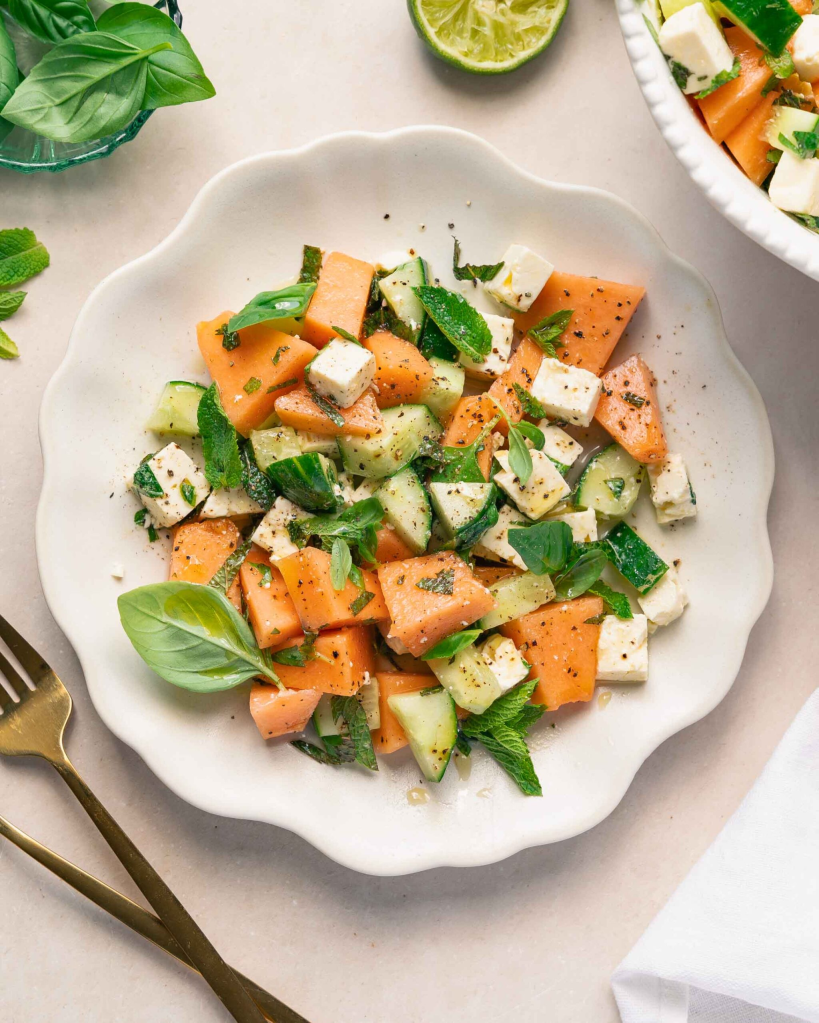
“When the sun scorches, let sweetness and salt be your salvation.”
Full Recipe Savory Melon Salad
Savory melon salads may be refreshing, but they’re not for everyone.
Here are a few groups who might want to steer clear or tweak the recipe:
⚠️ Groups That May Need Caution
- People with melon allergies: Melons like cantaloupe and honeydew can trigger oral allergy syndrome or more severe reactions. Symptoms include itching, swelling, or digestive upset.
- Those with IBS or digestive sensitivities: Melons are high in water and fermentable sugars (FODMAPs), which can cause bloating or gas in sensitive individuals.
- Diabetics or those managing blood sugar: While melons are hydrating, they do contain natural sugars. Pairing them with salty cheeses or dressings may spike glycemic load if not balanced properly.
- Food-combination purists: Some nutrition philosophies suggest melons digest best alone due to their rapid breakdown. Mixing them with proteins or starches might cause fermentation or bloating.
🌿 Final Bite: The Spirit of Lambkin
The Lambkin melon isn’t just another fruit—it’s a seasonal muse. With its sun-kissed skin and sweet, mellow flesh, it whispers of harvests, feasts, and forgotten rituals. Whether nestled in a savory salad or perched on an altar of first fruits, Lambkin carries the quiet elegance of nature’s timing—early, abundant, and beautifully understated.
In a world chasing the exotic, Lambkin invites us back to simplicity. Back to the soil. Back to stories written in seeds and sung by sunlight.
“Sometimes, the rarest legacy is not what’s wild—but what’s quietly wonderful.”
 EJADA
EJADA 
Leave a comment