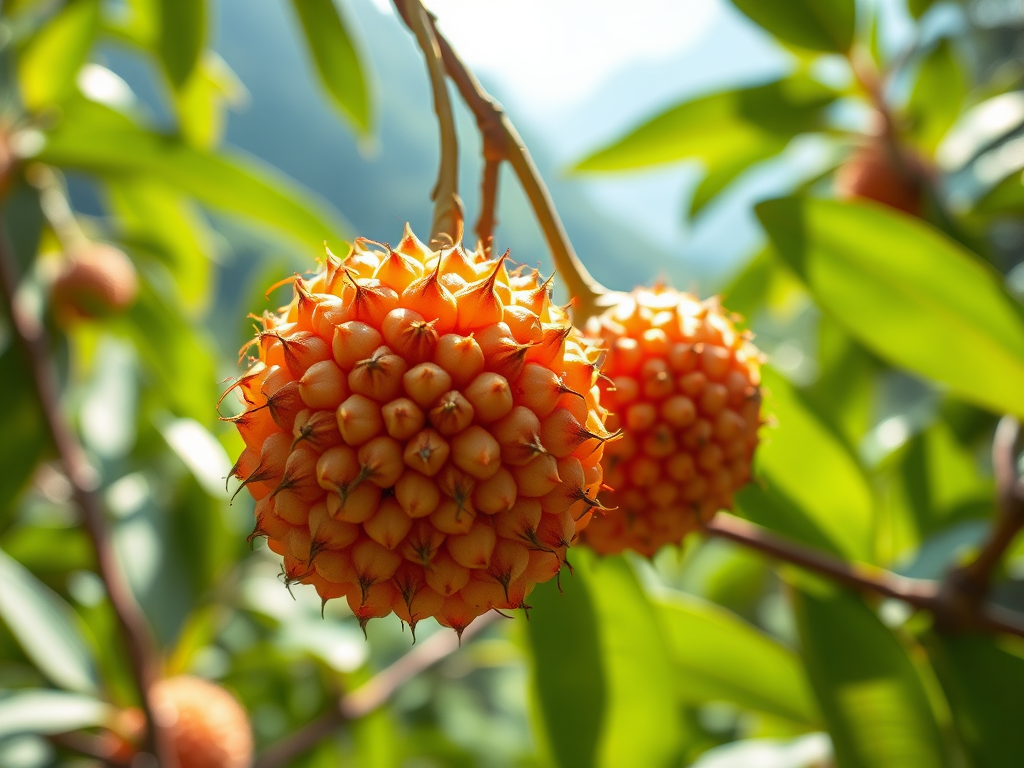
Korlan (Nephelium hypoleucum), often dubbed the “wild lychee,” is a rare tropical fruit native to Southeast Asia, especially found in the mountainous regions of Vietnam, Thailand, Malaysia, Laos, and Cambodia.
🏞️ Early Uses & Cultural Significance
- Wild Foraging: Korlan was never widely cultivated — it grew wild in mountainous regions like Tay Ninh and An Giang in Vietnam, and was gathered seasonally by locals.
- Culinary Rituals:
- In Vietnam, Korlan was eaten fresh or dipped in salt and chili or fish sauce with sugar, often served during rustic gatherings or as a roadside snack.
- Its sour profile made it a favorite for balancing rich or fatty dishes.
- Spiritual Use: In Korean temple medicine, Korlan roots were used to calm the spirit, aligning with the belief that food and medicine are one — a concept known as Yak Sik Dong Won.
🧘♀️ Cultural Insight
While Korlan itself was often consumed fresh or wild-harvested, its pairing with herbs was more contextual than standardized—based on seasonal availability, local beliefs, and the desired energetic effect (cooling, warming, calming, etc.). These combinations reflect a holistic view of food as medicine, deeply embedded in Southeast Asian and Indigenous healing systems.
Korlan (Nephelium hypoleucum) is a wild fruit with deep roots in Southeast Asian traditional medicine, but documentation on specific herbal combinations with Korlan is quite limited. That said, based on regional practices and analogous uses with related fruits like lychee and rambutan, we can infer a few likely pairings used in folk remedies and culinary rituals:
🌿 Ancestral Wisdom: Korlan’s Legacy in the Highlands
Korlan’s presence in Southeast Asian highlands isn’t just botanical — it’s spiritual. For generations, highland communities have viewed Korlan not merely as a fruit, but as a living symbol of resilience, echoing the rhythms of nature and the wisdom of those who came before.
In Vietnamese and Laotian oral traditions, elders speak of Korlan trees growing wild near sacred springs, believed to be guardians of emotional balance. During seasonal transitions, Korlan was offered in rituals to honor ancestors and ask for strength — its tartness seen as a metaphor for life’s trials, and its sweetness as the reward of endurance.
The act of foraging Korlan — often done communally — was more than sustenance. It was a ceremony of remembrance, where stories were shared, songs were sung, and the land was thanked. These gatherings reinforced kinship and passed down ecological knowledge, such as when to harvest and how to pair Korlan with herbs for healing tonics.
Even today, some herbalists in the region blend Korlan pulp with wild ginger and lemongrass to create teas that “cool the heart” — a phrase that reflects both emotional and physical restoration. This practice embodies the ancestral belief that food is medicine, and that healing begins with honoring the land and its gifts.
🌿 Likely Herbal Pairings with Korlan
| Herb | Purpose in Combination | Traditional Context |
|---|---|---|
| Lemongrass | Enhances digestion, adds citrus aroma | Used in Vietnamese teas and tonics |
| Ginger | Warms the body, aids circulation and immunity | Often paired with sour fruits in herbal brews |
| Mint | Cools the system, balances sourness | Used in Thai and Lao fruit salads |
| Turmeric | Anti-inflammatory, supports liver detox | May be added to fermented fruit tonics |
| Holy Basil (Tulsi) | Adaptogenic, stress-reducing | Used in Ayurvedic-style infusions |
| Coriander Seed | Aids digestion, balances pungency | Sometimes used in fruit chutneys or decoctions |
🧪 Folk Preparation Styles
- Korlan Herbal Decoction: In rural Vietnamese and Lao traditions, Korlan pulp was sometimes simmered with ginger and lemongrass to create a warming tonic for respiratory and digestive support.
- Fermented Fruit Tonics: Korlan was occasionally fermented with turmeric and mint in earthen jars, believed to enhance its immune-boosting properties.
- Cooling Fruit Salads: Mint and holy basil were added to fresh Korlan pulp with lime juice and chili for a refreshing, medicinal snack.
🧘♀️ Cultural Insight
While Korlan itself was often consumed fresh or wild-harvested, its pairing with herbs was more contextual than standardized—based on seasonal availability, local beliefs, and the desired energetic effect (cooling, warming, calming, etc.). These combinations reflect a holistic view of food as medicine, deeply embedded in Southeast Asian and Indigenous healing systems.
🍊 Nutritional Profile
While Korlan hasn’t been extensively studied like lychee or rambutan, its nutritional traits are promising:
| Nutrient | Role in Health |
|---|---|
| Vitamin C | Boosts immunity, collagen production |
| Antioxidants | Fights oxidative stress, supports skin |
| Iron (trace) | Supports red blood cell formation |
| Potassium | Regulates blood pressure and hydration |
- The pulp is juicy and slightly sour-sweet, rich in polyphenols and flavonoids.
- The seed is toxic, so only the flesh is consumed.
🌿 Medicinal Uses & Traditional Healing
Korlan (Nephelium hypoleucum) has long been valued in Southeast Asian and Korean herbal traditions:
Stress Reduction & Energy Boost: Used as a daily stimulant, Korlan juice was believed to enhance vitality and reduce fatigue — especially during monsoon seasons when immunity was vulnerable.
Immune Support: Folk remedies claimed Korlan could help combat flu, cold, and even herpes viruses, with anecdotal evidence suggesting increased antibody activity after consumption.
ADHD & Focus: In some traditional practices, Korlan was used to improve concentration, particularly in children with attention challenges.
Digestive Aid: Korean herbalists used wild Korlan roots to calm the spirit, strengthen the lungs, and aid digestion — often brewed into decoctions for respiratory and gastrointestinal support.
Blood Sugar Regulation: Though not clinically proven, Korlan was traditionally consumed to help balance blood glucose levels, especially among elders in rural communities.
🍒 Korlan: The Wild Lychee with Medicinal Promise
Scientific Backing from Recent Research
A 2023 study titled “Nutrients, Phytochemicals and In Vitro Disease Prevention of Nephelium hypoleucum Kurz Fruit” highlights Korlan’s impressive potential:
- High Antioxidant Capacity: Lab tests revealed Korlan’s rich polyphenol and flavonoid content that may combat oxidative stress, aging, and inflammation.
- Phytochemical Profile: Contains tannins and other bioactive compounds with immune-boosting and anti-inflammatory effects.
- Disease Prevention Potential: In vitro studies suggest Korlan extracts may help prevent conditions rooted in oxidative damage, like cardiovascular and neurodegenerative diseases.
🧪 Note:
These findings are preliminary and based on lab tests. Human clinical trials are needed to confirm the benefits.
Explore the full study on MDPI →
🌿 Traditional Wisdom Meets Scientific Insight
From the highlands of Vietnam to Korean temple medicine, Korlan’s legacy includes:
- Stress relief & energy restoration when brewed with herbs like holy basil, mint, and ginger
- Digestive & respiratory support via decoctions infused with lemongrass, turmeric, or licorice root
- Skin health & hydration, thanks to its juicy pulp and antioxidant properties
🧪 Herbal Tonic Idea: Korlan + Local Herbs
Create a natural immunity and energy booster:
- Korlan pulp (½ cup), ginger, lemongrass, mint, and tulsi
- Steep in boiling water for 30–45 mins
- Strain, add honey, chill, and enjoy
Perfect for seasonal transitions, travel recovery, or daily vitality 🌱
🔍 SEO Keywords & Meta Description
Keywords:
- Wild lychee benefits
- Korlan antioxidant study
- Herbal tonic with Korlan
- Natural immune booster
- Southeast Asian medicinal fruits
Meta Description:
Unlock the antioxidant power of Korlan, the wild lychee. Backed by research and rooted in Southeast Asian tradition, Korlan pairs beautifully with local herbs to support immunity, digestion, and stress relief.
Korlan may enhance focus and help manage ADHD symptoms, even if anecdotal, is an intriguing thread in its traditional narrative.
Korlan & Focus Enhancement
While no clinical studies specifically link Korlan to ADHD treatment, here’s how traditional use and inferred herbal logic support its role in mental clarity:
- Adaptogenic Pairings: Korlan was often paired with herbs like holy basil (Tulsi) and mint, both known for their cognitive-enhancing and calming properties.
- Stress Reduction: Its use as a daily tonic in some Southeast Asian regions aligns with a goal of balancing emotional and mental states — critical in managing attention challenges.
- Vitamin C & Polyphenols: These compounds support brain health and reduce oxidative stress, which may indirectly enhance focus and cognitive function.
🌿 Anecdotal Use in Practice
In Korean and Vietnamese folk medicine:
- Korlan was brewed with Tulsi or lemongrass and consumed before study or meditation sessions.
- Parents reportedly gave Korlan infusions to children to support alertness and calmness, especially during high-stress seasons like exams.
- Combined with Licorice Root or Ginger, the tonics were said to reduce mental fatigue and enhance sustained attention.
🌱 Cultivation & Origins
- First Cultivated By: There’s no record of a specific individual or group who first cultivated Korlan. It grows wild in Southeast Asia and is not commercially cultivated like its cousins lychee or rambutan.
- Propagation: Traditionally propagated by seed or air layering, but mostly gathered from the wild
- Habitat: Prefers fertile sandy soils at high altitudes (up to 1200 meters), thriving in tropical climates with high humidity
Korlan’s Emerging Footprint in the U.S.
- Tropical Fruit Collectors & Growers: A few niche growers in Florida and Hawaii have experimented with Korlan cultivation from imported seeds. Forums like Tropical Fruit Forum show enthusiasts trading seeds and discussing soil, climate, and propagation techniques.
- Ethnic Markets & Specialty Stores: Occasionally, Korlan may appear in Southeast Asian grocery stores or farmers markets, especially in communities with Vietnamese or Thai populations. However, it’s not commercially cultivated in the U.S.
- Herbal & Nutritional Interest: Some natural health blogs and alternative wellness practitioners mention Korlan’s potential benefits — such as stress reduction, digestion support, and immune boosting — though these claims remain anecdotal and not FDA-evaluated1.
- Academic Curiosity: A few U.S.-based researchers have cited Korlan in studies on tropical biodiversity and phytochemicals, especially in relation to its antioxidant profile.
🌱 Challenges to Wider Use
- Limited Supply: Seeds are hard to come by, and the fruit is not commercially grown due to its dioecious nature (requiring male and female trees) and sensitivity to fertilizers.
- Lack of Awareness: Unlike lychee or rambutan, Korlan hasn’t yet made its mark in mainstream culinary or wellness circles.
🍽️ Culinary Use
Korlan’s culinary versatility is quietly captivating, especially when you consider how its tart-sweet profile bridges rustic traditions and modern fusion.
- Eaten fresh, often paired with salt and chili or fish sauce with sugar in Vietnamese cuisine
- The seed is considered poisonous, so only the pulp is consumed
Korlan Chutney with Ginger & Tamarind
A tangy, spicy, and slightly sweet chutney that honors Korlan’s wild tartness and ginger’s fiery depth. Ideal as a dip, spread, or sidekick to tropical dishes.
🌿 Ingredients:
- 1 cup fresh Korlan pulp (seeded)
- 2-inch piece fresh ginger, peeled and chopped
- 1 tbsp tamarind paste
- 1 tbsp jaggery or raw honey
- 1 tsp cumin seeds
- 1 tsp mustard seeds
- 1 tbsp chana dal (optional, for texture)
- 2 dried red chilies (adjust to taste)
- Pinch of hing (asafoetida)
- Salt to taste
- 1 tbsp coconut oil
- Curry leaves (for tempering)

A tangy, spicy, and slightly sweet chutney that honors Korlan’s wild tartness and ginger’s fiery depth. Ideal as a dip, spread, or sidekick to tropical dishes.
Traditional & Regional Uses
In Southeast Asia, particularly Vietnam and Thailand:
- Rustic Snack: Korlan is often eaten fresh with salt and chili powder, or dipped in fish sauce mixed with sugar — a bold, tangy contrast that highlights its sour notes2.
- Pickled or Fermented: Locals sometimes preserve Korlan in brine or vinegar, pairing it with garlic and lemongrass for a spicy-sour condiment served with grilled meats.
- Fruit Salads: Peeled Korlan segments are tossed with shredded green mango, mint, and crushed peanuts — a vibrant street-style salad.
🧑🍳 Modern Culinary Explorations
In fusion kitchens and experimental wellness cafés:
- Korlan Chutney: Simmered with ginger, jaggery, and tamarind — this makes a tangy spread for flatbreads or cheese boards.
- Korlan Reduction: A syrup made from Korlan juice, honey, and star anise — drizzled over panna cotta or coconut ice cream.
- Korlan & Coconut Cream Parfait: Layered with chia seeds, toasted coconut, and a hint of lime zest — a tropical, nutrient-rich dessert.
🥗 Herbal Pairings & Functional Recipes
Given your EJADA focus, these could be compelling additions:
- Korlan + Tulsi Infusion: A calming tea blend that balances tartness with adaptogenic depth.
- Korlan Glazed Tempeh: A plant-based entrée where Korlan’s acidity cuts through the umami of fermented soy.
- Korlan Salsa: Diced Korlan with red onion, cilantro, and mango — perfect for pairing with grilled fish or jackfruit tacos.
Perfect Pairings for Korlan Ginger Chutney
🌾 Grain-Based Dishes
- Coconut Rice or Jasmine Rice The chutney’s tartness balances the mellow sweetness of coconut or floral notes of jasmine.
- Millet Pilaf with Roasted Veggies Earthy grains and caramelized vegetables make a grounding base for Korlan’s zing.
🥟 Savory Snacks & Starters
- Cassava Patties or Yam Croquettes Root vegetables echo the chutney’s rustic charm and absorb its spice beautifully.
- Stuffed Plantain Cups Sweet plantains filled with black beans or cheese, topped with a spoonful of chutney — a tropical tapas dream.
🍗 Proteins & Mains
- Grilled Chicken or Tandoori Tofu The ginger heat and Korlan tang cut through smoky marinades and add a vibrant finish.
- Seared Fish with Citrus Glaze Especially good with snapper or tilapia — the chutney acts as a bright counterpoint.
🧀 Cheese & Bread Pairings
- Goat Cheese Crostini Spread goat cheese on toasted bread and top with chutney for a sweet-savory bite.
- Flatbreads or Naan Use the chutney as a dip or drizzle — perfect for sharing boards or fusion platters.
🥗 Vegetarian Delights
- Roasted Cauliflower Steaks Brush with chutney before roasting or serve on the side for a layered flavor profile.
- Stuffed Bell Peppers with Quinoa & Herbs A spoonful of chutney adds brightness and depth to the filling.
🌿 Korlan in Cooking: Flavor Meets Function
Korlan isn’t just a tropical treat — it’s a nutritional ally with deep cultural roots and modern culinary relevance.
- Vitamin C: Supports immunity and collagen production, especially when Korlan is paired with leafy greens or plant-based proteins.
- Antioxidants: Rich in polyphenols and flavonoids that help combat inflammation and protect against oxidative stress.
- Dietary Fiber: Aids digestion and improves gut health — ideal for fermented condiments or rustic fruit chutneys.
- Natural Sugars: Offers sustained energy without sugar spikes — perfect in whole-fruit applications like parfaits or chutneys.
🍽️ Functional Culinary Pairings
| 🌱 Recipe Idea | 🧠 Health Benefit |
|---|---|
| Korlan Chutney with Ginger | Digestive support, anti-inflammatory |
| Korlan-Mint Infusion | Mental clarity, stress reduction |
| Korlan Salsa with Mango & Cilantro | Immune boosting, flavor synergy |
| Korlan Glazed Tempeh | Plant-based protein + antioxidant lift |
Pair Korlan with adaptogens like Tulsi or calming agents like lemongrass to boost focus and mood naturally.
Nutritional powerhouse : Waiting to be rediscovered, not just as ingredients, but as wellness traditions rooted in ancestral intelligence especially in functional cooking.
Did You Know?
Korlan belongs to the Nephelium genus — the same botanical family as rambutan and lychee — but it’s often called the “wild cousin” for its tart flair and rugged growth in Southeast Asian highlands.
In traditional Vietnamese medicine, Korlan’s pulp is brewed into cooling teas believed to “settle the heart” and restore vitality after intense heat or emotional stress. 🌿
Its deep red skin also contains trace anthocyanins — the same pigments found in blueberries — known for their antioxidant potential.
Korlan Safety & Usage Tips
A thoughtful reminder for enjoying this tropical treasure
✅ Safe Consumption
- Only eat the translucent pulp — seeds are toxic
- Wash thoroughly before use, especially if foraged or bought fresh
- Start with small amounts if trying for the first time
⚠️ Precautions
- Allergy Alert: May cause mild reactions for those sensitive to lychee or rambutan
- Digestive Balance: Sour and fibrous — overindulgence can cause stomach upset
- Medicinal Use: Benefits are not yet FDA-approved; consult professionals when blending with herbs or supplements
- Fermentation Note: Ensure clean tools and process to prevent spoilage or harmful microbes
While Korlan is generally safe when consumed in moderation, here are some groups who might want to be cautious or consult a healthcare provider before indulging
🚫 Who Should Be Cautious with Korlan Fruit
🧒 Children (especially under 5)
- The seed is considered toxic, and accidental ingestion could be harmful.
- Its sour and astringent profile may cause digestive discomfort in sensitive stomachs.
🤰 Pregnant & Breastfeeding Individuals
- No formal studies confirm Korlan’s safety during pregnancy or lactation.
- Its medicinal claims (like blood sugar regulation or antiviral effects) haven’t been medically validated.
💊 People on Medication
- Those taking blood sugar regulators, antivirals, or digestive aids should be cautious, as Korlan may interact with these pathways.
- Always check with a healthcare provider before adding unfamiliar fruits to a therapeutic diet.
🤧 Allergy-Prone Individuals
- Korlan belongs to the Sapindaceae family (like lychee and rambutan), which can trigger allergic reactions in sensitive individuals.
- Symptoms may include itching, swelling, or gastrointestinal upset.
🩺 Individuals with Acid Sensitivity or IBS
- Its tartness and fiber content may aggravate acid reflux or irritable bowel symptoms in some people.
🌿 Pairing Awareness
- Combining Korlan with calming herbs (e.g., chamomile, valerian) may amplify sedation
- May interact with blood-pressure-lowering herbs — monitor effects
Now You Know: Korlan’s Hidden Story Unveiled
From the shadowed groves of Southeast Asia to the healing tables of tomorrow, Korlan has quietly endured — tart, tenacious, and waiting to be heard.
Its journey isn’t just botanical; it’s ancestral. With roots in ancient medicine, stories woven through generations, and a culinary soul begging to be revived, Korlan calls us back to a time when fruit was more than flavor — it was memory, ritual, and remedy.
Now you’ve peeled back its layers. Now you know its story. The question is: how will you honor it?
Let this be your invitation to taste deeper, create boldly, and revive the forgotten gifts of nature — one fruit at a time 🌱
 EJADA
EJADA 
Leave a comment