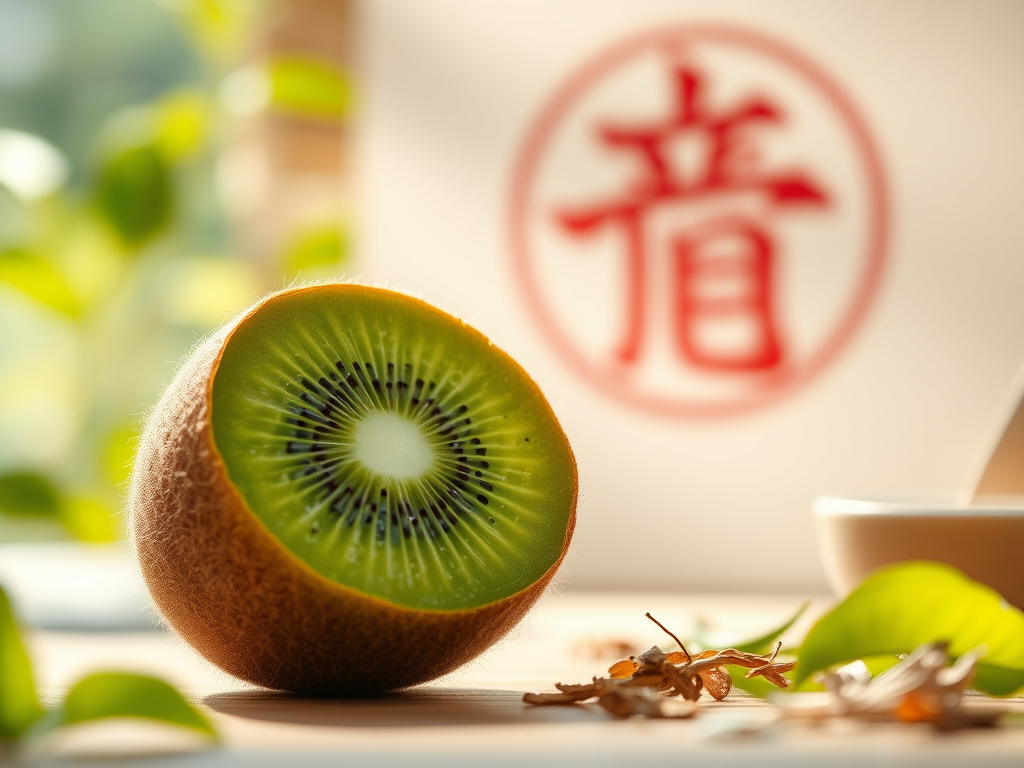
🥝 Kiwi: Ancient Origins & Modern Wisdom
From Yang Tao to Global Superfruit
“Most of us recognize the fuzzy brown fruit as a tangy snack or smoothie staple. But behind the vibrant green lies a tale of ancient botanical wisdom, cultural migration, and potent nutrition.
🌿 What Makes Nutrition “Potent”?
- High nutrient density: Rich in vitamins, minerals, antioxidants, and phytonutrients per calorie.
- Bioavailability: Nutrients that are easily absorbed and utilized by the body.
- Synergistic compounds: Elements like flavonoids, polyphenols, and enzymes that work together to amplify health benefits.
- Functional impact: Supports immunity, digestion, cognition, hormonal balance, and cellular repair.
- Vitamin C powerhouse – nearly twice the amount found in oranges.
- Actinidin enzyme – aids protein digestion, unique to kiwifruit.
- Potassium & magnesium – support heart health and nerve function.
- Lutein & zeaxanthin – protect eye health and reduce oxidative stress.
In traditional Chinese medicine, yang tao (kiwifruit) was revered for its ability to cool the body, aid digestion, and restore balance—an intuitive understanding of its potent nutritional profile long before modern science confirmed it.
🌿 Cultural Origins
China’s Legacy: Known as yang tao, kiwi was prized in traditional medicine for aiding digestion and cooling inflammation.Before it became globally recognized as “kiwifruit,” this vibrant green fruit was known in China as “yang tao,” meaning “sun peach” or “strawberry peach.” Its name evokes brightness, vitality, and a connection to nature’s rhythm—qualities deeply embedded in Taoist philosophy and traditional Chinese medicine.
1. Origins and Symbolism
Native to the mountainous regions of Sichuan and Zhejiang, yang tao was prized for its cooling properties and digestive benefits.
In Taoist herbalism, fruits like yang tao were seen as embodiments of yin energy—refreshing, moistening, and harmonizing the body’s internal balance.
2. Taoist Resonance
The duality of yin and yang is central to Taoism, and yang tao’s name itself reflects this balance: “yang” (阳) represents the active, bright force, while the fruit’s cooling nature embodies “yin.”
Consuming yang tao was believed to restore equilibrium, especially during hot seasons or emotional unrest.
3. Cultural Adaptation and Global Identity
In the 20th century, when New Zealand began cultivating the fruit commercially, it was renamed “kiwifruit” to align with national branding.
Yet its Chinese legacy remains intact, with yang tao still celebrated in regional dishes, herbal tonics, and seasonal rituals.
4. Culinary and Medicinal Use
Traditional Chinese recipes often paired yang tao with hawthorn or chrysanthemum to aid digestion and soothe the liver.
It was also used in infused teas, especially in southern provinces, where it symbolized renewal and clarity.
🥝 Kiwifruit in New Zealand: A Symbol of Identity, Adaptation, and Pride
New Zealand’s Reinvention: Kiwi seeds crossed oceans in the early 20th century, eventually renamed after the kiwi bird and cultivated into the cultivar known today.
Though originally native to China and known as yang tao, the kiwifruit has become a national emblem of New Zealand’s agricultural ingenuity and cultural branding. Its journey from foreign cultivar to beloved staple mirrors the country’s spirit of adaptation and innovation.
🌿 From Chinese Gooseberry to Kiwi
- Introduced to New Zealand in the early 20th century, the fruit was renamed “kiwifruit” in the 1950s to align with the country’s iconic kiwi bird, a flightless native species revered in Māori tradition as a taonga (treasure).
- This renaming wasn’t just marketing—it was a cultural re-rooting, transforming an imported fruit into a symbol of national pride and global identity.
🧬 Symbol of Resilience and Uniqueness
- Like the kiwi bird, the fruit is small, unassuming, and biologically unique—with its fuzzy exterior and vibrant green interior, it reflects the idea that true value lies beneath the surface.
- Its high nutritional density and adaptability to New Zealand’s climate made it a cornerstone of the country’s horticultural success, especially in regions like Bay of Plenty.
🥗 Culinary and Cultural Integration
- Kiwifruit features prominently in festive dishes, summer barbecues, and the iconic pavlova, a dessert often claimed by both New Zealand and Australia.
- It’s also used in fusion teas and tonics, sometimes paired with native herbs like kawakawa or horopito, reflecting a modern revival of Indigenous wellness practices.
🧵 Metaphor for National Identity
- Just as the kiwi bird symbolizes groundedness, intuition, and protection, the fruit has come to represent New Zealanders’ resourcefulness and connection to nature.
- The term “Kiwi” itself is affectionately used to describe New Zealanders, reinforcing the fruit’s symbolic role in cultural storytelling and global recognition.
🌍 Global Presence: Bridging Cultures, Markets, and Meaning
To cultivate a global presence is to transcend borders—not just geographically, but emotionally, culturally, and spiritually. Sharing ancestral wisdom, healing traditions, and fruit-based innovations with audiences across continents, while honoring the roots from which they came.
🧭 Cultural Connectivity
- A global presence allows you to amplify Indigenous voices, rituals, and remedies in a respectful and educational way.
- It invites cross-cultural dialogue—where a Cherokee tea ritual can resonate with a wellness seeker in Tokyo, or a Yoruba proverb can inspire a reader in São Paulo.
🛒 E-Commerce Reach
- Through platforms like Shopify, WordPress, and Facebook Marketplace, EJADA can reach niche audiences seeking natural health solutions and cultural authenticity.
- SEO optimization, multilingual content, and region-specific keywords help localize your message while maintaining brand integrity.
🧬 Scientific Credibility Across Borders
- Sharing research-backed insights on fruits like Jussara Palm or Juniper berries builds trust and authority in global wellness communities.
- Collaborating with international herbalists, ethnobotanists, or cultural historians can enrich your content and expand your network.
💬 Language and Storytelling
- Integrating native proverbs, sayings, and rituals into your posts creates emotional resonance and cultural depth.
- A quote like “The soul would have no rainbow if the eyes had no tears” speaks universally, yet carries the spirit of Cherokee wisdom.
🌱 Sustainability and Biodiversity
Highlighting how local communities cultivate and protect rare fruits can inspire mindful consumption and support regenerative economies.
A global presence also means advocating for fruit revival, biodiversity, and ethical sourcing.
Grown in Italy, California, Iran, and Chile, kiwi now thrives in climates across the globe.
🥝 Kiwi Fruit: Cultural Threads, Not Ceremonial Rites
1. Māori Symbolism (Bird vs. Fruit)
- The kiwi bird, not the fruit, is considered a taonga (treasure) in Māori culture.
- Its feathers were used in ceremonial cloaks, and the bird is seen as a guardian spirit.
- The fruit itself—originally called Chinese gooseberry—was renamed “kiwifruit” in the 1950s to align with national identity.
2. Culinary Rituals
- While not ceremonial, kiwifruit is often featured in festive dishes, especially in summer barbecues and pavlova desserts—both staples of Kiwi gatherings.
- It’s also used in health tonics and smoothies, sometimes paired with native herbs like kawakawa or horopito for wellness blends.
3. Indigenous Pairings
- Some modern Māori chefs and herbalists incorporate kiwifruit into fusion teas or infused waters, blending it with native botanicals for spiritual and digestive balance.
- These are more contemporary rituals than ancient ceremonies, but they reflect a growing movement to honor native ingredients.
Dimensions to Explore
1. Historical Lineage
- Trace the fruit’s origins and its role in Indigenous, colonial, or migratory traditions.
- Highlight its symbolic uses in rituals, mythologies, and ancient medicinal practices.
- Example: Juniper berries used in spiritual cleansing ceremonies among Native tribes or in medieval European apothecaries.
2. Culinary Traditions
- Showcase how a fruit or herb is central to regional dishes or seasonal practices.
- Mention food preparation rituals, family recipes, or festivities.
- Example: Kiwano’s role in Central African fruit salads or tropical fusion desserts.
3. Medicinal and Spiritual Roles
- Explore how cultures use fruits for healing, either spiritually or physically.
- Consider traditional medicine, holistic wellness, or symbolic health rites.
- Example: Jussara Palm fruit used by Amazonian communities as an energy source and offered in ceremonial rites.
4. Societal Impact and Identity
- Look at how the fruit contributes to a community’s identity or economy.
- Explore gender roles, farming traditions, and artisan practices.
- Example: Female-led cooperatives harvesting exotic fruits tied to community empowerment.
5. Artistic and Literary Representation
- Reference depictions of the fruit in art, folklore, poetry, or textiles.
- Consider metaphors, legends, or visual storytelling.
- Example: Fruit baskets as symbols of abundance in Caribbean paintings.
🥝 Kiwi: The Healer in a Fuzzy Coat
From Ancient Roots to Modern Remedies
In Traditional Chinese Medicine, kiwi—or yang tao—is celebrated as a cooling fruit that harmonizes the body’s energy and supports digestive wellness. Cherokee traditions view plant-based healing as spiritual communion, and while kiwi is not native to their lands, its symbolism—vibrant core hidden beneath a fuzzy exterior—aligns with teachings of inner strength and renewal.
🌿 “Nature wraps its power in simplicity. Healing begins in the quiet.” — Inspired by Indigenous wisdom
🧠 Proven Health Benefits of Kiwi
| 🔬 Benefit Category | 🌟 Key Effects |
|---|---|
| Immune System Support | High vitamin C boosts infection resistance and neutrophil activity |
| Heart Health | Potassium, fiber, and polyphenols reduce cholesterol and regulate blood flow |
| Digestive Wellness | Actinidin enzyme aids protein breakdown; fiber relieves constipation |
| Skin & Collagen Boost | Vitamin C stimulates collagen production and protects against oxidative stress |
| Eye Health | Lutein & zeaxanthin protect against macular degeneration |
| Mental Clarity | Carotenoids and antioxidants reduce fatigue and support cognitive balance |
| Blood Sugar Regulation | Low glycemic index makes kiwi diabetes-friendly and aids weight management |
🌿 A Legacy Infused in Every Sip
“Imagine a mother in the highlands preparing tea with medicinal herbs passed down through generations. Her hands, weathered by time yet guided by ancestral memory, gently select leaves of wild yarrow, sweet lemon balm, and fire-colored hibiscus, gathered at dawn beneath mountain mists.
This tea isn’t just refreshment—it is a ritual of remembrance. Each herb recalls a story: of childbirth eased by elderflower, of fever soothed with holy basil, of resilience brewed in the steam of sorrow and celebration alike.”
“In this cup, the wisdom of generations steeps slowly, releasing not just healing compounds but a sacred connection to place, practice, and people. To share it is an act of communion—between past and present, between body and spirit.”
🧬 Nutrition Snapshot (Per 100g)
| Nutrient | Benefit | %DV* |
|---|---|---|
| Vitamin C | Immune, skin, healing | 83% |
| Vitamin K | Bone & blood health | 34% |
| Fiber | Digestion & fullness | 3g |
| Potassium | Heart & muscle balance | 4% |
| Copper | Immunity & metabolism | 15% |
| Folate | Cell growth & repair | 7% |
*%DV = Percent Daily Value
“Healing Through the Lens of Culture & Chemistry”
🌿 Healing Properties: Where Tradition Meets Biochemistry
🧬 Science of Healing
- 🛡️ Antioxidants: Shield cells from damage
- 🌱 Adaptogens: Balance stress response
- ⚙️ Enzymes: Energize metabolism
- ❤️ Polyphenols: Boost immunity & heart health
🌍 Cultural Pathways
- 🌀 Cherokee rituals: Sassafras for soul alignment
- 🌴 Amazonian wisdom: Jussara Palm for vitality
- 🍃 Chinese medicine: Yang tao (kiwifruit) as cooling harmonizer
🌌 Spiritual Renewal
- 🫖 Ceremonial teas: Chamomile, lemon balm for clarity
- 🥝 Symbolism: Kiwano’s radiant core mirrors inner transformation
- 🌲 Wisdom quote: “Let the forest speak through you.”
🥝 Zest of Zen: Kiwi Fusion for Calm & Gut Health
Harmonize Your Body—Awaken Your Clarity
Inspired by yang tao, the cooling kiwi of Traditional Chinese Medicine, this botanical blend supports your digestive rhythm and emotional equilibrium. Infused with calm-inducing herbs and gut-friendly enzymes, “Zest of Zen” is a daily ritual for inner harmony.
🌟 Key Benefits
| 🧬 Benefit | 🌿 Natural Ingredient | 💡 Result |
|---|---|---|
| Digestive Ease | Kiwi + Actinidin | Better protein breakdown, reduced bloating |
| Emotional Calm | Lemon balm + Chamomile | Soothed nerves, lifted mood |
| Gut Health | Prebiotic fiber | Balanced microbiome, improved regularity |
| Immune Boost | Vitamin C | Stronger defenses, lower inflammation |
Recharge your wellness with Zest of Zen: Kiwi Fusion for Calm & Gut Health
A wellness blend inspired by yang tao (kiwifruit in Traditional Chinese Medicine), known for its cooling and harmonizing properties. Paired with calming herbs like lemon balm and chamomile, this fusion supports digestion, emotional clarity, and inner balance.
🌿 “Let tranquility take root—healing begins in the belly.” — Inspired by Indigenous and Taoist teachings
Zest of Zen Smoothie Bowl
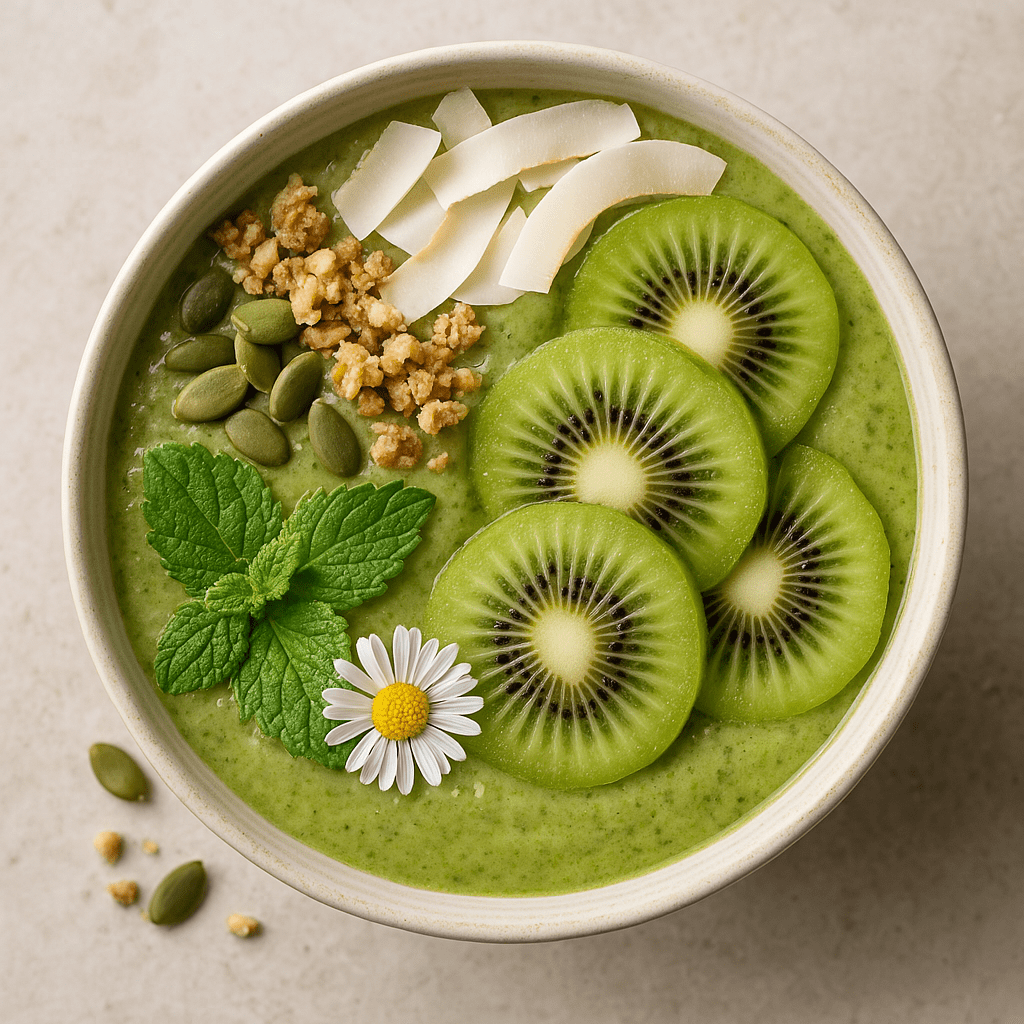
🌿🥝 “Balance isn’t found, it’s blended—like calm in a bowl.” Infused with kiwifruit, coconut cream, lemon balm, and edible flowers, this botanical fusion is your daily reminder to harmonize healing and hustle.
Full recipe: Zest of Zen Smoothie Bowl
Serves: 2 | Prep Time: 10 minutes
🌿 Ingredients
Base:
- 2 ripe kiwis (peeled and sliced)
- 1 frozen banana
- ½ cup coconut cream
- ¼ cup almond or rice milk
- 1 tsp dried lemon balm (or 1 tbsp fresh leaves)
- ½ tsp chamomile (optional, for added calm)
- 1 tsp honey or agave syrup (optional)
- Pinch of sea salt
Toppings:
- Edible blossoms (pansies, violets, or nasturtiums)
- Chia seeds or hemp hearts
- Toasted coconut flakes
- Sliced kiwi or berries
- Granola clusters
🌀 Instructions
Serve immediately and enjoy your moment of edible mindfulness.
In a high-speed blender, combine kiwi, banana, coconut cream, milk, lemon balm, chamomile, and sweetener.
Blend until smooth and creamy. Adjust thickness with more milk if needed.
Pour into bowls and smooth the surface.
Decorate with toppings to evoke botanical harmony.
🌱 Closing Reflection
In a world that often demands speed, the Zest of Zen reminds us that true vitality is quiet, intentional, and rooted in balance. From Indigenous wisdom to Taoist healing, each ingredient is more than nourishment—it’s a narrative. A ritual. A pause. Let every spoonful be a soft rebellion against chaos. Let healing begin in the belly, and radiate through your brand, your content, your community.
 EJADA
EJADA 
Leave a comment