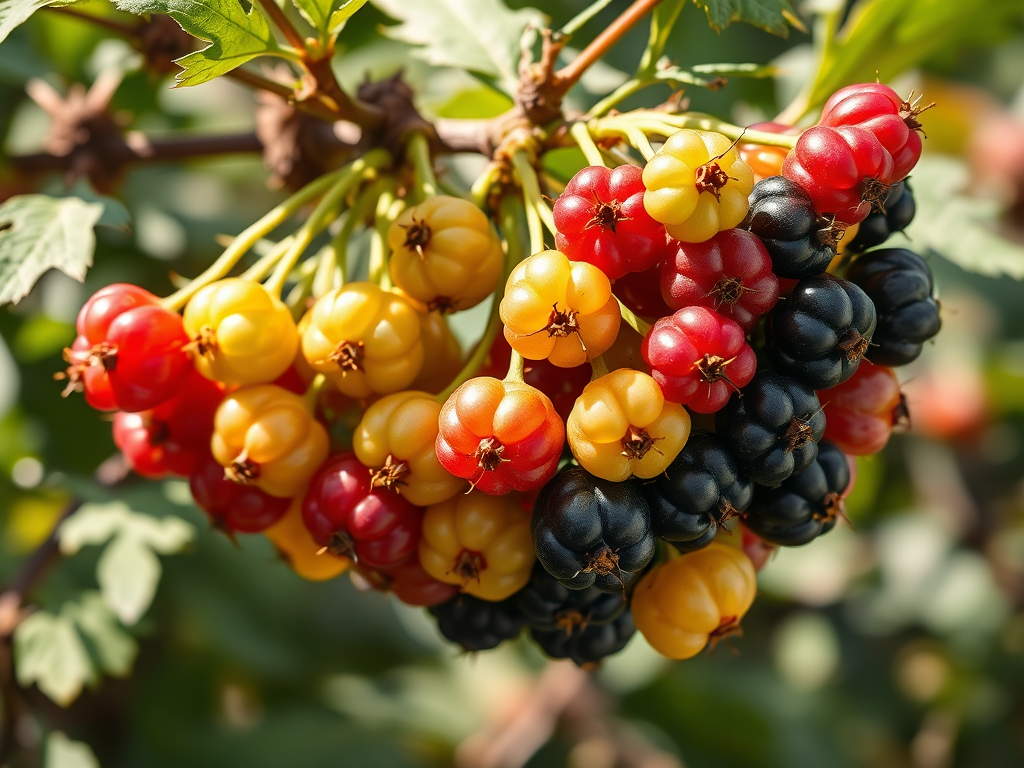
Gooseberries are small, round fruits that grow on spiny shrubs of the genus Ribes, which also includes currants. They come in a variety of colors—green, red, yellow, purple, and even black—and range in flavor from tart to sweet depending on the variety and ripeness
🧩 Theories on the Name’
| Theory | Explanation |
|---|---|
| Literal English | The Oxford English Dictionary suggests it may simply be a combination of “goose” and “berry,” even if the connection to geese is unclear. |
| Dutch/German Influence | Possibly derived from Dutch kruisbes or German Krausbeere, meaning “curly berry” (linked to the curled flower petals)6. |
| French Connection | May stem from French groseille (currant), or groseille à maquereau (“mackerel berry”), referencing its use in sauces for fish. |
| Folk Etymology | Some claim the fruit was once served with goose, but this is likely a retroactive association. |
Earliest cultivation: Likely in monastery gardens during the Middle Ages
First written English mention: Mid-16th century, in William Turner’s Herball (c. 1551)
Popularity surge: 18th–19th centuries in England, especially in Lancashire, where “gooseberry clubs” competed to grow the largest berries
The etymology of “gooseberry” is a bit of a linguistic puzzle:
🧶 Cultural Tidbits
In Britain, gooseberries are affectionately called “goosegogs.”
The phrase “born under a gooseberry bush” is a Victorian euphemism for childbirth, tied to 19th-century slang where “gooseberry bush” referred to pubic hair
🩺 Health Benefits of Gooseberries
🧬 1. Rich in Antioxidants
Gooseberries are packed with vitamin C, flavonoids, anthocyanins, and phenolic acids.
These compounds help neutralize free radicals, reducing oxidative stress and slowing aging.
💪 2. Boosts Immunity
Just 1 cup (150g) provides nearly 46% of your daily vitamin C needs.
Vitamin C enhances white blood cell production and supports the immune system.
🧠 3. Supports Brain Health
High levels of citric acid and antioxidants may protect against Alzheimer’s and stroke by reducing iron overload and inflammation in brain cells3.
❤️ 4. Promotes Heart Health
Contains potassium, fiber, and polyphenols that help:
Lower blood pressure
Improve blood vessel function
Reduce LDL (bad) cholesterol oxidation3
🍽️ 5. Aids Digestion
High in soluble and insoluble fiber, which:
Improves bowel regularity
Reduces constipation
Supports gut microbiota5
🩸 6. Helps Regulate Blood Sugar
Contains chlorogenic acid and fiber that slow sugar absorption and may help manage type 2 diabetes.
🧬 7. May Have Anticancer Properties
Rich in ellagic acid, folate, and anthocyanins, which may inhibit tumor growth and reduce inflammation3.
👁️ 8. Supports Eye Health
Contains vitamin A and carotenoids that may reduce the risk of macular degeneration and improve vision.
🧴 9. Improves Skin and Hair
Used in Ayurvedic and modern skincare for:
Anti-aging effects
UV protection
Hair growth and pigmentation support3
🧪 Nutritional Snapshot (per 100g of raw gooseberries)
| Nutrient | Amount |
|---|---|
| Calories | 44 kcal |
| Vitamin C | 27.7 mg |
| Fiber | 4.3 g |
| Vitamin A | 15 mcg |
| Potassium | 198 mg |
| Manganese | 0.1 mg |
🆚 European Gooseberry vs. Indian Gooseberry (Amla)
| Feature | European Gooseberry (Ribes uva-crispa) | Indian Gooseberry (Phyllanthus emblica / Amla) |
|---|---|---|
| 🌍 Origin | Europe, North Africa, and parts of Asia | Indian subcontinent and Southeast Asia |
| 🌱 Botanical Family | Grossulariaceae | Phyllanthaceae |
| 🍇 Appearance | Small, round, hairy or smooth berries; green, red, yellow, or purple | Small, smooth, translucent green berries with vertical stripes |
| 🍽️ Flavor | Tart to sweet, depending on ripeness | Extremely sour and astringent |
| 🧪 Vitamin C Content | High (about 27.7 mg/100g) | Exceptionally high (up to 300–600 mg/100g) |
| 🧬 Antioxidants | Flavonoids, anthocyanins, vitamin C | Polyphenols, tannins, gallic acid, ellagic acid |
| 🩺 Health Benefits | – Supports digestion and immunity <br> – Aids in blood sugar control <br> – Promotes heart and brain health | – Potent anti-inflammatory and antioxidant <br> – Lowers cholesterol and blood sugar <br> – Improves liver, skin, and hair health <br> – Used in Ayurvedic medicine for rejuvenation |
| 🧴 Traditional Uses | Culinary: pies, jams, sauces (esp. with mackerel) | Ayurvedic: rasayana (rejuvenator), hair oil, chyawanprash, digestive tonics |
| 🧪 Scientific Studies | Limited modern research; mostly culinary and folk use | Extensively studied for anti-aging, anti-diabetic, and cardioprotective effects2 |
| 🧃 Forms Consumed | Fresh, cooked, preserved | Fresh, dried, powdered, juiced, pickled, or in supplements |
🧠 Key Takeaways
European gooseberries are prized for their culinary versatility and moderate health benefits, especially in traditional British and French cuisine.
Indian gooseberries (Amla) are revered in Ayurveda and modern herbal medicine for their exceptional vitamin C content, adaptogenic properties, and broad-spectrum therapeutic effects.
Written by Elise Mandl, BSc, Msc, APD — Updated on July 13, 2023
Gooseberries are nutritious, low-calorie fruits that are rich in vitamins, minerals, and antioxidants. These berries may have health benefits that include lower blood sugar, cholesterol, and blood pressure.
Medically reviewed by Jillian Kubala, MS, RD — Written by Louisa Richards — Updated on January 15, 2024
Gooseberry is a tart fruit high in nutrients, such as vitamin C. It has several potential health benefits, including anti-aging, antioxidant, and anti-carcinogenic properties.
People eat gooseberries in fresh or canned form. Some people also use it as a supplement or beauty product. Amla, also known as Indian gooseberry, has been linked to several health benefits.
This article discusses gooseberries and explores eight potential health benefits. In addition, it explains how to use gooseberries and looks at any safety issues.
Key Takeaways
European gooseberries are prized for their culinary versatility and moderate health benefits, especially in traditional British and French cuisine.
Indian gooseberries (Amla) are revered in Ayurveda and modern herbal medicine for their exceptional vitamin C content, adaptogenic properties, and broad-spectrum therapeutic effects.
Gooseberry Fool with Elderflower: A Tangy Taste of British Heritage
Meta Description: Discover the history and health benefits of gooseberries with this traditional British dessert—Gooseberry Fool with Elderflower. A creamy, tangy treat that’s as nourishing as it is nostalgic.
🧾 Ingredients
- 2 cups fresh gooseberries (green or red)
- 3 tbsp sugar (adjust to taste)
- 1 tbsp elderflower cordial (optional but adds floral depth)
- 1 cup heavy cream (or Greek yogurt for a lighter version)
- ½ tsp vanilla extract
- Mint leaves or edible flowers for garnish
🥣 Instructions
- Cook the Gooseberries In a saucepan, combine gooseberries and sugar. Simmer over medium heat for 10–15 minutes until the berries burst and soften. Stir in elderflower cordial and let cool.
- Whip the Cream In a chilled bowl, whip the cream with vanilla until soft peaks form. (Or whisk yogurt until smooth and creamy.)
- Fold and Chill Gently fold the cooled gooseberry compote into the whipped cream, creating a marbled effect. Chill for at least 1 hour.
- Serve Spoon into glasses or bowls. Garnish with mint or edible flowers. Serve cold.
🌿 Cultural & Historical Context
Gooseberry Fool dates back to 16th-century England, where it was one of the earliest recorded fruit-and-cream desserts. The name “fool” may derive from the French fouler, meaning “to crush,” referring to the mashed fruit. Gooseberries were prized in monastery gardens and later became a staple in Victorian kitchens, often paired with oily fish like mackerel or transformed into jams and pies.
🩺 Health Benefits Snapshot
- Vitamin C: Boosts immunity and skin health
- Fiber: Supports digestion
- Antioxidants: Fights inflammation and oxidative stress
- Low Glycemic: A smart choice for blood sugar balance
✅ Who Can Safely Eat Gooseberries?
👨👩👧👦 Most Healthy Adults and Children
- Gooseberries are non-toxic and rich in vitamin C, fiber, and antioxidants.
- They can be introduced to children around 6 months of age, mashed to avoid choking hazards.
- They are safe to consume fresh, cooked, or in products like jams and juices.
⚠️ Who Should Be Cautious?
🧒 Children & Infants
- Introduce in small amounts to monitor for allergies or skin irritation due to acidity.
- Always mash or cook to reduce choking risk.
🤧 People with Allergies
- Rare, but allergic reactions like itching, swelling, or difficulty breathing can occur.
- Cross-reactivity with other berries is possible—consult an allergist if unsure.
🧬 People Prone to Kidney Stones
- Gooseberries contain oxalates, which may contribute to kidney stone formation in sensitive individuals.
💊 People on Medication
- Gooseberries may interact with blood sugar medications or blood thinners due to their high vitamin C and polyphenol content.
- Always consult a healthcare provider before using gooseberry supplements or extracts.
🚫 What to Avoid
| Unsafe Part | Why to Avoid |
|---|---|
| Unripe gooseberries | May contain higher levels of solanine-like compounds, which can cause stomach upset |
| Leaves and stems | Contain toxic alkaloids and should not be consumed |
| Wild gooseberries | Safe if properly identified, but some look-alikes in the Ribes family may be toxic5 |
🧠 Tip: Always introduce new fruits gradually, especially to children or those with dietary restrictions.
Gooseberries are grown in the U.S., though they’re more commonly associated with Europe. In the U.S., their cultivation was historically restricted in some states due to their role in spreading white pine blister rust, a disease harmful to pine trees. However, many of those restrictions have been lifted or relaxed, and gooseberries are now grown in cooler regions like the Northeast, Pacific Northwest, and parts of the Midwest.
🧠 Summary
Gooseberries are a safe and healthful fruit for most people when ripe and properly prepared. However, individuals with allergies, kidney issues, or those on certain medications should exercise caution. As with any new food, especially herbal remedies or supplements, it’s wise to start small and consult a healthcare provider if you have underlying conditions.
 EJADA
EJADA 
Leave a comment