🟠 Kiwano: The Spiky Jewel of the Kalahari
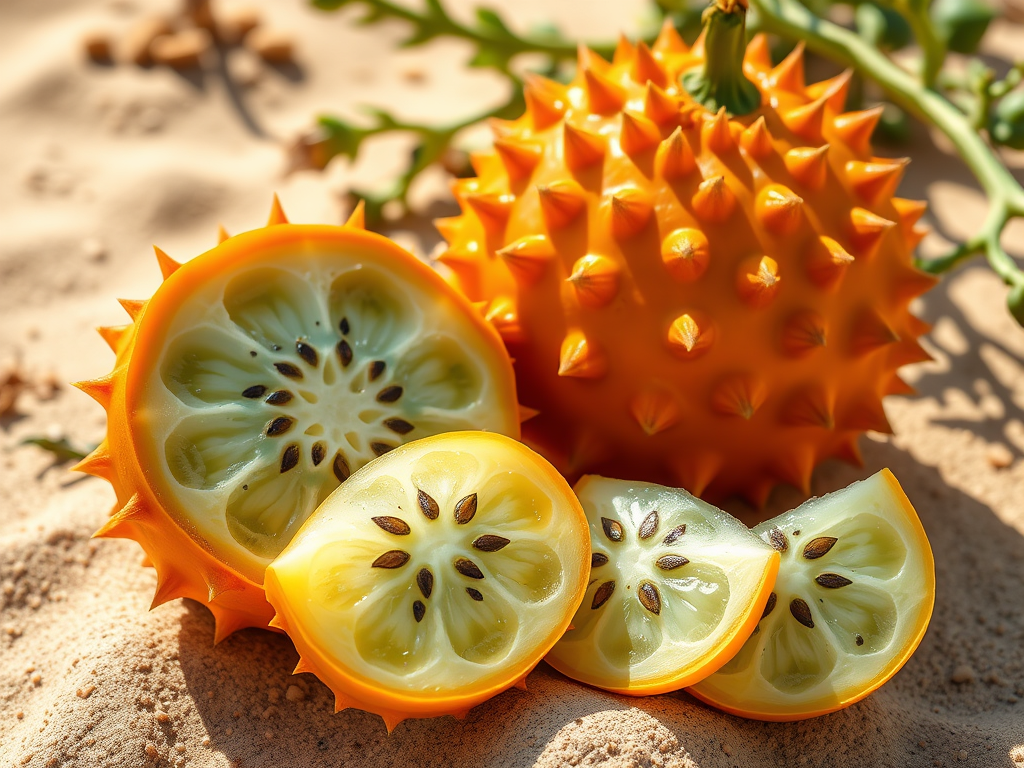
Imagine stumbling upon a fruit so alien-looking it could be mistaken for a prop in a sci-fi film — bright orange skin, covered in horn-like spikes, and a jelly-green interior that glistens like emeralds. This is Kiwano, also known as the African horned cucumber, and its story is as wild and wondrous as its appearance.
🟠 What Does Kiwano Look Like?
Kiwano, or African horned cucumber, is a fruit that looks like it was designed by nature to turn heads:
- Shape & Size: Oval to oblong, typically 10–15 cm long
- Skin: Vibrant orange or golden-yellow when ripe, covered in prominent horn-like spikes
- Interior: When sliced open, it reveals a lime-green, jelly-like pulp filled with edible seeds
- Texture: The outer rind is thick and leathery, while the pulp is slippery and juicy — almost like passionfruit meets cucumber
Its alien-like appearance makes it a favorite in gourmet plating and exotic fruit displays.
🌿 How Kiwano Grows
Kiwano is a vigorous climbing vine from the cucumber family (Cucurbitaceae), and it thrives in warm climates:
🌞 Growing Conditions
- Climate: Prefers temperatures between 68–86°F (20–30°C); sensitive to frost
- Sunlight: Needs full sun for optimal growth
- Soil: Well-drained, sandy loam with a pH of 6.0–7.0, enriched with organic matter
🌱 Plant Structure
- Vines: Can grow over 3 meters long, often trained on trellises or allowed to sprawl
- Leaves: Large, lobed, and palmate — similar to squash or cucumber
- Flowers: Yellow, star-shaped, with both male and female blooms on the same plant
🍈 Fruit Development
- Pollination: Typically by bees; only female flowers bear fruit
- Ripening: Fruits turn from green to orange as they mature
- Harvest: Ready when the skin is fully orange and the fruit detaches easily from the vine
🌍 Origins in the Desert: A Thirst-Quenching Discovery
Kiwano’s roots trace back to the Kalahari Desert in southern Africa, where indigenous communities like the San people first encountered it growing wild. In a land where water is scarce and survival depends on ingenuity, this fruit wasn’t just food — it was hydration in a shell. Its high water content made it a vital resource for desert dwellers, who used it to quench thirst during long hunts and dry seasons.
🧪 Medicinal Marvels: Nature’s Pharmacy
Beyond hydration, Kiwano was revered for its medicinal properties. Traditional healers used:
- Root decoctions to relieve pain after childbirth (Shona tribe)
- Boiled roots as a remedy for gonorrhea
- Skin and pulp rich in vitamin C and antioxidants, believed to boost immunity and cleanse the blood
- Saponins in the fruit, which foam when mixed with water, used in traditional cleansing rituals
Some tribes even believed that smearing a root-fat mixture on the body could ward off evil spirits — a spiritual layer to its healing legacy.
🌿 Kiwano + Herbs: A Synergistic Legacy of Healing
In traditional African medicine, fruits and herbs were rarely used in isolation — they were part of a holistic system where combinations enhanced potency and spiritual resonance.
🧪 Medicinal Pairings
- Kiwano root decoctions were sometimes combined with wild basil (Ocimum gratissimum) to treat postpartum pain and infections. Basil added antimicrobial properties and spiritual cleansing.
- Boiled Kiwano roots were mixed with African wormwood (Artemisia afra) to treat gonorrhea and digestive ailments, leveraging wormwood’s bitter compounds for detoxification.
- In some cleansing rituals, Kiwano pulp was blended with saponin-rich herbs like soapberry or African soap tree to create foaming washes used in spiritual purification.
🔮 Ritual Use
- During fertility ceremonies, Kiwano was paired with fragrant herbs like lemongrass or myrrh to create aromatic offerings symbolizing abundance and protection.
- Healers would burn dried Kiwano skin with sage or frankincense to invoke ancestral blessings or ward off malevolent spirits.
- In some oral traditions, Kiwano pulp was infused with herbal teas made from hibiscus or rooibos, believed to enhance dream clarity and spiritual insight.
These combinations weren’t just medicinal — they were deeply symbolic, reflecting a worldview where plants, people, and spirits were interconnected.

You can find a full recipe for a Kiwano Banana Smoothie — complete with spinach, avocado, blueberries, and ginger
Full Recipe
Kiwano is more than just a spiky showstopper — it’s a nutritional powerhouse wrapped in a sci-fi shell.
Here’s a breakdown of its benefits that’ll make you want to scoop it straight into your next smoothie:
🧬 Nutritional Highlights (Per 1 Kiwano, ~209g)
| Nutrient | Amount | Benefit |
|---|---|---|
| Calories | ~92 kcal | Low-calorie, great for weight control |
| Water | ~88% | Excellent for hydration |
| Protein | ~3.7g | Higher than most fruits |
| Fat | ~2.6g | Mostly healthy fats from seeds |
| Carbohydrates | ~16g | Provides energy |
| Vitamin C | ~18% RDI | Boosts immunity, collagen production |
| Magnesium | ~21% RDI | Supports muscle, nerve, and heart health |
| Iron | ~13% RDI | Aids red blood cell production |
| Zinc | ~7% RDI | Enhances immunity and skin health |
| Potassium | ~5% RDI | Regulates fluid balance and blood pressure |
| Vitamin A | ~6% RDI | Supports vision and skin |
| Vitamin B6 | ~7% RDI | Helps brain function and metabolism |
🌱 Cultural Note
The bright pulp of the Kiwano was once seen as the heart of the earth, symbolizing resilience and divine sustenance. Infuse your morning with this heritage-rich smoothie that blends health and storytelling in every sip.
🔎 SEO Tags
Keywords: Kiwano smoothie, African horned melon, healthy fruit recipes, exotic smoothie, desert fruits Meta Description: Energize your mornings with this Kiwano Banana Smoothie — blending tropical fruits, hydration, and cultural heritage from Africa’s Kalahari Desert.
🌟 Health Benefits
🛡️ Antioxidant-Rich @ Natural Foods
Packed with vitamin C, A, E, lutein, and zinc, Kiwano helps fight oxidative stress, reducing the risk of chronic diseases like heart disease and cancer2.
💪 Iron + Vitamin C Combo
This duo boosts hemoglobin production, improving oxygen transport and preventing fatigue — especially helpful for those with anemia3.
🧠 Mood & Brain Support @ Health
Thanks to magnesium and zinc, Kiwano may help regulate neurotransmitters linked to mood, potentially easing symptoms of anxiety and depression2.
🩸 Blood Sugar Friendly @Health
With a low glycemic index and magnesium to support insulin function, it’s a smart choice for blood sugar control.
💧 Hydration Hero @myhealthopedia.
Its high water and electrolyte content (magnesium, potassium) makes it ideal for post-workout recovery or hot summer days4.
🦴 Bone & Skin Boost@Healthline
Magnesium, zinc, and vitamin C contribute to strong bones and glowing skin, supporting collagen production and reducing signs of aging.
🍽️ Culinary Curiosity: From Desert to Gourmet@Natural Foods
Kiwano’s flavor is a mystical blend of banana, cucumber, and lime, making it a versatile ingredient in both traditional and modern kitchens.
- Fresh scooped pulp eaten raw or sprinkled with salt/sugar
- Juices and smoothies for a tropical twist
- Fruit salads and salsas that pop with color and texture
- Jellies and pickles made by boiling the pulp
- Decorative garnishes in high-end restaurants, thanks to its sci-fi aesthetic.
Even the leaves were cooked like spinach, and the seeds and skin are edible — a testament to its zero-waste potential.
Kiwano as a Cultural Symbol: Fertility, Resilience, and Sacred Nourishment
In the arid landscapes of southern Africa, where survival hinges on resourcefulness, Kiwano emerged not just as a fruit, but as a symbol of life itself. Indigenous groups like the Khoisan and Shona peoples revered it for more than its hydration and nutrition — they saw it as a spiritual and cultural emblem.
🌾 Fertility & Abundance
- In Shona folklore, Kiwano was associated with fertility and prosperity, often featured in ceremonial feasts marking harvests, weddings, and rites of passage.
- Its abundant seeds and ability to thrive in harsh conditions made it a metaphor for life’s persistence and generational continuity.
- Women were sometimes gifted Kiwano during pregnancy rituals, symbolizing safe delivery and maternal strength.
🔮 Protection & Spiritual Cleansing
- Some tribes believed that smearing a mixture of Kiwano root and animal fat on the body could ward off evil spirits or protect against misfortune.
- The foaming saponins in the pulp were used in ritual cleansing, both physically and spiritually — a practice that blurred the line between medicine and mysticism.
🧵 Storytelling & Oral Tradition
- Elders used the fruit’s striking appearance as a storytelling device, likening its spikes to ancestral guardians and its green pulp to the heart of the earth.
- In some tales, Kiwano was said to be a gift from the gods, dropped into the desert to sustain the people during droughts — a divine intervention in fruit form.
🧺 Modern Cultural Revival
- Today, Kiwano is experiencing a renaissance in African urban culture, appearing in boutique cafés, art installations, and even fashion motifs.
- Its image is used to celebrate Indigenous resilience, and its cultivation is promoted as part of food sovereignty and biodiversity preservation.
So next time you see this spiky wonder in a market, remember: it’s not just a fruit — it’s a legacy of survival, healing, and flavor.
Kiwano is definitely available in the U.S.
You can find it at places like:
- Whole Foods Market, where it’s sold as Kiwano Horned Melon
- Online retailers like Delivisor, which offer fresh Kiwano with fast delivery
- Asian grocery platforms such as Weee!, which provide nationwide shipping and even accept EBT/SNAP in many cities
- RawJoy Farm also sells it directly through their site, offering different weight options for bulk orders
It’s typically available year-round thanks to imports from New Zealand, Africa, and California. If you’re planning to feature it in a post or recipe
🧡 Final Sip: From Desert Roots to Delicious Revival
Whether you scoop it fresh, blend it into smoothies, or weave its story into your wellness ritual, Kiwano is more than a fruit — it’s a celebration of resilience, flavor, and cultural legacy. Its journey from the sandy stretches of the Kalahari to your kitchen glass is a reminder that nature’s brilliance often comes wrapped in spikes.
So next time you need a burst of hydration, a healing kick, or just a touch of tropical whimsy — grab a Kiwano and raise a toast to ancient wisdom and modern delight.
Drink deep. Nourish well. Thrive with heritage. 🌿🍹
 EJADA
EJADA 
Leave a comment