Introduction
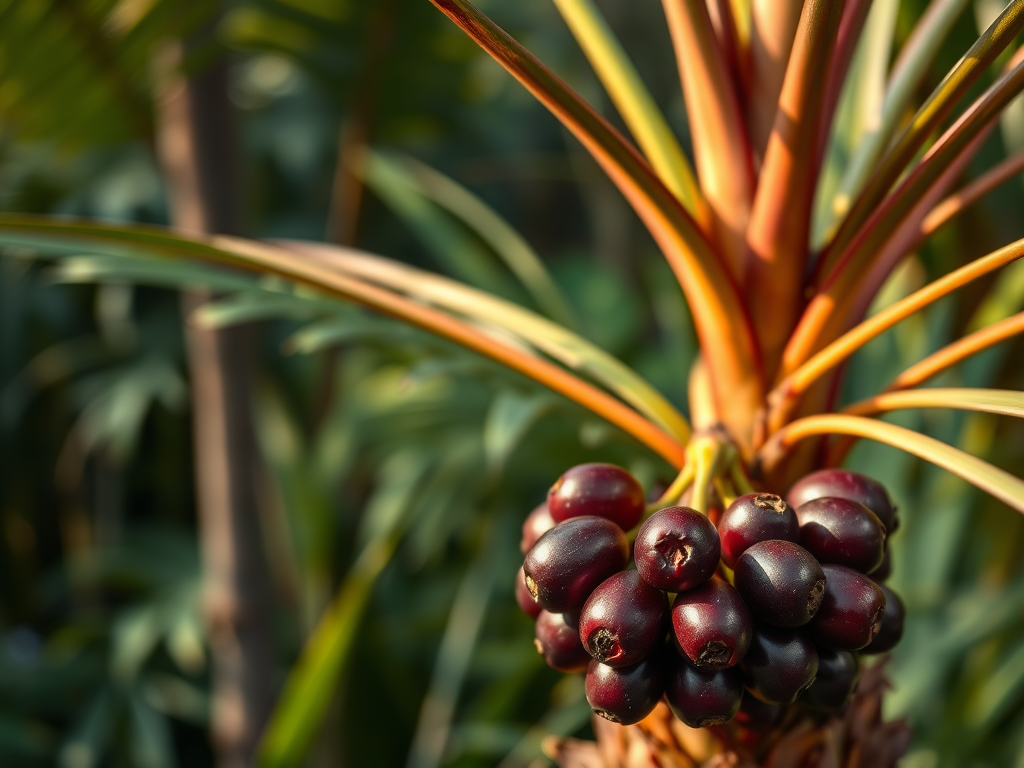
The Jussara Palm (Euterpe edulis) emerges from Brazil’s Atlantic Forest as more than a superfruit—it embodies ecological revival, cultural heritage, and nutritional innovation. Its dusky-purple berries, packed with anthocyanins, rival acai in both flavor and health benefits. Yet what truly sets Jussara apart is its role in reforestation and the resurgence of Indigenous-led agroforestry.
The Jussara Palm fruit is best known for its deep purple pigment, antioxidant density, and ecological symbolism.
It’s often praised as:
🟣 An Antioxidant Powerhouse
- Exceptionally rich in anthocyanins—compounds that combat oxidative stress
- Phenolic profile even stronger than acai, giving it superior antioxidant capacity
- Used in functional foods, smoothies, and wellness supplements
🌳 A Symbol of Ecological Regeneration
- Once endangered due to overharvesting of hearts-of-palm
- Now revered as a key player in Atlantic Forest restoration and biodiversity
- Promotes sustainable fruit-first harvesting, preserving palm populations
👣 A Cultural and Nutritional Heritage
- Embedded in Indigenous diets, rituals, and medicine
- Name “Jussara” comes from Tupi-Guarani language—”fruit of the palm”
- Traditions include fermented drinks, healing teas, and forest guardianship
🥣 A Rising Star in Global Superfruit Circles
- Flavor combines sweet, tangy, and earthy tones—ideal for smoothie bowls and parfaits
- Appearing in specialty markets as pulp, powder, juice, and supplements
In essence, Jussara isn’t just admired for taste or nutrition—it’s celebrated for healing the forest and honoring tradition.
“Jussara Palm: A Berry That Rebuilds Forests, Nourishes Tradition, and Powers the Body.”
Indigenous Knowledge
- Long before Western science took note, Guarani, Kaingang and other Atlantic Forest peoples harvested and stewarded the palm’s fruits and hearts of palm as staples in their diet and medicine.
Western Scientific Documentation
- The species was first formally described in 1824 by German botanist Carl Friedrich Philipp von Martius.
- Martius based his description on specimens collected during the Spix–Martius expedition to Brazil (1817–1820) when he and Johann Baptist von Spix surveyed the Atlantic Forest flora.
🍇 Flavor Profile
The Jussara Palm fruit delivers a multi-layered taste experience that balances sweetness, tartness, and earthy undertones. Its flavor is often described as:
- A mellow, fruity sweetness akin to wild blueberries, with a subtle caramel note
- A bright, tangy finish reminiscent of acai, lifting the overall profile
- An underlying vegetal earthiness that adds complexity and pairs well with both sweet and savory applications
This nuanced taste makes Jussara ideal for smoothies, bowls, and natural food colorants, where its depth can shine through without overpowering other ingredients.
Nutritional Profile
Jussara berries pack a potent combination of macronutrients, micronutrients, and bioactive compounds:
| Nutrient | Amount per 100 g pulp | Notes |
|---|---|---|
| Energy | 476 kcal | High caloric density driven primarily by healthy fats |
| Protein | 2.11 g | Contains all nine essential amino acids in modest amounts |
| Total Fat | 6.12 g | 35 % monounsaturated (oleic acid), 35 % polyunsaturated (linoleic acid) |
| Available Carbohydrates | 4 g – 6 g | Mostly simple sugars that contribute to its fruit-like sweetness |
| Dietary Fiber | 18.2 g | Supports digestive health and provides a slow, sustained energy release |
| Anthocyanins | Predominantly cyanidin-3-glucoside and cyanidin-3-rutinoside | Deep purple pigments with high antioxidant capacity |
| Phenolic Compounds | ~81 % higher than acai | Correlates with superior free-radical scavenging activity |
| Vitamin C | 2.13 mg | Contributes to immune support and collagen synthesis |
| Calcium | 98 mg | Aids in bone health |
| Iron | 1.09 mg | Important for oxygen transport in blood |
| Magnesium | 59 mg | Plays a role in over 300 enzymatic reactions |
| Potassium | 388 mg | Helps regulate fluid balance and muscle contractions |
| Zinc | 0.99 mg | Supports immune function and protein synthesis |
Antioxidant Power
Jussara stands out among tropical berries for its exceptional antioxidant properties:
- Anthocyanin levels up to 353 % higher than those in Euterpe oleracea (common acai) translate into robust total antioxidant capacity
- Rich phenolic profile contributes to protection against oxidative stress and inflammation
- Comparable or superior in ORAC and TEAC assays relative to other dark-pigmented berries, making it a functional superfruit
This rich blend of nutrients and phytonutrients positions Jussara Palm as both a culinary delight and a nutritional powerhouse.
🌱 Ecological Significance
Understory Keystone in the Atlantic Forest
The Jussara Palm thrives as a shade-tolerant understorey species, flourishing on swampy, high-rainfall forest floors from sea level up to 1,200 m. Its ability to persist under dense canopy makes it a cornerstone of Atlantic Forest structure and succession, maintaining forest integrity and microclimate balance.
Biodiversity and Wildlife Support
- Fruits feed a wide array of birds and mammals, anchoring food webs
- Larvae of the butterfly Caligo brasiliensis depend on its foliage, linking palm health to insect populations
- Dense stands create corridors that facilitate wildlife movement and genetic exchange
Soil Health and Erosion Control
- Deep, fibrous roots bind soil, reducing erosion in steep or disturbed areas
- Leaf litter and decaying biomass enrich soil organic matter, boosting nutrient cycling and water retention
Carbon Sequestration
- Mature palms store significant carbon in trunks and roots, acting as living carbon sinks
- Integrating Jussara into restoration plantings enhances above- and below-ground carbon stocks more rapidly than many pioneer species
Conservation and Sustainable Management
- Historical overharvesting for hearts-of-palm severely depleted wild populations, prompting federal protections and harvest bans
- Transitioning to fruit-only harvesting preserves adult palms and supports natural regeneration
- Emerging agroforestry models blend Jussara with native timber and food crops, aligning ecological restoration with community livelihoods
👣Cultural Roots of the Jussara Palm
Tupi-Guarani Etymology
The name “Jussara” derives from the Tupi-Guarani word iuçara, literally “fruit of the palm tree,” reflecting centuries of Indigenous botanical knowledge and reverence for this understorey palm.
Indigenous Dietary Traditions
Across the Atlantic Forest, Guarani and Kaingang communities have long harvested ripe jussara berries for sustenance. The pulp was traditionally:
- Sun-dried and milled into a nutrient-dense flour
- Mixed with manioc or maize porridge for daily staples
- Fermented into a mild, tangy chicha enjoyed during communal gatherings
These practices anchored the jussara harvest at the heart of seasonal food cycles and storytelling festivals.
Medicinal and Healing Practices
Ethnobotanical accounts highlight the palm’s therapeutic role:
- Healers brewed teas from dried berries to combat anemia and boost vitality
- Juice pressed from the young stem acted as an astringent poultice for wounds and skin irritations
Such remedies underscore the interconnectedness of nutrition and healing in traditional forest medicine.
Ritual and Symbolic Functions
Jussara’s deep purple hue and forest origins made it a potent symbol in spiritual rites:
- Offerings of fresh berries to Y’byrá (forest guardian spirits) during planting ceremonies
- Use of palm fronds in purification rites to invoke protection and communal harmony
- Seasonal harvest festivals where elders recited origin myths linking the palm to Earth-Mother figures
These ceremonies wove jussara into both the material and mythic fabrics of forest life.
Oral Stewardship Traditions
Generations of Indigenous stewards passed down practices to ensure the palm’s regeneration:
- Selective harvesting—only collecting every third fruiting stalk—allowed palms to flower again
- Avoiding heart-of-palm extraction preserved adult trees for future harvests
- Folktales personified the palm as a “forest guardian,” instilling respect and restraint in youth
Such unwritten protocols formed the blueprint for today’s community-driven restoration and sustainable-use movements.
💡 Modern Revivals
Community-led Agroforestry
Conservation-minded entrepreneurs and smallholders in Espírito Santo and Bahia have integrated juçara into multi-strata agroforestry systems alongside cocoa, coffee, and native timber. This fruit-first model generates income while restoring degraded lands and enhancing forest connectivity.
Policy Shift & Market Pivot
Early 2000s regulations restricted commercial harvest of juçara hearts-of-palm, catalyzing a pivot to fruit-only harvesting. Juçara pulp now competes with açaí in local markets, commanding premium prices for its superior antioxidant profile1.
Research & Breeding Innovations
Academic trials—including hybridization between Euterpe edulis and the cold-tolerant E. oleracea—seek cultivars with stronger yields and wider climate adaptability. Concurrent studies refine germination protocols and sustainable understory management for scalable cultivation.
Conservation Cultivation
Conservation programs partner with communities to produce juçara seedlings, embedding the palm into reforestation and agroecological niches. These initiatives replenish wild populations, boost carbon sequestration, and revive traditional stewardship practices throughout the Atlantic Forest region.
Culinary Uses and Precautions of the Jussara Palm Fruit
Culinary Uses
Jussara’s vibrant pulp and subtle vegetal notes lend themselves to a wide array of dishes, from chilled beverages to baked goods. Its deep purple hue and antioxidant-rich profile make it both a culinary star and a functional ingredient.
Smoothies & Bowls
- Blend 100 g fresh or frozen jussara pulp with banana, almond milk, and honey for an antioxidant-packed smoothie bowl.2
- Top with granola, chia seeds, and fresh fruits to accentuate its tangy-sweet profile.
Baking & Confectionery
- Incorporate jussara pulp into cakes, muffins, and quick breads for natural coloring and moisture—“Bolo de Jussara” is a classic Brazilian dessert.
- Formulate cereal or energy bars by mixing dried jussara extract (1 %–3 % anthocyanin-rich powder) into oat, rice, and nut blends for a functional snack.
Fermented & Savory Preparations
- Ferment jussara pulp into a mild chicha-like beverage, combining with water, sugar, and yeast for 24–48 hours at room temperature.
- Steam or blanch young jussara leaves (understory fronds) and use in salads or as wraps for rice and fish filings.
Natural Food Colorant & Functional Additive
- Use jussara juice as a natural dye in icings, sauces, or dairy-based desserts, providing both color and phytonutrients.
- Enrich yogurts, sorbets, and ice creams by swirling in concentrated jussara extract for visual appeal and antioxidant boost.
Precautions
While jussara is generally safe, its high fiber, phenolic, and fatty-acid content warrants mindful consumption and preparation.
Start with small servings (50 g pulp) to assess tolerance, as high fiber may cause mild bloating or gastrointestinal discomfort.
Remove and discard seeds before processing; each berry contains a hard seed that poses a choking hazard.
Rinse and sanitize fruit thoroughly to eliminate any forest‐floor contaminants or pesticide residues.
Those on anticoagulant therapy should consult a healthcare professional, as dense polyphenol intake can influence blood-clotting pathways.
Limited data exist for pregnant or breastfeeding individuals; consume in moderation and seek medical advice if uncertain.
Groups That Should Exercise Caution or Avoid Jussara Palm Fruit
While jussara is nutrient-dense and generally safe, certain populations may need to limit or avoid its consumption:
1. People on Anticoagulant or Antiplatelet Therapy
Dense polyphenols can enhance blood-thinning effects, increasing bleeding risk. Consult a physician before adding jussara to the diet if you take warfarin, aspirin, or similar medications.
2. Individuals with Gastrointestinal Disorders
The high fiber content (18.2 g per 100 g pulp) can exacerbate bloating, gas, or discomfort during flare-ups of IBS, diverticulitis, or other GI conditions. Start with small amounts and monitor tolerance.
3. Those with Chronic Kidney Disease or Hyperkalemia Risk
At 388 mg potassium per 100 g, jussara may contribute to hyperkalemia in people with impaired renal function or on potassium-sparing medications. Kidney patients should check with their nephrologist.
4. People with Iron-Overload Disorders
Containing 1.09 mg iron per 100 g, regular jussara intake could worsen hemochromatosis or other iron-loading conditions. Medical guidance is advised.
5. Young Children and Infants
Each berry houses a hard seed that poses a choking hazard. Puree the pulp thoroughly and remove all seeds before offering it to toddlers.
6. Pregnant or Breastfeeding Individuals
No safety studies specifically address jussara in pregnancy or lactation. Until more data emerge, consume in moderation and discuss with a healthcare provider.
If you’re caring for any of these conditions or uncertainties, a registered dietitian or physician can tailor advice based on your health status and medication regimen.
US Availability and Forms of Jussara Palm Fruit
Jussara remains a niche ingredient in the US, but it’s steadily gaining traction among superfruit aficionados.
Here’s how and where you’re likely to find it:
1. Frozen Pulp Packs
- Sold much like açaí bowls—100 g–500 g resealable bags
- Carried by specialty importers (e.g., Tropical Fruit Box, Amazon Marketplace sellers)
- Ideal for smoothies, bowls, and DIY sorbets
2. Freeze-Dried & Powdered Extracts
- Available in health-food stores and online retailers (Amazon, Etsy, Thrive Market)
- Typically sold in 50 g–200 g jars or pouches
- Perfect for natural food coloring, functional baking, and supplement formulations
3. Liquid Concentrates & Juices
- Found in cold-pressed juice bars or via direct-to-consumer juice shot brands
- Blended with other superfruits (blueberry, maqui) for antioxidant “boost shots”
- Shelf-stable concentrate bottles (100 mL–500 mL)
4. Dietary Supplements
- Standardized capsules/tablets (anthocyanin-rich) in 30–90-count bottles
- Marketed alongside açaí and other Amazonian extracts
5. Seeds & Saplings for Cultivation
- RarePalmSeeds.com, TropicalSeeds.com, and select nurseries
- Seed packets range from ~$6–15; saplings available seasonally
- USDA zones 9b–11 recommended for outdoor growing
6. Specialty Foods & Confectionery
- Artisan chocolate bars, granola bars, and energy bites featuring jussara powder
- Seasonal items in Brazilian markets and pop-up stands
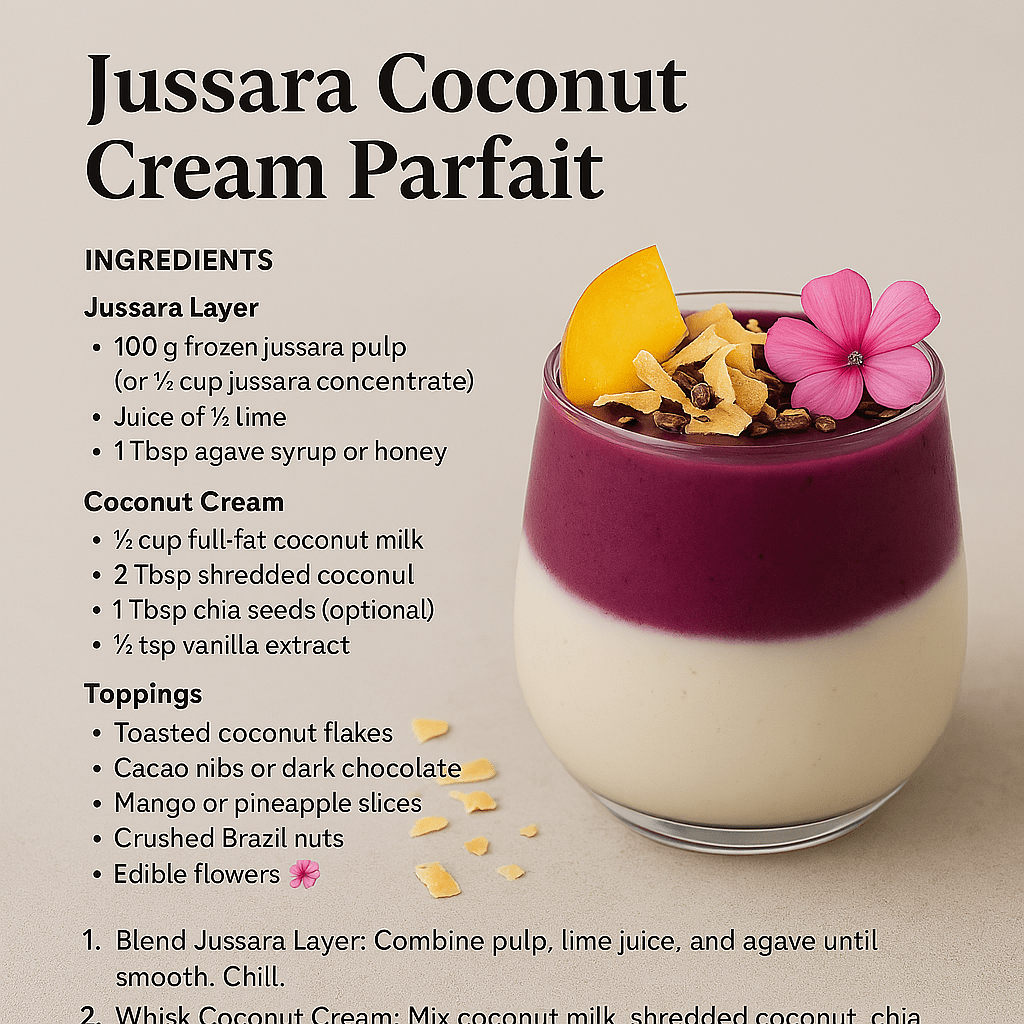
Its antioxidant-rich pulp pairs beautifully with coconut’s nurturing creaminess, creating not just a dessert, but a symbol of healing and heritage.
💡 Recipe Highlights
| Feature | Benefit |
|---|---|
| Rich in anthocyanins | Antioxidant boost & vibrant color |
| Plant-based | Vegan & dairy-free option |
| Layered texture | Adds visual appeal and mouthfeel |
| Customizable | Great for breakfast or dessert |
Why This Works
- Jussara’s tart edge contrasts beautifully with creamy coconut and vanilla notes.
Here’s a curated list of trusted resources on the Jussara Palm (Euterpe edulis), covering its botany, nutrition, conservation, and sustainable use:
🔗 Trusted Resources on Jussara Palm (Euterpe edulis)
🌿 Botanical & Edibility Profiles
- Plants For A Future – Habitat, edibility, and cultivation
- Palmpedia – Palm morphology, ecological role, and restoration notes
- Wikipedia – Taxonomy, conservation, and historical background
🍇 Nutrition & Biodiversity
- Biodiversity for Food and Nutrition (B4FN) – Detailed nutrient profile and biodiversity classification
🌱 Conservation & Sustainable Agriculture
- World Resources Institute – Emerson & Viviane’s Story – Real-world example of juçara fruit-led restoration
- Palmpedia – Threats & Restoration – History of overharvesting and emerging conservation models
 EJADA
EJADA 
Leave a comment