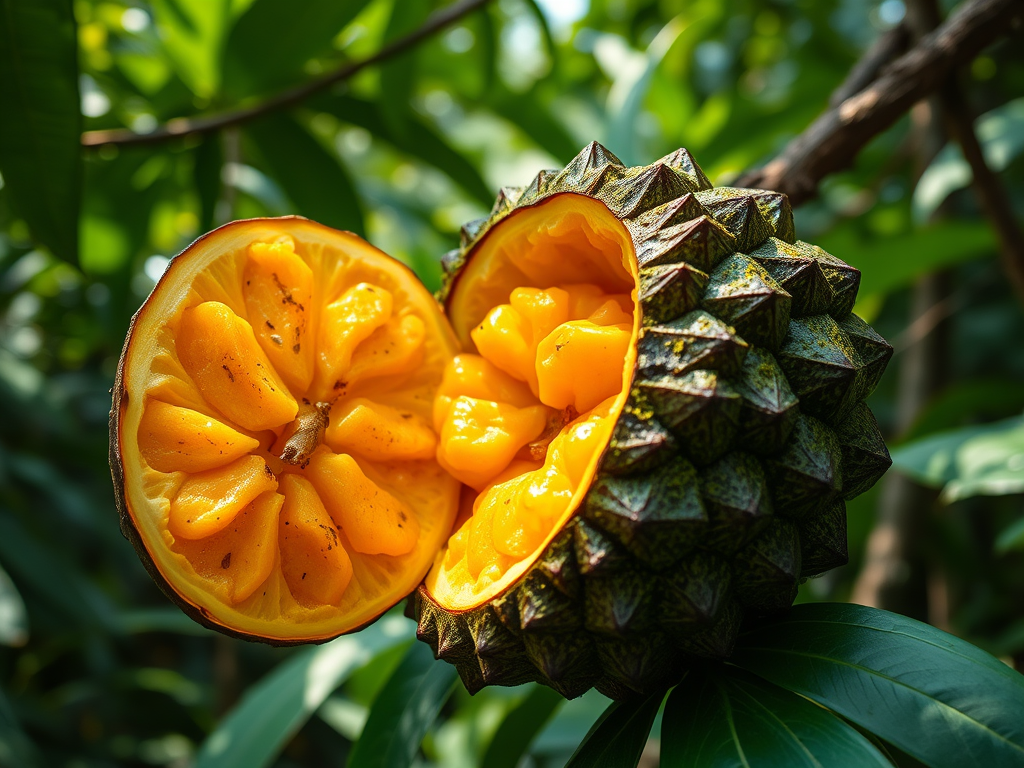
What Exactly Is a Jungle Sop?
Picture a fruit bursting with tropical drama: meet the junglesop (Anonidium mannii), Africa’s very own tree-born titan! This custard-apple cousin doesn’t just grow—it rockets skyward to 30 meters, flaunts a trunk over two meters wide, and produces fruits so colossal—4 to 6 kg on average (and sometimes tipping 15 kg!)—they’ll dominate any rainforest forage.
Slice through that rugged, diamond-patterned shell and you’ll discover a golden-orange treasure trove of sweet-tangy pulp—like sunshine you can spoon, eac
When, Where, and Who Discovered It?
- First scientifically described in 1867 by British botanist Daniel Oliver as Annona mannii.
- Renamed Anonidium mannii in the early 1900s by German botanists Adolf Engler and Ludwig Diels.
- These botanical pioneers cemented the junglesop’s place in plant taxonomy and sparked curiosity that still grows today!
Where Does It Thrive?
Jungle Sops call the lowland rainforests of central Africa home. You’ll find them across:
- Democratic Republic of the Congo and Republic of the Congo
- Central African Republic, Angola, Zambia
- Ghana, Nigeria, Gabon, Cameroon
- They love acidic, well-drained soils along riverbanks and forest edges—and while shade-tolerant, their giant crowns need protection from strong winds.
Known and Little-Known Benefits of Junglesop
Known Benefits
Immune System Support: Junglesop pulp is rich in vitamin C and minerals like zinc, selenium, and magnesium, bolstering defenses against colds, flu, and other infections.
Eye Health: High levels of vitamin A protect retinal cells and may reduce the risk of age-related macular degeneration.
Skin Health: Vitamins C and E nourish skin, helping guard against UV damage and supporting collagen production for a youthful glow.
Heart Health: The fruit’s omega-3 fatty acids can lower cholesterol and blood pressure, contributing to cardiovascular well-being.
Digestive Health: With 6 g of dietary fiber per 100 g, junglesop aids regularity and can help prevent digestive disorders like constipation and diverticulitis.
Weight Management: Low in calories (around 3.5 g of carbohydrates per 100 g) but high in fiber, it promotes satiety and curbs cravings for better weight control.
Anti-Aging Benefits: A potent mix of antioxidants fights oxidative stress, helping to slow cellular aging and reduce wrinkles.
Brain Health: Omega-3s and antioxidants support cognitive function and may lower the risk of age-related memory decline.
Little-Known Benefits
Plant-Based Protein: Contains 2.1 g of protein per 100 g, making it one of the few tropical fruits that contribute meaningfully to daily protein intake.
Trace Mineral Boost: Supplies sodium (14 mg per 100 g) and magnesium for electrolyte balance and muscle function.
Prebiotic Fiber: Its soluble and insoluble fibers feed beneficial gut bacteria, promoting a healthier microbiome beyond basic digestion support.
Biodiversity Ally: In its native forests, junglesop is a keystone food for wildlife like bonobos, aiding seed dispersal and forest regeneration.
Food-Security Potential: As a heavy producer of large, nutritious fruits, it holds promise as an underexploited crop to address malnutrition in tropical regions.
Culinary Innovation: Beyond fresh eating, its unique flavor profile unlocks creative uses in jams, chutneys, fermented beverages, and plant-based desserts—areas still ripe for exploration.
Whether you’re crafting a nutrition-packed smoothie, writing an eco-foodie feature, or dreaming up a rare-fruit orchard, junglesop’s blend of familiar and surprising benefits makes it a treasure worth spotlighting.
How People Use and Celebrate This Giant Fruit
Locals affectionately call it “bobo” and will trek deep into the forest to score one, sometimes paying up to two days’ wages!
The soft pulp’s eaten fresh, stored for 4–5 days to soften, and one fruit can feed five to six people.
Packed with vitamin A and calories, it’s a nutritional lifeline for forest communities.
Innovators see jam, juice, dessert—and dream of seedless, ultra-sweet varieties for orchards worldwide.
Fresh jungle sop fruit doesn’t show up in U.S. grocery stores or farmers’ markets, but there is one known jungle sop tree growing stateside—it’s in pomologist Bill Whitman’s Miami Garden, though it has yet to bear fruit.
If you’re itching to grow your own, seeds and seedlings pop up occasionally through specialty outlets. Veliyath Gardens in Florida has offered seedlings (often selling out fast).
True seed hunters note that viable jungle sop seeds are extremely scarce—some stores last stocked them around 20185—though a few vendors like Jibril Enterprise still advertise seed packets (with Phyto-certificates) for mail order.
In short, while fresh jungle sop remains a wild rainforest treasure in the U.S., dedicated growers can track down plant material with patience, persistence, and a dash of jungle spirit!
Sprinkle Some Junglesop Magic Into Your Kitchen!
Ever dreamed of a fruit that turns every bite into a tropical celebration? Let’s transform that golden-orange pulp into dazzling dishes that’ll steal the show at brunch, dinner, or happy hour!
1. Jungle Smoothie Bowl
- Blend 1 cup chilled junglesop pulp with ½ banana, ¼ cup coconut milk, and a handful of spinach.
- Pour into a bowl and top with granola, chia seeds, and fresh berries.
- Drizzle honey or agave for extra sparkle.
2. Custard-Apple Parfait
- Layer junglesop pulp, Greek yogurt, and crushed nuts in a tall glass.
- Repeat layers for color drama.
- Sprinkle toasted coconut and a mint sprig on top.
3. Spicy Junglesop Salsa
- Dice junglesop pulp and mix with chopped tomato, red onion, cilantro, and jalapeño.
- Squeeze in lime juice, season with salt, and let flavors marry for 15 minutes.
- Serve with tortilla chips or spoon over grilled fish.
4. Junglesop Mojito Twist
- Muddle fresh mint leaves, lime wedges, and a teaspoon of sugar.
- Add 2 oz white rum, 1 oz junglesop pulp, and crushed ice.
- Top with sparkling water and garnish with a mint sprig.
5. Jam-Swirled Pancakes
- Stir junglesop pulp with a touch of sugar on low heat until syrupy.
- Swirl this bright jam into pancake batter before griddling.
- Stack and serve with butter and an extra dollop of junglesop jam.
Vitamin and Nutritional Highlights of Junglesop
Per 100 grams, junglesop delivers the following macronutrients and minerals:
| Nutrient | Amount per 100 g |
|---|---|
| Protein | 2.1 g |
| Fat | 0.6 g |
| Carbohydrate | 3.5 g |
| Dietary Fiber | 6 g |
| Sodium | 14 mg |
Key Vitamin Highlights
Vitamin A Junglesop is rich in vitamin A, essential for healthy vision, immune function, and cellular growth.
Vitamin C High levels of vitamin C bolster the immune system, support collagen synthesis, and act as a powerful antioxidant.
Vitamin E Contains vitamin E, which protects cell membranes from oxidative damage and promotes skin health.
Mineral and Phytonutrient Notes
Trace Minerals Also provides zinc, selenium, and magnesium—critical cofactors for antioxidant enzymes, muscle function, and electrolyte balance.
Antioxidant Profile The combined action of vitamins A, C, and E, along with phytonutrients in junglesop, helps neutralize free radicals, supporting overall cellular health.
Sprinkle jungle sop pulp into smoothies, curries, or dessert parfaits to harness its unique flavor and nutritional punch!
🔔 Wrap-Up
Thanks for joining this junglesop adventure! From towering rainforest giants to your kitchen table, it’s all about celebrating nature’s bold flavors. I strive to share fruits you can find in the U.S., but on some occasions, I’ll spotlight rare gems with limited availability. Keep exploring—and let me know which tropical treasure we should dive into next!
 EJADA
EJADA 
Leave a comment