
🍌 “Krazy K-Korner of the Fruit Alphabet”
Some of you might remember that I went from the E to K .
What can only be described as a bold alphabetic leap. You call it fruit alphabet amnesia or a wild tropical detour. Either way, I resurfaced in the land of K, because I am fully committed to the citrus-scented, kernel-crunching ride.
Now, I’m like a fruit archaeologist uncovering juicy relics from the K vault. I’m finishing the lineup of fruits. They begin with this wonderfully quirky letter.
The Kaffir lime whose name sounds like it could be a mischievous herbal elixir, or a spicy mystery novel.
The Key lime, rings like the name of a tropical jazz band, or the secret ingredient in grandma’s legendary pie recipe.
The letter K keeps delivering citrus with character. 🍋
The fruit journey from K is anything but conventional. Buckle up—we’re about to go kernel-deep in this fruity finale. 🍍💥
K-fruits don’t just grow, they perform. They’re like fruit celebrities with stage names and dramatic flair.
While Kaffir Lime brings that bold, zesty punch that would wake up a sleepy soup. Key lime keeps things cool, creamy, and a little bit tangy, basically the beachy soul of the citrus world.
Time to explore the wonderful world of Key Lime
🌿 Key Lime: From Ancient Groves to Pie Fame
The journey of the Key lime (Citrus aurantifolia) began in the lush tropics of Southeast Asia. Ancient civilizations first cultivated it for its intensely aromatic juice. They also valued it for its medicinal properties.
Early uses included flavoring food. It was also used for treating ailments and even perfuming oils. This little lime was a multitasker long before it hit the dessert scene.
🚢 Voyage to the Americas
Spanish explorers introduced Key limes to the Caribbean and Florida in the 16th century. The warm, humid climate proved ideal for its growth.
It quickly naturalized in the Florida Keys, earning its iconic name and becoming a staple in local cooking.
🥧 Purpose with a Tangy Twist
While its original purpose was largely culinary and medicinal.
Key lime’s fame skyrocketed with the invention of Key lime pie in Florida. A creamy, tart dessert that turned this citrus into a cultural icon.
Its juice also became popular in marinades, cocktails, and sauces, prized for its bold acidity and floral aroma.
Cultural Significance of the Key Lime
The Key lime is more than just a citrus fruit—it’s a culinary and cultural emblem of the Florida Keys. Its small size and tart flavor belie a rich legacy rooted in regional resilience, resourcefulness, and identity. Introduced by early settlers and Caribbean influences, Key limes flourished in Florida’s subtropical climate, becoming a staple in kitchens long before modern refrigeration.
Most famously, the Key lime pie emerged in the late 1800s as a practical dessert made with condensed milk, eggs, and lime juice. It was a clever solution to the region’s limited access to fresh dairy and cold storage, and it quickly became a local favorite. Over time, the pie evolved into a cultural icon, celebrated annually at the Key Lime Festival in Key West, where the community gathers to honor the fruit with competitions and creative culinary twists.
In 2006, Florida solidified the pie’s legacy by naming it the official state pie—cementing the Key lime’s place in Floridian folklore. But beyond its dessert fame, the Key lime carries symbolic weight: it represents adaptability, tropical abundance, and a connection to local heritage. Its zesty presence in drinks, marinades, and traditional dishes continues to flavor Florida’s identity with every bite.
Medical Benefits of the Key Lime
Key limes offer a wide spectrum of medicinal benefits rooted in their rich vitamin C content, antioxidant compounds, and bioactive phytochemicals. These properties make them valuable in both traditional remedies and modern nutritional science.
Key limes are especially known for their immune-boosting effects. Just one fluid ounce of juice provides about 14% of the daily recommended vitamin C intake, helping the body resist infections and neutralize free radicals. This antioxidant power also supports collagen production, which is essential for skin health, wound healing, and slowing signs of aging.
They may also aid in blood sugar regulation. Their soluble fiber content helps stabilize glucose absorption, making them beneficial for individuals managing type 2 diabetes. Additionally, key limes support cardiovascular health by lowering LDL cholesterol and reducing inflammation in blood vessels, which can help prevent heart disease and stroke.
Digestive wellness is another area where key limes shine. Their acidity and fiber stimulate gastric juices and peristalsis, easing digestion and helping prevent constipation and colorectal issues. Lime juice has shown antibacterial properties, including the ability to kill Vibrio cholerae, and may help treat peptic ulcers due to its flavonoids and detoxifying compounds.
Emerging research also suggests anticancer potential. Key lime extracts contain flavonoids, limonoids, and carotenoids that may inhibit cancer cell growth and reduce oxidative stress. These compounds are being studied for their role in preventing breast and colon cancers.
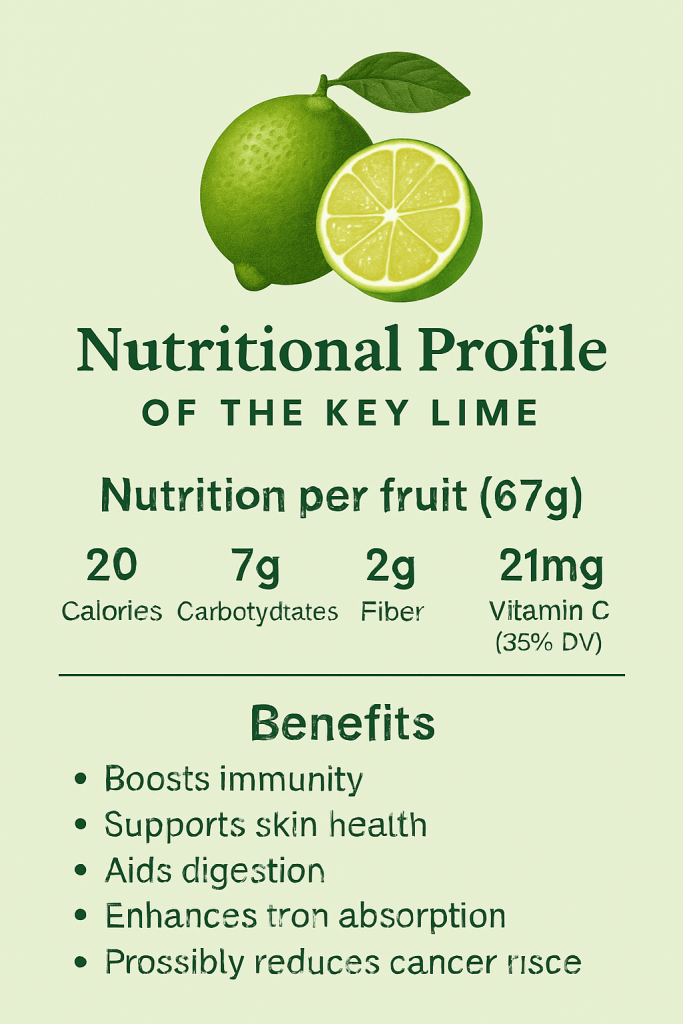
Key Lime Nutrition Insights
The nutritional strength of Key lime goes far beyond its refreshing zing. While low in calories, it’s packed with micro-nutrients and bioactive compounds that support vital systems in the body. This makes Key lime an excellent candidate for functional foods and integrative wellness products, especially in tropical health formulations or alkalizing tonics.
Here’s a deeper breakdown of its nutritional profile and wellness impact:
1. Essential Micronutrients
- Vitamin C: A powerful antioxidant supporting immunity, collagen formation, and iron absorption
- Calcium: Supports bone health and muscle function
- Potassium: Helps regulate blood pressure and fluid balance
- Magnesium: Crucial for enzymatic reactions and muscle relaxation
- Folate (Vitamin B9): Important for cell repair and DNA synthesis
2. Bioactive Plant Compounds
Key limes are rich in:
- Flavonoids: Help reduce inflammation and oxidative stress
- Limonoids: Potential anticancer agents that also support liver detox
- Carotenoids: Protect skin and eyes from oxidative damage
- Citric Acid: Helps prevent kidney stones by reducing calcium crystal formation
3. Digestive Benefits
The citric acid and natural enzymes stimulate digestive juices, supporting:
- Improved nutrient breakdown and assimilation
- Relief from bloating and constipation
- Promotion of healthy gut flora
4. Metabolic and Cardiovascular Support
- Blood sugar moderation through soluble fiber
- LDL cholesterol reduction, enhancing heart health
- Anti-inflammatory effects beneficial for managing metabolic syndrome
This nutritional depth makes Key lime a potent ally in natural health routines—perfect for teas, elixirs, and culinary pairings that celebrate both flavor and function.

Key Lime Shortbread Bars These bars offer a refreshing twist on traditional Key lime desserts. A pillowy lime custard sits atop a buttery shortbread crust, creating a sweet-tart balance that’s both elegant and easy to serve. Perfect for warm-weather gatherings or as a citrusy complement.
Key Lime: Groups That Should Use Caution
While Key limes offer many health benefits, certain individuals may need to limit or avoid their consumption due to medical sensitivities, drug interactions, or physiological conditions. Here’s a breakdown of groups that should exercise caution
1. Individuals with Acid Sensitivities People with acid reflux (GERD) or stomach ulcers may find that the high citric acid content in Key limes worsens symptoms like heartburn, indigestion, or gastric irritation.
2. Those Taking Certain Medications Key lime juice may interact with medications metabolized by the CYP3A4 enzyme, such as statins, antifungals, and some antihistamines. It can also increase sensitivity to sunlight when combined with photosensitizing drugs, raising the risk of sunburn or skin rashes3.
3. Pregnant Individuals Frequent consumption of Key lime preparations may not be recommended during pregnancy due to the presence of bisabolene, a compound with potential abortifacient effects. Moderate culinary use is generally safe, but medicinal doses should be avoided.
4. People with Kidney Conditions Key limes contain oxalates, which may contribute to kidney stone formation in susceptible individuals. Those with a history of stones should consult a healthcare provider before regular consumption.
5. Individuals with Citrus Allergies or Skin Sensitivities Some people may experience allergic reactions or phytophotodermatitis—a skin condition triggered when lime juice contacts the skin and is exposed to sunlight. This is especially relevant for chefs, bartenders, or anyone handling limes frequently.
6. Children and Infants Due to their sensitive digestive systems and developing enamel, children—especially infants—should avoid concentrated lime juice. It may cause tooth enamel erosion or gastrointestinal discomfort.
🟩 Key Lime: Safe Use Tips
While Key limes are safe and beneficial for most people, here are a few tips to help ensure responsible and enjoyable use
✔️ Dilute for Gentle Impact When used medicinally, mix Key lime juice with water or herbal tea to reduce acidity and protect tooth enamel.
🌞 Wash After Handling Rinse hands after squeezing limes—juice can react with sunlight, causing skin irritation (phytophotodermatitis).
🤰 Moderate During Pregnancy Safe in culinary amounts, but avoid concentrated extracts or essential oils unless approved by a healthcare provider.
🦷 Protect Your Enamel Rinse your mouth with water after enjoying Key lime foods or drinks; delay brushing to avoid enamel erosion.
❄️ Store Smart Refrigerate fresh limes or keep at room temp. For juice, use glass containers—not metal—for nutrient preservation.
Wrap-Up
Zestfully Yours 🍋🎩
From pie to phytophotodermatitis, the mighty Key lime has given us history, healing, hydration—and a whole lot of highlights (literally). Whether it’s tucked into shortbread bars or infused in ritual cream, this little fruit proves that size doesn’t limit soul.
So, as we squeeze the last drop of lime from this post, remember: life’s better with a bit of tartness, a dash of wisdom, and a sprinkle of WordPress-friendly formatting. If citrus had a personality, Key lime would be your sharp-witted friend who always shows up with snacks and clever comebacks.
 EJADA
EJADA 
Leave a comment