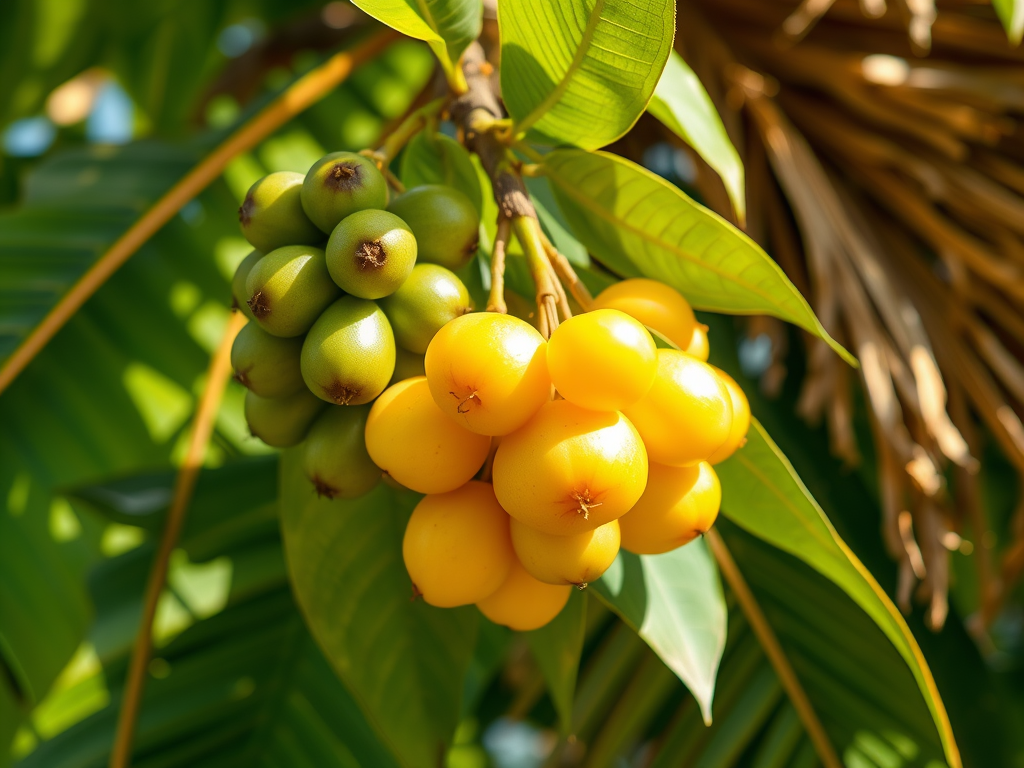
The June Plum, also known as Spondias dulcis, Ambarella, or Golden Apple, is a tropical fruit native to Polynesia and Melanesia, including islands like Papua New Guinea, Fiji, and Vanuatu. It’s part of the Anacardiaceae family, which also includes mangoes and cashews.
June Plum — known locally as vī or wī in Polynesia and Melanesia — was more than just a fruit; it was a canoe plant, meaning it was intentionally carried by Austronesian voyagers during their expansion across the Pacific
🌊. Its uses in Polynesia and Melanesia were deeply woven into daily life, cuisine, and even medicine
🍽 Culinary Traditions
- Raw or pickled: Unripe fruits were eaten with salt or chili, or pickled for preservation
- Cooked dishes: Ripe fruits were stewed, made into jams, or added to curries and chutneys
- Beverages: In Tonga and Samoa, June Plum was used to make ʻotai, a refreshing fruit drink often mixed with coconut and other tropical fruits
- Leaf usage: Tender leaves were steamed or used to season dishes wrapped in banana leaves, especially in Fiji and Indonesia
🌿 Medicinal & Practical Uses
- Cough remedy: Juice from grated fruit or boiled leaves was used to soothe coughs and fevers in traditional medicine
- Digestive aid: Its fiber-rich pulp helped with constipation, while bark decoctions were used for diarrhea and dysentery
- Skin treatments: Leaves and roots were applied to treat rashes, scabies, and burns due to their antimicrobial properties
🌱 Cultural Significance
- Canoe plant legacy: Its spread across the Pacific reflects its value in sustaining voyaging communities
- Home gardens: Often grown near homes for easy access to fruit and leaves year-round
- Names & language: The fruit’s many names — vī, wī, makok farang, ambarella — reflect its integration into diverse island cultures
🌍 Discovery & Spread
- While the fruit has been cultivated for centuries in Southeast Asia and the Pacific Islands, its introduction to the Western world is often credited to Captain William Bligh, who brought it to Jamaica in 1782.
- From Jamaica, it spread across the West Indies, Caribbean coast of Costa Rica, and into tropical Latin America.
- By 1909, June Plums were planted in Florida, and later appeared in Australia.
🍈 What It Is
- June Plums grow in clusters of up to twelve fruits and can be eaten green and crisp or ripe and juicy, with flavors ranging from pineapple-like to a mix of mango, star fruit, and soursop.
- They’re packed with vitamins A, C, and K, and used in everything from chutneys and jams to Trinidadian chow and Asian medicinal drinks.
June Plum is delightfully versatile, and it’s available in several forms depending on how you want to experience it
🍈. Here’s a breakdown of the most common ways it’s offered:
Fresh Fruit (Seasonal & Pre-Order)
- Single fruit: Sold individually for sampling or small use
- Sampler boxes: Typically 1.5–2 lbs, great for first-timers
- Small to bulk boxes: Ranging from 5 lbs up to 40 lbs for serious fruit lovers or culinary projects
- Jumbo variety: Larger, juicier version available from select farms
🌱 Live Trees & Plants
- Dwarf June Plum trees: Ideal for container gardening or small spaces
- 3-gallon potted trees: Ready to plant, often 2–3 feet tall
- Wholesale nursery options: For larger-scale cultivation or resale
🍽 Culinary Uses
- Unripe (green): Crunchy and tart—used in chutneys, pickles, or eaten with salt and chili
- Ripe (yellow to orange): Juicy and sweet—perfect for jams, juices, sauces, or fresh snacking
Sources:
June Plum is a perfect muse for exploring both seasonal rhythms and bold tropical flavor narratives 🍃🌴
🌤 Seasonal Transitions
June Plum shines in its ability to reflect seasonal shifts, especially in subtropical and tropical climates:
- Early Season (green stage): Crisp and tart, ideal for savory creations like pickled slices, herb-infused slaws, or spicy dips
- Mid to Late Season (ripening): Golden-hued, juicy, and sweet — perfect for jams, chutneys, smoothies, and desserts
- Visual storytelling idea: A time-lapse or infographic showing June Plum’s skin and flavor evolution from firm green to sunset yellow-orange
🍍 Tropical Flavor Profiles
It brings a burst of the Caribbean and Southeast Asia into your kitchen, with flavor notes that can span:
| Ripeness Level | Taste Profile | Culinary Use Suggestions |
|---|---|---|
| Green | Tart, astringent | Pickles, crunchy salads, vinegar-forward sauces |
| Semi-ripe | Slightly sweet, tangy | Salsas, stir-fries, fruit cocktails |
| Ripe | Juicy, mango-pineapple fusion | Sorbets, jams, chutneys, fresh eating |
- Flavor pairings: Lime, chili, ginger, tamarind, coconut milk, lemongrass
- Fusion ideas: June Plum ceviche with ginger-lime vinaigrette, Caribbean-style rice with stewed June Plum, or a tropical fruit sushi roll
June Plum’s medicinal value today is both time-honored and scientifically intriguing.
🌿. Here’s a breakdown of its modern applications:
🧬 Nutritional & Preventive Health
- Immune support: Rich in vitamin C and antioxidants, June Plum helps fight infections and supports wound healing2
- Vision health: Beta-carotene (a precursor to vitamin A) aids in preventing eye strain and inflammation from screen exposure
- Heart health: Potassium and magnesium help regulate blood pressure and reduce cardiovascular risk
🌿 Digestive & Metabolic Benefits
Constipation relief: High fiber content promotes regularity and gut health4
Diarrhea remedy: Bark decoctions are still used in herbal medicine to treat dysentery and diarrhea
Diabetes support: Fiber and antioxidants help stabilize blood sugar and improve insulin sensitivity
🌸 Skin & Topical Applications
Antimicrobial properties: Leaves and bark are used to treat rashes, scabies, and burns due to their antibacterial effects
Natural moisturizer: Boiled leaves are applied as a skin lotion or wash for sore eyes
Anti-aging: Vitamin C boosts collagen production, helping reduce fine lines and improve skin elasticity
🍵 Respiratory & Immune Remedies
Cough relief: Leaf teas and grated fruit juice with salt are traditional remedies still used today
Fever reduction: Decoctions from leaves are used to soothe fevers and inflammation
June Plum holds its own impressively among medicinal fruits, especially when you look at its nutrient density, versatility, and cultural legacy
🌿. Here’s how it stacks up against a few other well-known healing fruits:
June Plum (Spondias dulcis)
- Key nutrients: Vitamins A, C, K, potassium, magnesium, fiber
- Medicinal uses: Treats coughs, fevers, digestive issues, skin conditions, and supports heart health
- Unique traits: Canoe plant legacy, antimicrobial bark and leaves, used in both Polynesian and Caribbean remedies
- Modern appeal: Low-calorie, high-antioxidant, great for immune and skin health
🍋 Amla (Indian Gooseberry)
- Key nutrients: Extremely high vitamin C, polyphenols, iron
- Medicinal uses: Boosts immunity, regulates blood sugar, improves hair and skin, supports liver function
- Unique traits: Revered in Ayurveda, often consumed as powder or in tonics
- Modern appeal: Popular in supplements and adaptogenic blends
🍍 Pineapple
- Key nutrients: Bromelain enzyme, vitamin C, manganese
- Medicinal uses: Anti-inflammatory, aids digestion, supports joint health
- Unique traits: Bromelain is used in wound healing and post-surgery recovery
- Modern appeal: Found in digestive enzyme formulas and anti-inflammatory diets
🍇 Elderberry
- Key nutrients: Anthocyanins, vitamin C, flavonoids
- Medicinal uses: Fights colds and flu, supports respiratory health
- Unique traits: Used in syrups and tinctures for immune defense
- Modern appeal: A staple in natural cold remedies and wellness shots
🍏 Comparison Snapshot
| Fruit | Immunity | Digestion | Skin Health | Unique Medicinal Trait |
|---|---|---|---|---|
| June Plum | ✅ | ✅ | ✅ | Bark for dysentery, leaves for rashes |
| Amla | ✅✅ | ✅ | ✅✅ | Hair growth, liver detox |
| Pineapple | ✅ | ✅✅ | ✅ | Bromelain enzyme for inflammation |
| Elderberry | ✅✅ | ⚠️ | ✅ | Antiviral properties |
June Plum’s strength lies in its multi-system support — from digestion to skin to immunity — and its cultural versatility
June Plum is a tropical powerhouse, and its health benefits span multiple systems, making it a standout in both traditional and modern wellness circles
🌿. Here’s a comprehensive look at what it offers:
🧬 Nutritional Riches
- Vitamin C: Boosts immunity, collagen production, and iron absorption
- Vitamin A: Supports vision, skin regeneration, and immune defense
- Vitamin K: Essential for blood clotting and bone health
- Fiber: Aids digestion, regulates blood sugar, and promotes satiety
- Potassium & Magnesium: Help manage blood pressure and support heart function
- Antioxidants: Combat free radicals, reduce inflammation, and slow aging
🌿 Medicinal & Therapeutic Uses
- Digestive health: Relieves constipation and supports gut microbiome
- Respiratory relief: Leaf teas and grated fruit juice soothe coughs and fevers
- Skin care: Boiled leaves used as moisturizers; bark and roots treat rashes and burns
- Diabetes support: Fiber and antioxidants help stabilize blood sugar
- Eye health: Vitamin A and topical washes for sore eyes2
❤️ Preventive & Holistic Benefits
- Heart protection: Nutrients work synergistically to lower cholesterol and blood pressure
- Weight management: Low-calorie, high-fiber profile keeps you full longer
- Bone strength: Magnesium and vitamin K contribute to bone density
- Anti-aging: Antioxidants and vitamin C improve skin elasticity and reduce wrinkles
June Plum’s versatility — from fruit to bark to leaves — makes it a botanical multitasker.
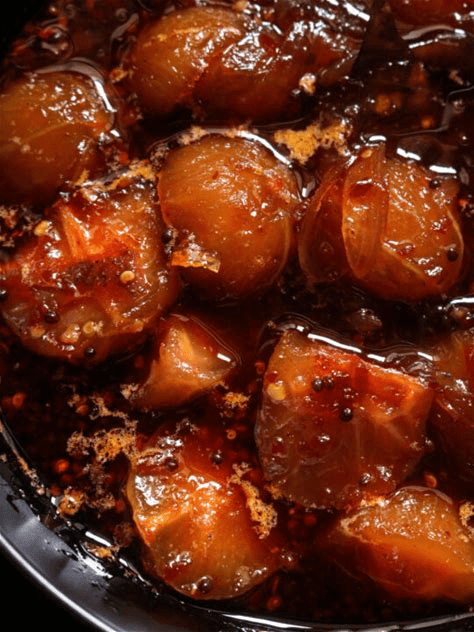
Sweet and Spicy Ambarella Curry(Sri Lankan)
Sweet and Spicy Ambarella Curry(Sri Lankan) recipe –
AND
June Plum lends itself beautifully to seasonal recipes, Brinder — especially when you want to highlight its tart-to-sweet transformation and tropical flair 🌿🍈. Here’s a curated lineup of seasonal dishes that showcase its versatility across different ripeness stages:
🌱 Spring & Early Summer (Green June Plum)
These recipes embrace the fruit’s crisp, tart profile:
- Pickled June Plum: Sliced green fruit packed in vinegar, chili, and garlic — perfect for sandwiches or rice bowls
- Spicy Slaw: Shredded green June Plum with cabbage, lime, and ginger dressing
- June Plum Chutney: Cooked with mustard seeds, turmeric, and jaggery — ideal with grilled meats or lentil dishes
- Ambarella Curry: A Sri Lankan favorite with cinnamon, cardamom, and chili flakes simmered into a thick, sweet-spicy gravy
🌞 Mid to Late Summer (Ripe June Plum)
Now the fruit is golden and juicy — ideal for sweet and savory fusion:
- June Plum Jam: Stewed with ginger and sugar — great on toast or as a glaze
- June Plum Juice or Sorbet: Blended with lime and mint for a refreshing cooler
- Tropical Fruit Salad: Combine with mango, pineapple, and papaya for a vibrant bowl
- June Plum Smoothie Bowl: With coconut milk, chia seeds, and granola — a breakfast showstopper
🍂 Fall & Preservation Recipes
Capture the season’s bounty for year-round use:
- June Plum Butter: Slow-cooked with cinnamon and allspice — perfect for toast or baking
- June Plum Wine or Liqueur: Fermented with sugar and spices for a tangy, aromatic drink
- Dried June Plum Slices: Chewy, tart snacks or additions to trail mix
- June Plum Jelly: A classic preserve for pairing with cheese boards or pastries
🌿 June Plum: Your Year-Round Ally for Wellness and Flavor
No matter the season, June Plum is your go-to for health, taste, and versatility. Whether tart and crunchy in spring pickles or golden and juicy in summer smoothies, this tropical treasure fuels your wellness journey with vitamins, fiber, and healing properties from leaf to bark. Rooted in tradition and backed by modern science, June Plum effortlessly bridges the gap between cultural heritage and everyday nourishment — one bite at a time.
🛡️ Safety First: Mindful Use of June Plum
While June Plum is packed with wellness benefits, responsible use ensures you reap its rewards safely:
- Watch for Allergies: Rare reactions can occur, especially for those sensitive to mango or cashew (same plant family)
- Enjoy Unripe Fruit Moderately: Its high acidity may cause stomach upset if overconsumed
- Avoid the Seed: Not edible and can be a choking hazard—especially for children
- Consult Before Medicinal Use: Decoctions from bark or leaves may interact with medications like diuretics or blood pressure meds
🌿 Topical & Skin Cautions
- Always Patch Test: When using leaf or bark extracts, test on a small skin area first
- Care with Eye Applications: If using leaf washes, strain and dilute well—never apply raw juice directly
🌱 Cultivation Reminders
- Protect from Frost: Trees dislike cold—use covers or move indoors if potted
- Thin Early Fruit Loads: Prevent stress or branch breakage in young trees
- Monitor for Pests: Treat fruit flies and fungal spots with organic sprays like neem or copper
 EJADA
EJADA 
Leave a comment